Padalino Barbara, Raidal Sharanne L
Department of Agricultural and Food Sciences, University of Bologna, Viale Fanin 44, 40127 Bologna, Italy.
School of Animal and Veterinary Sciences, Charles Stuart University, Wagga, NSW 2650, Australia.
Animals (Basel). 2020 Jan 17;10(1):160. doi: 10.3390/ani10010160.
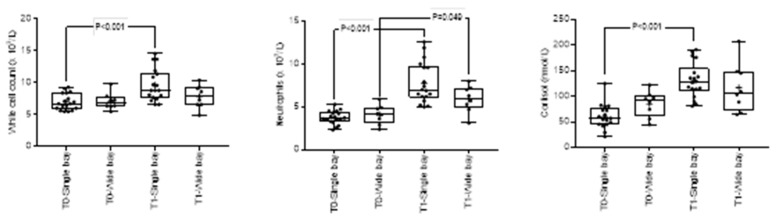
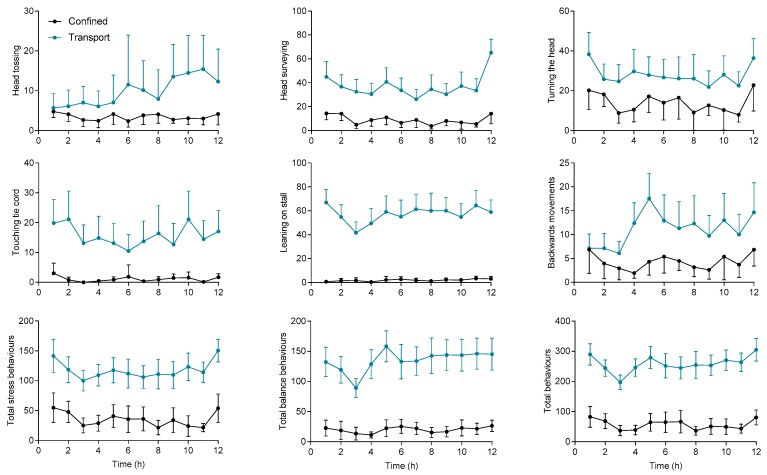
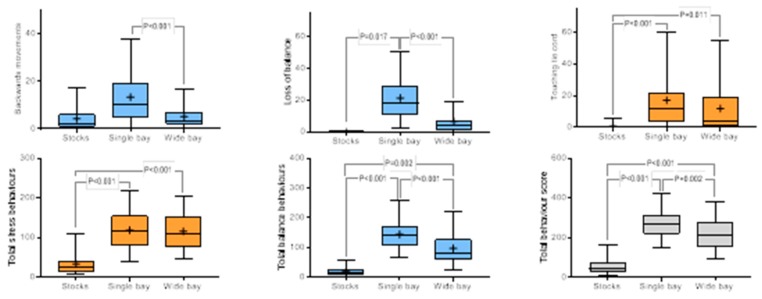
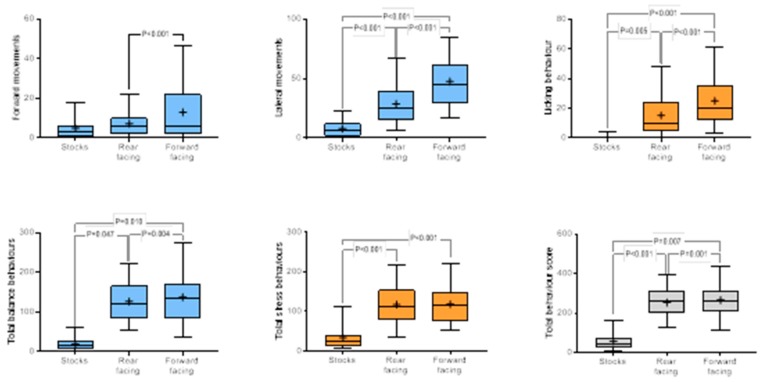
The regulations for minimal space and direction of travel for land transport in horses vary worldwide and there is currently no definitive guidance to promote equine health and welfare. This study evaluated the effects of bay size and direction of travel (forwards/backwards) in horses by comparing the behavioural, physiological, laboratory and gastroscopy parameters between transported and confined horses. A total of twenty-six mares took part in the study; 12 horses were confined for 12 h, and all mares underwent 12 hours' transportation, travelling in single (n = 18) or wide bays (n = 8), and forward (n = 10) or rear (n = 16) facing. Behaviour was recorded during confinement/transportation and analysed using a behaviour sampling ethogram. Clinical examination, blood samples and gastroscopy were conducted before and after confinement/transportation. The frequency of behaviours relating to stress and balance increased during transport, and horses transported in a rear-facing position and in a wider bay size showed fewer balance-related behaviours. Balance behaviours, particularly loss of balance, were positively associated with the severity of gastric ulceration after transportation and elevated muscle enzymes, while increased stress behaviours correlated with decreased gastrointestinal sounds. Heart rate and rectal temperature after transportation were positively associated with balance and stress behaviours, and with squamous gastric ulcer scores. Transportation was associated with expected increases in cortisol and muscle enzymes, but positioning and space allowance had minimal effects on these analytes. Findings suggest that transportation in a rear-facing position and in wider bays might reduce the impact of transport on horse health and welfare, and monitoring behaviour in transit and physiological measurements after transportation should be recommended. Behavioural and physiological parameters were more sensitive than haematological, biochemical or endocrine analytes to identify horses suffering from transport stress.
马匹陆地运输的最小空间和行进方向规定在全球范围内各不相同,目前尚无促进马匹健康和福利的明确指导意见。本研究通过比较运输和圈养马匹的行为、生理、实验室和胃镜检查参数,评估了马厩大小和行进方向(向前/向后)对马匹的影响。共有26匹母马参与了这项研究;12匹马被圈养12小时,所有母马都经历了12小时的运输,以单排(n = 18)或宽马厩(n = 8),以及朝前(n = 10)或朝后(n = 16)的方向行进。在圈养/运输过程中记录行为,并使用行为采样行为图谱进行分析。在圈养/运输前后进行临床检查、采集血样和胃镜检查。与应激和平衡相关的行为频率在运输过程中增加,以朝后位置和较宽马厩大小运输的马匹表现出较少的平衡相关行为。平衡行为,特别是失去平衡,与运输后胃溃疡的严重程度和肌肉酶升高呈正相关,而应激行为增加与胃肠蠕动音减少相关。运输后的心率和直肠温度与平衡和应激行为以及鳞状胃溃疡评分呈正相关。运输与皮质醇和肌肉酶的预期增加有关,但位置和空间余量对这些分析物的影响最小。研究结果表明,朝后位置和较宽马厩的运输可能会减少运输对马匹健康和福利的影响,建议在运输过程中监测行为,并在运输后进行生理测量。行为和生理参数比血液学、生化或内分泌分析物对识别遭受运输应激的马匹更敏感。