Department of Electronics and Communication Engineering, Istanbul Technical University, Istanbul 34469, Turkey.
Sensors (Basel). 2020 Jan 18;20(2):530. doi: 10.3390/s20020530.
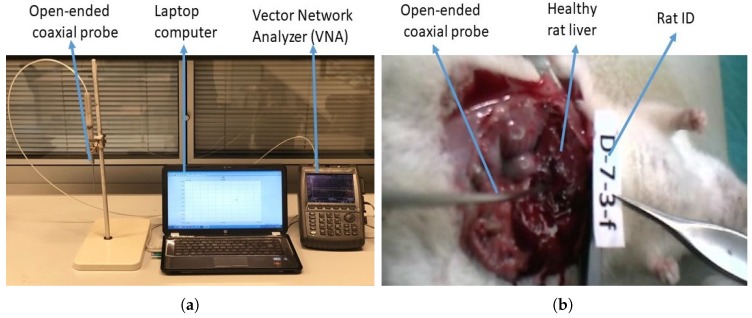
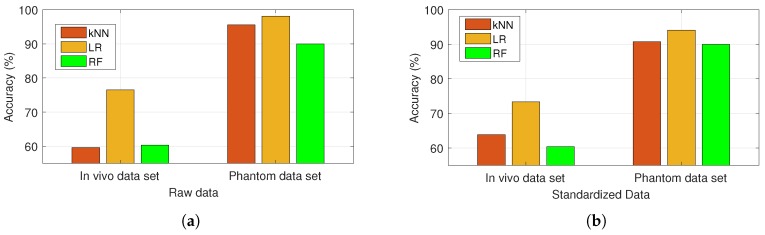
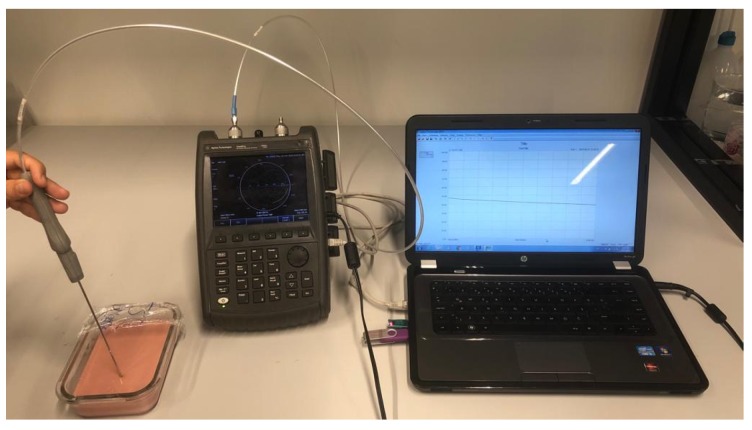
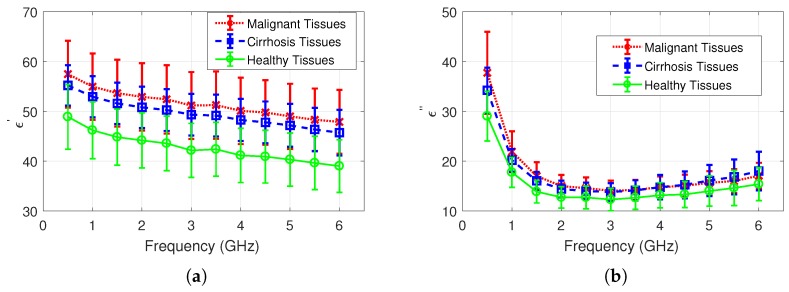
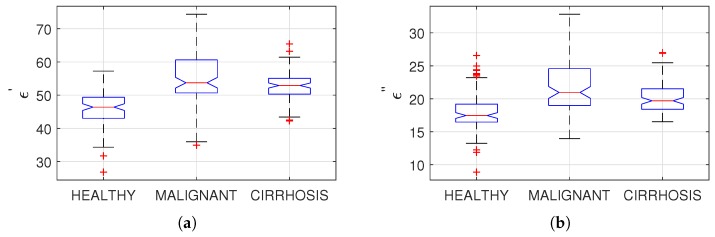
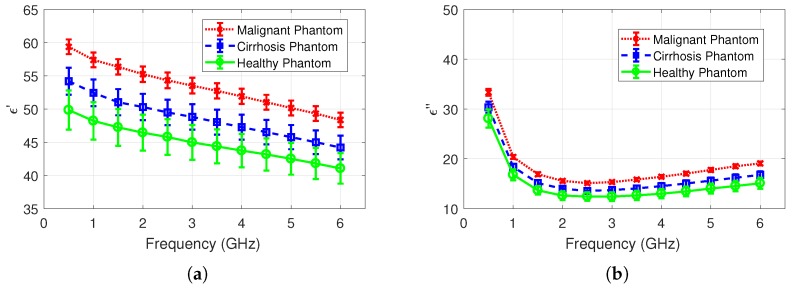
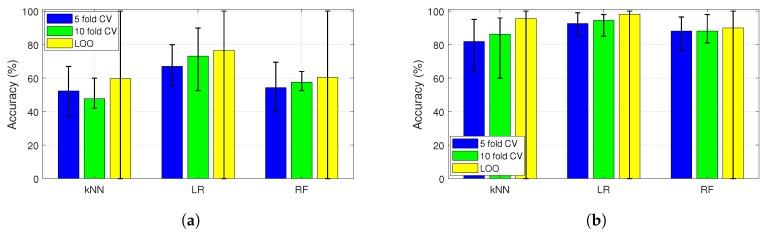
Open-ended coaxial probes can be used as tissue characterization devices. However, the technique suffers from a high error rate. To improve this technology, there is a need to decrease the measurement error which is reported to be more than 30% for an in vivo measurement setting. This work investigates the machine learning (ML) algorithms' ability to decrease the measurement error of open-ended coaxial probe techniques to enable tissue characterization devices. To explore the potential of this technique as a tissue characterization device, performances of multiclass ML algorithms on collected in vivo rat hepatic tissue and phantom dielectric property data were evaluated. Phantoms were used for investigating the potential of proliferating the data set due to difficulty of in vivo data collection from tissues. The dielectric property measurements were collected from 16 rats with hepatic anomalies, 8 rats with healthy hepatic tissues, and in house phantoms. Three ML algorithms, k-nearest neighbors (kNN), logistic regression (LR), and random forests (RF) were used to classify the collected data. The best performance for the classification of hepatic tissues was obtained with 76% accuracy using the LR algorithm. The LR algorithm performed classification with over 98% accuracy within the phantom data and the model generalized to in vivo dielectric property data with 48% accuracy. These findings indicate first, linear models, such as logistic regression, perform better on dielectric property data sets. Second, ML models fitted to the data collected from phantom materials can partly generalize to in vivo dielectric property data due to the discrepancy between dielectric property variability.
开口同轴探头可用作组织特征化设备。然而,该技术的误差率较高。为了改进这项技术,需要降低测量误差,据报道,在体内测量环境下,测量误差超过 30%。本工作研究了机器学习 (ML) 算法降低开口同轴探头技术测量误差的能力,以实现组织特征化设备。为了探索该技术作为组织特征化设备的潜力,评估了多类 ML 算法对收集的体内大鼠肝组织和幻影介电特性数据的性能。使用幻影来研究由于从组织中采集体内数据困难而增加数据集的潜力。从 16 只具有肝异常的大鼠、8 只具有健康肝组织的大鼠和内部幻影中采集介电特性测量值。使用 k-最近邻 (kNN)、逻辑回归 (LR) 和随机森林 (RF) 这三种 ML 算法对收集的数据进行分类。LR 算法对肝组织的分类性能最佳,准确率为 76%。LR 算法对幻影数据的分类准确率超过 98%,对体内介电特性数据的模型泛化准确率为 48%。这些发现表明:第一,线性模型(如逻辑回归)在介电特性数据集上的性能更好;第二,基于从幻影材料中收集的数据拟合的 ML 模型,由于介电特性可变性的差异,部分可泛化到体内介电特性数据。