Bakonyi Péter, Koók László, Rózsenberszki Tamás, Tóth Gábor, Bélafi-Bakó Katalin, Nemestóthy Nándor
Research Institute on Bioengineering, Membrane Technology and Energetics, University of Pannonia, Egyetem ut 10, Veszprém 8200, Hungary.
Membranes (Basel). 2020 Jan 18;10(1):16. doi: 10.3390/membranes10010016.
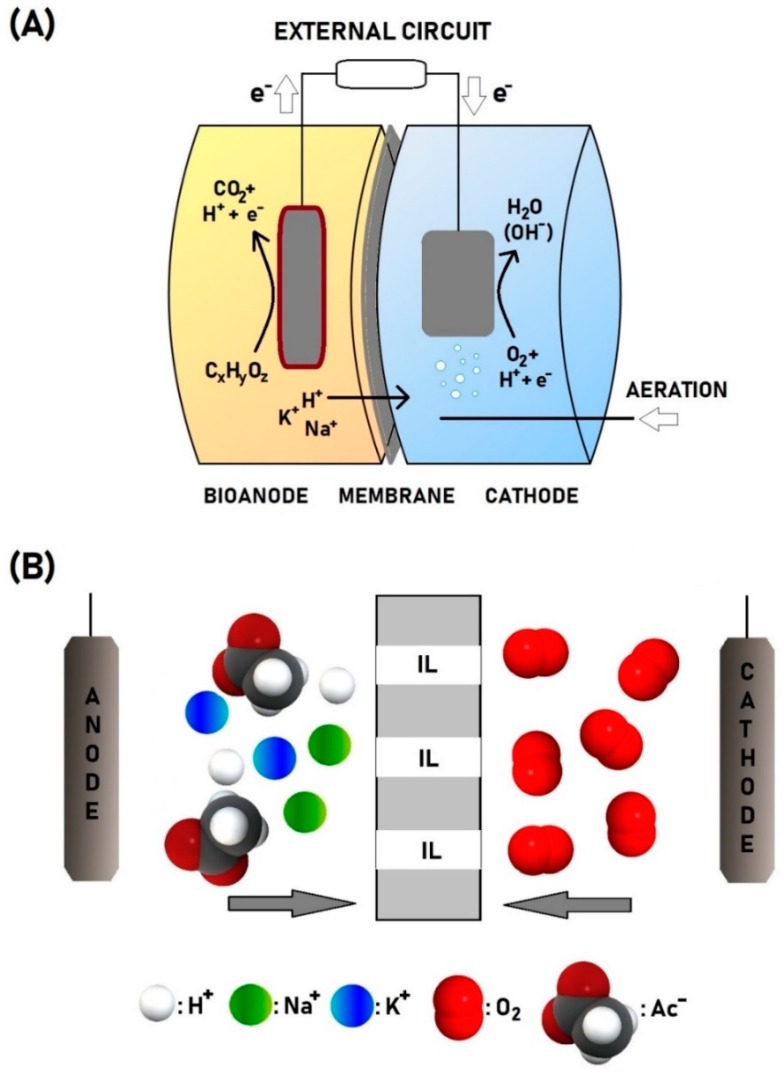
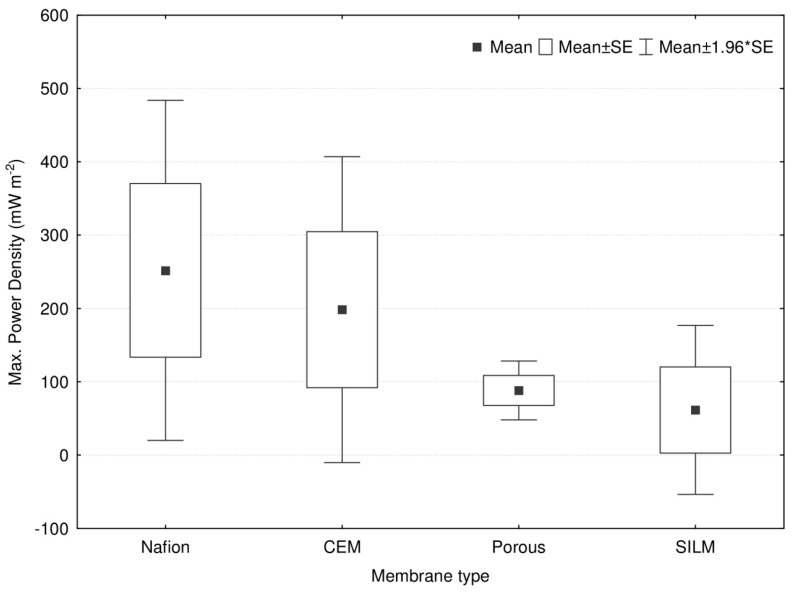
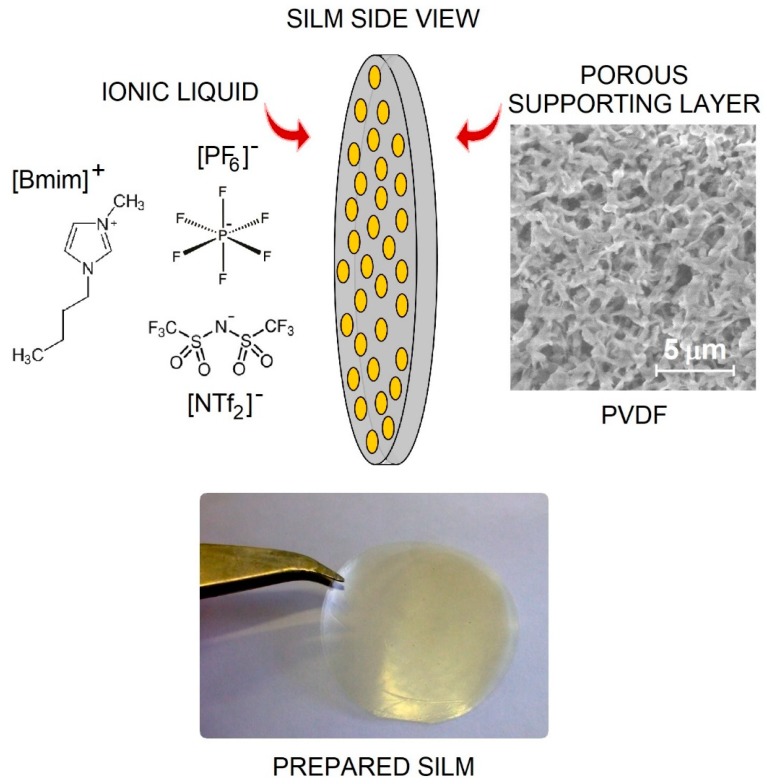
Membrane separators are key elements of microbial fuel cells (MFCs), especially of those constructed in a dual-chamber configuration. Until now, membranes made of Nafion have been applied the most widely to set-up MFCs. However, there is a broader agreement in the literature that Nafion is expensive and in many cases, does not meet the actual (mainly mass transfer-specific) requirements demanded by the process and users. Driven by these issues, there has been notable progress in the development of alternative materials for membrane fabrication, among which those relying on the deployment of ionic liquids are emerging. In this review, the background of and recent advances in ionic liquid-containing separators, particularly supported ionic liquid membranes (SILMs), designed for MFC applications are addressed and evaluated. After an assessment of the basic criteria to be fulfilled by membranes in MFCs, experiences with SILMs will be outlined, along with important aspects of transport processes. Finally, a comparison with the literature is presented to elaborate on how MFCs installed with SILM perform relative to similar systems assembled with other, e.g., Nafion, membranes.
膜分离器是微生物燃料电池(MFC)的关键部件,对于双室结构的MFC尤其如此。到目前为止,由Nafion制成的膜在搭建MFC时应用最为广泛。然而,文献中普遍认为Nafion价格昂贵,并且在许多情况下,无法满足该工艺和用户所要求的实际(主要是传质特定方面的)需求。受这些问题的驱动,在用于制造膜的替代材料开发方面取得了显著进展,其中依赖离子液体应用的材料正在兴起。在本综述中,将阐述并评估用于MFC应用的含离子液体分离器,特别是负载型离子液体膜(SILM)的背景和最新进展。在评估MFC中膜需满足的基本标准之后,将概述SILM的相关经验以及传输过程的重要方面。最后,与文献进行比较,以详细说明安装有SILM的MFC相对于使用其他(例如Nafion)膜组装的类似系统的性能表现。