National Botanic Garden of Wales, Llanarthne, SA32 8HG, UK.
MEFGL, School of Natural Sciences, Bangor University, Bangor, LL57 2UW, UK.
Commun Biol. 2021 Jan 14;4(1):37. doi: 10.1038/s42003-020-01562-4.
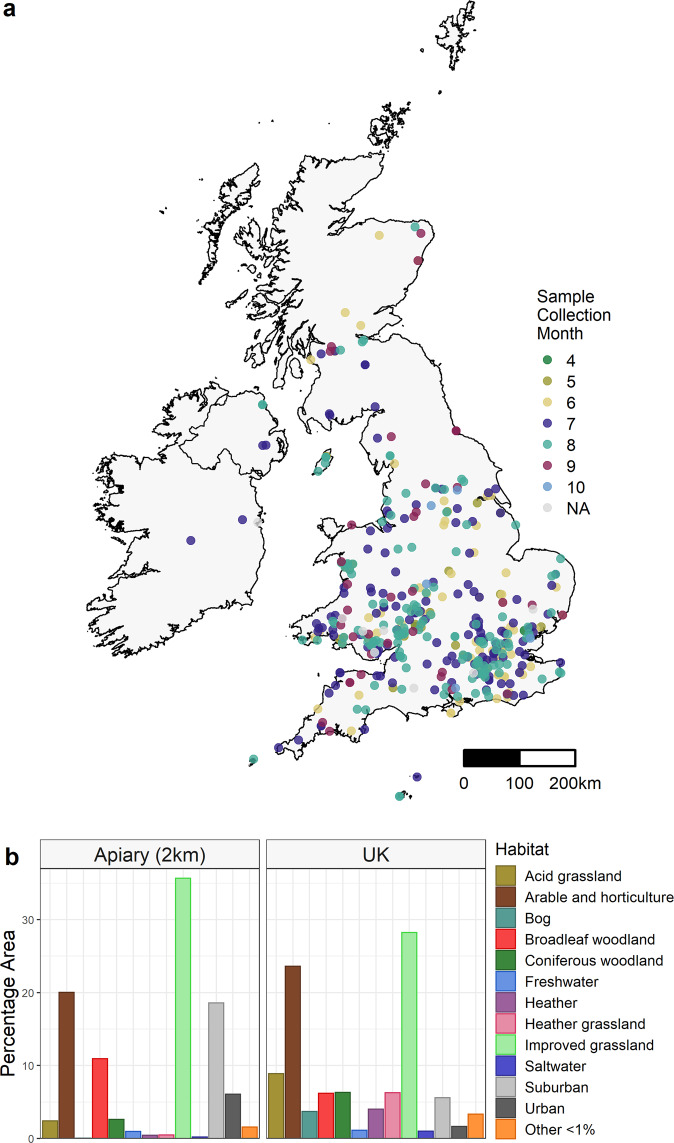
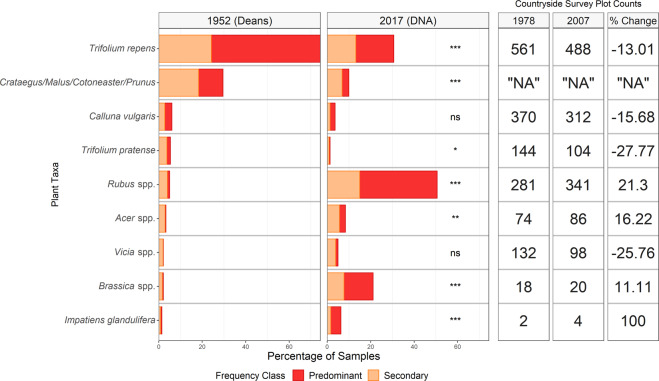
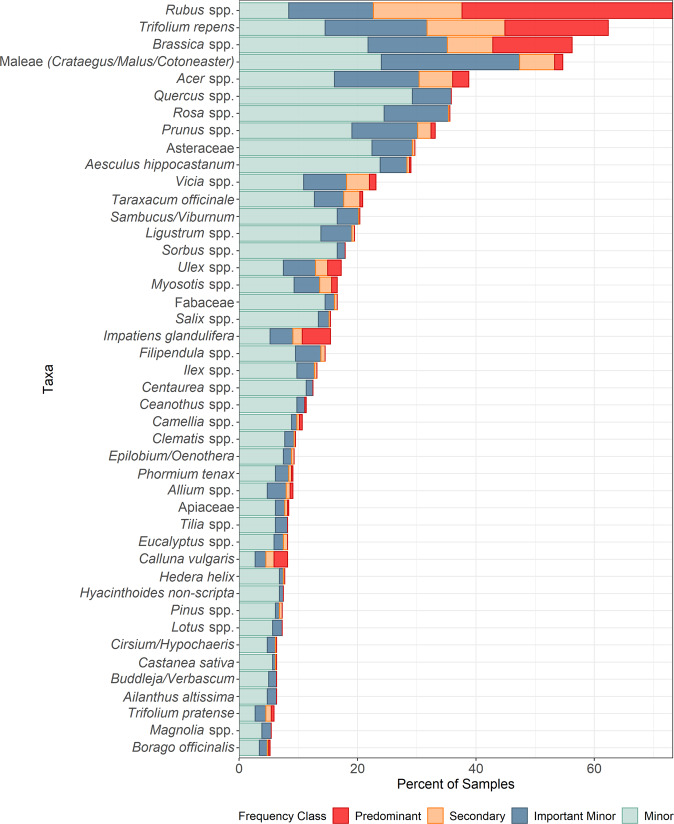
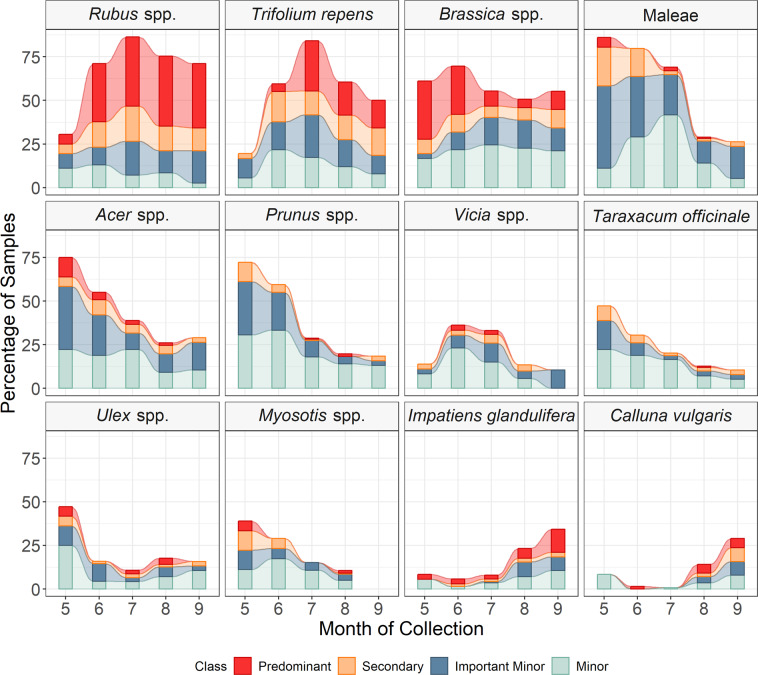
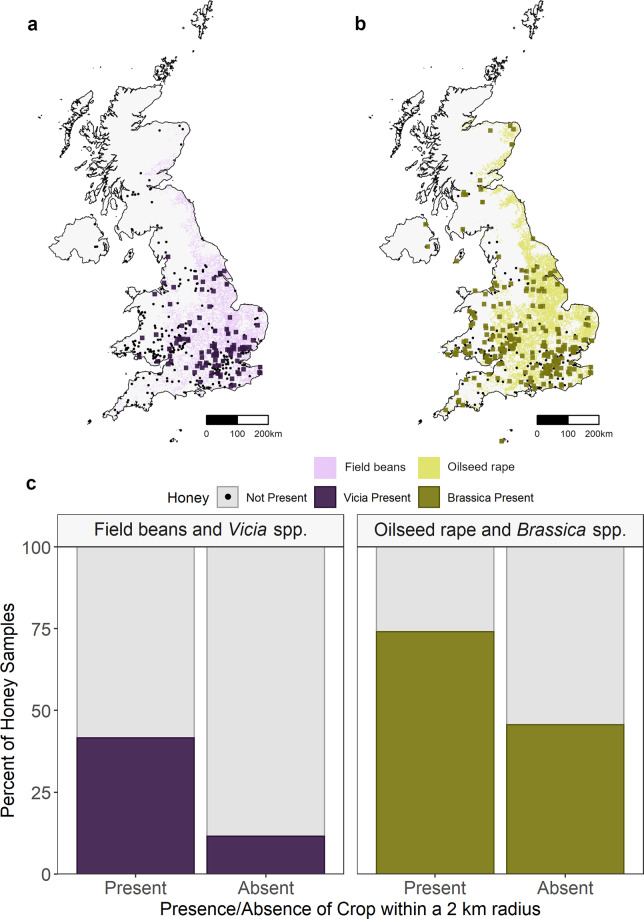
Decreasing floral resources as a result of habitat loss is one of the key factors in the decline of pollinating insects worldwide. Understanding which plants pollinators use is vital to inform the provision of appropriate floral resources to help prevent pollinator loss. Using a globally important pollinator, the honeybee, we show how changes in agricultural intensification, crop use and the spread of invasive species, have altered the nectar and pollen sources available in the UK. Using DNA metabarcoding, we analysed 441 honey samples from 2017 and compared these to a nationwide survey of honey samples from 1952. We reveal that shifts in major plants foraged by honeybees are driven by changes in the availability of these plants within the landscape. Improved grasslands are the most widespread habitat type in the UK, and management changes within this habitat have the greatest potential to increase floral resource availability.
由于栖息地丧失导致花卉资源减少,是全球授粉昆虫数量减少的关键因素之一。了解传粉者使用哪些植物对于提供适当的花卉资源以帮助防止传粉者的损失至关重要。我们使用全球重要的传粉媒介——蜜蜂,展示了农业集约化、作物用途和入侵物种传播的变化如何改变了英国可利用的花蜜和花粉来源。我们使用 DNA 代谢组学分析了 2017 年的 441 个蜂蜜样本,并将这些样本与 1952 年全国范围内的蜂蜜样本调查进行了比较。结果表明,蜜蜂采集的主要植物种类的变化是由这些植物在景观中的可利用性变化所驱动的。改良的草地是英国分布最广泛的栖息地类型,而该栖息地内的管理变化具有最大的潜力来增加花卉资源的可利用性。