Erhart Friedrich, Hackl Matthias, Hahne Hannes, Buchroithner Johanna, Meng Chen, Klingenbrunner Simone, Reitermaier René, Fischhuber Katrin, Skalicky Susanna, Berger Walter, Spiegl-Kreinecker Sabine, Lötsch Daniela, Ricken Gerda, Kuster Bernhard, Wöhrer Adelheid, Widhalm Georg, Hainfellner Johannes, Felzmann Thomas, Dohnal Alexander M, Marosi Christine, Visus Carmen
1Department of Neurosurgery, Medical University of Vienna, Vienna, Austria.
2Institute of Neurology, Medical University of Vienna, Vienna, Austria.
NPJ Vaccines. 2020 Jan 16;5(1):5. doi: 10.1038/s41541-019-0149-x. eCollection 2020.
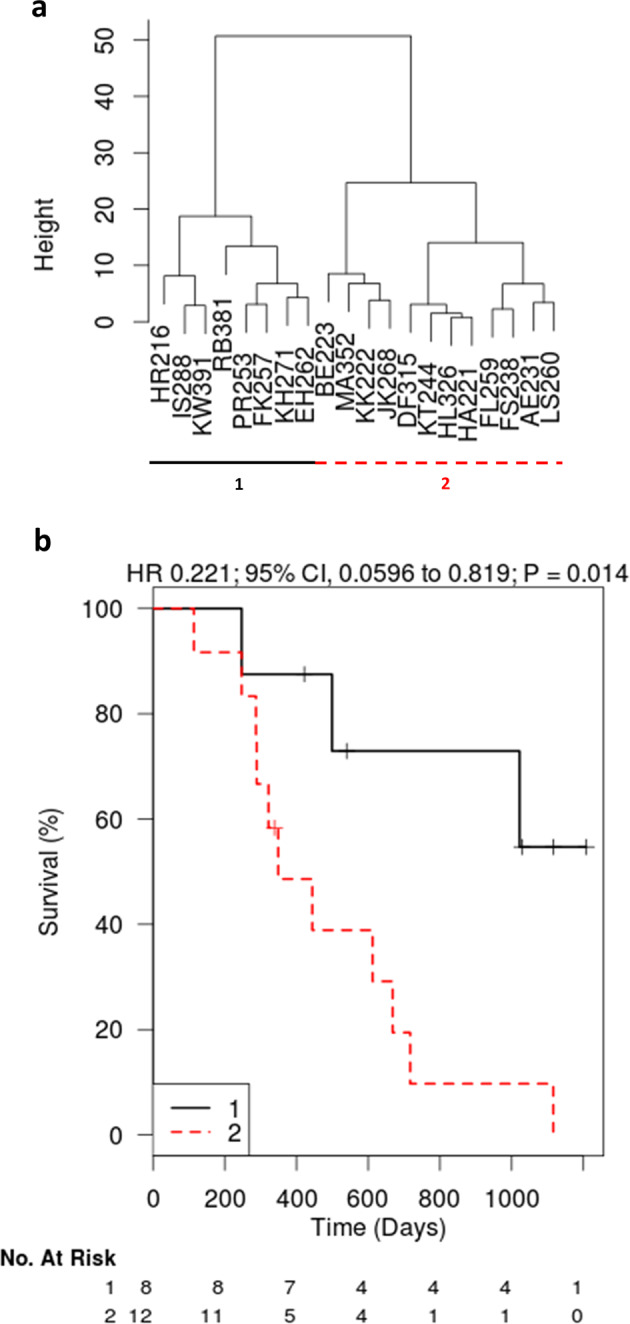
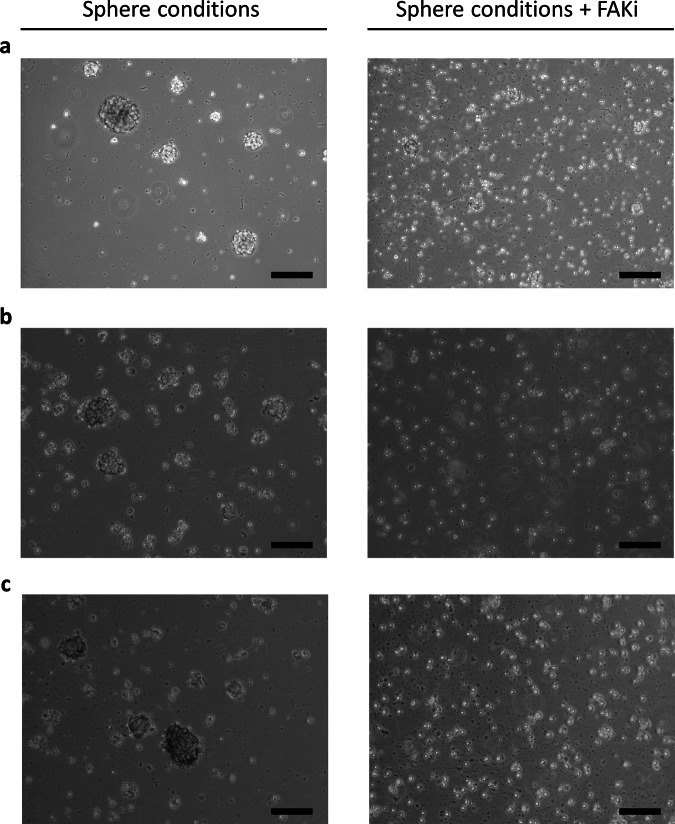
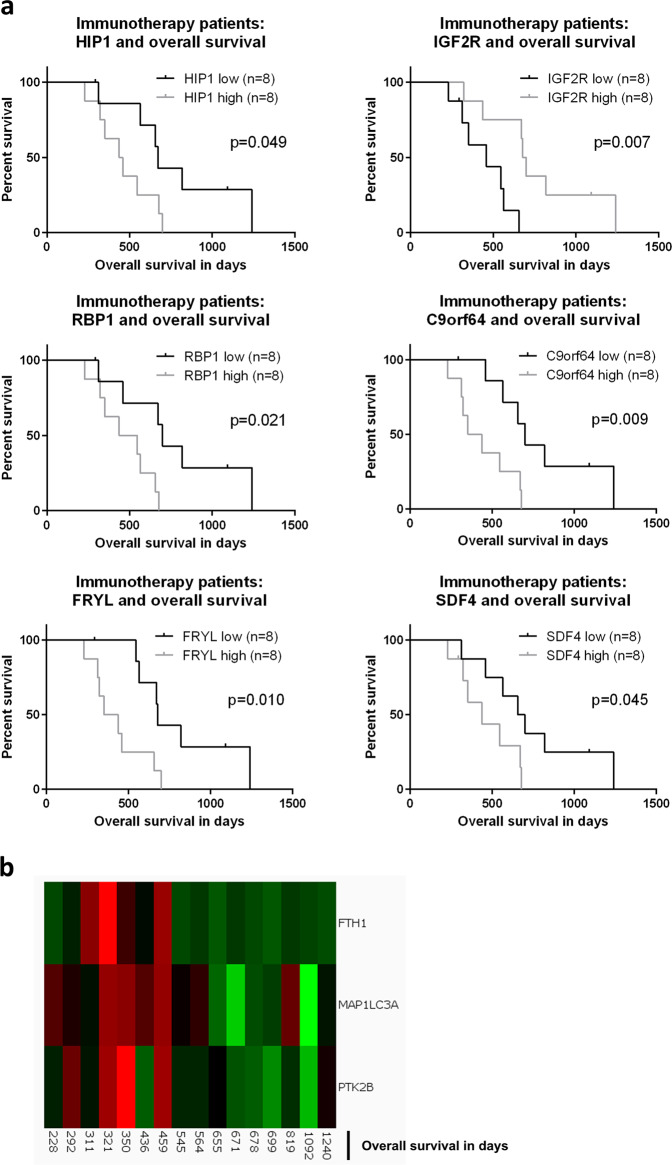
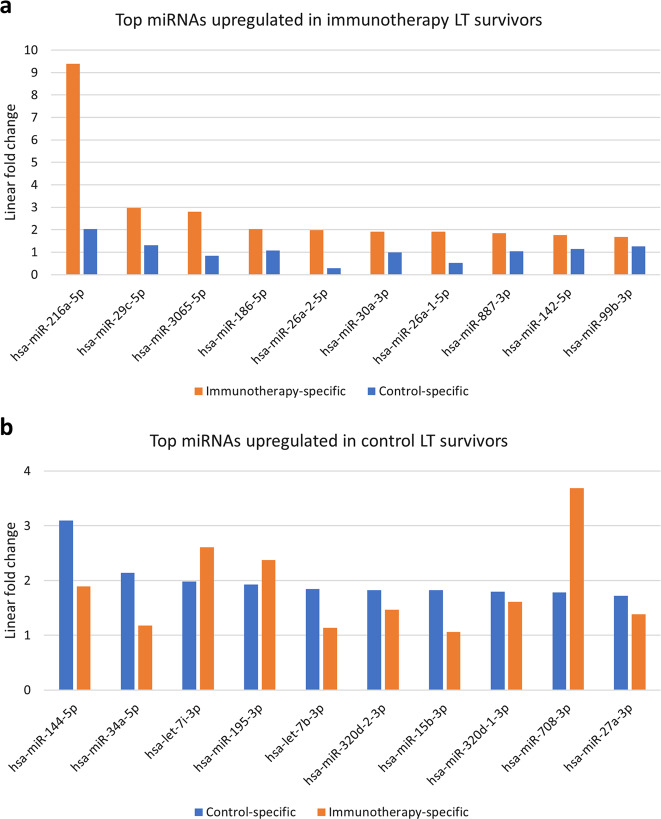
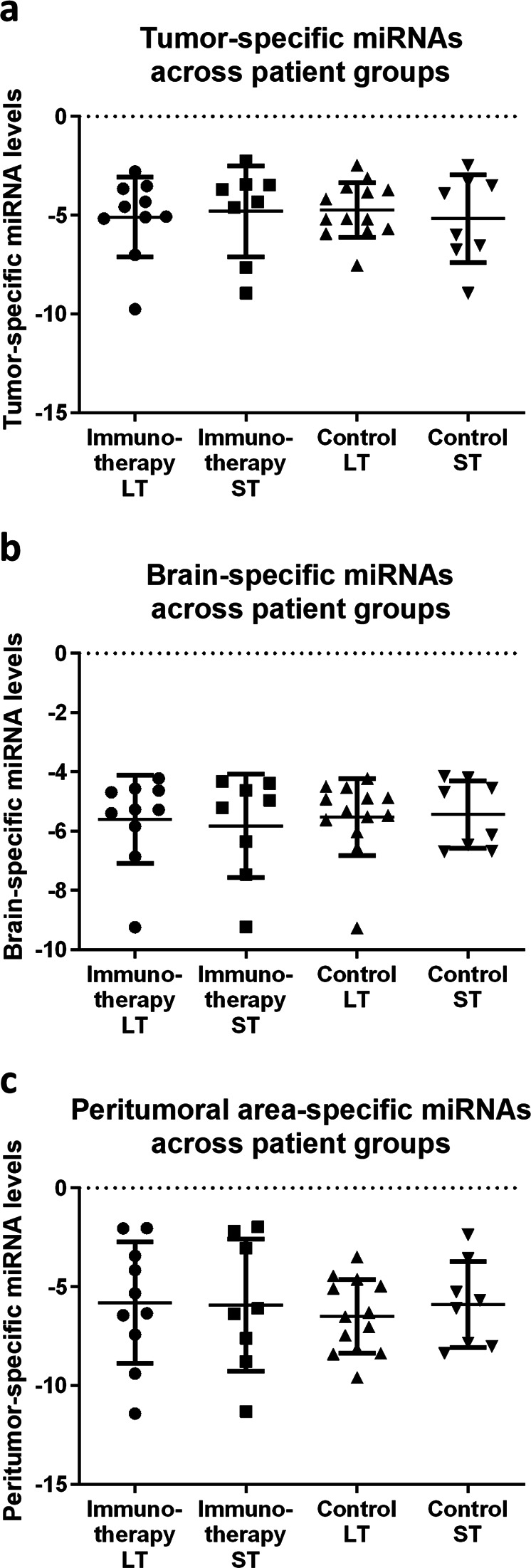
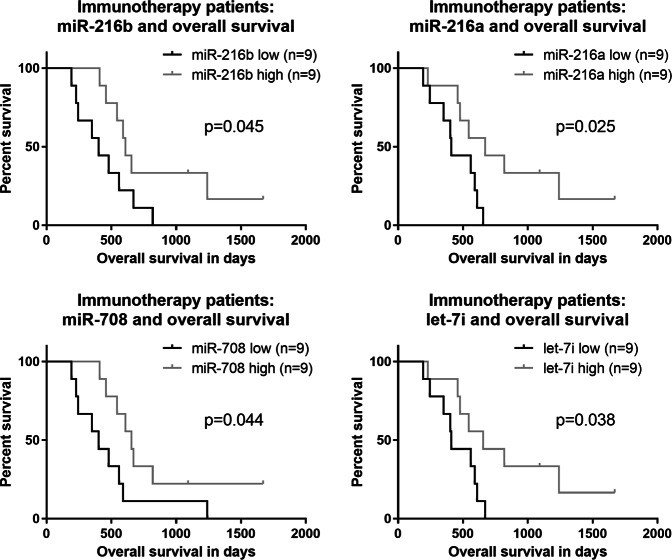
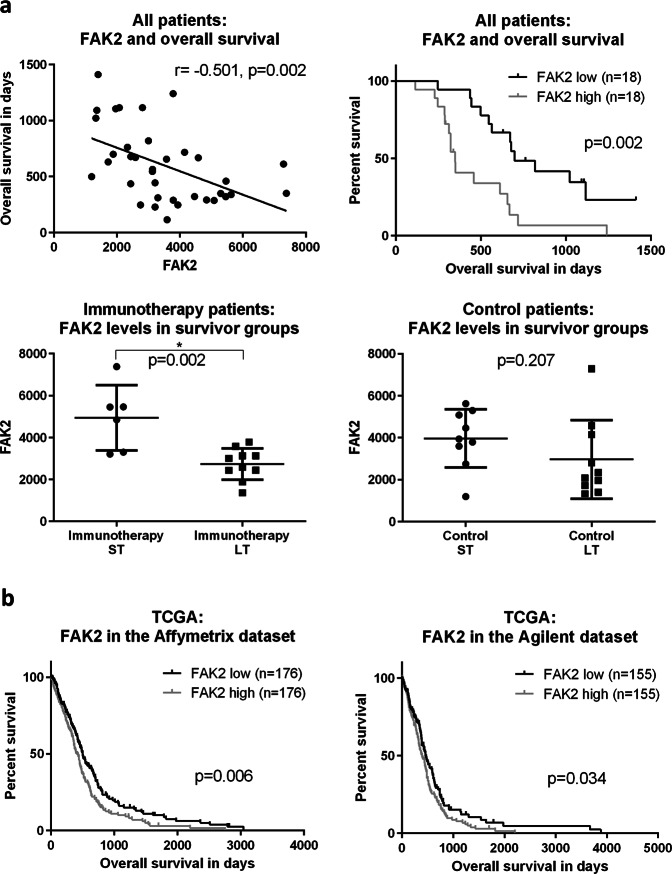
Glioblastoma is the most prevalent and aggressive brain cancer. With a median overall survival of ~15-20 months under standard therapy, novel treatment approaches are desperately needed. A recent phase II clinical trial with a personalized immunotherapy based on tumor lysate-charged dendritic cell (DC) vaccination, however, failed to prolong survival. Here, we investigated tumor tissue from trial patients to explore glioblastoma survival-related factors. We followed an innovative approach of combining mass spectrometry-based quantitative proteomics ( = 36) with microRNA sequencing plus RT-qPCR ( = 38). Protein quantification identified, e.g., huntingtin interacting protein 1 (HIP1), retinol-binding protein 1 (RBP1), ferritin heavy chain (FTH1) and focal adhesion kinase 2 (FAK2) as factor candidates correlated with a dismal prognosis. MicroRNA analysis identified miR-216b, miR-216a, miR-708 and let-7i as molecules potentially associated with favorable tissue characteristics as they were enriched in patients with a comparably longer survival. To illustrate the utility of integrated miRNomics and proteomics findings, focal adhesion was studied further as one example for a pathway of potential general interest. Taken together, we here mapped possible drivers of glioblastoma outcome under immunotherapy in one of the largest DC vaccination tissue analysis cohorts so far-demonstrating usefulness and feasibility of combined proteomics/miRNomics approaches. Future research should investigate agents that sensitize glioblastoma to (immuno)therapy-potentially building on insights generated here.
胶质母细胞瘤是最常见且侵袭性最强的脑癌。在标准治疗下,患者的总中位生存期约为15 - 20个月,因此迫切需要新的治疗方法。然而,最近一项基于肿瘤裂解物负载树突状细胞(DC)疫苗接种的个性化免疫疗法的II期临床试验未能延长生存期。在此,我们研究了试验患者的肿瘤组织,以探索与胶质母细胞瘤生存相关的因素。我们采用了一种创新方法,将基于质谱的定量蛋白质组学(n = 36)与微小RNA测序及逆转录定量聚合酶链反应(n = 38)相结合。蛋白质定量分析确定,例如亨廷顿相互作用蛋白1(HIP1)、视黄醇结合蛋白1(RBP1)、铁蛋白重链(FTH1)和粘着斑激酶2(FAK2)为与预后不良相关的候选因素。微小RNA分析确定miR - 216b、miR - 216a、miR - 708和let - 7i为可能与良好组织特征相关的分子,因为它们在生存期相对较长的患者中富集。为了说明整合的微小RNA组学和蛋白质组学研究结果的实用性,作为一个潜在普遍感兴趣的通路示例,我们进一步研究了粘着斑。总之,我们在迄今为止最大的DC疫苗接种组织分析队列之一中,描绘了免疫治疗下胶质母细胞瘤预后的可能驱动因素,证明了蛋白质组学/微小RNA组学联合方法的实用性和可行性。未来的研究应探索使胶质母细胞瘤对(免疫)治疗敏感的药物,这可能基于此处产生的见解。