Raboy Victor
USDA-ARS Small Grains and Potato Research Unit, 1691 South 2700 West, Aberdeen, ID 83210, USA.
Plants (Basel). 2020 Jan 22;9(2):140. doi: 10.3390/plants9020140.
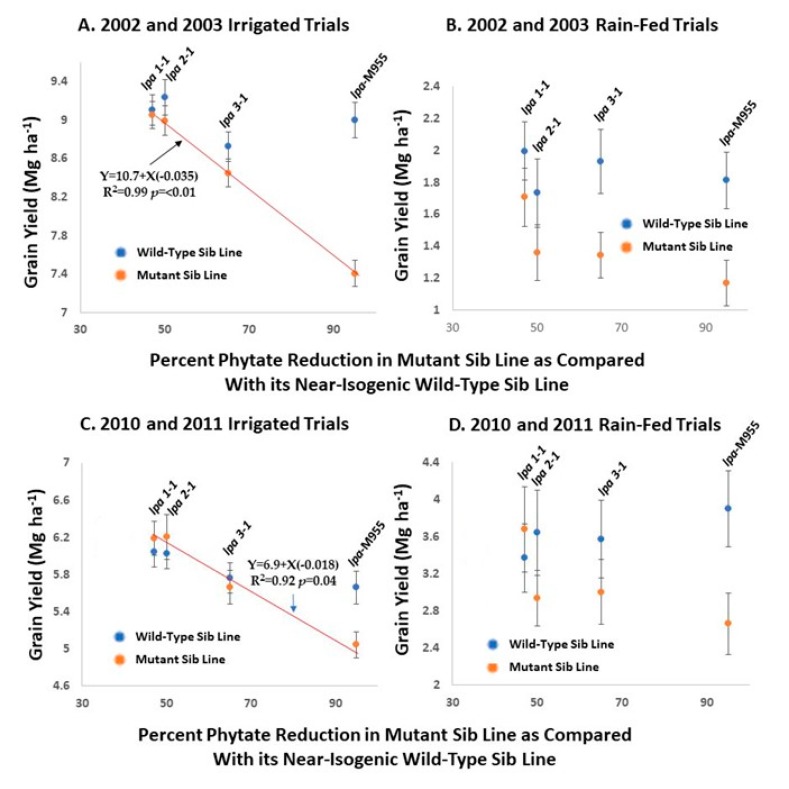
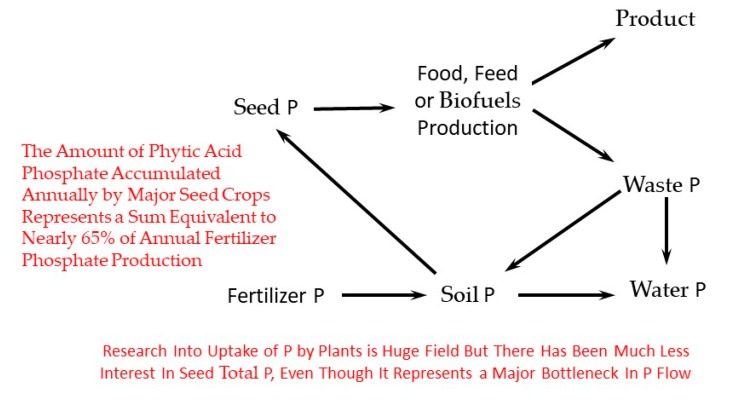
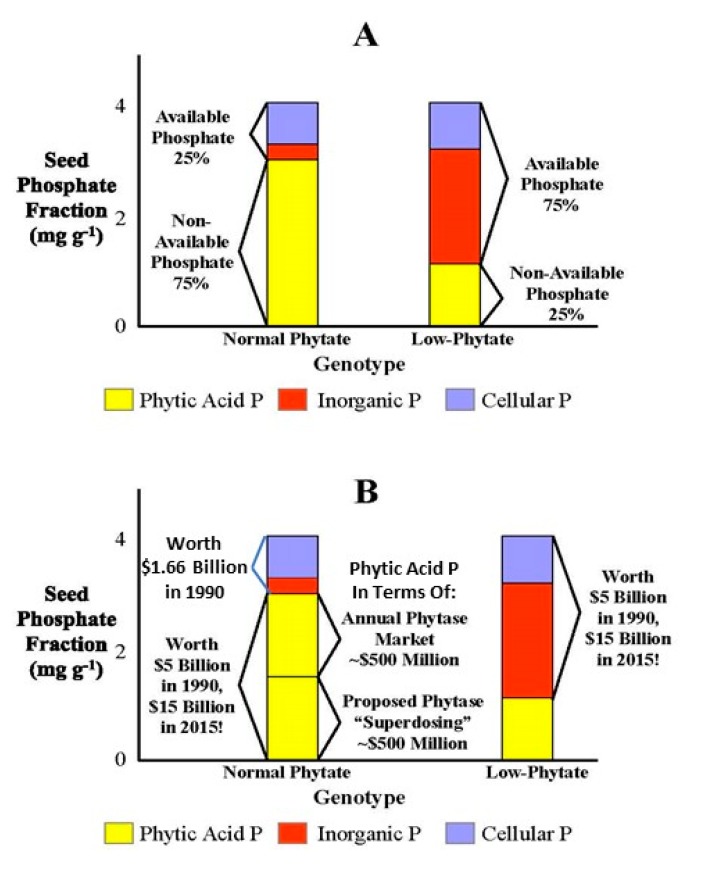
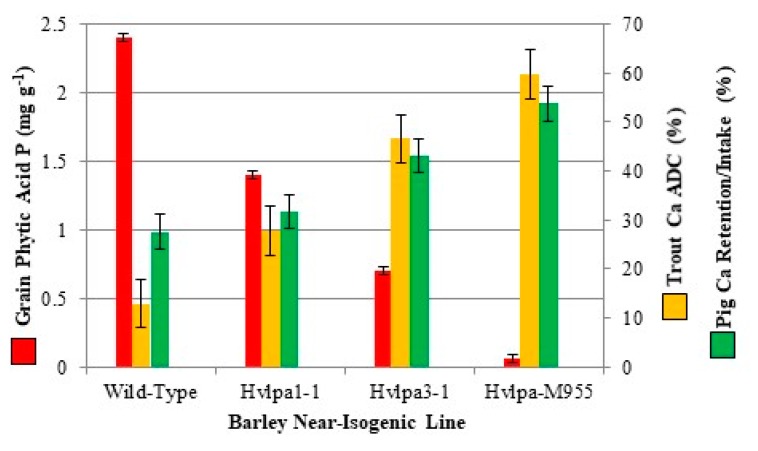
The (), or "low-phytate" seed trait can provide numerous potential benefits to the nutritional quality of foods and feeds and to the sustainability of agricultural production. Major benefits include enhanced phosphorus (P) management contributing to enhanced sustainability in non-ruminant (poultry, swine, and fish) production; reduced environmental impact due to reduced waste P in non-ruminant production; enhanced "global" bioavailability of minerals (iron, zinc, calcium, magnesium) for both humans and non-ruminant animals; enhancement of animal health, productivity and the quality of animal products; development of "low seed total P" crops which also can enhance management of P in agricultural production and contribute to its sustainability. Evaluations of this trait by industry and by advocates of biofortification via breeding for enhanced mineral density have been too short term and too narrowly focused. Arguments against breeding for the low-phytate trait overstate the negatives such as potentially reduced yields and field performance or possible reductions in phytic acid's health benefits. Progress in breeding or genetically-engineering high-yielding stress-tolerant low-phytate crops continues. Perhaps due to the potential benefits of the low-phytate trait, the challenge of developing high-yielding, stress-tolerant low-phytate crops has become something of a holy grail for crop genetic engineering. While there are widely available and efficacious alternative approaches to deal with the problems posed by seed-derived dietary phytic acid, such as use of the enzyme phytase as a feed additive, or biofortification breeding, if there were an interest in developing low-phytate crops with good field performance and good seed quality, it could be accomplished given adequate time and support. Even with a moderate reduction in yield, in light of the numerous benefits of low-phytate types as human foods or animal feeds, should one not grow a nutritionally-enhanced crop variant that perhaps has 5% to 10% less yield than a standard variant but one that is substantially more nutritious? Such crops would be a benefit to human nutrition especially in populations at risk for iron and zinc deficiency, and a benefit to the sustainability of agricultural production.
(),即“低植酸”种子性状,可为食品和饲料的营养品质以及农业生产的可持续性带来诸多潜在益处。主要益处包括:改善磷(P)管理,有助于提高非反刍动物(家禽、猪和鱼)生产的可持续性;减少非反刍动物生产中磷废物排放对环境的影响;提高矿物质(铁、锌、钙、镁)对人类和非反刍动物的“全球”生物利用率;增强动物健康、提高生产力以及改善动物产品质量;培育“低种子总磷”作物,这也有助于农业生产中磷的管理并促进其可持续性。行业以及通过培育提高矿物质密度进行生物强化的倡导者对该性状的评估过于短期且过于狭隘。反对培育低植酸性状的观点夸大了负面影响,如可能降低产量和田间表现,或可能减少植酸对健康的益处。培育或基因工程改造高产、耐逆低植酸作物的工作仍在继续。或许由于低植酸性状的潜在益处,培育高产、耐逆低植酸作物的挑战已成为作物基因工程的一大圣杯。虽然有广泛可用且有效的替代方法来处理种子源性膳食植酸带来的问题,如使用植酸酶作为饲料添加剂,或进行生物强化育种,但如果有兴趣培育具有良好田间表现和良好种子质量的低植酸作物,在给予足够时间和支持的情况下是可以实现的。即使产量适度降低,鉴于低植酸类型作为人类食品或动物饲料有诸多益处,难道不应该种植一种营养增强型作物变体吗?这种变体的产量可能比标准变体低5%至10%,但营养却显著更丰富。这样的作物将有益于人类营养,尤其是对有缺铁和缺锌风险的人群,也有益于农业生产的可持续性。