Biology Department, College of Education for Pure Science/Ibn al-Haitham, University of Baghdad, Baghdad 10071, Iraq.
Plant Production Department, College of Food and Agriculture Sciences, King Saud University, Riyadh 11451, Saudi Arabia.
Molecules. 2020 Jan 22;25(3):478. doi: 10.3390/molecules25030478.
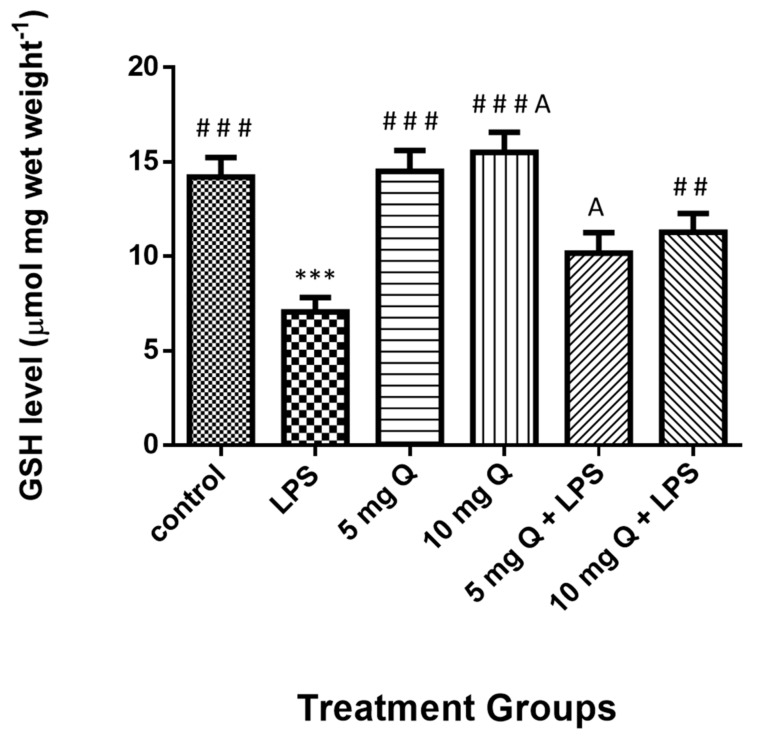
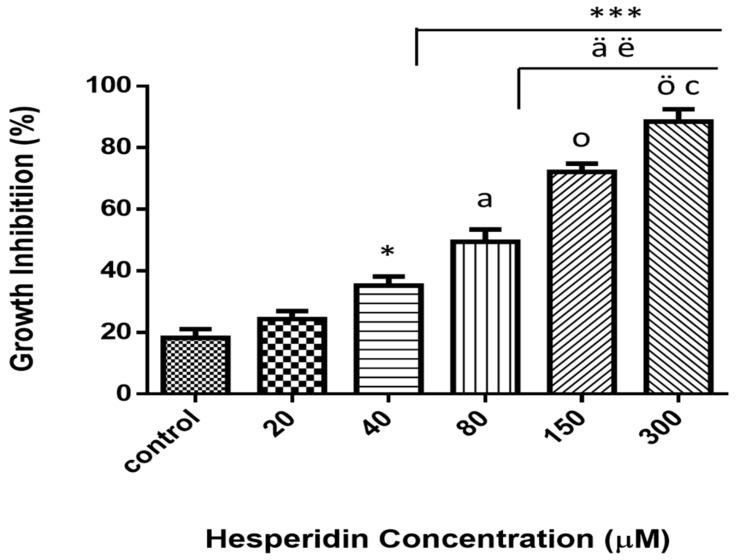
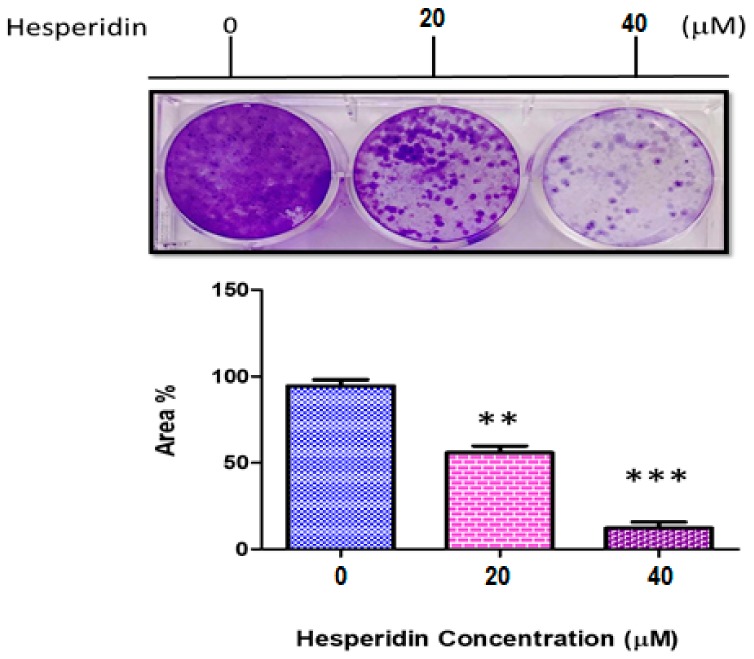
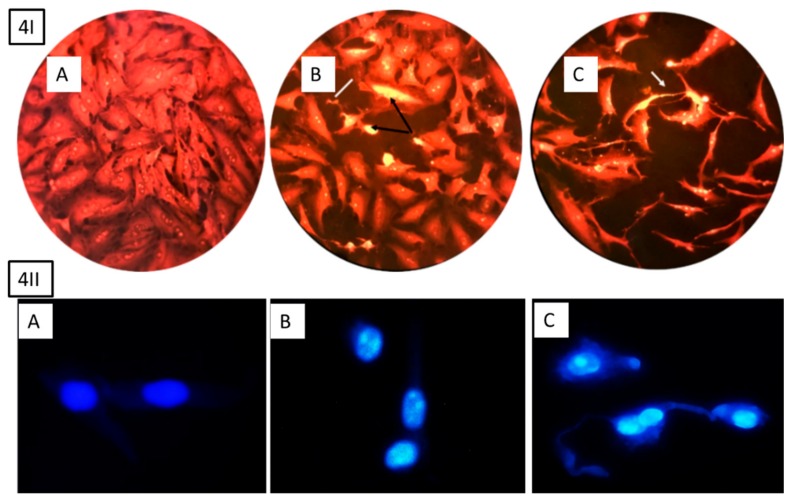
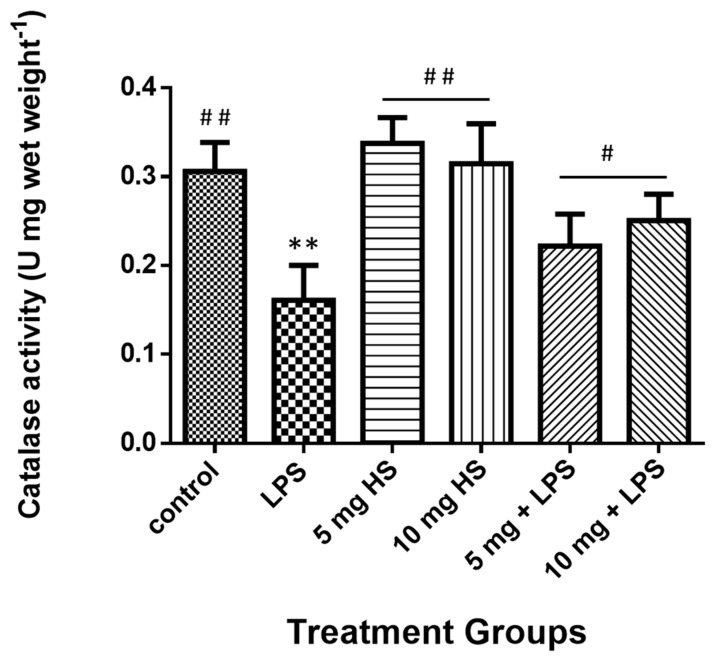
(1) Background: Plant flavonoids are efficient in preventing and treating various diseases. This study aimed to evaluate the ability of hesperidin, a flavonoid found in citrus fruits, in inhibiting lipopolysaccharide (LPS) induced inflammation, which induced lethal toxicity in vivo, and to evaluate its importance as an antitumor agent in breast cancer. The in vivo experiments revealed the protective effects of hesperidin against the negative LPS effects on the liver and spleen of male mice. (2) Methods: In the liver, the antioxidant activity was measured by estimating the concentration of glutathione (GSH) and catalase (CAT), whereas in spleen, the concentration of cytokines including IL-33 and TNF-α was measured. The in vitro experiments including MTT assay, clonogenity test, and sulforhodamine 101 stain with DAPI (4', 6-diamidino-2-phenylindole) were used to assess the morphological apoptosis in breast cancer cells. (3) Results: The results of this study revealed a significant increase in the IL-33 and TNF-α cytokine levels in LPS challenged mice along with a considerable elevation in glutathione (GSH); moreover, the catalase (CAT) level was higher compared to that of the control group. Cytotoxicity of the MCF-7 cell line revealed significant differences among the groups treated with different concentrations when compared to the control groups, in a concentration-dependent manner. Hesperidin significantly inhibited the colony formation of MCF7 cells when compared to that of control. Clear changes were observed in the cell shape, including cell shrinkage and chromatin condensation, which were associated with a later apoptotic stage. (4) Conclusion: The results indicate that hesperidin might be a potential candidate in preventing diseases.
(1)背景:植物类黄酮在预防和治疗各种疾病方面具有显著效果。本研究旨在评估橙皮苷(一种存在于柑橘类水果中的类黄酮)抑制脂多糖(LPS)诱导炎症的能力,因为 LPS 会在体内引发致命毒性,同时评估其作为乳腺癌抗肿瘤药物的重要性。体内实验揭示了橙皮苷对雄性小鼠肝和脾的负面 LPS 效应的保护作用。
(2)方法:在肝脏中,通过估计谷胱甘肽(GSH)和过氧化氢酶(CAT)的浓度来衡量抗氧化活性,而在脾脏中,测定包括白细胞介素-33(IL-33)和肿瘤坏死因子-α(TNF-α)在内的细胞因子浓度。MTT 测定、集落形成试验和 DAPI(4', 6-二脒基-2-苯基吲哚)结合的磺酰罗丹明 101 染色等体外实验用于评估乳腺癌细胞的形态学凋亡。
(3)结果:本研究结果表明,LPS 刺激的小鼠中 IL-33 和 TNF-α 细胞因子水平显著增加,同时 GSH 水平显著升高;此外,CAT 水平高于对照组。与对照组相比,用不同浓度处理的 MCF-7 细胞系的细胞毒性显示出显著差异,呈浓度依赖性。与对照组相比,橙皮苷显著抑制 MCF7 细胞的集落形成。细胞形态发生了明显变化,包括细胞收缩和染色质浓缩,这与晚期凋亡阶段有关。
(4)结论:结果表明,橙皮苷可能是预防疾病的潜在候选药物。