Reggi Serena, Giromini Carlotta, Dell'Anno Matteo, Baldi Antonella, Rebucci Raffaella, Rossi Luciana
Dipartimento di Scienze Veterinarie per la Salute, la Produzione Animale e la Sicurezza Alimentare Carlo Cantoni, Università Degli Studi di Milano, Via Trentacoste 2, 20134 Milano, Italy.
Animals (Basel). 2020 Jan 23;10(2):195. doi: 10.3390/ani10020195.
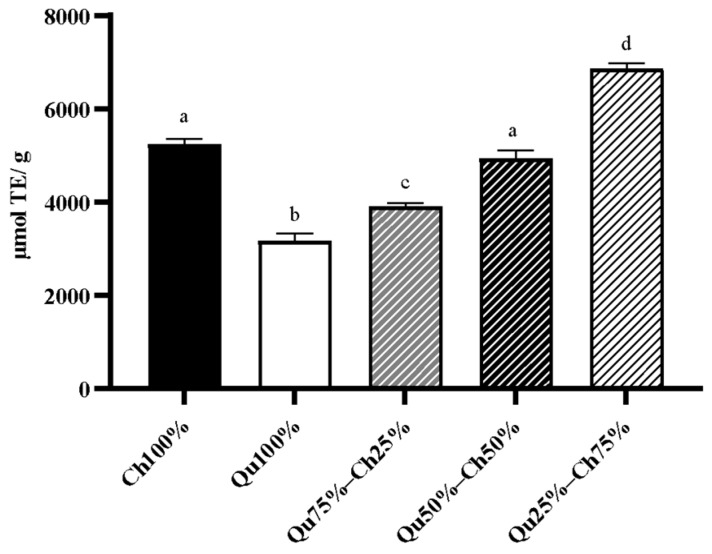
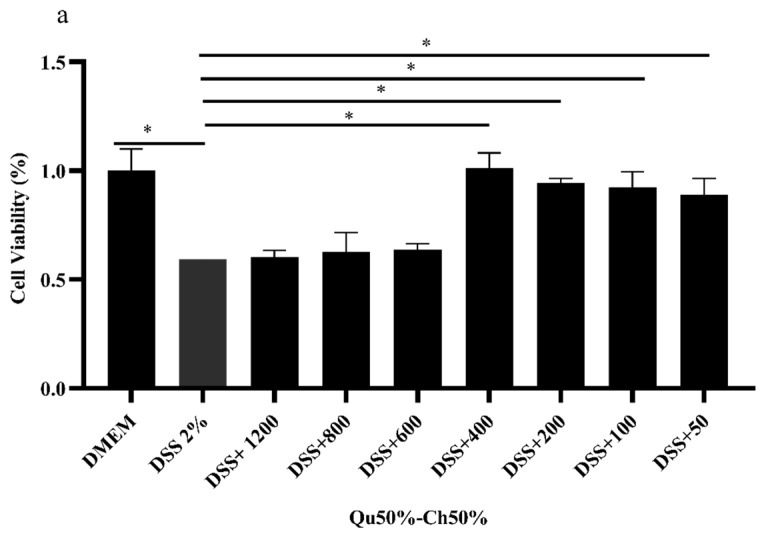
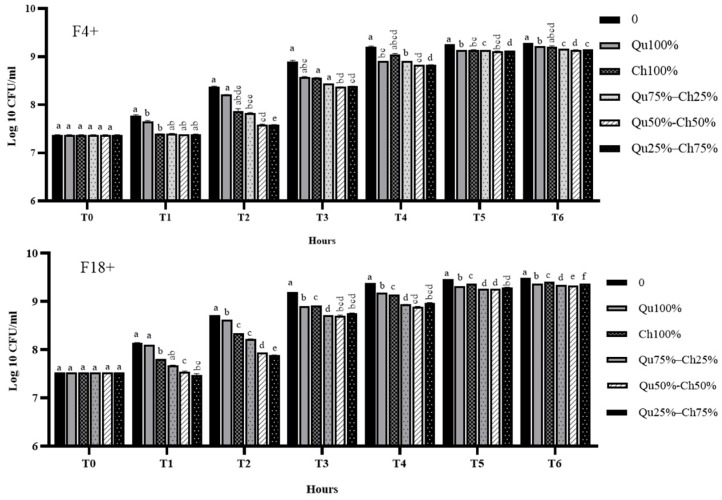
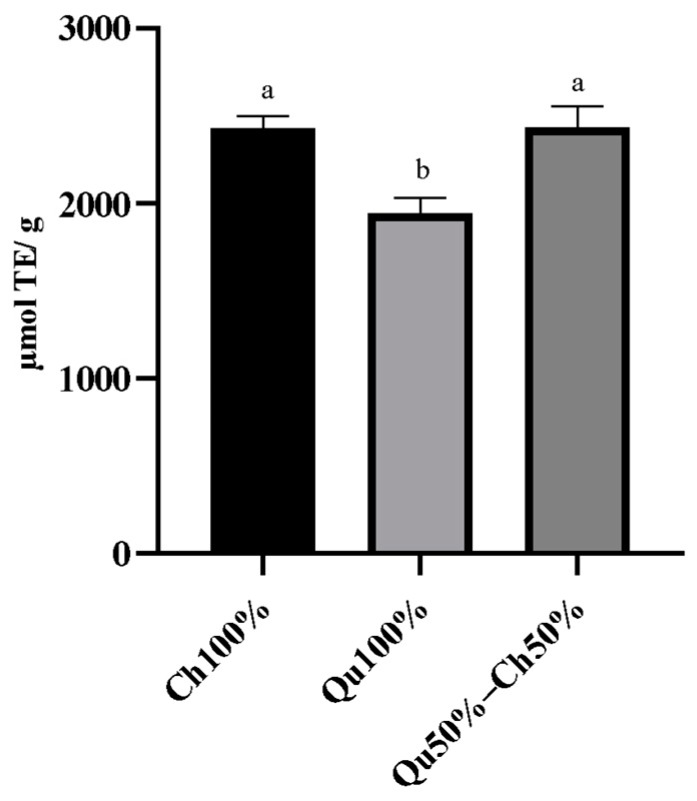
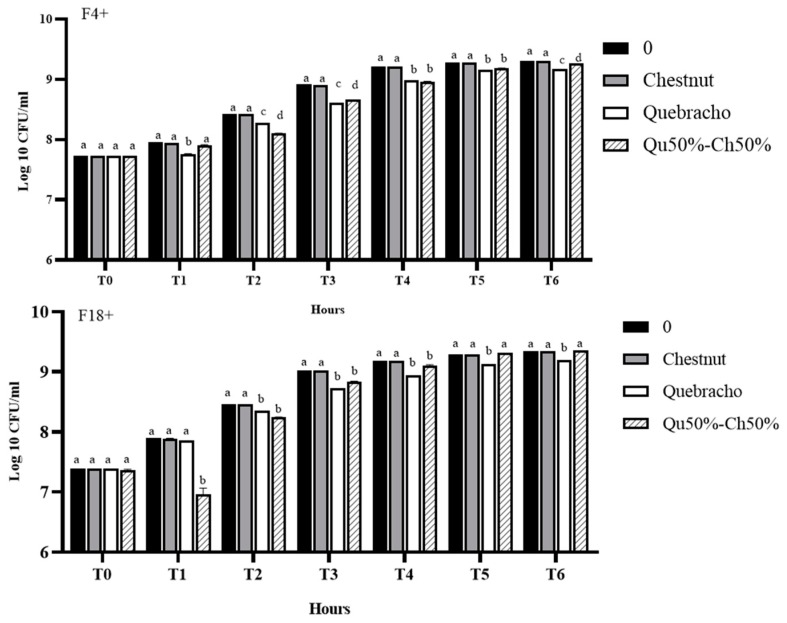
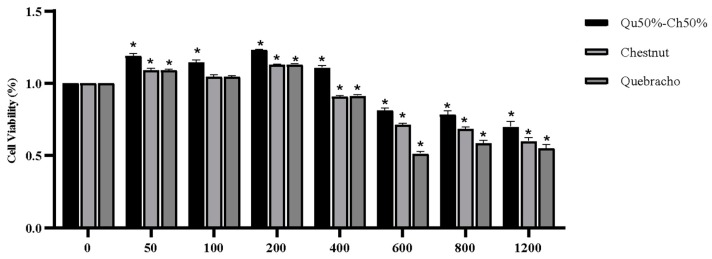
Quebracho (Qu) and chestnut (Ch) are natural sources of tannins and they are currently used in animal nutrition as feed ingredients. However, to date the bio-accessibility, antimicrobial, antioxidant, and intestinal epithelial cell stimulatory doses of Qu and Ch have not been determined. Our study investigates the antioxidant and E. coli F4+ and F18+ growth inhibitory activity of Qu, Ch, and their combinations after solubilization in water (to evaluate the already bio-accessible molecules) and after simulated gastro-intestinal digestion in vitro. The effect of an in vitro digested Ch and Qu combination was also tested on intestinal epithelial IPEC-J2 cells experimentally stressed with hydrogen peroxide (HO) and Dextran Sodium Sulfate (DSS). The results showed that undigested Qu and Ch alone, and in combination, exerted a valuable antioxidant capacity and E. coli F4+ and F18+ growth inhibitory activity. The concentration of 1200 µg/mL exhibited the highest E. coli growth inhibitory activity for all the samples tested. In addition, after in vitro digestion, Qu and Qu50%-Ch50% maintained E. coli growth inhibitory activity and a modest antioxidant capacity. Three hours pre-treatment with in vitro digested Qu50%-Ch50% counteracted the HO and DSS experimentally-induced stress in the intestinal IPEC-J2 cells. Ch and Qu tannin extracts, particularly when combined, may exert E. coli F4+ and F18+ growth inhibitory activity and valuable antioxidant and cell viability modulation activities.
破斧木(Qu)和栗木(Ch)是单宁的天然来源,目前在动物营养中用作饲料成分。然而,迄今为止,破斧木和栗木的生物可及性、抗菌、抗氧化以及对肠上皮细胞的刺激剂量尚未确定。我们的研究调查了破斧木、栗木及其组合在水中溶解后(以评估已经具有生物可及性的分子)以及在体外模拟胃肠消化后的抗氧化活性以及对大肠杆菌F4+和F18+生长的抑制活性。还测试了体外消化的栗木和破斧木组合对用过氧化氢(HO)和葡聚糖硫酸钠(DSS)进行实验性应激处理的肠上皮IPEC-J2细胞的影响。结果表明,未消化的破斧木和栗木单独使用以及组合使用时,都具有重要的抗氧化能力以及对大肠杆菌F4+和F18+生长的抑制活性。对于所有测试样品,1200 µg/mL的浓度表现出最高的大肠杆菌生长抑制活性。此外,体外消化后,破斧木以及破斧木-栗木各50%的组合保持了对大肠杆菌生长的抑制活性以及适度的抗氧化能力。用体外消化的破斧木-栗木各50%的组合进行三小时预处理,可抵消HO和DSS在实验中对肠IPEC-J2细胞诱导的应激。栗木和破斧木单宁提取物,特别是组合使用时,可能具有抑制大肠杆菌F4+和F18+生长的活性以及重要的抗氧化和调节细胞活力的活性。