Institute of Endocrinology and Experimental Oncology, IEOS CNR, 80131 Naples, Italy.
Department of Molecular Medicine and Medical Biotechnology, University of Naples "Federico II", 80131 Naples, Italy.
Int J Mol Sci. 2020 Jan 23;21(3):747. doi: 10.3390/ijms21030747.
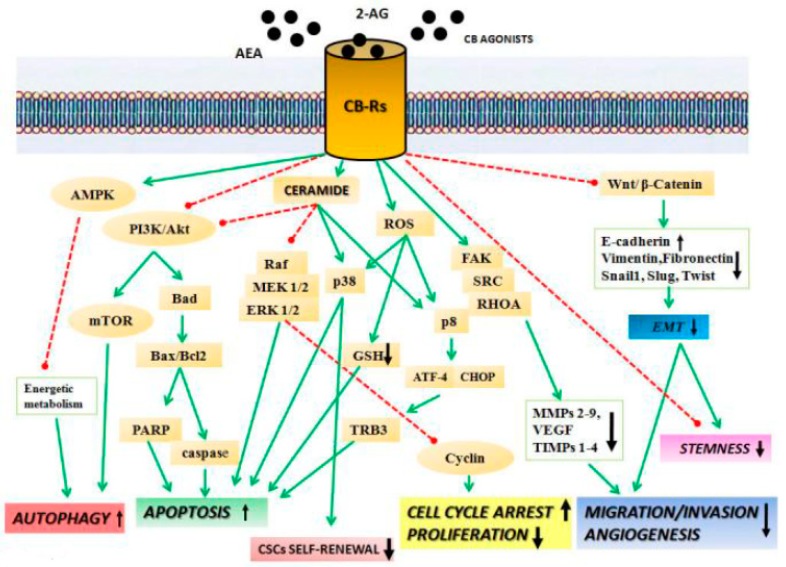
In recent years, the endocannabinoid system has received great interest as a potential therapeutic target in numerous pathological conditions. Cannabinoids have shown an anticancer potential by modulating several pathways involved in cell growth, differentiation, migration, and angiogenesis. However, the therapeutic efficacy of cannabinoids is limited to the treatment of chemotherapy-induced symptoms or cancer pain, but their use as anticancer drugs in chemotherapeutic protocols requires further investigation. In this paper, we reviewed the role of cannabinoids in the modulation of signaling mechanisms implicated in tumor progression.
近年来,内源性大麻素系统作为许多病理状况的潜在治疗靶点受到了极大的关注。大麻素通过调节参与细胞生长、分化、迁移和血管生成的几种途径显示出抗癌潜力。然而,大麻素的治疗效果仅限于治疗化疗引起的症状或癌症疼痛,但其在化疗方案中作为抗癌药物的使用需要进一步研究。在本文中,我们综述了大麻素在调节肿瘤进展中涉及的信号机制中的作用。