Department of Surgery, Ewha Womans University College of Medicine, 1071 Anyangcheon-ro, Yangcheon-gu, Seoul, 07985, South Korea.
MD Healthcare Inc., Seoul, South Korea.
World J Surg Oncol. 2020 Jan 24;18(1):19. doi: 10.1186/s12957-020-1793-3.
The aim of this study is to investigate the composition of microbiota in biliary tract cancer patients and healthy adults by metagenome analysis and evaluate its potential values as biomarkers for biliary tract cancer.
Patients who were diagnosed with biliary tract cancer or benign inflammation were enrolled in this study. The control group consisted of healthy adults who presented with no history of significant medical issues. We isolated bacteria-derived extracellular vesicles in the plasma. The microbiome composition was investigated with 16S rDNA metagenome analysis. We evaluated each microbiome to ensure suitability for the biliary tract cancer prediction model.
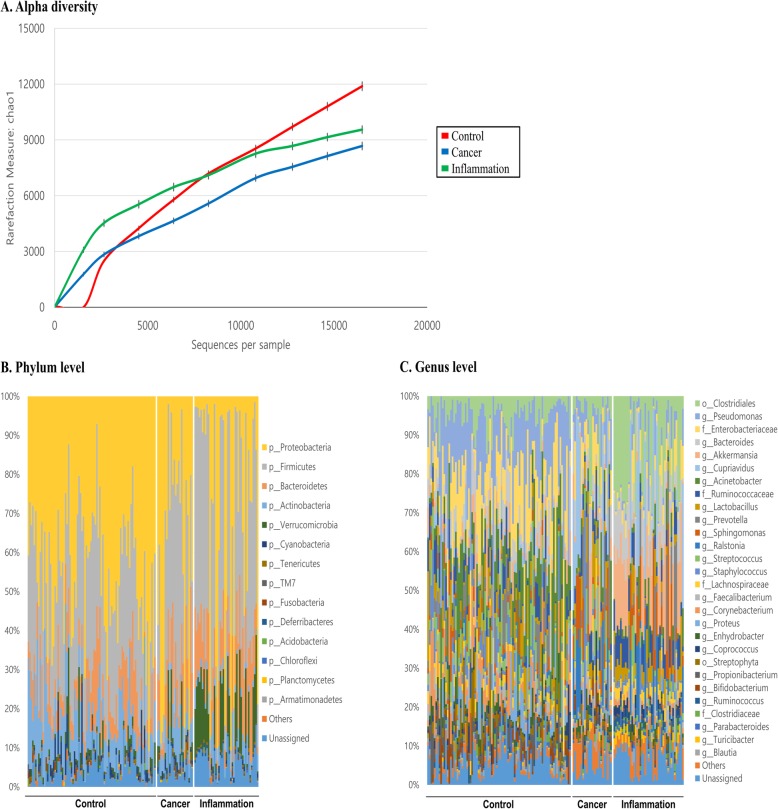
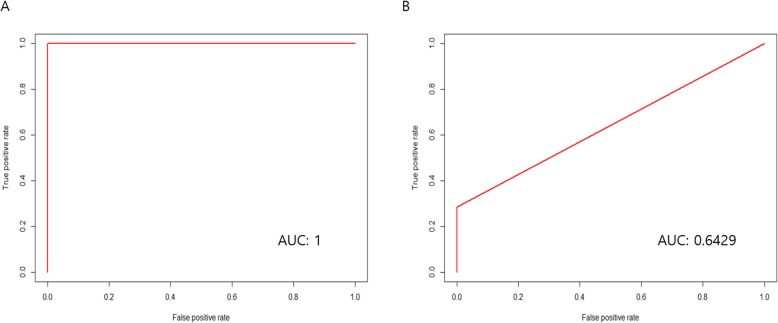
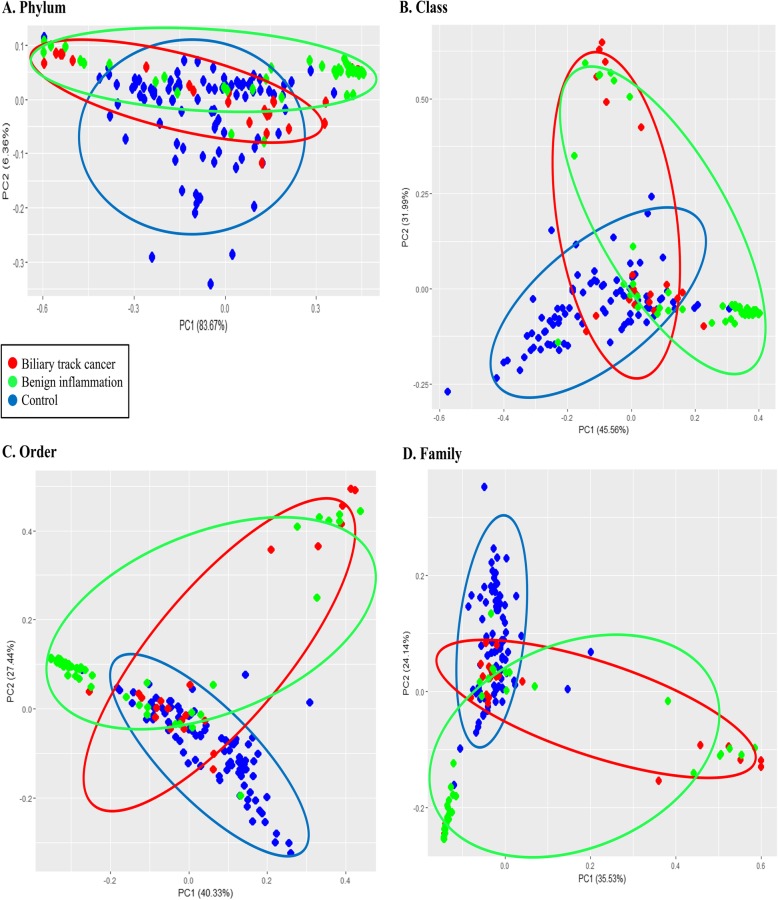
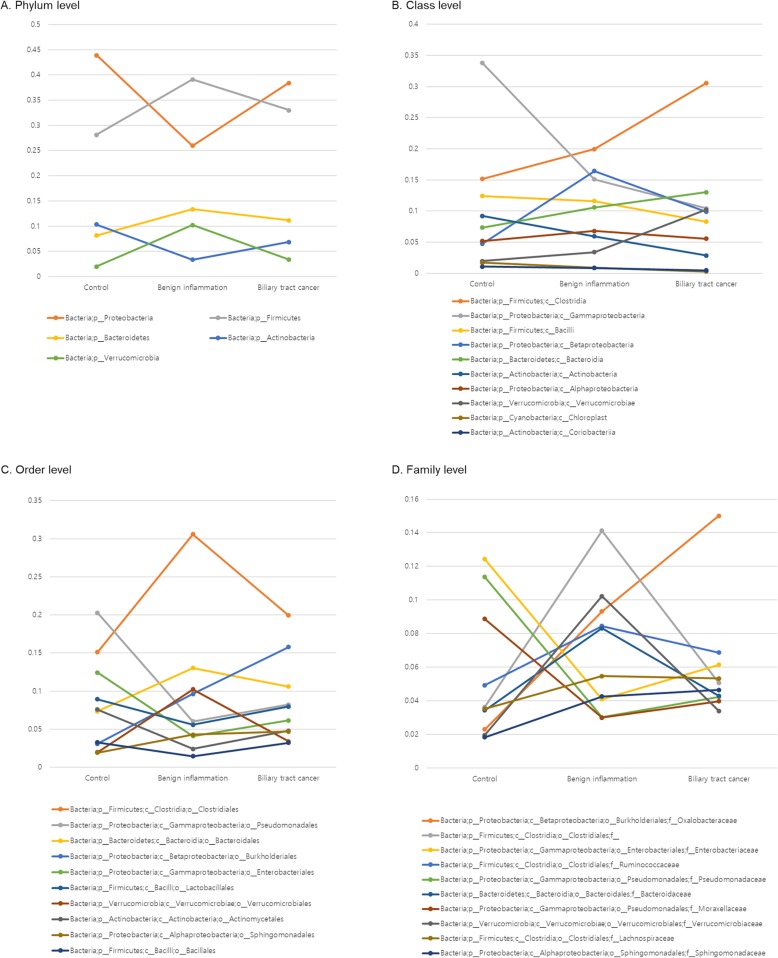
A total of 155 patients were included in this study: 24 patients with diagnosed biliary tract cancers, 43 diagnosed with cholecystitis or cholangitis, and 88 healthy adults. The microbiome composition pattern of the biliary tract cancer differed from the microbiome composition pattern seen in healthy adult group in beta diversity analysis. The percent composition of microbiota was found to be different from the phylum to genus level. Differences in the composition of the Bifidobacteriaceae and Pseudomonaceae families and Corynebacteriaceae Corynebacterium, Oxalobacteraceae Ralstonia and Comamonadaceae Comamonas species may be used to develop predictive models for biliary tract cancer.
Biliary tract cancer patients have altered microbiome composition, which represents a promising biomarker to differentiate malignant biliary tract disease from normal control group.
本研究旨在通过宏基因组分析研究胆道癌患者和健康成年人的微生物群落组成,并评估其作为胆道癌生物标志物的潜在价值。
本研究纳入了经诊断患有胆道癌或良性炎症的患者。对照组由无重大医疗问题史的健康成年人组成。我们从血浆中分离细菌衍生的细胞外囊泡。通过 16S rDNA 宏基因组分析研究微生物组组成。我们评估了每个微生物组,以确保其适合胆道癌预测模型。
本研究共纳入 155 名患者:24 名经诊断患有胆道癌,43 名患有胆囊炎或胆管炎,88 名健康成年人。在β多样性分析中,胆道癌患者的微生物群落组成模式与健康成年人组的微生物群落组成模式不同。从门到属水平,微生物的组成百分比存在差异。双歧杆菌科和假单胞菌科以及棒状杆菌科的 Corynebacterium、Oxalobacteraceae 的 Ralstonia 和 Comamonadaceae 的 Comamonas 物种的组成差异可能用于开发胆道癌的预测模型。
胆道癌患者的微生物群落组成发生改变,这代表一种有前途的生物标志物,可将恶性胆道疾病与正常对照组区分开来。