Department of Microbiology, Immunology and Infectious Diseases, Snyder Institute for Chronic Diseases, University of Calgary Health Sciences Centre, 3330 Hospital Drive NW, Calgary, AB, T2N4N1, Canada.
Snyder Institute for Chronic Diseases, Mouse Phenomics Resource Laboratory, University of Calgary, Calgary, AB, T2N4N1, Canada.
Nat Commun. 2020 Jan 24;11(1):483. doi: 10.1038/s41467-019-14182-2.
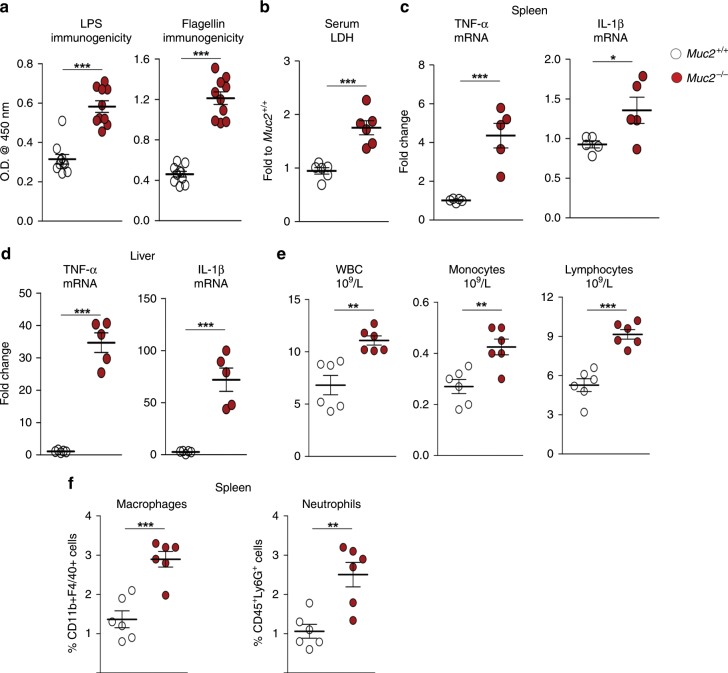
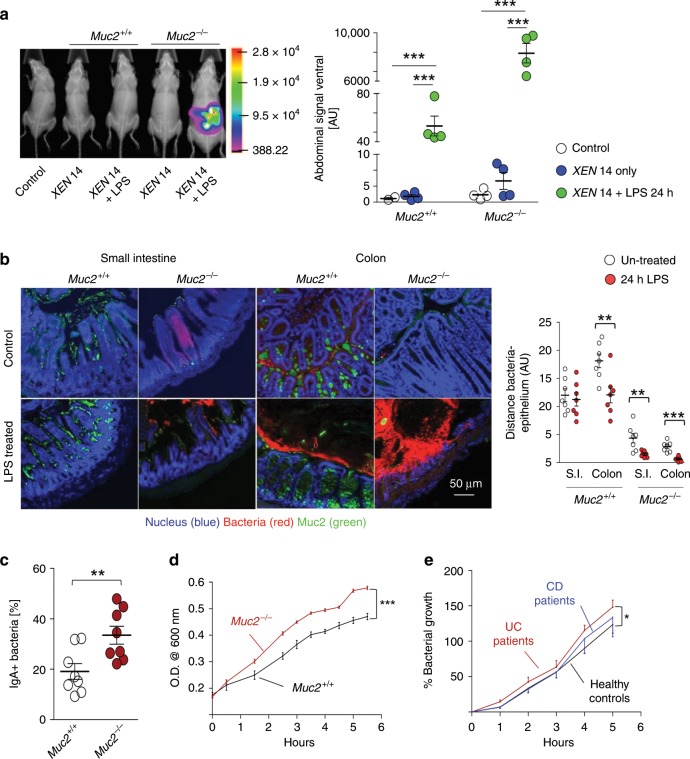
Inflammatory bowel disease is associated with changes in the mucosal barrier, increased intestinal permeability, and increased risk of infections and sepsis, but the underlying mechanisms are incompletely understood. Here, we show how continuous translocation of gut microbial components affects iron homeostasis and facilitates susceptibility to inflammation-associated sepsis. A sub-lethal dose of lipopolysaccharide results in higher mortality in Mucin 2 deficient (Muc2) mice, and is associated with elevated circulatory iron load and increased bacterial translocation. Translocation of gut microbial components attenuates hepatic stearoyl CoA desaturase-1 activity, a key enzyme in hepatic de novo lipogenesis. The resulting reduction of hepatic saturated and unsaturated fatty acid levels compromises plasma membrane fluidity of red blood cells, thereby significantly reducing their life span. Inflammation in Muc2 mice alters erythrophagocytosis efficiency of splenic macrophages, resulting in an iron-rich milieu that promotes bacterial growth. Our study thus shows that increased intestinal permeability triggers a cascade of events resulting in increased bacterial growth and risk of sepsis.
炎症性肠病与黏膜屏障的改变、肠道通透性增加以及感染和败血症风险增加有关,但潜在机制尚不完全清楚。在这里,我们展示了肠道微生物成分的持续易位如何影响铁稳态并促进与炎症相关的败血症易感性。亚致死剂量的脂多糖会导致粘蛋白 2 缺陷(Muc2)小鼠的死亡率更高,并且与循环铁负荷增加和细菌易位增加有关。肠道微生物成分的易位会减弱肝脏硬脂酰辅酶 A 去饱和酶-1 的活性,该酶是肝脏从头合成脂肪的关键酶。由此导致的肝饱和和不饱和脂肪酸水平降低会损害红细胞的质膜流动性,从而显著降低其寿命。Muc2 小鼠的炎症会改变脾脏巨噬细胞的红细胞吞噬效率,导致富含铁的环境,从而促进细菌生长。因此,我们的研究表明,肠道通透性的增加引发了一系列事件,导致细菌生长和败血症风险增加。