Dong Yi, Xiong Man, Chen Yuejun, Tao Yezheng, Li Xiang, Bhattacharyya Anita, Zhang Su-Chun
Key Laboratory of Adolescent Health Assessment and Exercise Intervention of Ministry of Education, East China Normal University, Shanghai 200241, China; School of Physical Education & Health Care, East China Normal University, Shanghai 200241, China; Waisman Center, University of Wisconsin, Madison, WI 53705, USA.
Institute of Pediatrics, Children's Hospital, Fudan University, 399 Wanyuan Road, Shanghai 201102, China.
iScience. 2020 Feb 21;23(2):100829. doi: 10.1016/j.isci.2020.100829. Epub 2020 Jan 9.
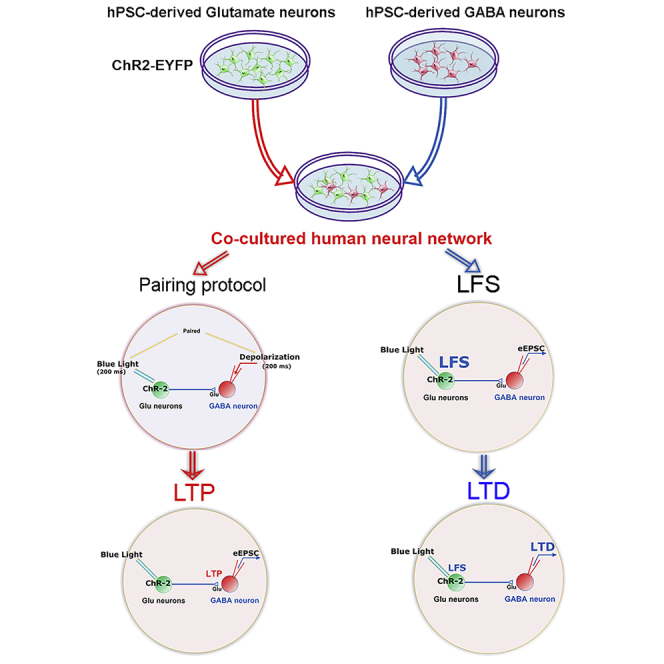
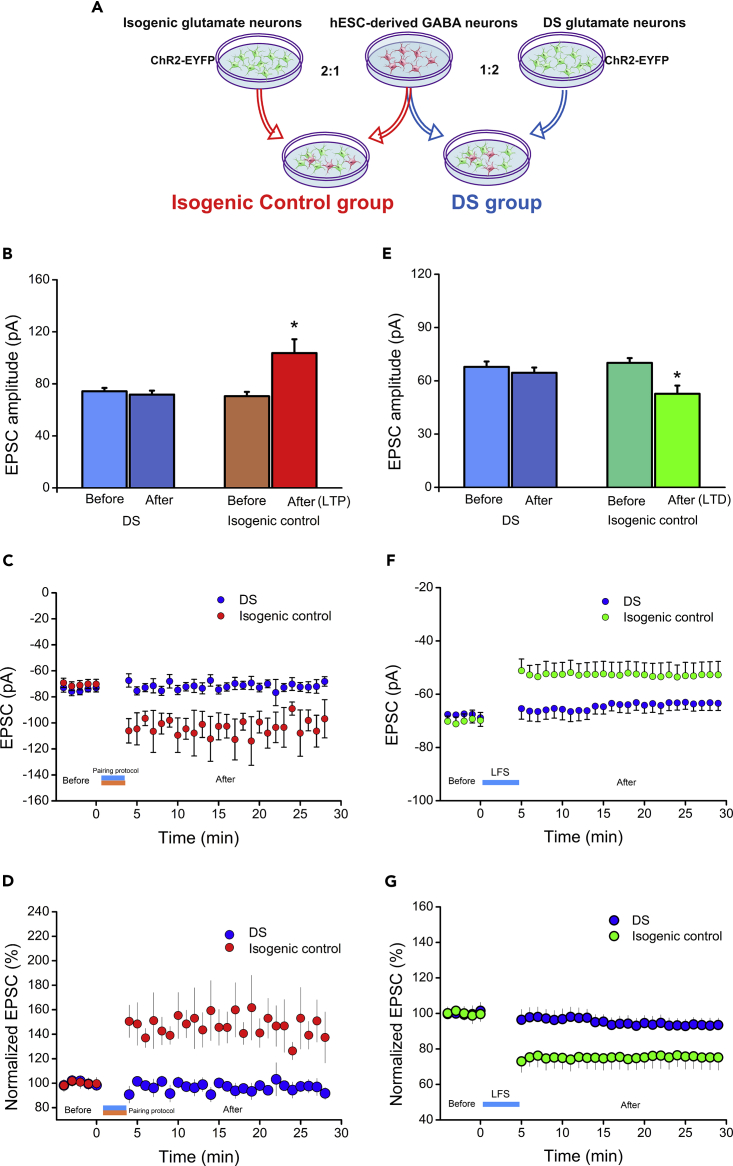
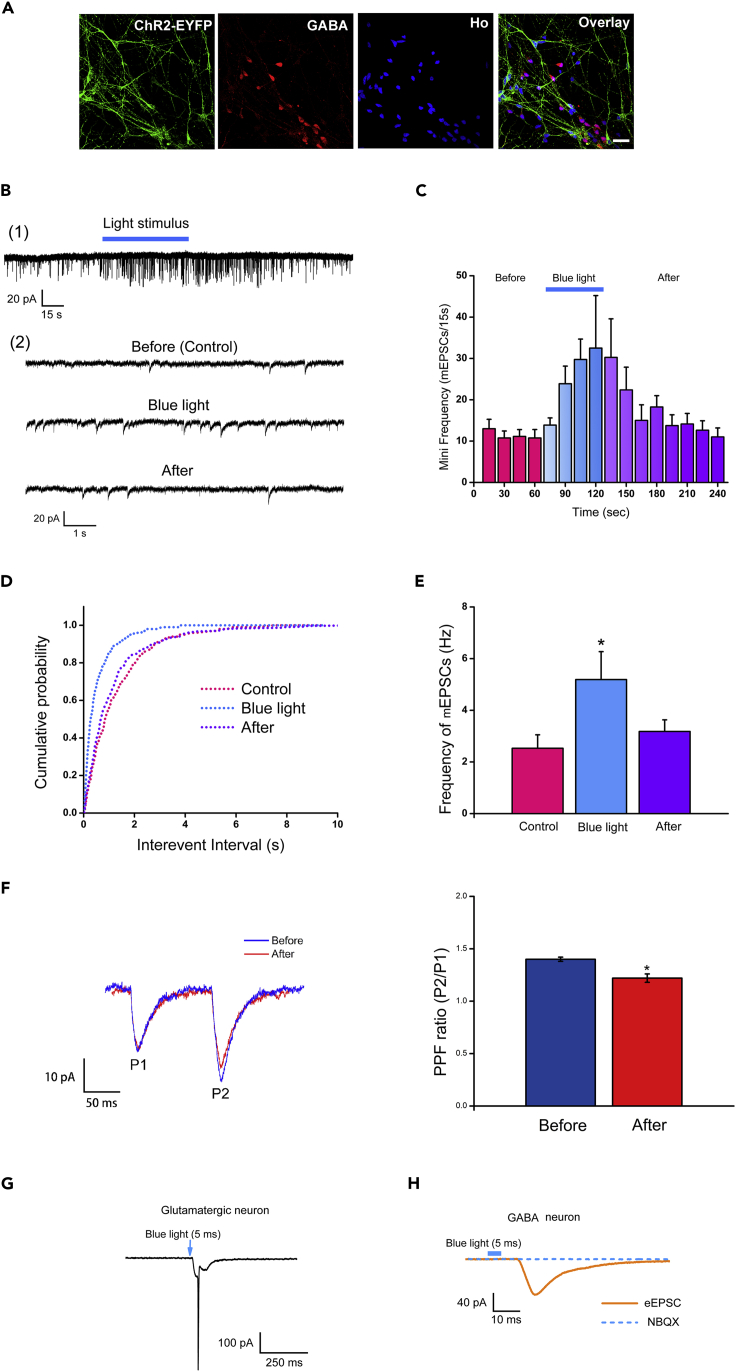
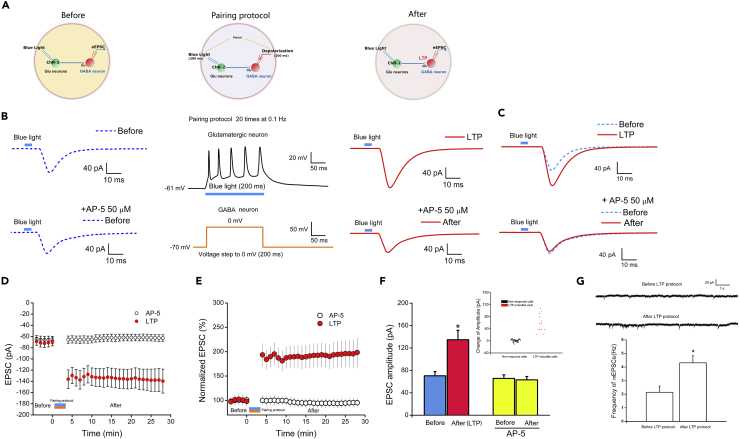
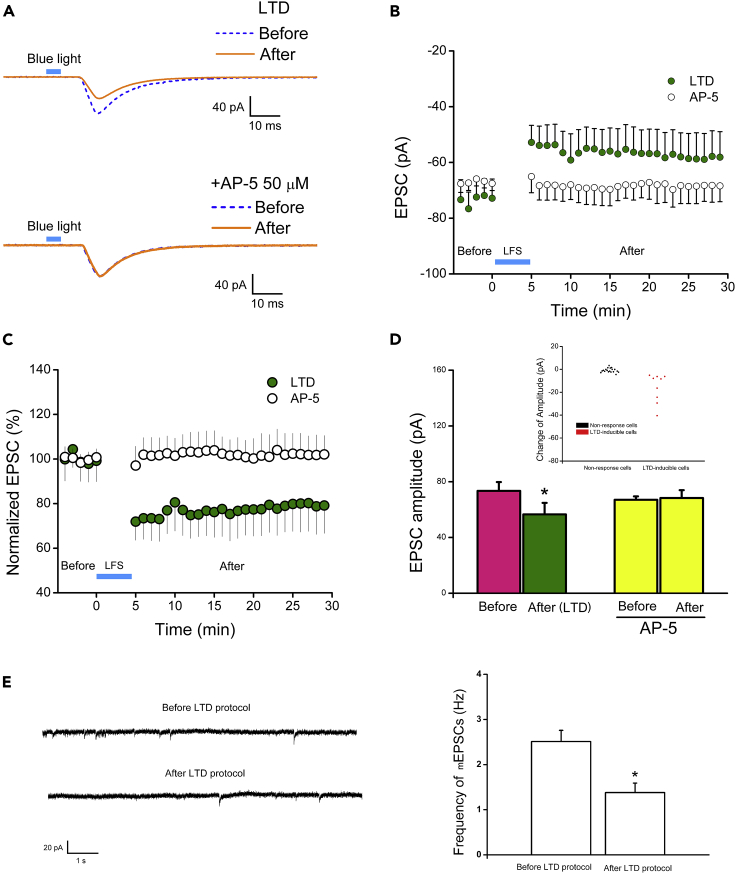
Long-term potentiation and depression, inferred from analysis on brain slices, are considered the cellular processes underlying learning and memory formation. They have not so far been demonstrated in human stem cell-derived neurons. By expressing channelrhodopsin in hESCs-derived glutamate neurons and co-culturing them with GABA neurons, we found that blue light stimulation increased the frequency of miniature excitatory postsynaptic currents (mEPSCs) and decreased the ratio of paired pulse facilitation (PPF) in non-ChR2-expressing GABA neurons, indicating a facilitating action at the presynaptic terminals. When paired with postsynaptic depolarization, the repetitive stimulation significantly increased the amplitude of light-evoked EPSCs that persisted during the period, indicating long-term potentiation (LTP). In contrast, low-frequency light stimulation induced long-term depression (LTD). These effects were blocked by N-methyl-D-aspartic acid (NMDA) receptor antagonists, suggesting NMDA receptor-mediated synaptic plasticity in human neural networks. Furthermore, induced pluripotent stem cell (iPSC)-derived neurons of patient with Down syndrome showed absence of LTP or LTD. Thus, our platform offers a versatile model for assessing human neural plasticity under physiological and pathological conditions.
从脑片分析推断出的长时程增强和长时程抑制,被认为是学习和记忆形成的细胞过程。到目前为止,它们尚未在人类干细胞衍生的神经元中得到证实。通过在人胚胎干细胞衍生的谷氨酸能神经元中表达通道视紫红质,并将它们与γ-氨基丁酸(GABA)能神经元共培养,我们发现蓝光刺激增加了微小兴奋性突触后电流(mEPSCs)的频率,并降低了非表达通道视紫红质2(ChR2)的GABA能神经元中配对脉冲易化(PPF)的比率,表明在突触前终末有促进作用。当与突触后去极化配对时,重复刺激显著增加了在此期间持续存在的光诱发兴奋性突触后电流(EPSCs)的幅度,表明长时程增强(LTP)。相反,低频光刺激诱导了长时程抑制(LTD)。这些效应被N-甲基-D-天冬氨酸(NMDA)受体拮抗剂阻断,表明在人类神经网络中存在NMDA受体介导的突触可塑性。此外,唐氏综合征患者的诱导多能干细胞(iPSC)衍生的神经元表现出缺乏LTP或LTD。因此,我们的平台为评估生理和病理条件下的人类神经可塑性提供了一个通用模型。