Department of Orthopedic Surgery, Zhongshan Hospital, Fudan University, Shanghai, 200032, China.
Exp Mol Med. 2020 Jan;52(1):31-40. doi: 10.1038/s12276-019-0372-6. Epub 2020 Jan 27.
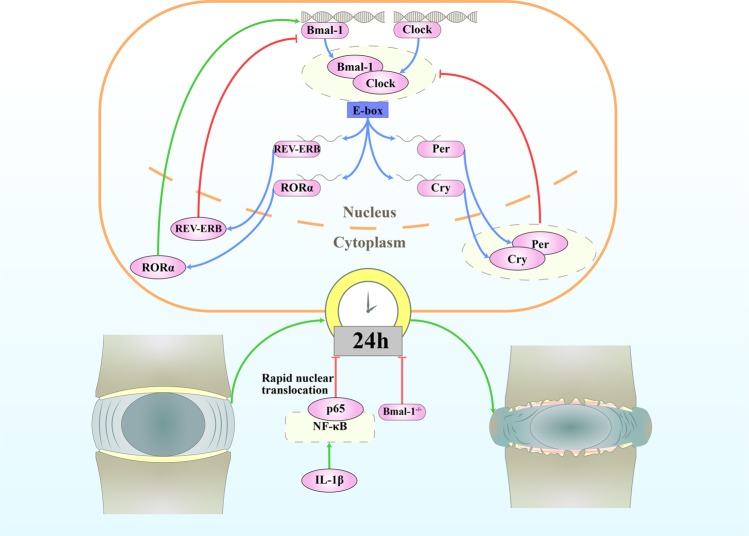
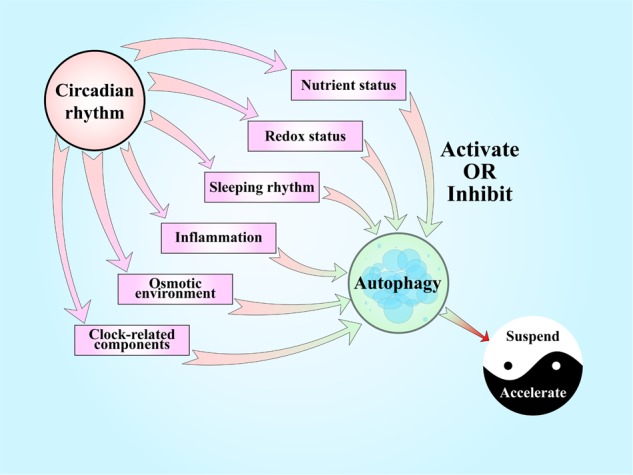
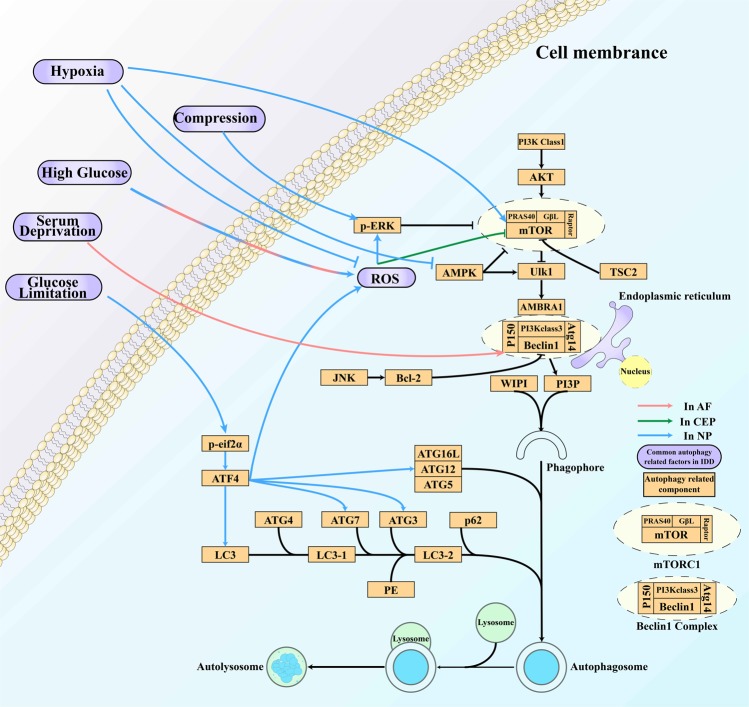
There is one circadian clock in the central nervous system and another in the peripheral organs, and the latter is driven by an autoregulatory molecular clock composed of several core clock genes. The height, water content, osmotic pressure and mechanical characteristics of intervertebral discs (IVDs) have been demonstrated to exhibit a circadian rhythm (CR). Recently, a molecular clock has been shown to exist in IVDs, abolition of which can lead to stress in nucleus pulposus cells (NPCs), contributing to intervertebral disc degeneration (IDD). Autophagy is a fundamental cellular process in eukaryotes and is essential for individual cells or organs to respond and adapt to changing environments; it has also been demonstrated to occur in human NPCs. Increasing evidence supports the hypothesis that autophagy is associated with CR. Thus, we review the connection between CR and autophagy and the roles of these mechanisms in IDD.
在中枢神经系统中有一个生物钟,在外周器官中也有一个生物钟,后者由几个核心时钟基因组成的自调节分子钟驱动。已经证明,椎间盘(IVD)的高度、含水量、渗透压和机械特性呈现出昼夜节律(CR)。最近,已经在 IVD 中发现了分子钟,其丧失会导致髓核细胞(NPC)的压力,导致椎间盘退变(IDD)。自噬是真核生物中的一种基本细胞过程,对于单个细胞或器官对环境变化做出反应和适应至关重要;也已经在人 NPC 中证明了这一点。越来越多的证据支持自噬与 CR 相关的假说。因此,我们综述了 CR 与自噬之间的联系,以及这些机制在 IDD 中的作用。