Psychology Dept., University of Michigan, Ann Arbor, Michigan, United States of America.
PLoS One. 2020 Jan 27;15(1):e0224301. doi: 10.1371/journal.pone.0224301. eCollection 2020.
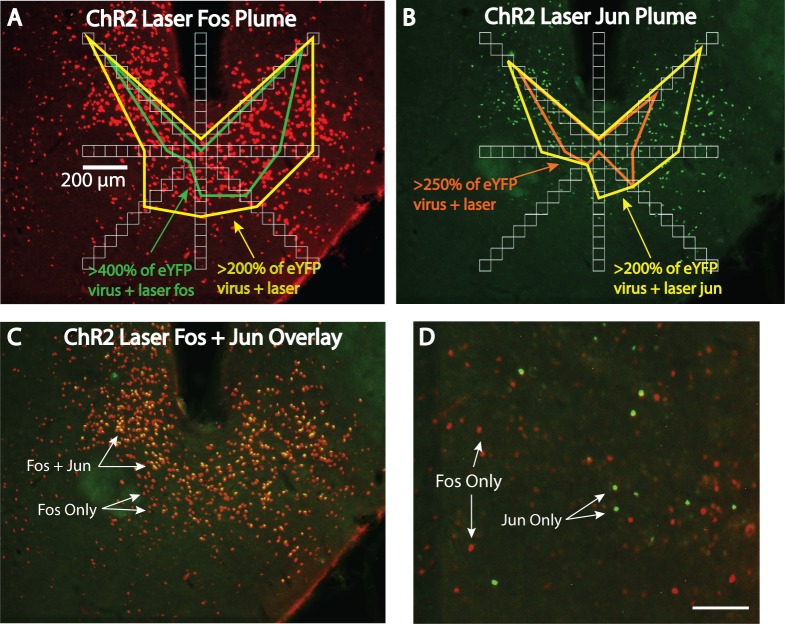
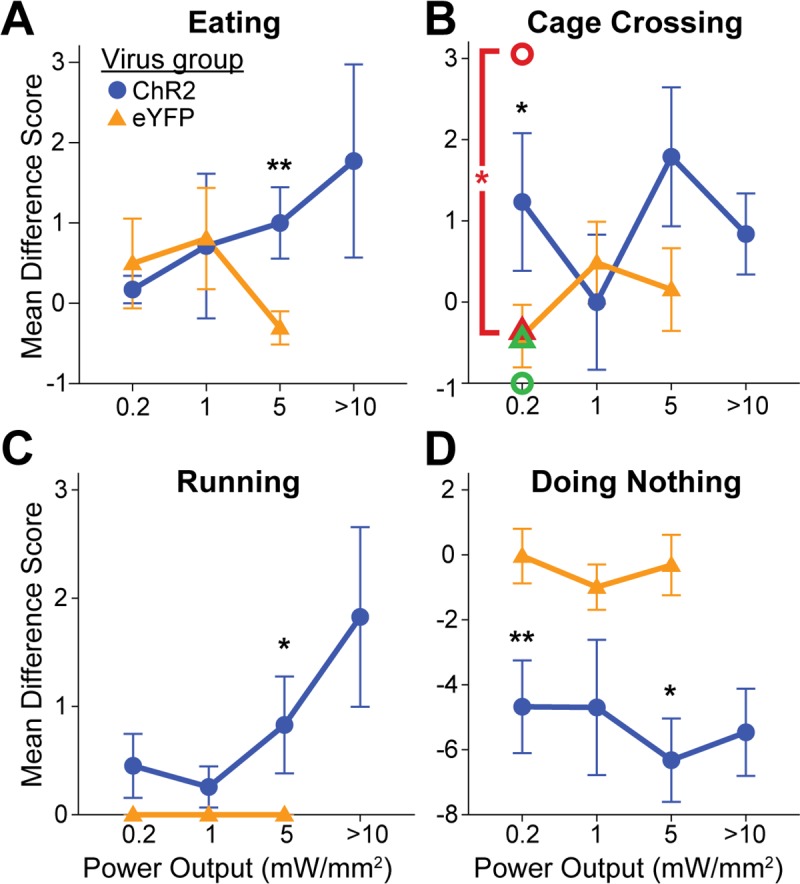
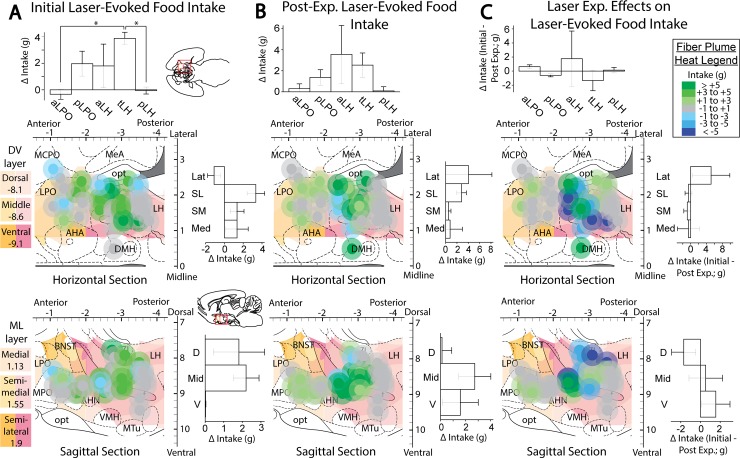
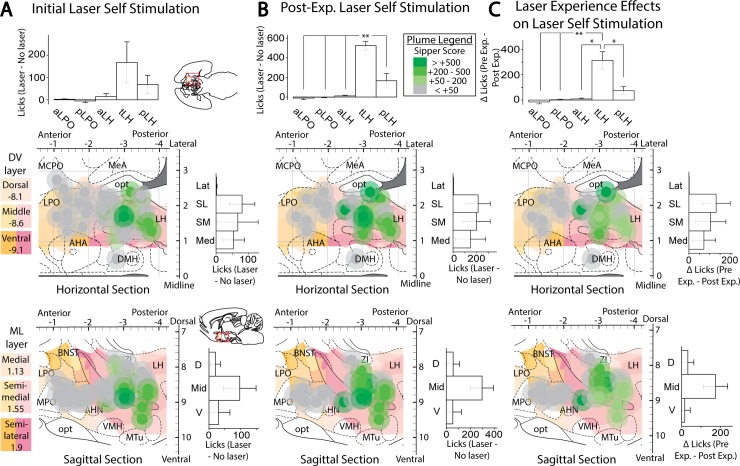
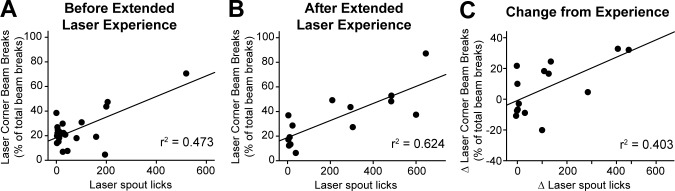
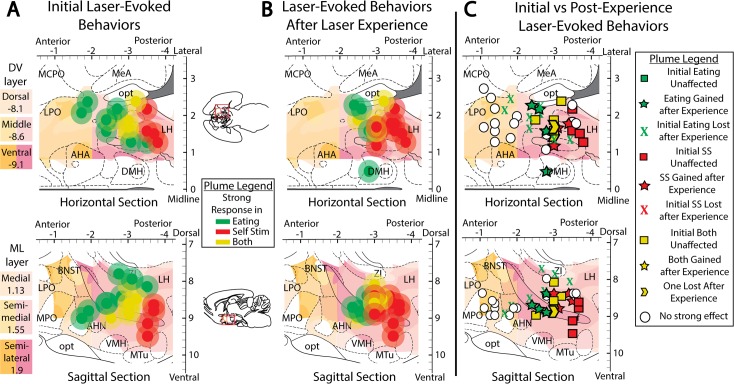
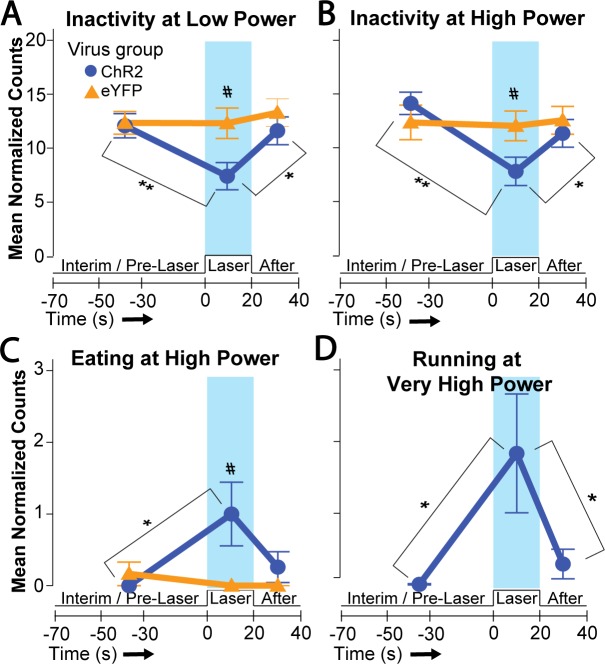
The lateral hypothalamus (LH) includes several anatomical subregions involved in eating and reward motivation. This study explored localization of function across different LH subregions in controlling food intake stimulated by optogenetic channelrhodopsin excitation, and in supporting laser self-stimulation. We particularly compared the tuberal LH subregion, the posterior LH subregion, and the lateral preoptic area. Local diameters of tissue optogenetically stimulated within the LH were assessed by measuring laser-induced Fos plumes and Jun plumes via immunofluorescence surrounding optic fiber tips. Those plume diameters were used to map localization of function for behavioral effects elicited by LH optogenetic stimulation. Optogenetic stimulation of the tuberal subsection of the LH produced the most robust eating behavior and food intake initially, but produced only mild laser self-stimulation in the same rats. However, after repeated exposures to optogenetic stimulation, tuberal LH behavioral profiles shifted toward more self-stimulation and less food intake. By contrast, stimulation of the lateral preoptic area produced relatively little food intake or self-stimulation, either initially or after extended stimulation experience. Stimulation in the posterior LH subregion supported moderate self-stimulation, but not food intake, and at higher laser intensity shifted valence to evoke escape behaviors. We conclude that the tuberal LH subregion may best mediate stimulation-bound increases in food intake stimulated by optogenetic excitation. However, incentive motivational effects of tuberal LH stimulation may shift toward self-stimulation behavior after repeated stimulation. By contrast, the lateral preoptic area and posterior LH do not as readily elicit either eating behavior or laser self-stimulation, and may be more prone to higher-intensity aversive effects.
外侧下丘脑 (LH) 包括几个参与进食和奖励动机的解剖亚区。本研究探索了不同 LH 亚区在控制光遗传通道视紫红质兴奋刺激的食物摄入和支持激光自我刺激方面的功能定位。我们特别比较了结节下丘脑亚区、后下丘脑亚区和外侧视前区。通过测量光纤尖端周围激光诱导的 Fos 羽和 Jun 羽的免疫荧光,评估 LH 内组织光遗传刺激的局部直径。这些羽流直径用于映射 LH 光遗传刺激引起的行为效应的功能定位。光遗传刺激结节下丘脑亚区最初产生最强烈的进食行为和食物摄入,但在同一组大鼠中仅产生轻度的激光自我刺激。然而,经过多次光遗传刺激暴露后,结节下丘脑的行为特征向更多的自我刺激和更少的食物摄入转变。相比之下,外侧视前区的刺激最初或经过长时间的刺激经验后,产生的食物摄入或自我刺激相对较少。后下丘脑亚区的刺激支持适度的自我刺激,但不支持食物摄入,并且在更高的激光强度下,刺激的效价转变为逃避行为。我们得出结论,结节下丘脑亚区可能最有效地介导光遗传兴奋刺激引起的刺激相关食物摄入增加。然而,结节下丘脑刺激的激励动机效应可能会在重复刺激后转向自我刺激行为。相比之下,外侧视前区和后下丘脑不太容易引起进食行为或激光自我刺激,并且可能更容易受到高强度的厌恶效应的影响。