Institute of Clinical Medicine, College of Medicine, National Cheng Kung University, Tainan, Taiwan.
Department of Life Sciences, College of Bioscience and Biotechnology, National Cheng Kung University, Tainan, Taiwan.
J Biomed Sci. 2020 Jan 27;27(1):29. doi: 10.1186/s12929-020-0622-x.
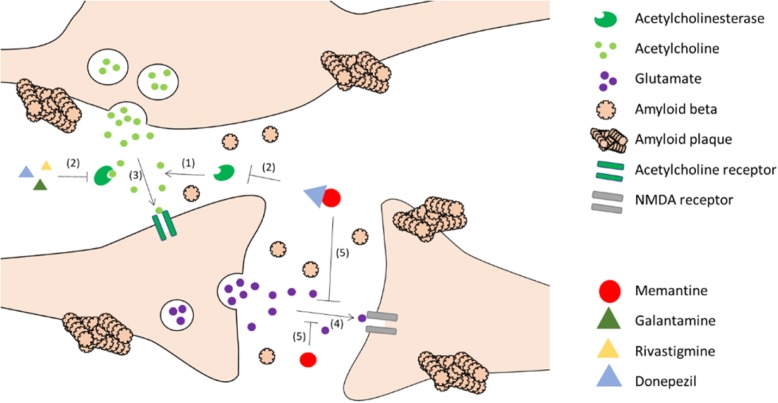
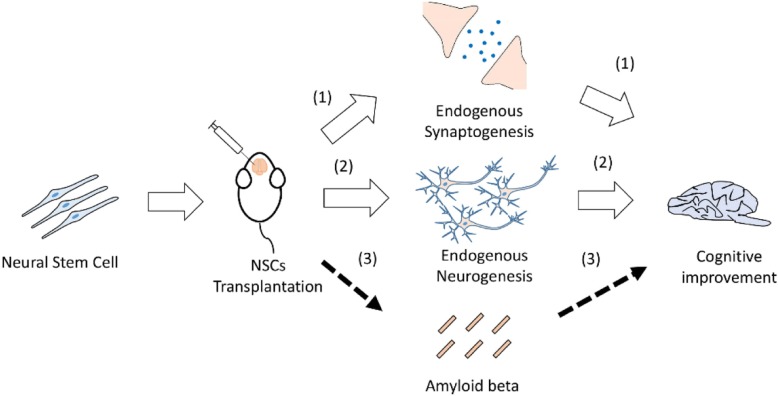
Currently there are no therapies for treating Alzheimer's disease (AD) that can effectively halt disease progression. Existing drugs such as acetylcholinesterase inhibitors or NMDA receptor antagonists offers only symptomatic benefit. More recently, transplantation of neural stem cells (NSCs) to treat neurodegenerative diseases, including AD, has been investigated as a new therapeutic approach. Transplanted cells have the potential to replace damaged neural circuitry and secrete neurotrophic factors to counter symptomatic deterioration or to alter lesion protein levels. However, since there are animal models that can recapitulate AD in its entirety, it is challenging to precisely characterize the positive effects of transplanting NSCs. In the present review, we discuss the types of mouse modeling system that are available and the effect in each model after human-derived NSC (hNSC) or murine-derived NSC (mNSC) transplantation. Taken together, results from studies involving NSC transplantation in AD models indicate that this strategy could serve as a new therapeutic approach.
目前,尚无有效的治疗阿尔茨海默病(AD)的方法可以有效阻止疾病进展。现有的药物,如乙酰胆碱酯酶抑制剂或 NMDA 受体拮抗剂,只能提供症状缓解。最近,神经干细胞(NSC)移植治疗神经退行性疾病,包括 AD,已被研究作为一种新的治疗方法。移植的细胞有可能替代受损的神经回路,并分泌神经营养因子来对抗症状恶化或改变病变蛋白水平。然而,由于存在可以完全模拟 AD 的动物模型,因此很难准确描述移植 NSC 的积极效果。在本综述中,我们讨论了现有的各种小鼠建模系统,以及在人源 NSC(hNSC)或鼠源 NSC(mNSC)移植后每个模型中的作用。综上所述,涉及 AD 模型中 NSC 移植的研究结果表明,该策略可能成为一种新的治疗方法。