Pan Kaiyu, Zhang Chengyue, Yao Xiaocong, Zhu Zhongxin
Department of Paediatrics, The First People's Hospital of Xiaoshan District, Hangzhou, Zhejiang, China.
Xiangya School of Medicine, Central South University, Changsha, Hunan, China.
Endocr Connect. 2020 Mar;9(3):194-200. doi: 10.1530/EC-19-0534.
Ensuring adequate calcium (Ca) intake during childhood and adolescence is critical to acquire good peak bone mass to prevent osteoporosis during older age. As one of the primary strategies to build and maintain healthy bones, we aimed to determine whether dietary Ca intake has an influence on bone mineral density (BMD) in children and adolescents.
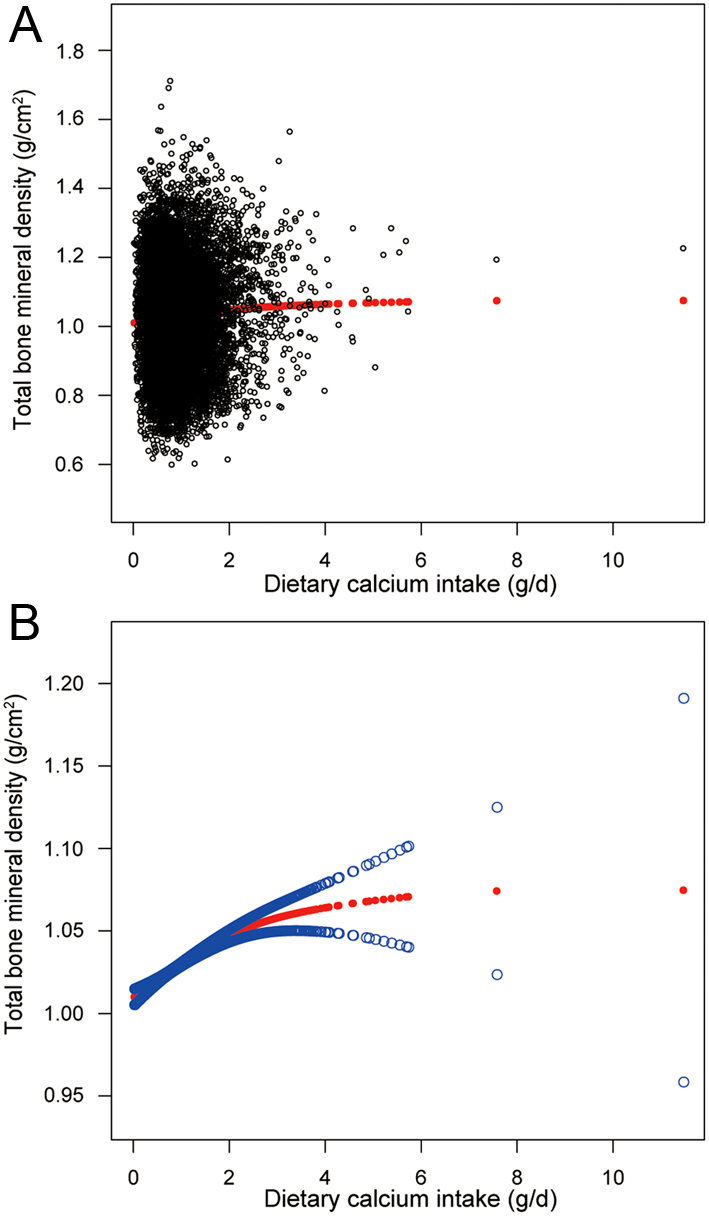
We conducted a cross-sectional study composed of 10,092 individuals from the National Health and Nutrition Examination Survey (NHANES). Dietary Ca intake and total BMD were taken as independent and dependent variables, respectively. To evaluate the association between them, we conducted weighted multivariate linear regression models and smooth curve fittings.
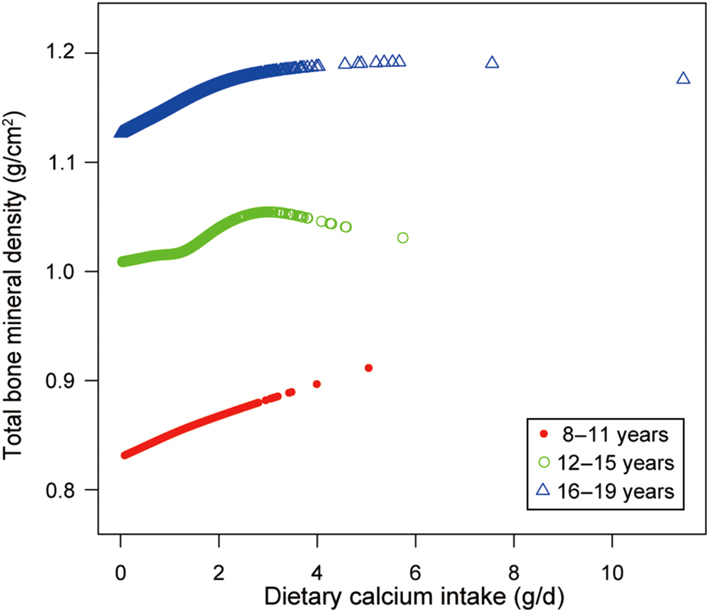
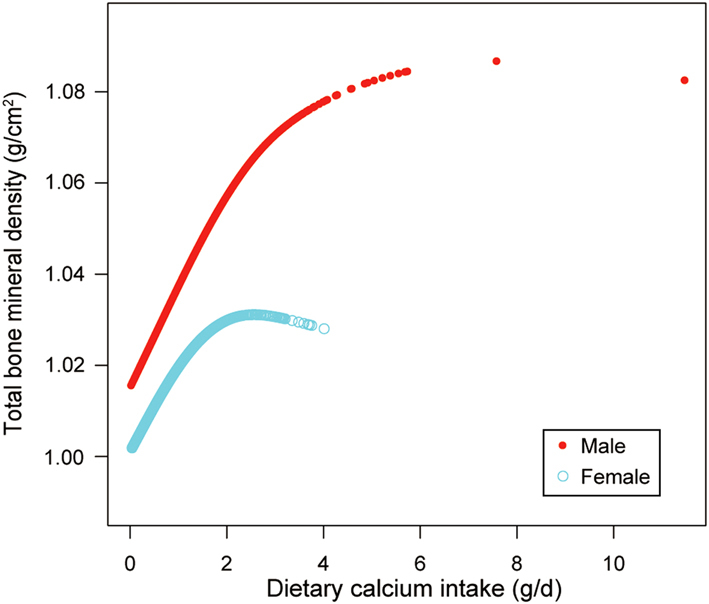
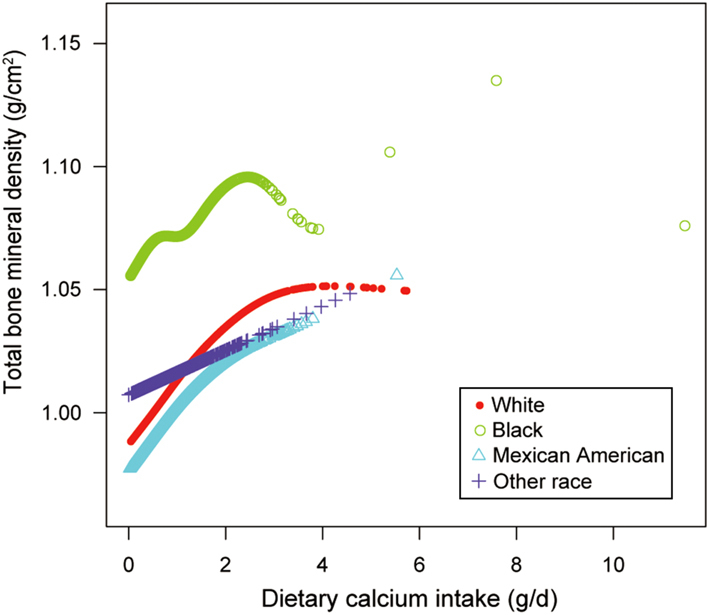
There was a significantly positive association between dietary Ca intake and total BMD. The strongest association was observed in 12-15 year old whites, 8-11 year old and 16-19 year old Mexican Americans, and 16-19 year old individuals from other race/ethnicity, in whom each quintile of Ca intake was increased. We also found that there were significant inflection points in females, blacks, and 12-15 year old adolescents group, which means that their total BMD would decrease when the dietary Ca intake was more than 2.6-2.8 g/d.
This cross-sectional study indicated that a considerable proportion of children and adolescents aged 8-19 years would attain greater total BMD if they increased their dietary Ca intake. However, higher dietary Ca intake (more than 2.6-2.8 g/d) is associated with lower total BMD in females, blacks, and 12-15 year old adolescents group.
在儿童和青少年时期确保充足的钙(Ca)摄入量对于获得良好的骨峰值以预防老年骨质疏松症至关重要。作为建立和维持健康骨骼的主要策略之一,我们旨在确定膳食钙摄入量是否会对儿童和青少年的骨矿物质密度(BMD)产生影响。
我们进行了一项横断面研究,研究对象包括来自美国国家健康与营养检查调查(NHANES)的10,092名个体。膳食钙摄入量和总骨密度分别作为自变量和因变量。为了评估它们之间的关联,我们进行了加权多元线性回归模型和平滑曲线拟合。
膳食钙摄入量与总骨密度之间存在显著的正相关。在12 - 15岁的白人、8 - 11岁和16 - 19岁的墨西哥裔美国人以及16 - 19岁的其他种族/族裔个体中观察到最强的关联,在这些人群中钙摄入量每增加一个五分位数。我们还发现女性、黑人以及12 - 15岁青少年组存在显著的拐点,这意味着当膳食钙摄入量超过2.6 - 2.8克/天时,他们的总骨密度会下降。
这项横断面研究表明,如果8 - 19岁的儿童和青少年增加膳食钙摄入量,相当一部分人将获得更高的总骨密度。然而,较高的膳食钙摄入量(超过2.6 - 2.8克/天)与女性、黑人以及12 - 15岁青少年组较低的总骨密度相关。