Departamento de Botânica, Universidade Federal do Paraná, Curitiba, Paraná, Brazil.
Royal Botanic Gardens, Kew, Richmond, Surrey, England, United Kingdom.
PLoS One. 2020 Jan 28;15(1):e0227991. doi: 10.1371/journal.pone.0227991. eCollection 2020.
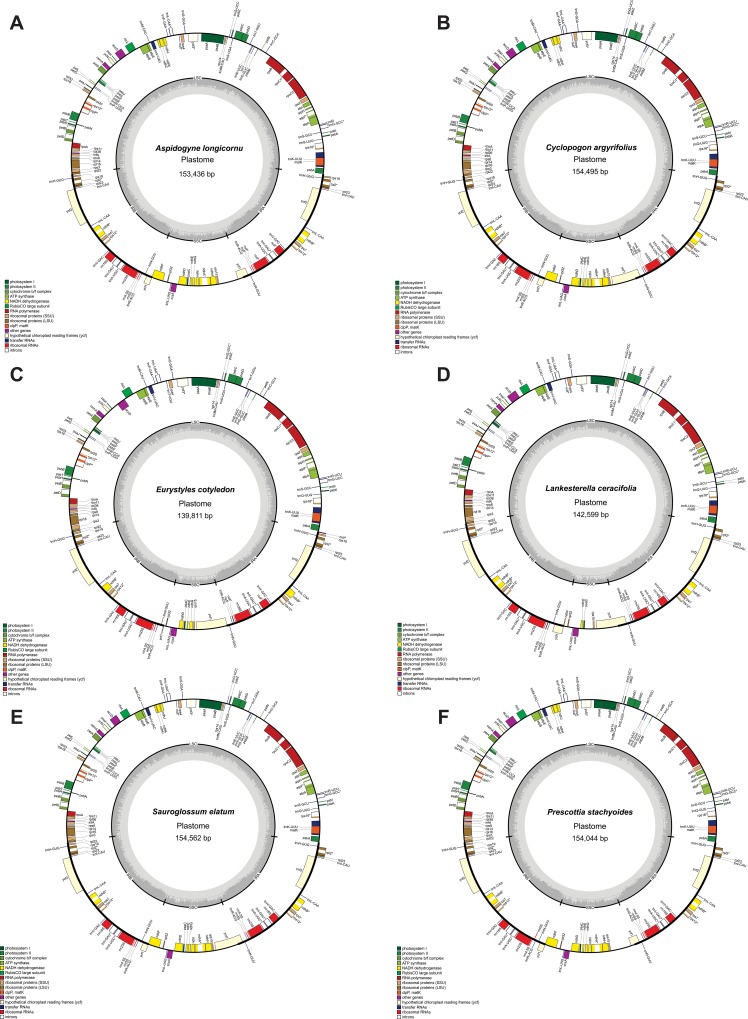
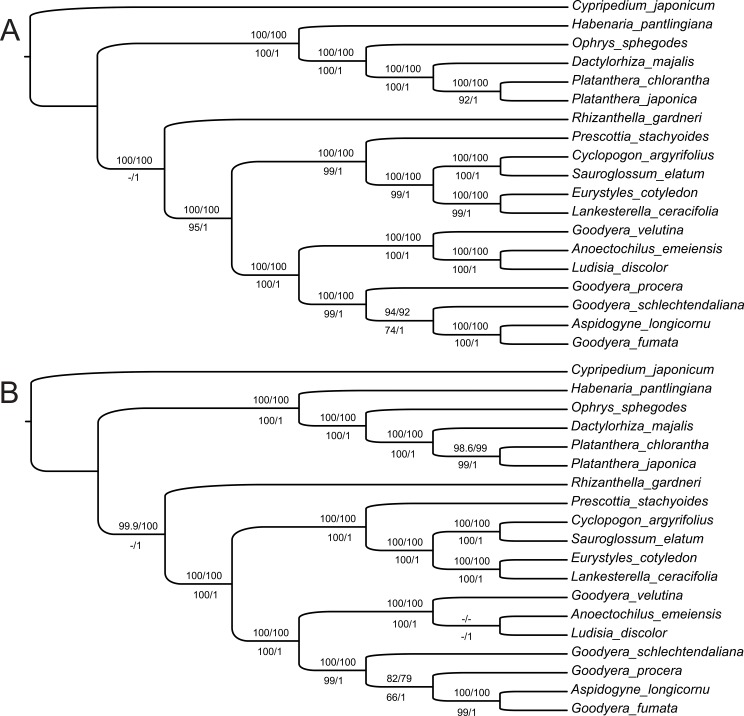
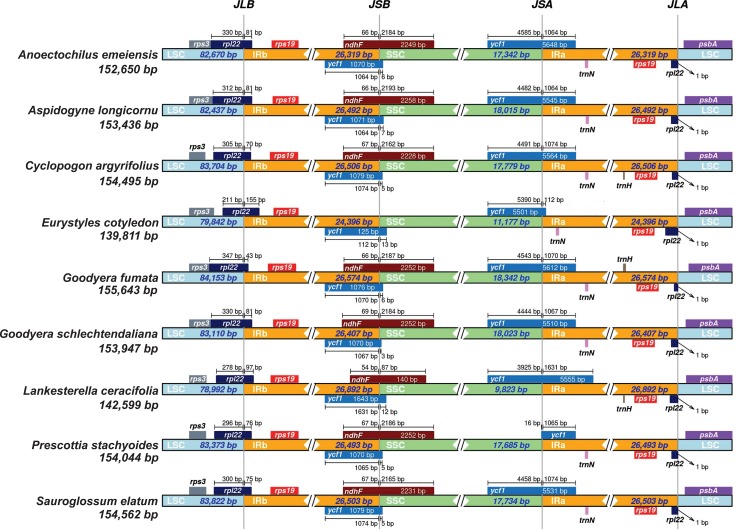
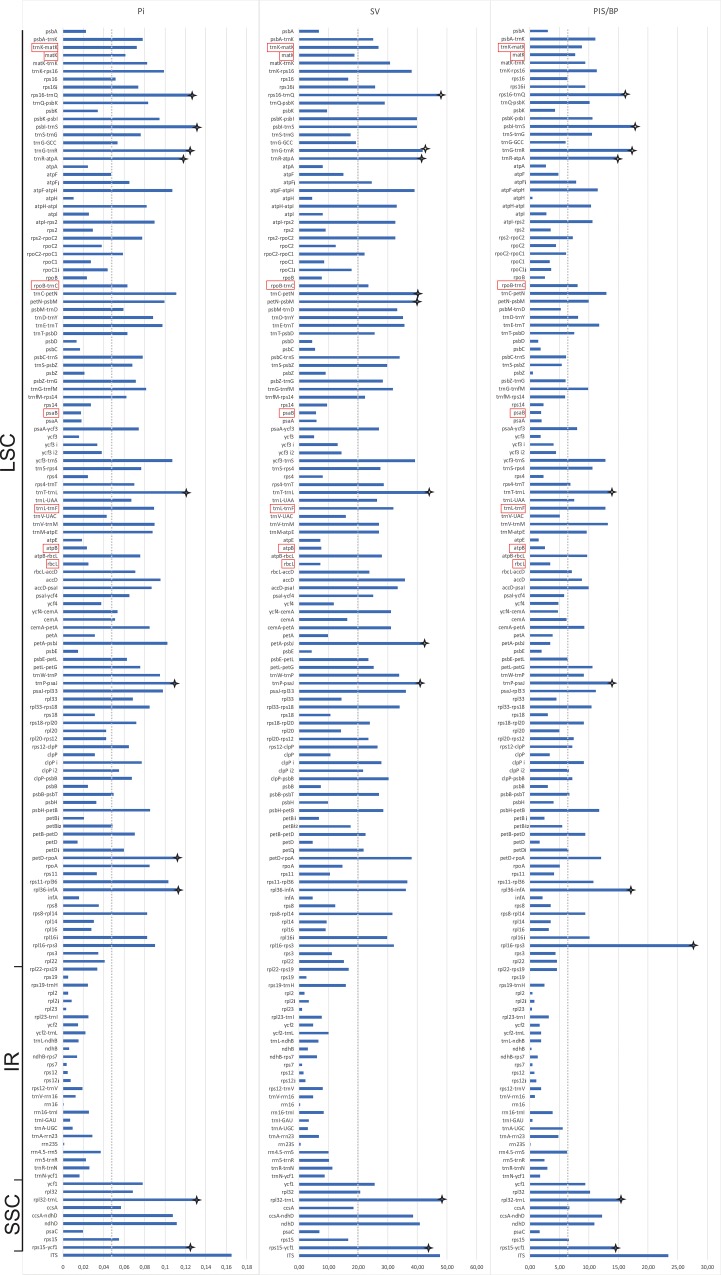
This study reports complete plastome sequences for six species of Neotropical Cranichideae and focuses on identification of the most variable regions (hotspots) in this group of orchids. These structure of these six plastomes is relatively conserved, exhibiting lengths ranging between 142,599 to 154,562 bp with 36.7% GC on average and exhibiting typical quadripartite arrangement (LSC, SSC and two IRs). Variation detected in the LSC/IR and SSC/IR junctions is explained by the loss of ndhF and ycf1 length variation. For the two genera of epiphytic clade in Spiranthinae, almost whole sets of the ndh-gene family were missing. Eight mutation hotspots were identified based on nucleotide diversity, sequence variability and parsimony-informative sites. Three of them (rps16-trnQ, trnT-trnL, rpl32-trnL) seem to be universal hotspots in the family, and the other five (trnG-trnR, trnR-atpA, trnP-psaJ, rpl32-infA, and rps15-ycf1) are described for the first time as orchid molecular hotspots. These regions have much more variation than all those used previously in phylogenetics of the group and offer useful plastid markers for phylogenetic, barcoding and population genetic studies. The use of whole plastomes or exclusive no-gap matrices also positioned with high support the holomycotrophic Rhizanthella among Orchidoideae plastomes in model-based analyses, showing the utility of plastomes for phylogenetic placement of this unusual genus.
本研究报告了六个新热带 Cranichideae 物种的完整质体基因组序列,并重点关注了该兰科植物中最具变异性的区域(热点)的鉴定。这六个质体基因组的结构相对保守,长度在 142599 到 154562bp 之间,平均 GC 含量为 36.7%,并表现出典型的四分体排列(LSC、SSC 和两个 IR)。在 LSC/IR 和 SSC/IR 交界处检测到的变异是由 ndhF 的缺失和 ycf1 长度的变化引起的。对于 Spiranthinae 中附生进化枝的两个属,几乎整个 ndh 基因家族都缺失了。根据核苷酸多样性、序列变异性和简约信息位点,确定了 8 个突变热点。其中 3 个(rps16-trnQ、trnT-trnL、rpl32-trnL)似乎是该科的普遍热点,另外 5 个(trnG-trnR、trnR-atpA、trnP-psaJ、rpl32-infA 和 rps15-ycf1)是首次作为兰科分子热点被描述。这些区域的变异比以前用于该组系统发育研究的所有区域都要多,为系统发育、条形码和种群遗传研究提供了有用的质体标记。在基于模型的分析中,使用整个质体基因组或不包含间隙的矩阵也以很高的支持率将全寄生的 Rhizanthella 定位在 Orchidoideae 质体中,表明质体在该不寻常属的系统发育定位中的有用性。