Panjwani M Kazim, Atherton Matthew J, MaloneyHuss Martha A, Haran Kumudhini P, Xiong Ailian, Gupta Minnal, Kulikovsaya Irina, Lacey Simon F, Mason Nicola J
Department of Clinical Studies, School of Veterinary Medicine, University of Pennsylvania, Philadelphia, PA, USA.
Department of Biomedical Sciences, School of Veterinary Medicine, University of Pennsylvania, Philadelphia, PA, USA.
Oncoimmunology. 2019 Oct 23;9(1):1676615. doi: 10.1080/2162402X.2019.1676615. eCollection 2020.
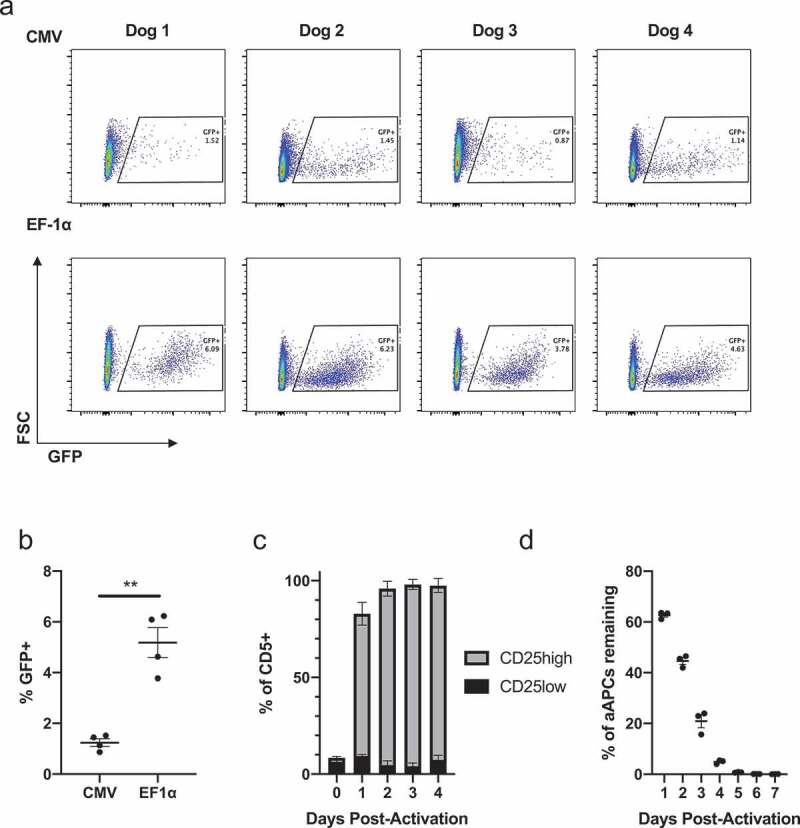
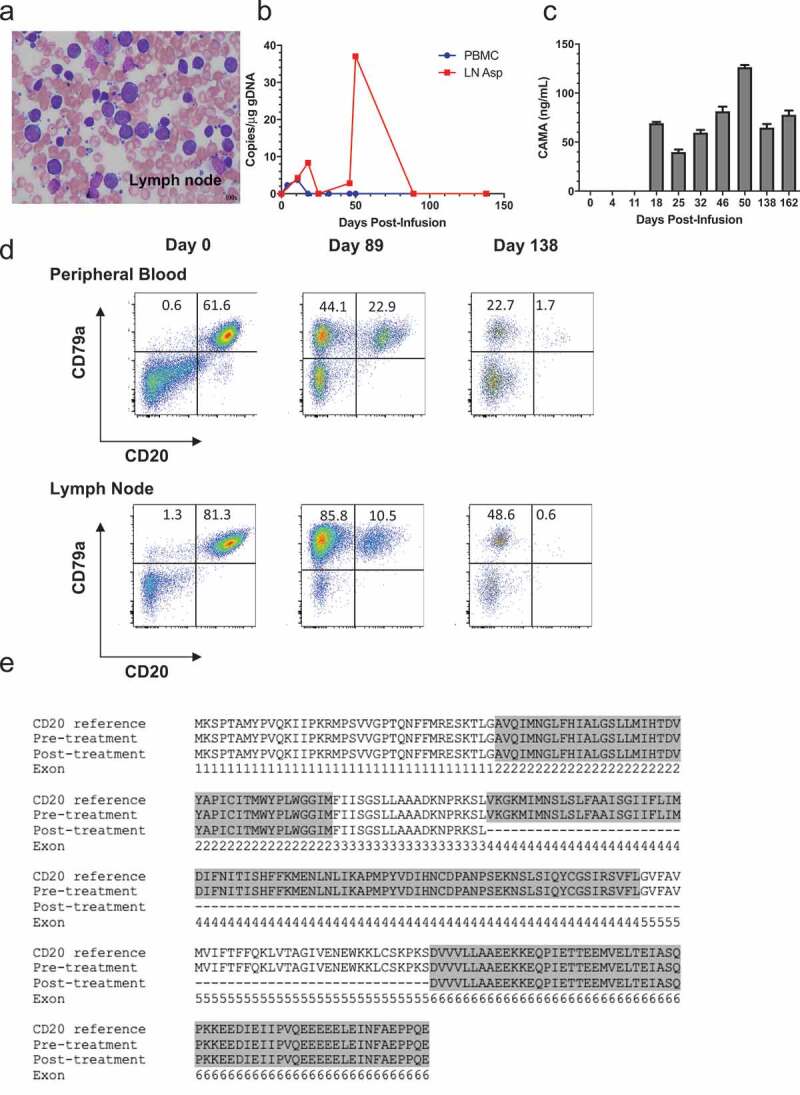
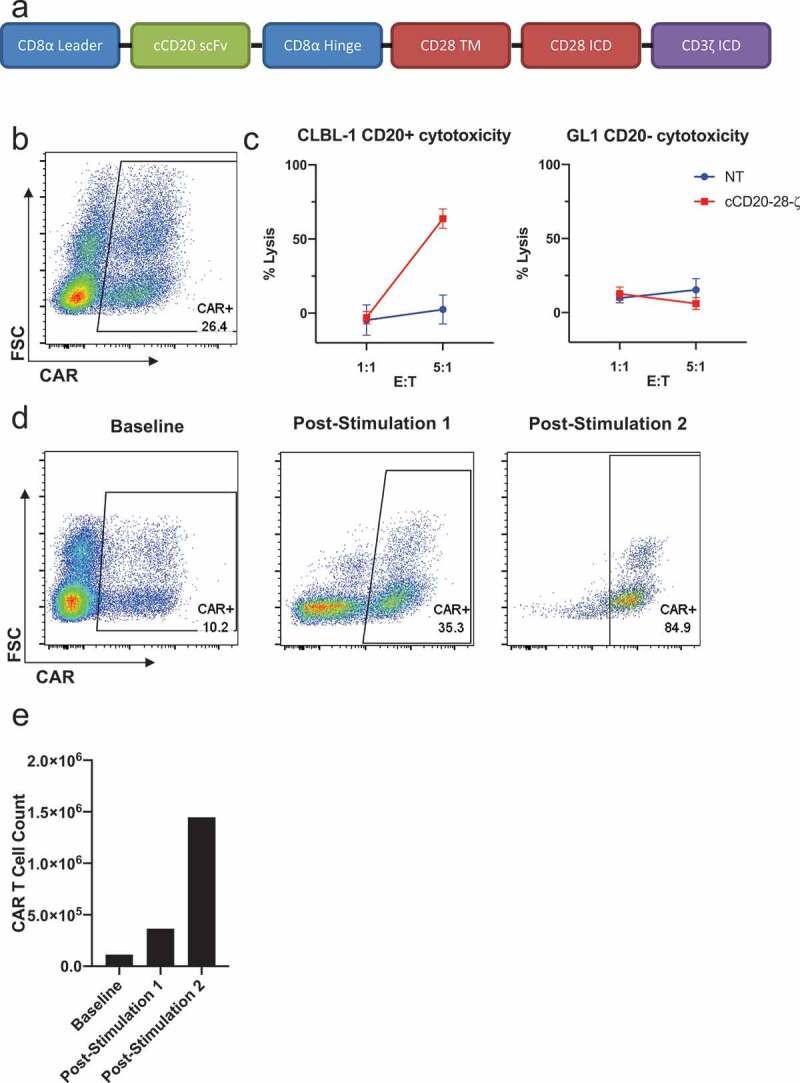
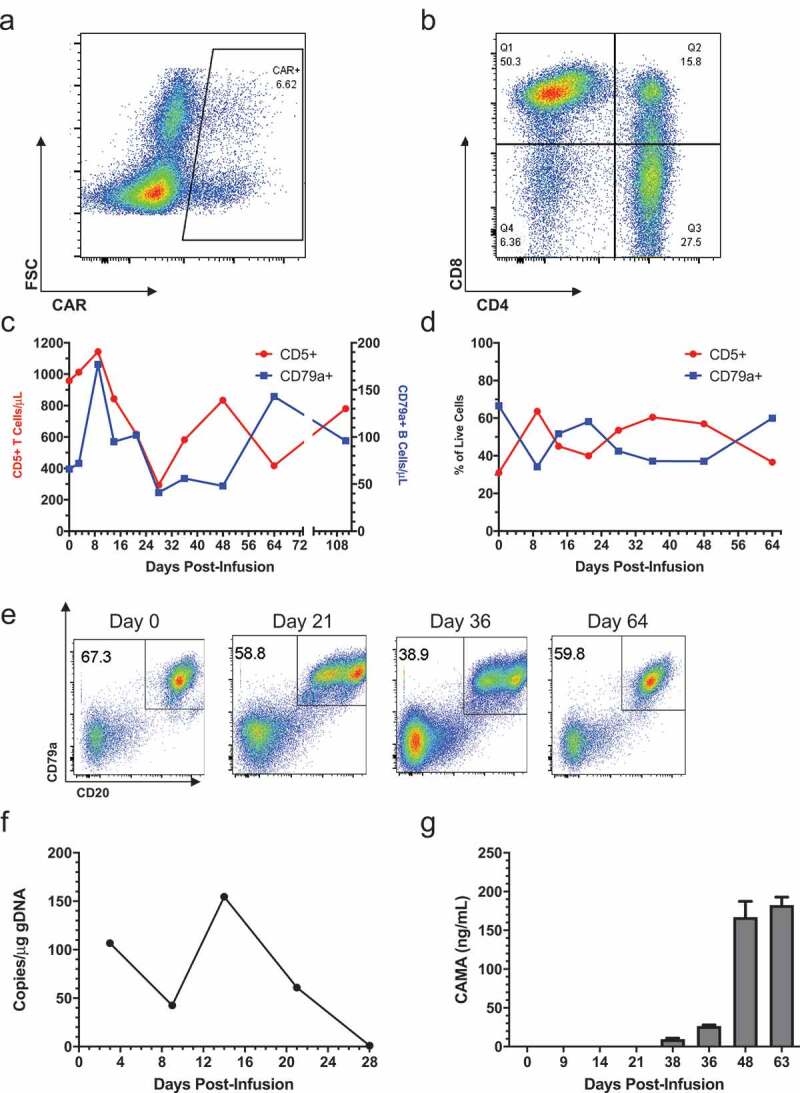
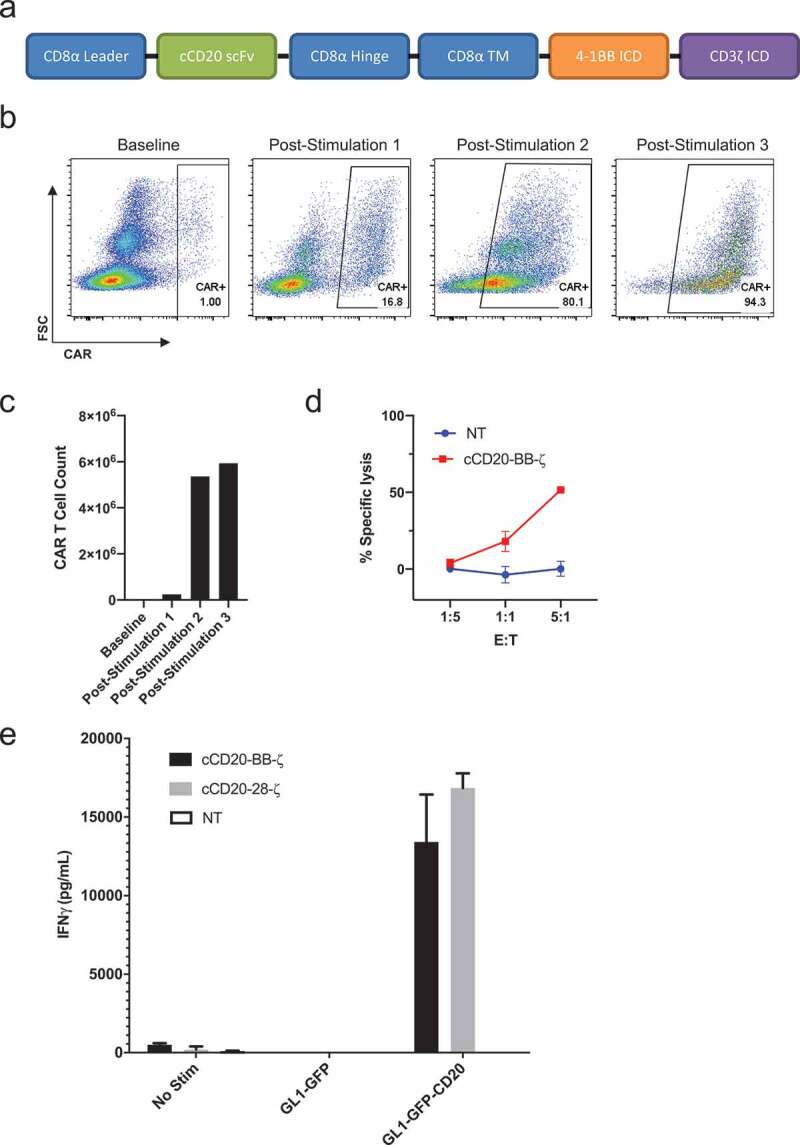
Multiple rodent and primate preclinical studies have advanced CAR T cells into the clinic. However, no single model accurately reflects the challenges of effective CAR T therapy in human cancer patients. To evaluate the effectiveness of next-generation CAR T cells that aim to overcome barriers to durable tumor elimination, we developed a system to evaluate CAR T cells in pet dogs with spontaneous cancer. Here we report on this system and the results of a pilot trial using CAR T cells to treat canine diffuse large B cell lymphoma (DLBCL). We designed and manufactured CD20-targeting, second-generation canine CAR T cells for functional evaluation and using lentivectors to parallel human CAR T cell manufacturing. A first-in-species trial of five dogs with DLBCL treated with CAR T was undertaken. Canine CAR T cells functioned in an antigen-specific manner and killed CD20+ targets. Circulating CAR T cells were detectable post-infusion, however, induction of canine anti-mouse antibodies (CAMA) was associated with CAR T cell loss. Specific selection pressure on CD20+ tumors was observed following CAR T cell therapy, culminating in antigen escape and emergence of CD20-disease. Patient survival times correlated with product expansion. Altering product manufacturing improved transduction efficiency and skewed toward a memory-like phenotype of canine CAR T cells. Manufacturing of functional canine CAR T cells using a lentivector is feasible. Comparable challenges to effective CAR T cell therapy exist, indicating their relevance in informing future human clinical trial design.
多项啮齿动物和灵长类动物的临床前研究已将嵌合抗原受体(CAR)T细胞推进到临床试验阶段。然而,没有单一模型能准确反映CAR T细胞疗法在人类癌症患者中面临的有效治疗挑战。为了评估旨在克服持久消除肿瘤障碍的下一代CAR T细胞的有效性,我们开发了一个系统,用于评估患有自发性癌症的宠物狗体内的CAR T细胞。在此,我们报告该系统以及使用CAR T细胞治疗犬弥漫性大B细胞淋巴瘤(DLBCL)的试点试验结果。我们设计并制造了靶向CD20的第二代犬CAR T细胞用于功能评估,并使用慢病毒载体来模拟人类CAR T细胞的制造过程。对五只患有DLBCL的狗进行了CAR T治疗的首例种内试验。犬CAR T细胞以抗原特异性方式发挥作用并杀死CD20+靶标。输注后可检测到循环中的CAR T细胞,然而,犬抗鼠抗体(CAMA)的诱导与CAR T细胞的损失有关。CAR T细胞治疗后观察到对CD20+肿瘤的特异性选择压力,最终导致抗原逃逸和CD20阴性疾病的出现。患者存活时间与产品扩增相关。改变产品制造工艺提高了转导效率,并使犬CAR T细胞倾向于记忆样表型。使用慢病毒载体制造功能性犬CAR T细胞是可行的。有效CAR T细胞疗法存在类似的挑战,表明它们对指导未来人类临床试验设计具有相关性。