Xu Zi-Jun, Gu Yu, Wang Cui-Zhu, Jin Ye, Wen Xiang-Mei, Ma Ji-Chun, Tang Li-Juan, Mao Zhen-Wei, Qian Jun, Lin Jiang
Laboratory Center, Affiliated People's Hospital of Jiangsu University, Zhenjiang, Jiangsu, P.R. China.
Zhenjiang Clinical Research Center of Hematology, Zhenjiang, Jiangsu, P.R. China.
Oncoimmunology. 2019 Nov 3;9(1):1683347. doi: 10.1080/2162402X.2019.1683347. eCollection 2020.
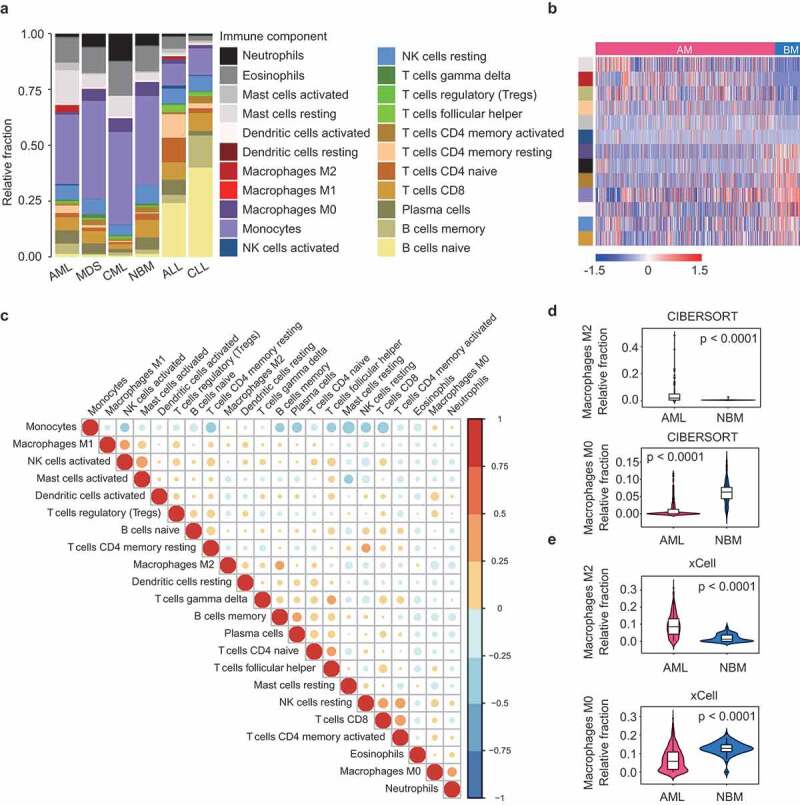
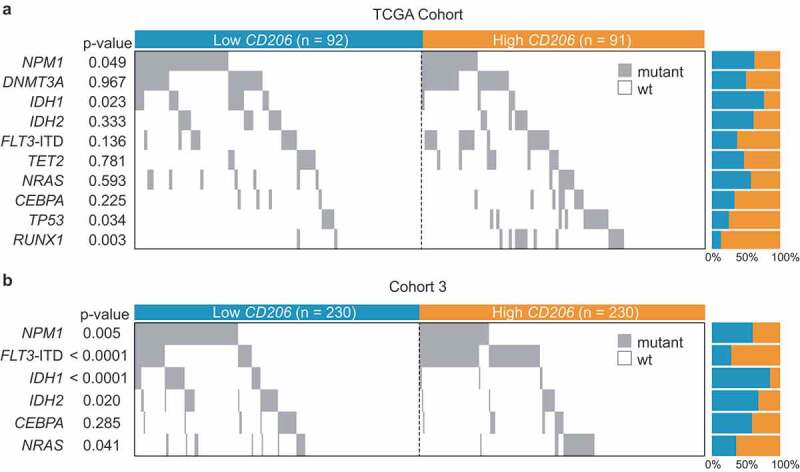
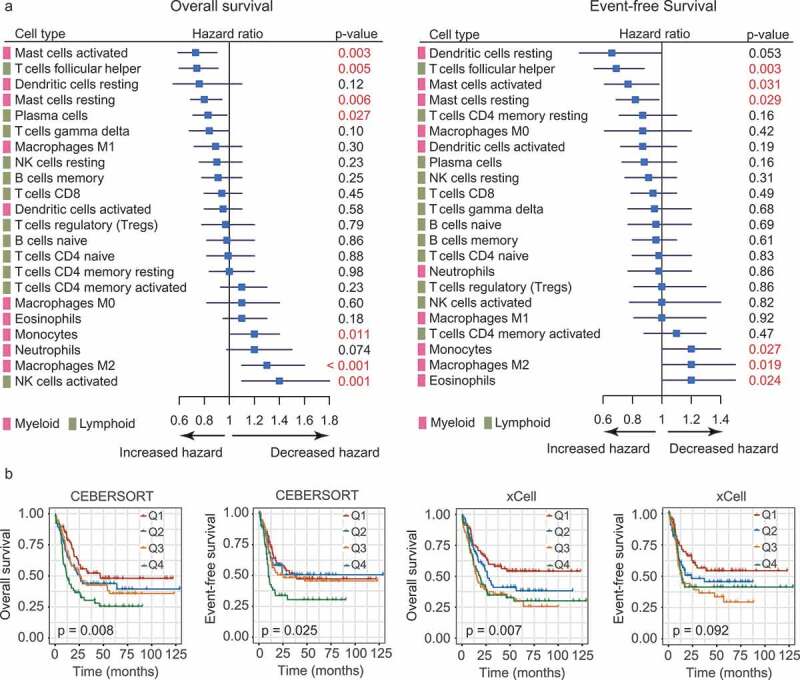
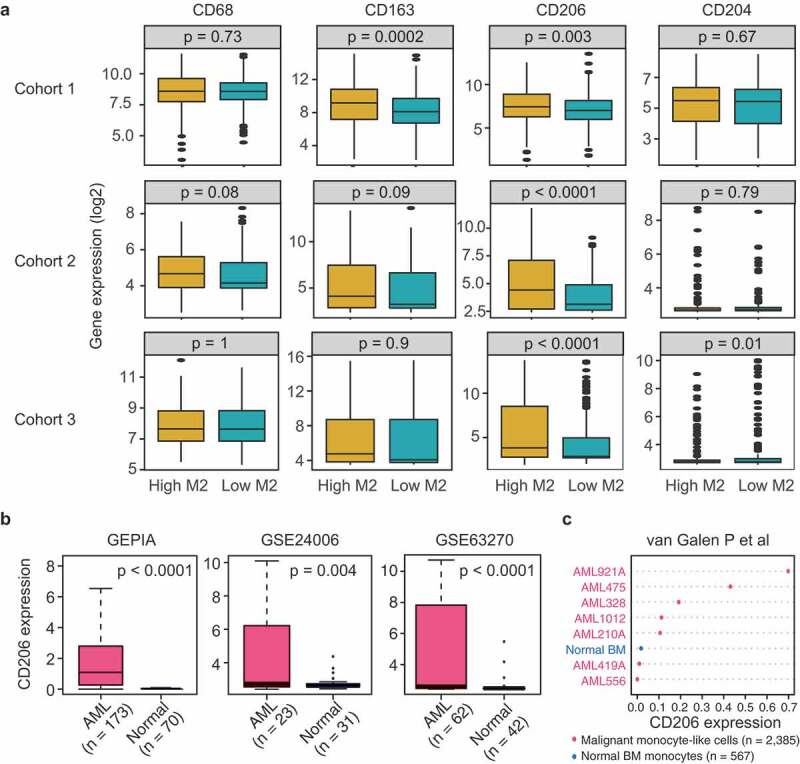
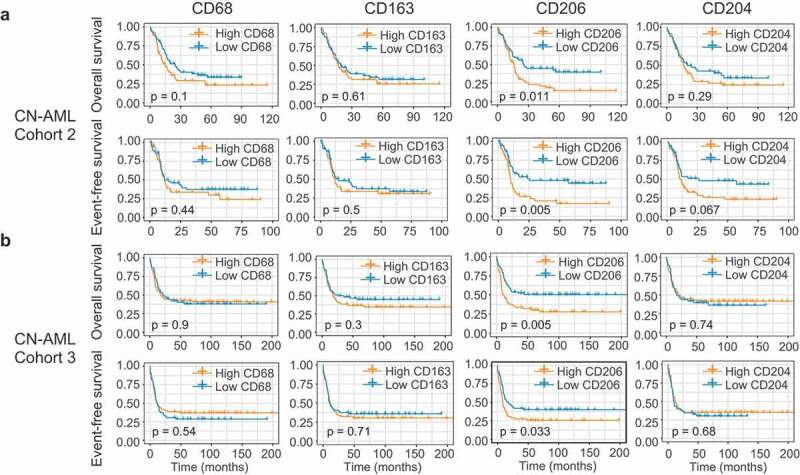
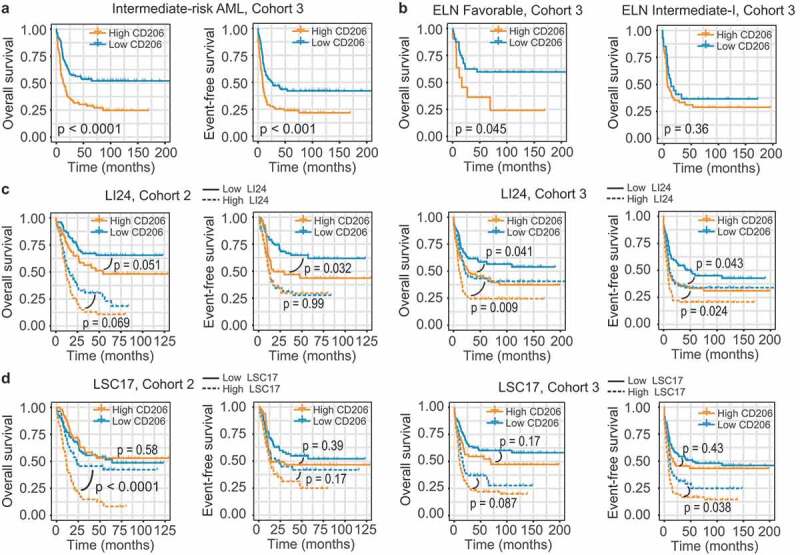
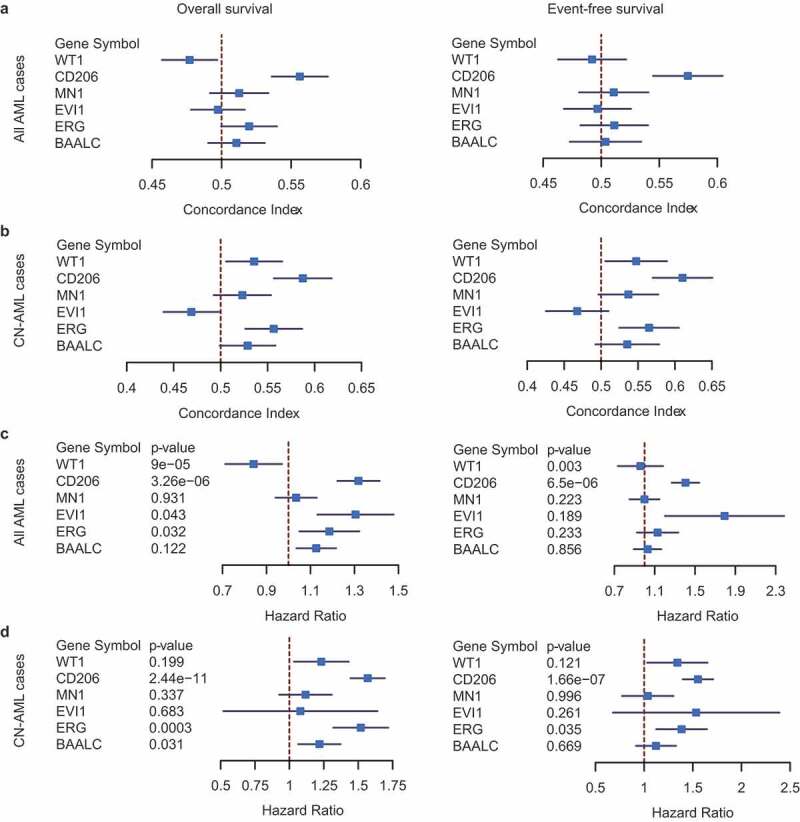
Hematological malignancies possess a distinctive immunologic microenvironment compared with solid tumors. Here, using an established computational algorithm (CIBERSORT), we systematically analyzed the overall distribution of 22 tumor-infiltrating leukocyte (TIL) populations in more than 2000 bone marrow (BM) samples from 5 major hematological malignancies and healthy controls. Focusing on significantly altered TILs in acute myeloid leukemia (AML), we found that patients with AML exhibited increased frequencies of M2 macrophages, compared to either healthy controls or the other four malignancies. High infiltration of M2 macrophages was associated with poor outcome in AML. Further analysis revealed that , a M2 marker gene, could faithfully reflect variation in M2 fractions and was more highly expressed in AML than normal controls. High expression predicted inferior overall survival (OS) and event-free survival (EFS) in two independent AML cohorts. Among 175 patients with intermediate-risk cytogenetics, the survival still differed greatly between low and high expressers (OS; < .0001; 3-year rates, 56% v 32%; EFS; < .001; 3-year rates, 47% v 25%). When analyzed in a meta-analysis, as a continuous variable showed superior predictive performance than classical prognosticators in AML (, and ). In summary, M2 macrophages are preferentially enriched in AML. The M2 marker may serve as a new prognostic marker in AML.
与实体瘤相比,血液系统恶性肿瘤具有独特的免疫微环境。在此,我们使用一种既定的计算算法(CIBERSORT),系统分析了来自5种主要血液系统恶性肿瘤和健康对照的2000多个骨髓(BM)样本中22种肿瘤浸润白细胞(TIL)群体的总体分布。聚焦于急性髓系白血病(AML)中显著改变的TIL,我们发现与健康对照或其他四种恶性肿瘤相比,AML患者的M2巨噬细胞频率增加。M2巨噬细胞的高浸润与AML的不良预后相关。进一步分析显示,一个M2标记基因,可以忠实地反映M2组分的变化,并且在AML中比正常对照表达更高。高表达预测两个独立AML队列中的总生存期(OS)和无事件生存期(EFS)较差。在175例具有中等风险细胞遗传学的患者中,低表达者和高表达者之间的生存期仍有很大差异(OS;<.0001;3年生存率,56%对32%;EFS;<.001;3年生存率,47%对25%)。在荟萃分析中进行分析时,作为连续变量在AML中显示出比经典预后指标更好的预测性能(,和)。总之,M2巨噬细胞在AML中优先富集。M2标记可能作为AML中的一种新的预后标志物。