Zippo Antonio G, Castiglioni Isabella, Lin Jianyi, Borsa Virginia M, Valente Maurizio, Biella Gabriele E M
Institute of Molecular Bioimaging and Physiology, Consiglio Nazionale delle Ricerche, Milan, Italy.
Department of Mathematics, Khalifa University, Abu Dhabi, United Arab Emirates.
Front Hum Neurosci. 2020 Jan 14;13:462. doi: 10.3389/fnhum.2019.00462. eCollection 2019.
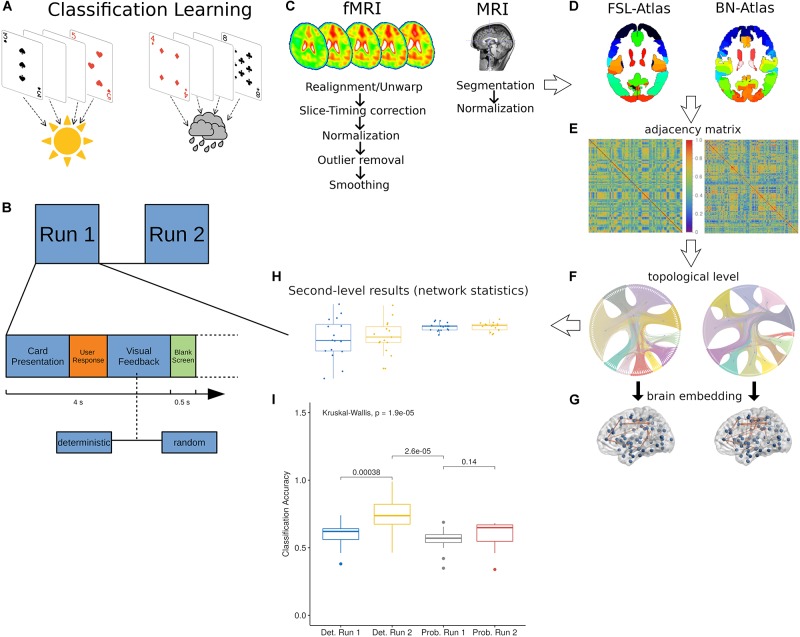
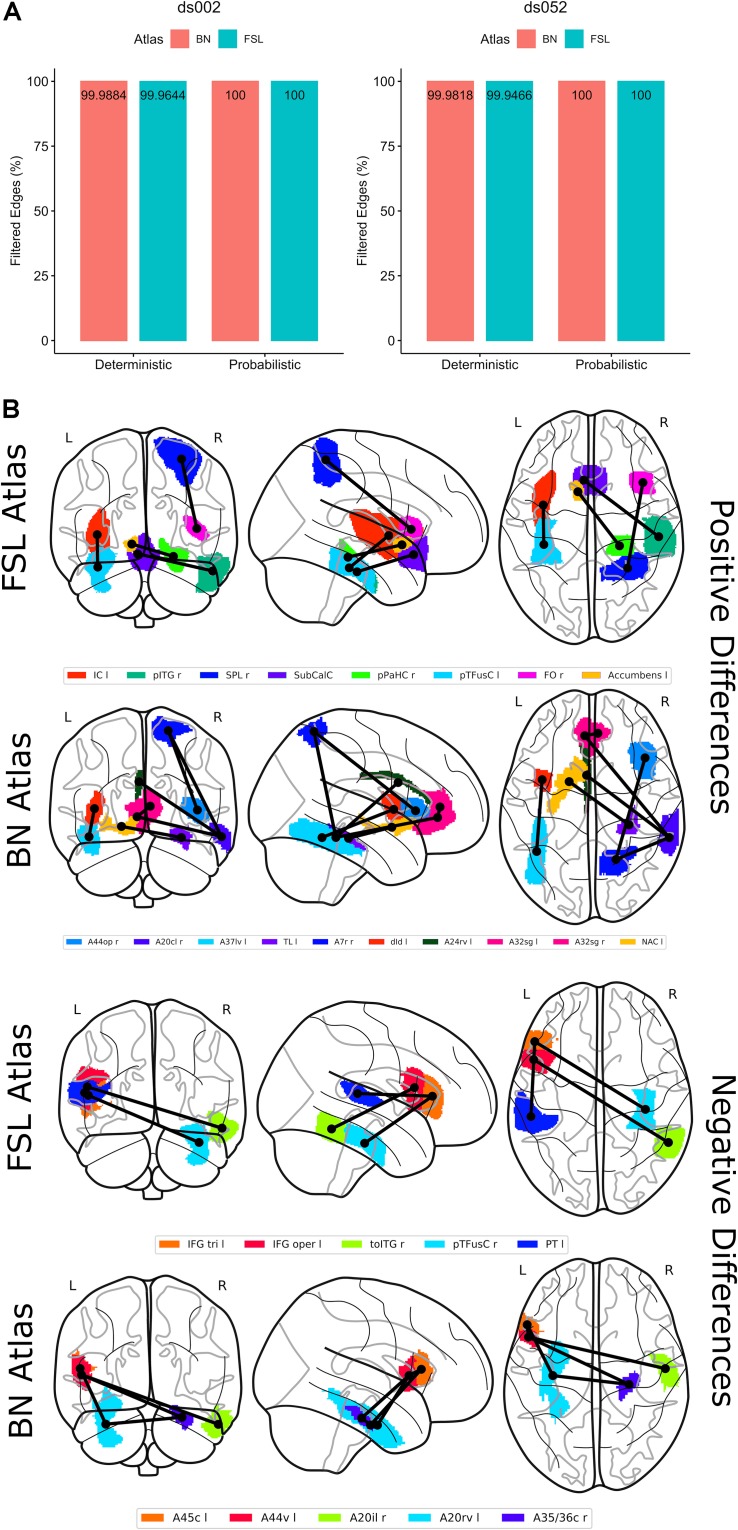
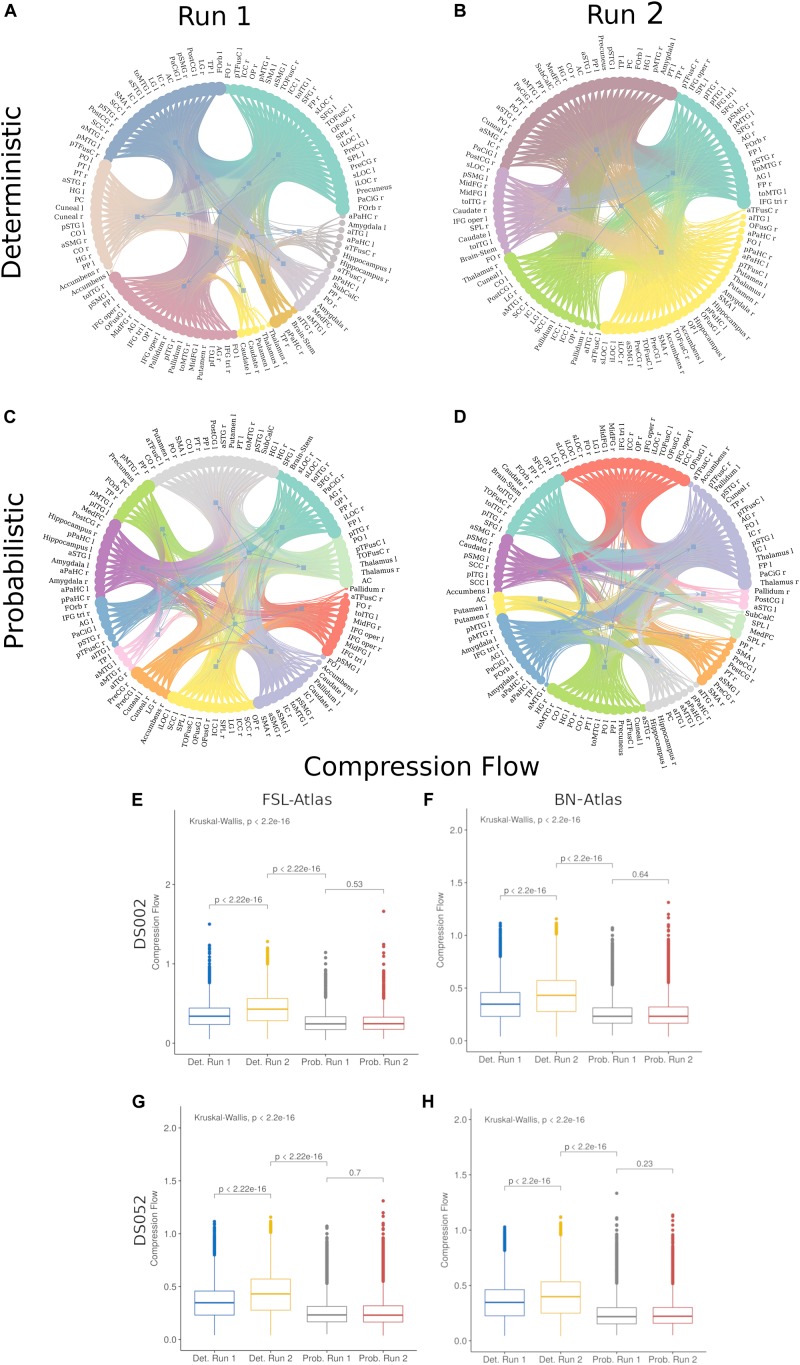
Classification learning is a preeminent human ability within the animal kingdom but the key mechanisms of brain networks regulating learning remain mostly elusive. Recent neuroimaging advancements have depicted human brain as a complex graph machinery where brain regions are nodes and coherent activities among them represent the functional connections. While long-term motor memories have been found to alter functional connectivity in the resting human brain, a graph topological investigation of the short-time effects of learning are still not widely investigated. For instance, classification learning is known to orchestrate rapid modulation of diverse memory systems like short-term and visual working memories but how the brain functional connectome accommodates such modulations is unclear. We used publicly available repositories (openfmri.org) selecting three experiments, two focused on short-term classification learning along two consecutive runs where learning was promoted by trial-by-trial feedback errors, while a further experiment was used as supplementary control. We analyzed the functional connectivity extracted from BOLD fMRI signals, and estimated the graph information processing in the cerebral networks. The information processing capability, characterized by complex network statistics, significantly improved over runs, together with the subject classification accuracy. Instead, -learning experiments, where feedbacks came with poor consistency, did not provoke any significant change in the functional connectivity over runs. We propose that learning induces fast modifications in the overall brain network dynamics, definitely ameliorating the short-term potential of the brain to process and integrate information, a dynamic consistently orchestrated by modulations of the functional connections among specific brain regions.
分类学习是动物界中人类卓越的能力,但调节学习的脑网络关键机制仍大多不为人知。最近的神经影像学进展将人类大脑描绘成一个复杂的图形机制,其中脑区是节点,它们之间的连贯活动代表功能连接。虽然已发现长期运动记忆会改变静息人类大脑中的功能连接,但对学习短期效应的图形拓扑研究仍未得到广泛探究。例如,已知分类学习会协调对多种记忆系统的快速调节,如短期和视觉工作记忆,但大脑功能连接组如何适应这种调节尚不清楚。我们使用公开可用的数据库(openfmri.org)选择了三个实验,其中两个实验聚焦于连续两次运行中的短期分类学习,学习通过逐次试验的反馈错误来促进,而另一个实验用作补充对照。我们分析了从BOLD功能磁共振成像信号中提取的功能连接,并估计了大脑网络中的图形信息处理。以复杂网络统计为特征的信息处理能力在运行过程中显著提高,同时受试者的分类准确率也提高了。相反,反馈一致性较差的学习实验在运行过程中并未引起功能连接的任何显著变化。我们提出,学习会在整个大脑网络动态中引发快速变化,肯定会改善大脑处理和整合信息的短期潜力,这种动态由特定脑区之间功能连接的调节持续协调。