Li Lixia, Long Ying, Li Hao, Wu Xiaoming
Key Laboratory of Biology and Genetic Improvement of Oil Crops, Ministry of Agriculture and Rural Affairs, Oil Crop Research Institute, Chinese Academy of Agricultural Sciences, Hubei, China.
Front Genet. 2020 Jan 17;10:1275. doi: 10.3389/fgene.2019.01275. eCollection 2019.
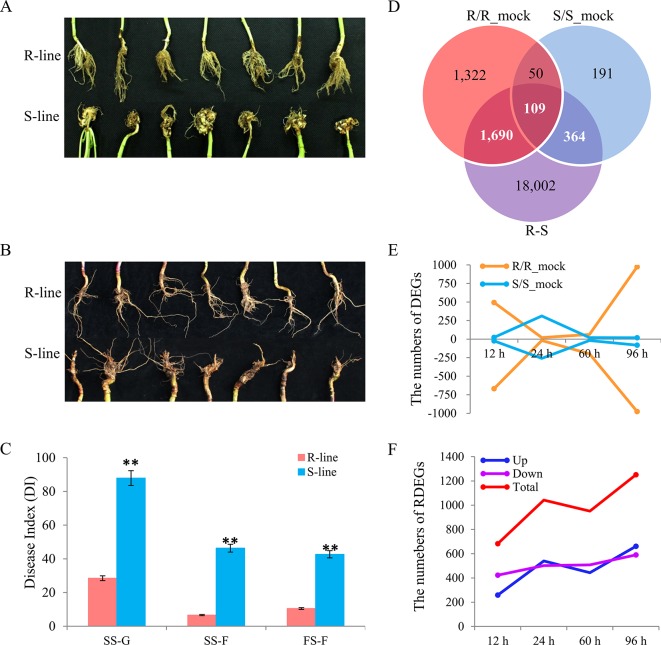
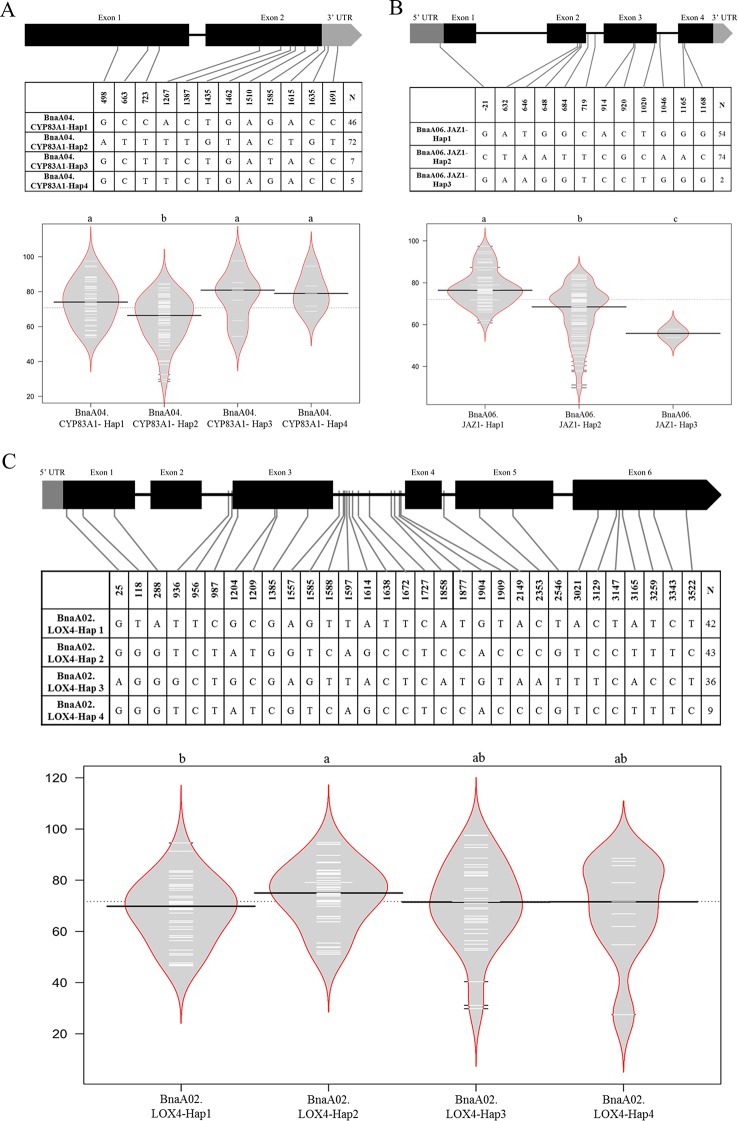
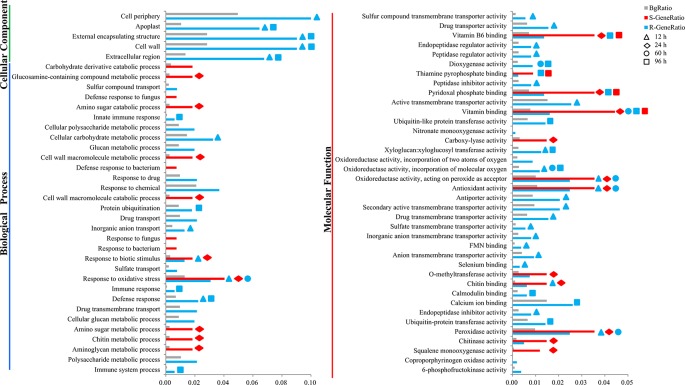
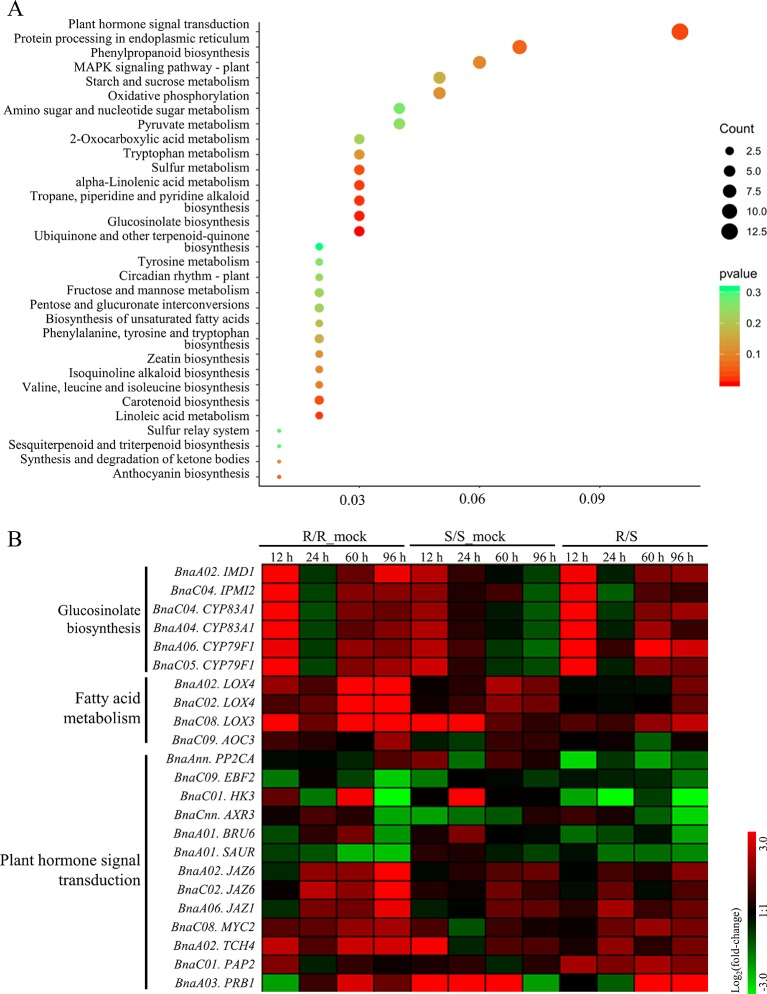
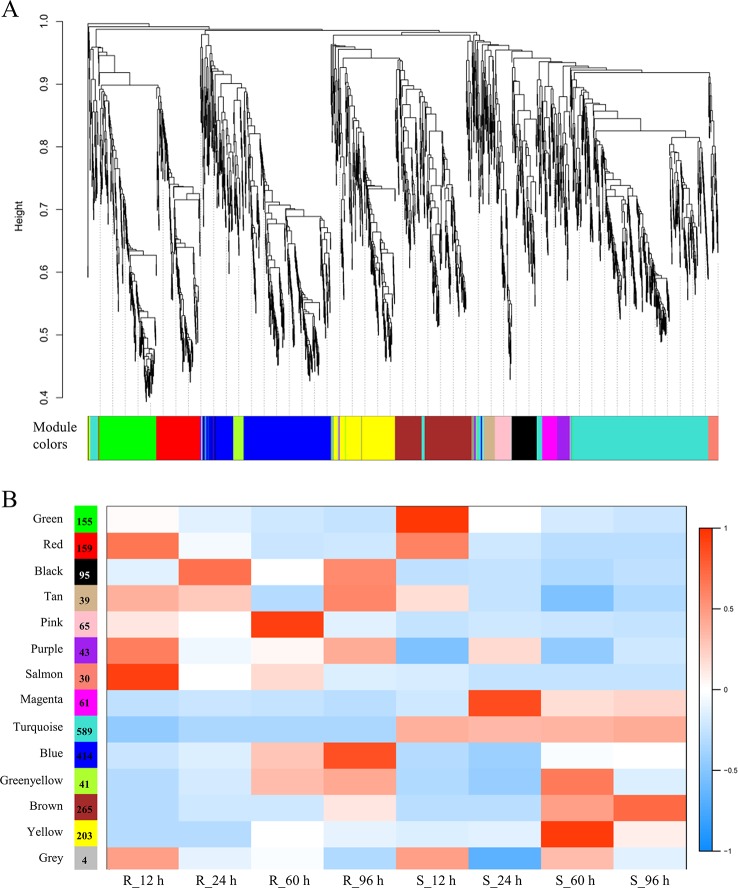
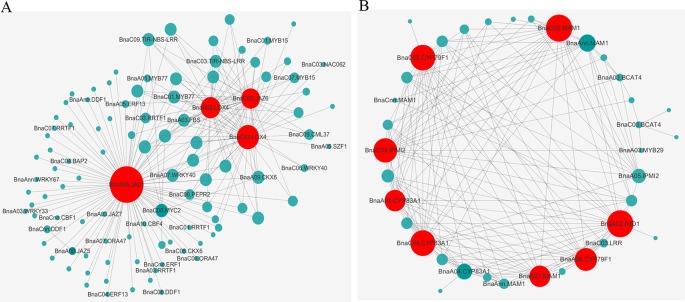
Rapeseed ( L., AACC, 2n = 38) is one of the most important oil crops around the world. With intensified rapeseed cultivation, the incidence and severity of clubroot infected by Wor. () has increased very fast, which seriously impedes the development of rapeseed industry. Therefore, it is very important and timely to investigate the mechanisms and genes regulating clubroot resistance (CR) in rapeseed. In this study, comparative transcriptome analysis was carried out on two rapeseed accessions of R- (resistant) and S- (susceptible) line. Three thousand one hundred seventy-one and 714 differentially expressed genes (DEGs) were detected in the R- and S-line compared with the control groups, respectively. The results indicated that the CR difference between the R- and S-line had already shown during the early stage of infection and the change of gene expression pattern of R-line exhibited a more intense defensive response than that of S-line. Moreover, Kyoto Encyclopedia of Genes and Genomes (KEGG) analysis of 2,163 relative-DEGs, identified between the R- and S-line, revealed that genes participated in plant hormone signal transduction, fatty acid metabolism, and glucosinolate biosynthesis were involved in regulation of CR. Further, 12 hub genes were identified from all relative-DEGs with the help of weighted gene co-expression network analysis. Haplotype analysis indicated that the natural variations in the coding regions of some hub genes also made contributed to CR. This study not only provides valuable information for CR molecular mechanisms, but also has applied implications for CR breeding in rapeseed.
油菜(L.,AACC,2n = 38)是世界上最重要的油料作物之一。随着油菜种植的集约化,由芸薹根肿菌(Wor.)引起的根肿病发病率和严重程度迅速上升,严重阻碍了油菜产业的发展。因此,研究油菜抗根肿病(CR)的机制和基因非常重要且及时。在本研究中,对两个油菜材料R-(抗病)和S-(感病)品系进行了比较转录组分析。与对照组相比,在R-和S-品系中分别检测到3171个和714个差异表达基因(DEGs)。结果表明,R-和S-品系之间的CR差异在感染早期就已显现,且R-品系基因表达模式的变化表现出比S-品系更强的防御反应。此外,对R-和S-品系之间鉴定出的2163个相对DEGs进行京都基因与基因组百科全书(KEGG)分析,发现参与植物激素信号转导、脂肪酸代谢和芥子油苷生物合成的基因参与了CR的调控。进一步地,借助加权基因共表达网络分析从所有相对DEGs中鉴定出12个枢纽基因。单倍型分析表明,一些枢纽基因编码区的自然变异也对CR有贡献。本研究不仅为CR分子机制提供了有价值的信息,也对油菜CR育种具有应用意义。