Wei Xiaochun, Zhang Yingying, Zhao Yanyan, Xie Zhengqing, Hossain Mohammad Rashed, Yang Shuangjuan, Shi Gongyao, Lv Yanyan, Wang Zhiyong, Tian Baoming, Su Henan, Wei Fang, Zhang Xiaowei, Yuan Yuxiang
Institute of Horticulture, Henan Academy of Agricultural Sciences, Graduate T&R Base of Zhengzhou University, Zhengzhou, China.
Henan International Joint Laboratory of Crop Gene Resources and Improvement, School of Agricultural Sciences, Zhengzhou University, Zhengzhou, China.
Front Plant Sci. 2021 Dec 15;12:759623. doi: 10.3389/fpls.2021.759623. eCollection 2021.
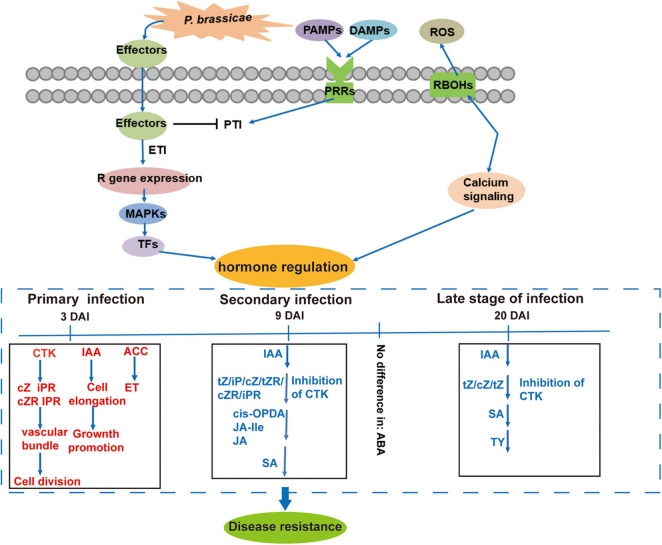
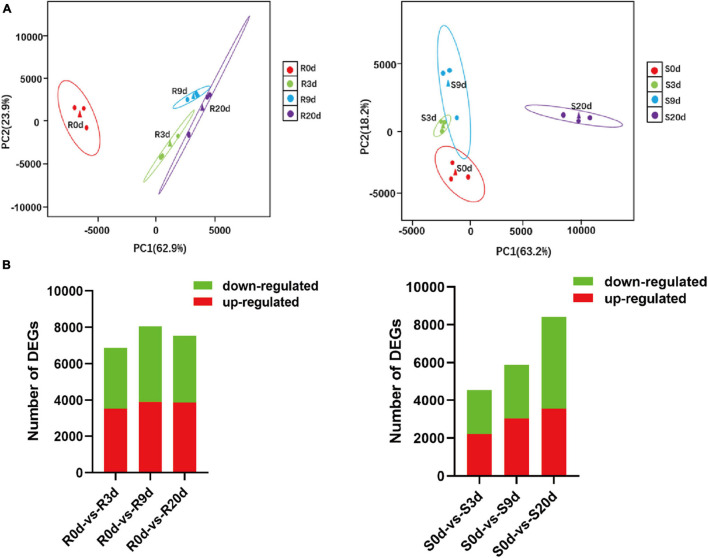
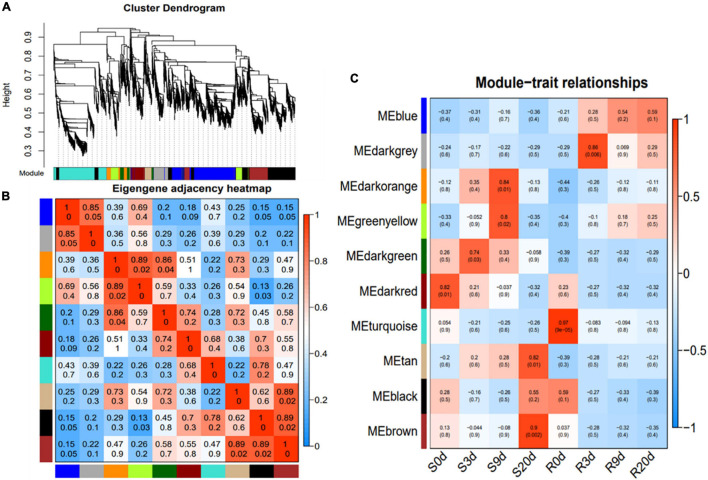
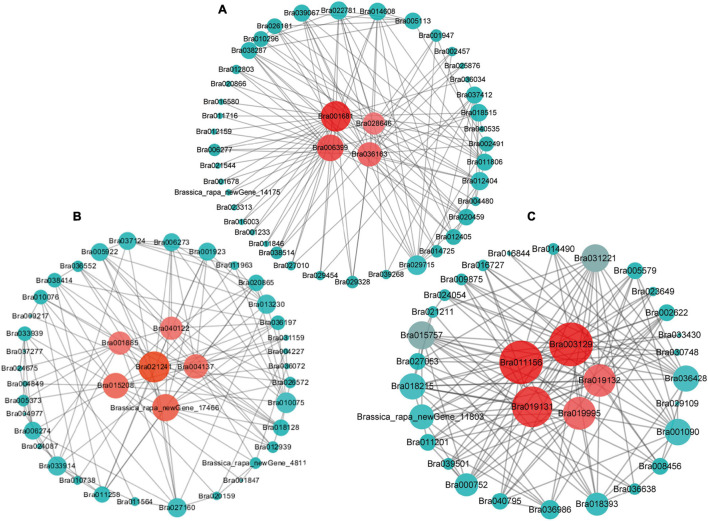
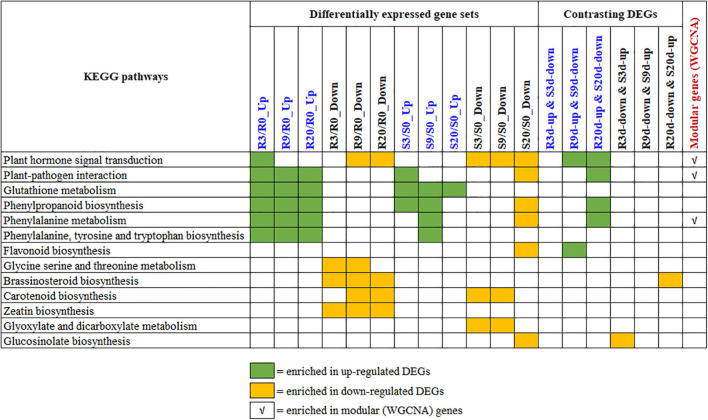
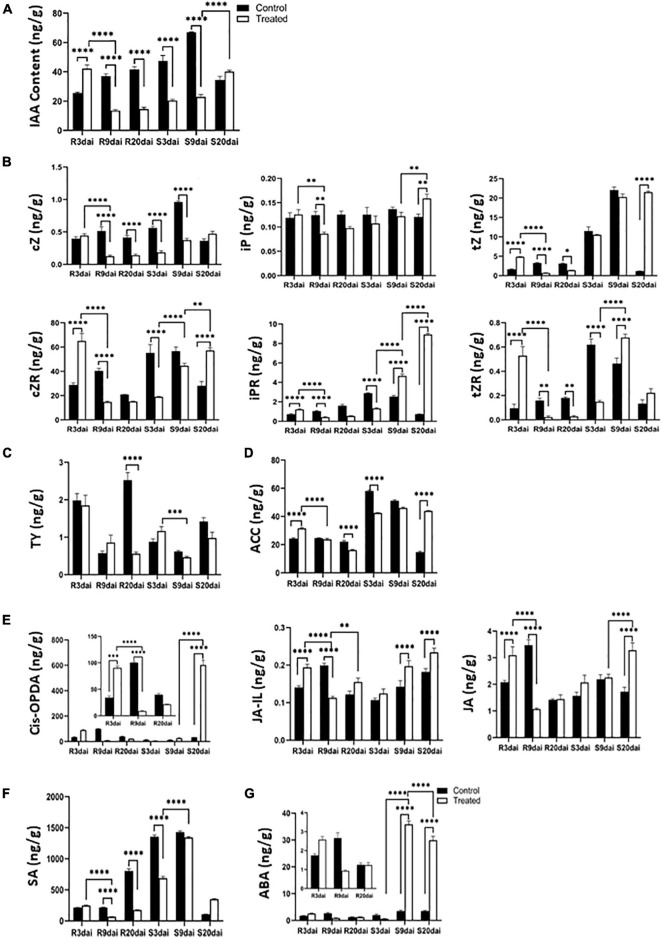
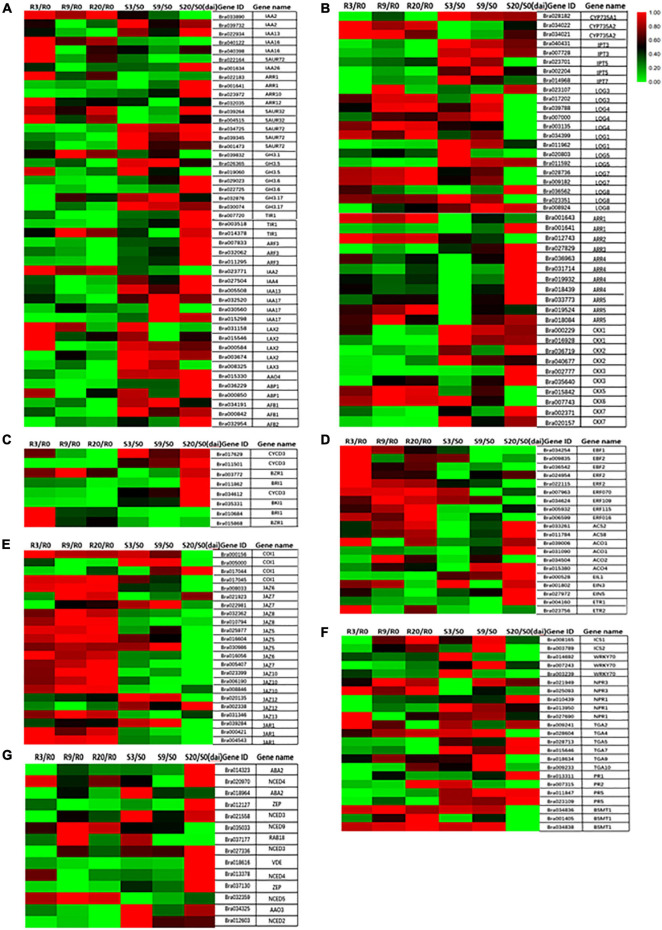
, an obligate biotrophic pathogen-causing clubroot disease, can seriously affect crops worldwide, especially Chinese cabbage. Understanding the transcriptome and metabolome profiling changes during the infection of will provide key insights in understanding the defense mechanism in crops. In this study, we estimated the phytohormones using targeted metabolome assays and transcriptomic changes using RNA sequencing (RNA-seq) in the roots of resistant (BrT24) and susceptible (Y510-9) plants at 0, 3, 9, and 20 days after inoculation (DAI) with . Differentially expressed genes (DEGs) in resistant vs. susceptible lines across different time points were identified. The weighted gene co-expression network analysis of the DEGs revealed six pathways including "Plant-pathogen interaction" and "Plant hormone signal transduction" and 15 hub genes including pathogenic type III effector avirulence factor gene () and auxin-responsive protein () to be involved in plants immune response. Inhibition of Indoleacetic acid, cytokinin, jasmonate acid, and salicylic acid contents and changes in related gene expression in R-line may play important roles in regulation of clubroot resistance (CR). Based on the combined metabolome profiling and hormone-related transcriptomic responses, we propose a general model of hormone-mediated defense mechanism. This study definitely enhances our current understanding and paves the way for improving CR in .
一种专性活体营养型致病病原菌,可引发根肿病,能严重影响全球农作物,尤其是大白菜。了解其感染过程中的转录组和代谢组谱变化,将为理解十字花科作物的防御机制提供关键见解。在本研究中,我们对接种后0、3、9和20天的抗性(BrT24)和感病(Y510 - 9)植株根系,使用靶向代谢组分析方法估算植物激素,并使用RNA测序(RNA - seq)分析转录组变化。鉴定了不同时间点抗性与感病品系之间的差异表达基因(DEG)。对这些DEG进行加权基因共表达网络分析,揭示了包括“植物 - 病原体相互作用”和“植物激素信号转导”在内的6条途径,以及包括致病III型效应物无毒因子基因()和生长素应答蛋白()在内的15个枢纽基因参与植物免疫反应。R系中吲哚乙酸、细胞分裂素、茉莉酸和水杨酸含量的抑制以及相关基因表达的变化,可能在根肿病抗性(CR)调控中发挥重要作用。基于综合代谢组谱和激素相关转录组反应,我们提出了激素介导防御机制的通用模型。本研究无疑增进了我们目前的理解,并为提高大白菜的根肿病抗性铺平了道路。