WHO Collaborating Centre for Gonorrhoea and other Sexually Transmitted Infections, Department of Laboratory Medicine, Microbiology, Faculty of Medicine and Health, Örebro University, SE-710 85, Örebro, Sweden.
Microbiotica Ltd, Biodata Innovation Centre, Wellcome Genome Campus, Hinxton, Cambridgeshire, UK.
BMC Genomics. 2020 Feb 3;21(1):116. doi: 10.1186/s12864-020-6511-6.
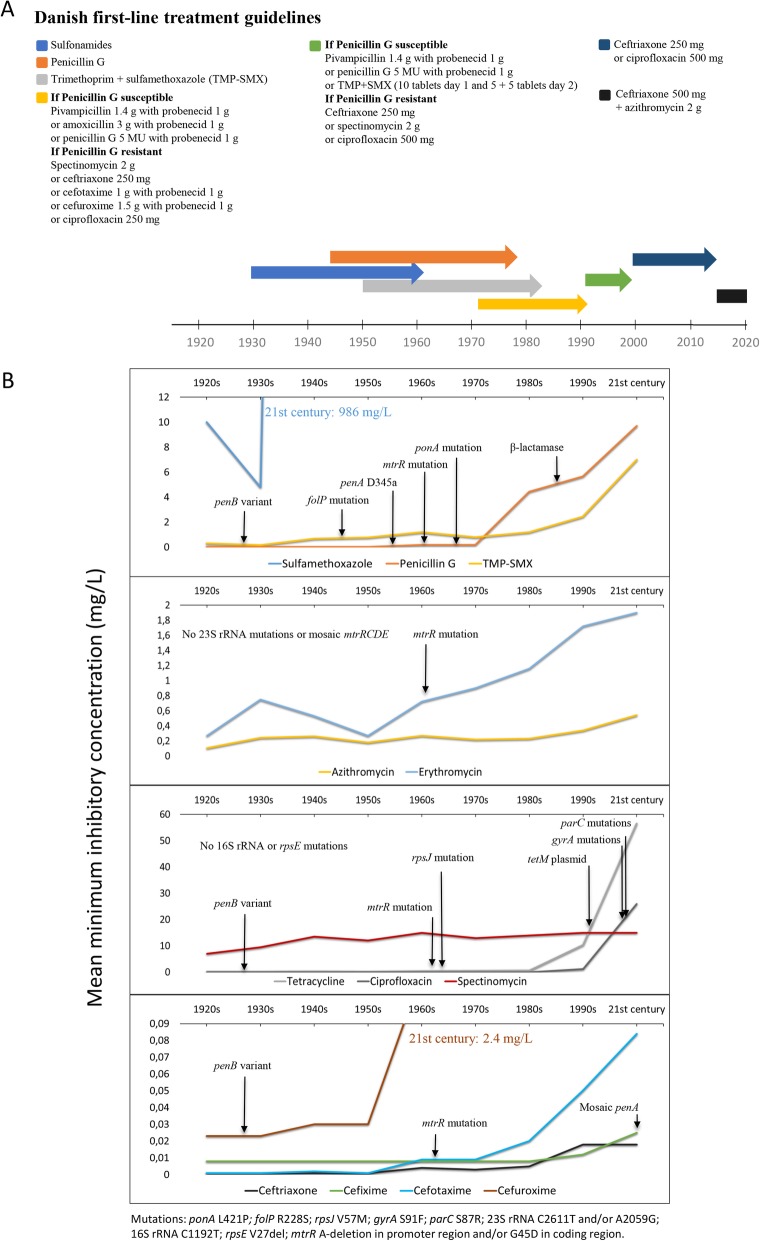
Multidrug-resistant Neisseria gonorrhoeae strains are prevalent, threatening gonorrhoea treatment globally, and understanding of emergence, evolution, and spread of antimicrobial resistance (AMR) in gonococci remains limited. We describe the genomic evolution of gonococci and their AMR, related to the introduction of antimicrobial therapies, examining isolates from 1928 (preantibiotic era) to 2013 in Denmark. This is, to our knowledge, the oldest gonococcal collection globally.
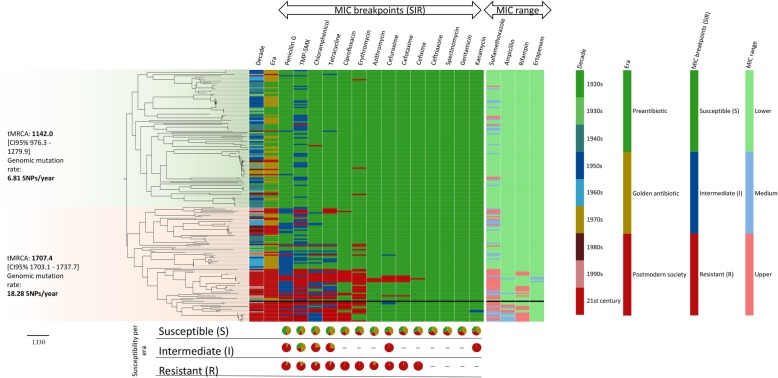
Lyophilised isolates were revived and examined using Etest (18 antimicrobials) and whole-genome sequencing (WGS). Quality-assured genome sequences were obtained for 191 viable and 40 non-viable isolates and analysed with multiple phylogenomic approaches.
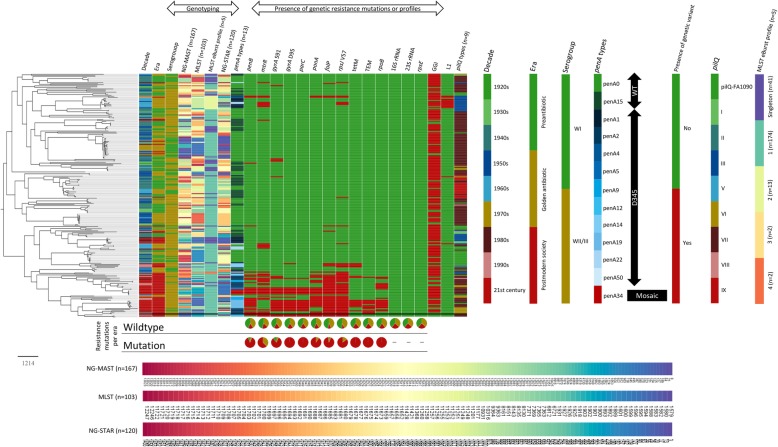
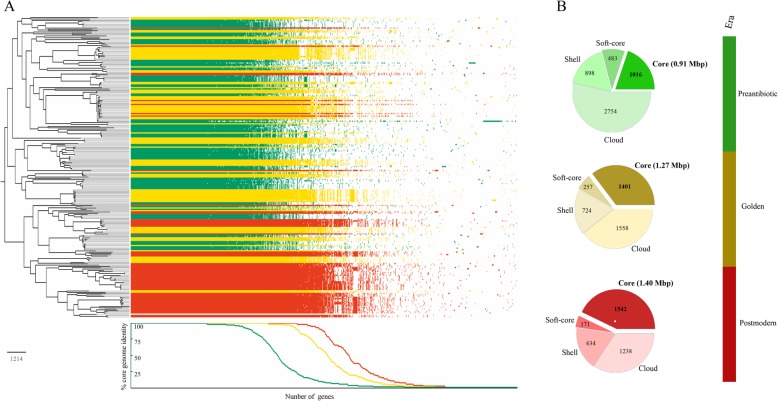
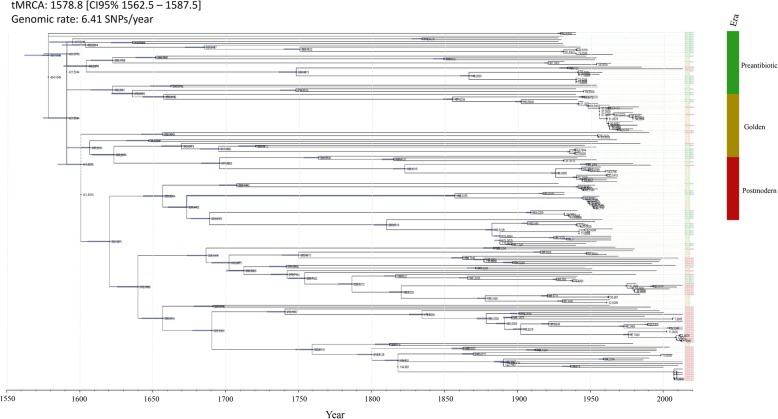
Gonococcal AMR, including an accumulation of multiple AMR determinants, started to emerge particularly in the 1950s-1970s. By the twenty-first century, resistance to most antimicrobials was common. Despite that some AMR determinants affect many physiological functions and fitness, AMR determinants were mainly selected by the use/misuse of gonorrhoea therapeutic antimicrobials. Most AMR developed in strains belonging to one multidrug-resistant (MDR) clade with close to three times higher genomic mutation rate. Modern N. gonorrhoeae was inferred to have emerged in the late-1500s and its genome became increasingly conserved over time.
WGS of gonococci from 1928 to 2013 showed that no AMR determinants, except penB, were in detectable frequency before the introduction of gonorrhoea therapeutic antimicrobials. The modern gonococcus is substantially younger than previously hypothesized and has been evolving into a more clonal species, driven by the use/misuse of antimicrobials. The MDR gonococcal clade should be further investigated for early detection of strains with predispositions to develop and maintain MDR and for initiation of public health interventions.
耐多药淋病奈瑟菌菌株普遍存在,威胁着全球淋病的治疗,而对淋球菌中抗菌药物耐药性(AMR)的出现、演变和传播的了解仍然有限。我们描述了丹麦 1928 年(抗生素前时代)至 2013 年期间淋病奈瑟菌的基因组进化及其 AMR,这是我们所知的全球最古老的淋病奈瑟菌集合。
冻干分离物经复苏后使用 Etest(18 种抗生素)和全基因组测序(WGS)进行检测。获得了 191 株有活力和 40 株无活力分离物的质量保证基因组序列,并采用多种系统发育基因组学方法进行了分析。
淋病奈瑟菌的 AMR,包括多种 AMR 决定因素的积累,特别是在 20 世纪 50 年代至 70 年代开始出现。到 21 世纪,大多数抗菌药物的耐药性已很普遍。尽管一些 AMR 决定因素影响许多生理功能和适应性,但 AMR 决定因素主要是由淋病治疗抗菌药物的使用/误用选择的。大多数 AMR 是在一个多药耐药(MDR)分支的菌株中发展起来的,其基因组突变率接近三倍。现代淋病奈瑟菌的出现时间被推断为 16 世纪后期,其基因组随着时间的推移变得越来越保守。
1928 年至 2013 年淋病奈瑟菌的 WGS 显示,在引入淋病治疗抗菌药物之前,除 penB 外,没有检测到可检测频率的 AMR 决定因素。现代淋病奈瑟菌比之前假设的要年轻得多,并且由于抗菌药物的使用/误用,一直在向更具克隆性的物种进化。应进一步研究 MDR 淋病奈瑟菌分支,以早期发现具有发展和维持 MDR 倾向的菌株,并启动公共卫生干预措施。