CLLE Lab, CNRS, University Toulouse Jean Jaurès, Toulouse, 31000, France.
Inria, University Rennes, IRISA, CNRS, Rennes, 35000, France.
Sci Rep. 2020 Feb 3;10(1):1705. doi: 10.1038/s41598-020-58533-2.
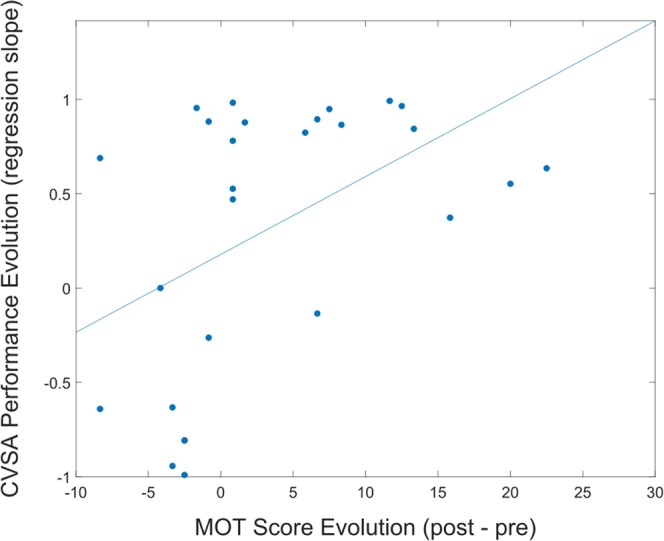
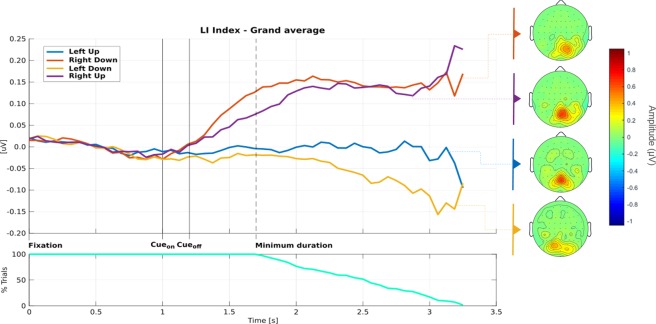
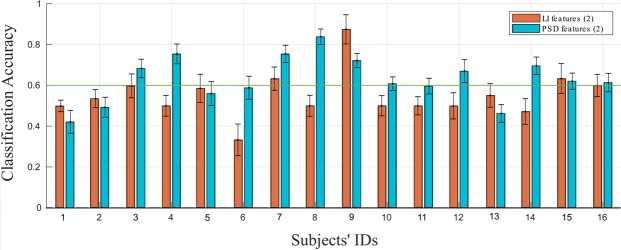
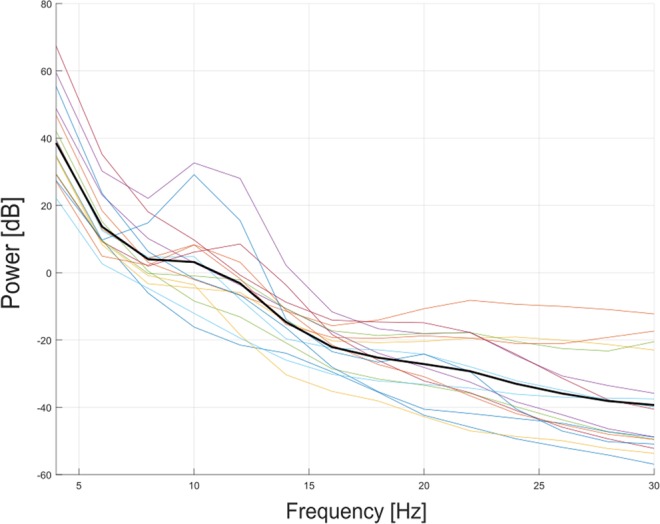
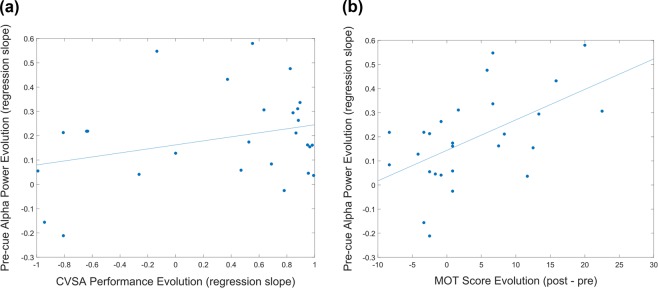
Advances in sports sciences and neurosciences offer new opportunities to design efficient and motivating sport training tools. For instance, using NeuroFeedback (NF), athletes can learn to self-regulate specific brain rhythms and consequently improve their performances. Here, we focused on soccer goalkeepers' Covert Visual Spatial Attention (CVSA) abilities, which are essential for these athletes to reach high performances. We looked for Electroencephalography (EEG) markers of CVSA usable for virtual reality-based NF training procedures, i.e., markers that comply with the following criteria: (1) specific to CVSA, (2) detectable in real-time and (3) related to goalkeepers' performance/expertise. Our results revealed that the best-known EEG marker of CVSA-increased α-power ipsilateral to the attended hemi-field- was not usable since it did not comply with criteria 2 and 3. Nonetheless, we highlighted a significant positive correlation between athletes' improvement in CVSA abilities and the increase of their α-power at rest. While the specificity of this marker remains to be demonstrated, it complied with both criteria 2 and 3. This result suggests that it may be possible to design innovative ecological training procedures for goalkeepers, for instance using a combination of NF and cognitive tasks performed in virtual reality.
运动科学和神经科学的进展为设计高效和激励性的运动训练工具提供了新的机会。例如,使用神经反馈(NF),运动员可以学习自我调节特定的脑节律,从而提高他们的表现。在这里,我们专注于足球守门员的隐蔽视觉空间注意(CVSA)能力,这对这些运动员达到高水平表现至关重要。我们寻找可用于基于虚拟现实的 NF 训练程序的 CVSA 的脑电图(EEG)标记物,即符合以下标准的标记物:(1)特定于 CVSA,(2)可实时检测,(3)与守门员的表现/专业知识相关。我们的结果表明,CVSA 的最著名的 EEG 标记物——增加对侧视野的α-功率——不可用,因为它不符合标准 2 和 3。尽管如此,我们强调了运动员 CVSA 能力的提高与休息时α-功率的增加之间存在显著的正相关。虽然该标记物的特异性仍有待证明,但它符合标准 2 和 3。这一结果表明,可能有可能为守门员设计创新的生态训练程序,例如使用 NF 和在虚拟现实中执行的认知任务的组合。