Department of Stomatology, The First Affiliated Hospital of Jinan University, Guangzhou, Guangdong 510632, P.R. China.
Chongqing Three Gorges Medical College, Chongqing 404120, P.R. China.
Mol Med Rep. 2020 Mar;21(3):1449-1460. doi: 10.3892/mmr.2020.10951. Epub 2020 Jan 20.
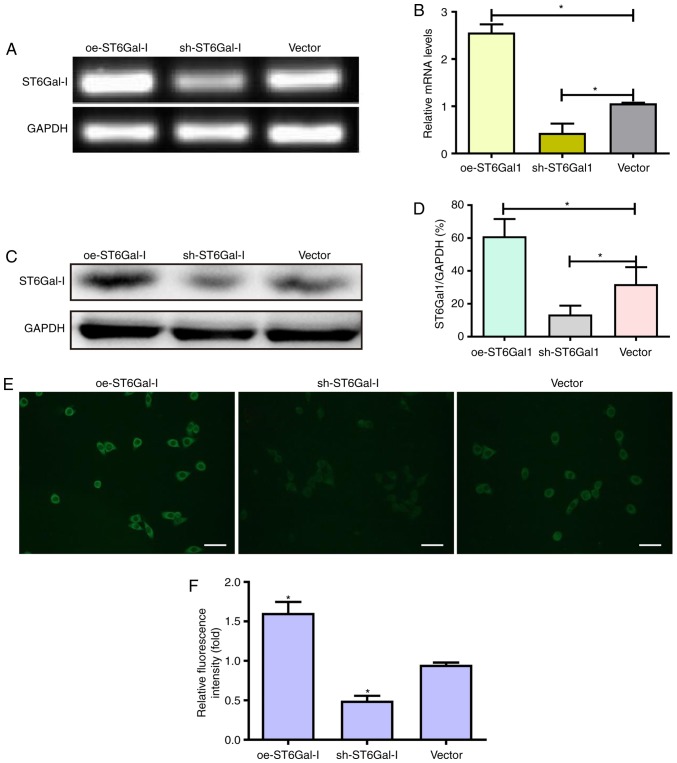
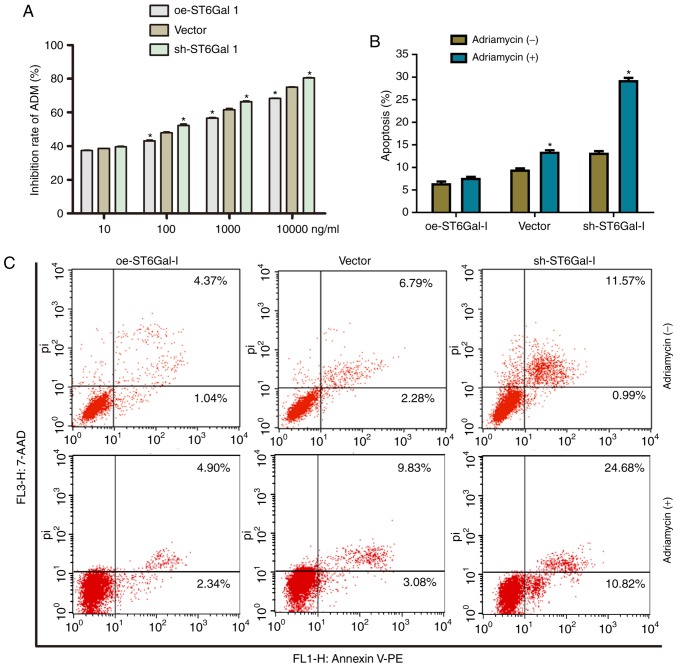
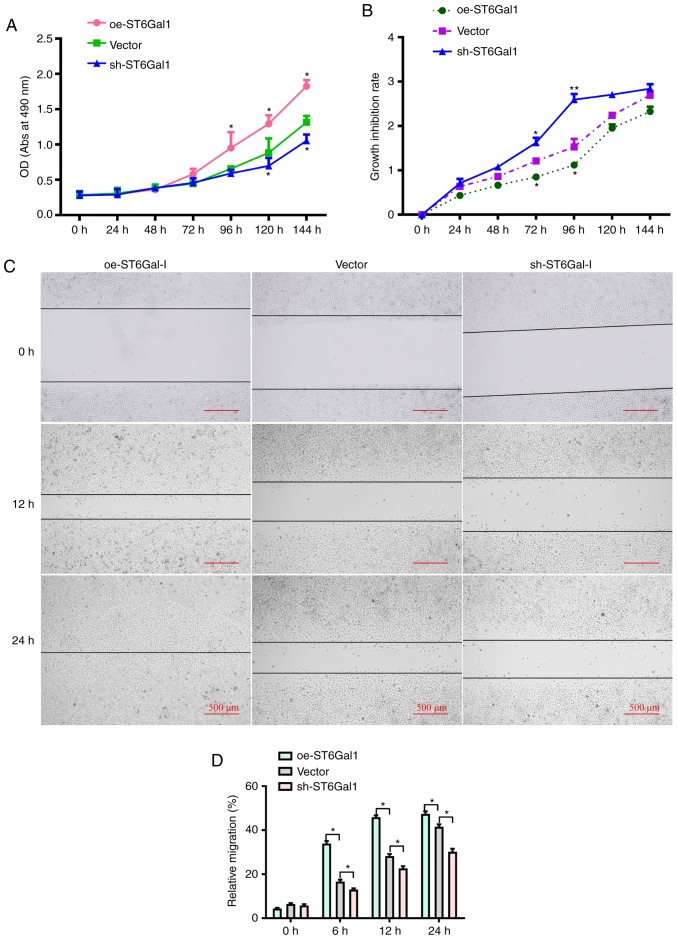
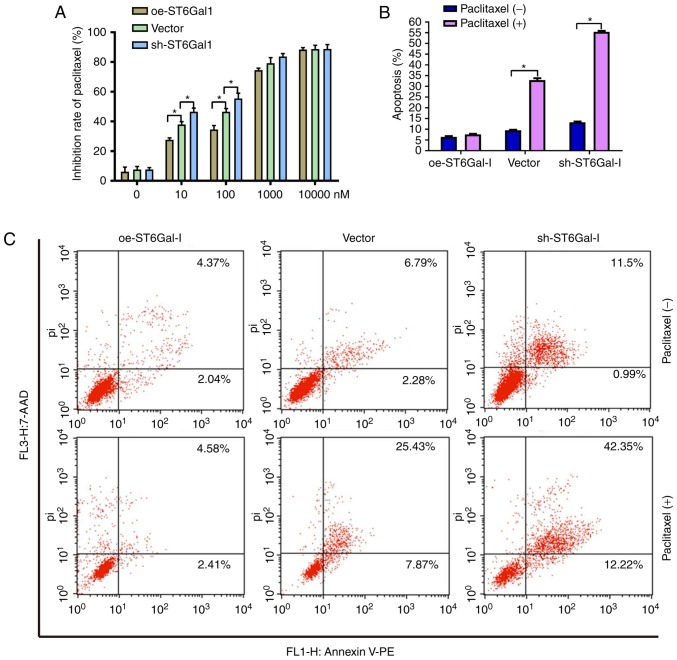
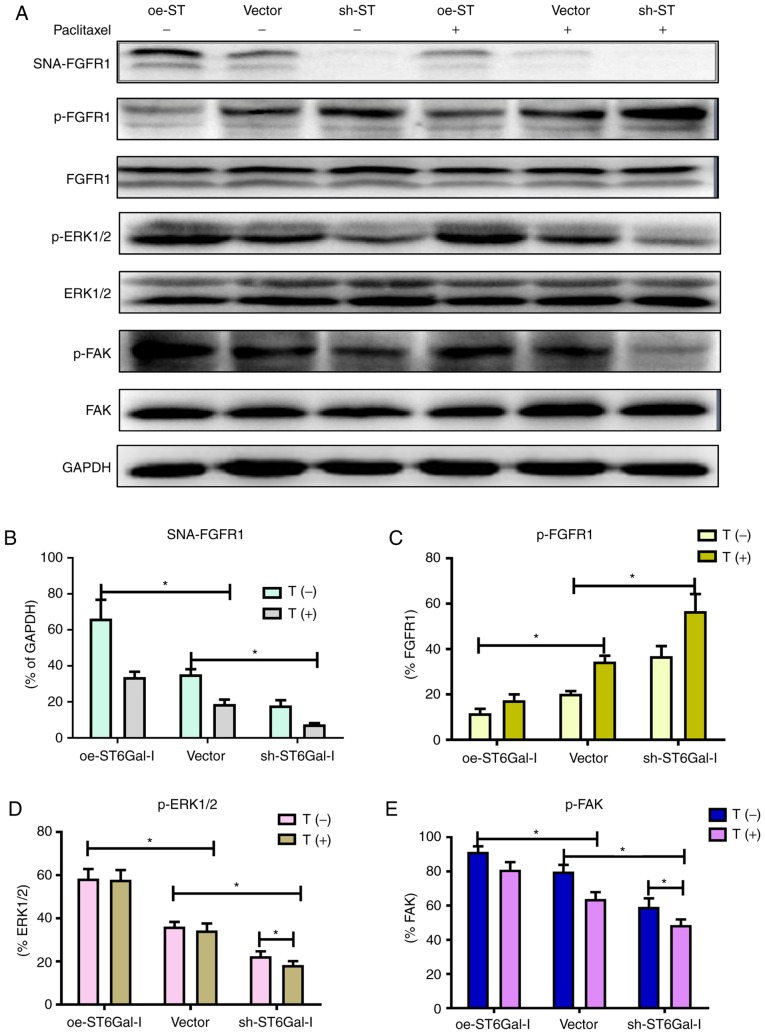
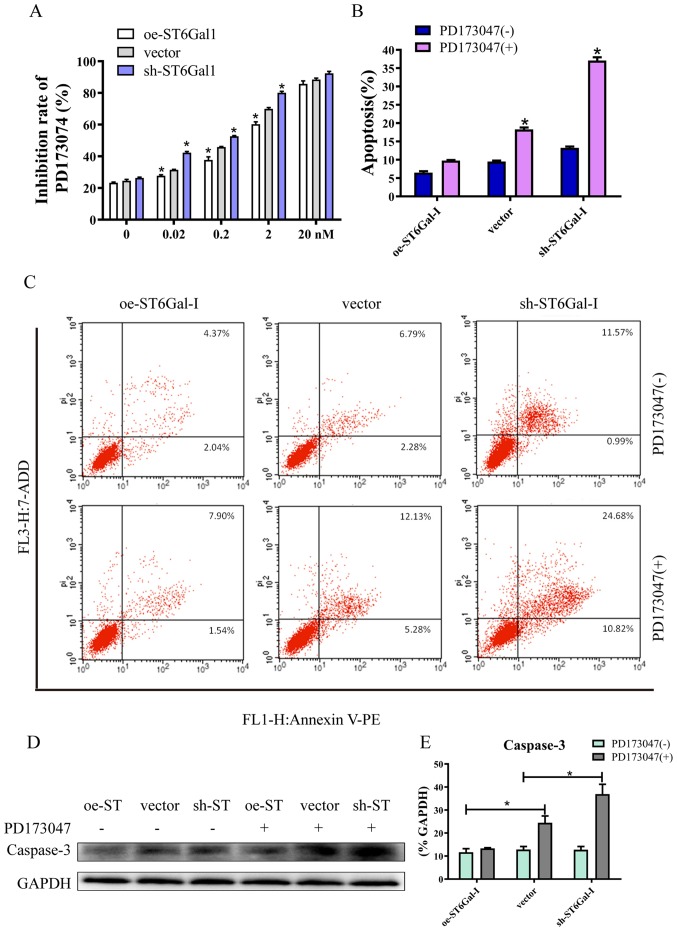
Fibroblast growth factor receptors (FGFRs) have been implicated in the malignant transformation and chemoresistance of epithelial ovarian cancer; however, the underlying molecular mechanisms are poorly understood. Increased sialyltransferase activity that enhances protein sialylation is an important post‑translational process promoting cancer progression and malignancy. In the present study, α2,6‑sialyltransferase (ST6Gal‑I) overexpression or knockdown cell lines were developed, and FGFR1 was examined to understand the effect of sialylation on migration and drug resistance, and the underlying mechanisms. It was identified that cells with ST6Gal‑I overexpression had increased cell viability and migratory ability upon serum deprivation. Moreover, ST6Gal‑I overexpression cells had strong resistance to paclitaxel, as demonstrated by low growth inhibition rate and cell apoptosis level. A mechanistic study showed that ST6Gal‑I overexpression induced high α2,6‑sialylation of FGFR1 and increased the expression of phospho‑ERK1/2 and phospho‑focal adhesion kinase. Further study demonstrated that the FGFR1 inhibitor PD173047 reduced cell viability and induced apoptosis; however, ST6Gal‑I overexpression decreased the anticancer effect of PD173047. In addition, ST6Gal‑I overexpression attenuated the effect of Adriamycin on cancer cells. Collectively, these results suggested that FGFR1 sialylation plays an important role in cell migration and drug chemoresistance in ovarian cancer cells.
成纤维细胞生长因子受体(FGFRs)与上皮性卵巢癌的恶性转化和化疗耐药有关;然而,其潜在的分子机制尚不清楚。增加的唾液酸转移酶活性增强了蛋白质的唾液酸化,这是促进癌症进展和恶性转化的一个重要的翻译后过程。在本研究中,构建了α2,6-唾液酸转移酶(ST6Gal-I)过表达或敲低细胞系,并对 FGFR1 进行了检测,以了解唾液酸化对迁移和耐药性的影响及其潜在机制。研究发现,ST6Gal-I 过表达的细胞在血清剥夺时具有更高的细胞活力和迁移能力。此外,ST6Gal-I 过表达细胞对紫杉醇具有很强的耐药性,表现为生长抑制率低和细胞凋亡水平低。机制研究表明,ST6Gal-I 过表达诱导 FGFR1 的高α2,6-唾液酸化,并增加磷酸化 ERK1/2 和磷酸化黏着斑激酶的表达。进一步的研究表明,FGFR1 抑制剂 PD173047 降低了细胞活力并诱导了细胞凋亡;然而,ST6Gal-I 过表达降低了 PD173047 的抗癌作用。此外,ST6Gal-I 过表达减弱了阿霉素对癌细胞的作用。综上所述,这些结果表明 FGFR1 唾液酸化在上皮性卵巢癌细胞的迁移和药物化疗耐药中发挥着重要作用。