Strategic Data Analysis, Global Pharmacovigilance, Boehringer Ingelheim International GmbH, Binger Strasse 173, 55216, Ingelheim am Rhein, Germany.
Methods and Analysis, Global Medical Safety, Janssen, The Pharmaceutical Companies of Johnson & Johnson, Horsham, PA, USA.
Drug Saf. 2020 Apr;43(4):351-362. doi: 10.1007/s40264-019-00899-y.
The Food and Drug Administration (FDA) Adverse Event Reporting System (FAERS) and VigiBase are two established databases for safety monitoring of medicinal products, recently complemented with the EudraVigilance Data Analysis System (EVDAS).
Signals of disproportionate reporting (SDRs) can characterize the reporting profile of a drug, accounting for the distribution of all drugs and all events in the database. This study aims to quantify the redundancy among the three databases when characterized by two disproportionality-based analyses (DPA).
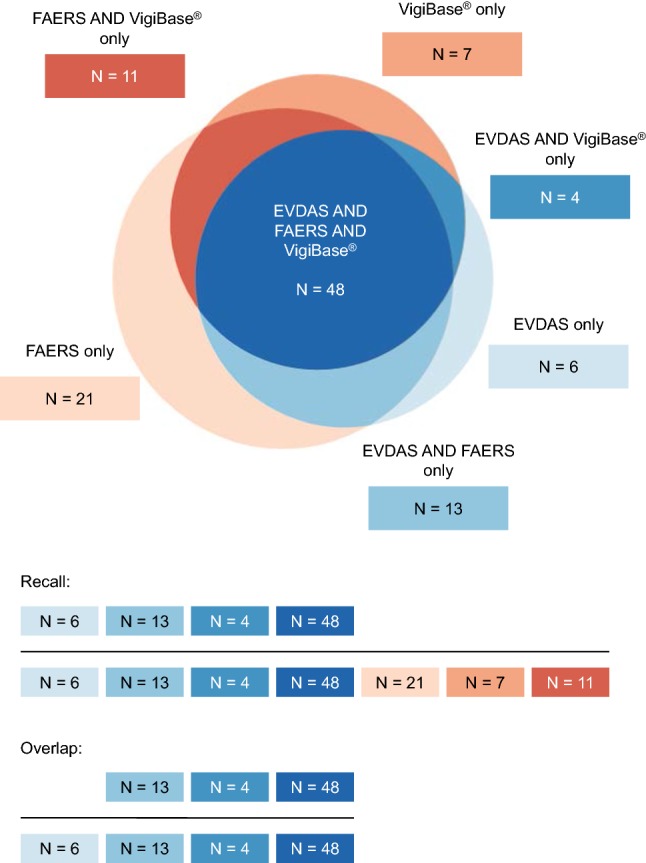
SDRs for 100 selected products were identified with two sets of thresholds (standard EudraVigilance SDR criteria for all vs Bayesian approach for FAERS and VigiBase). Per product and database, the presence or absence of SDRs was determined and compared. Adverse events were considered at three levels: MedDRA Preferred Term (PT), High Level Term (HLT), and HLT combined with Standardized MedDRA Query (SMQ). Redundancy was measured in terms of recall (SDRs in EVDAS divided by SDRs from any database) and overlap (SDRs in EVDAS and at least one other database, divided by SDRs in EVDAS). Covariates with potential impact on results were explored with linear regression models.
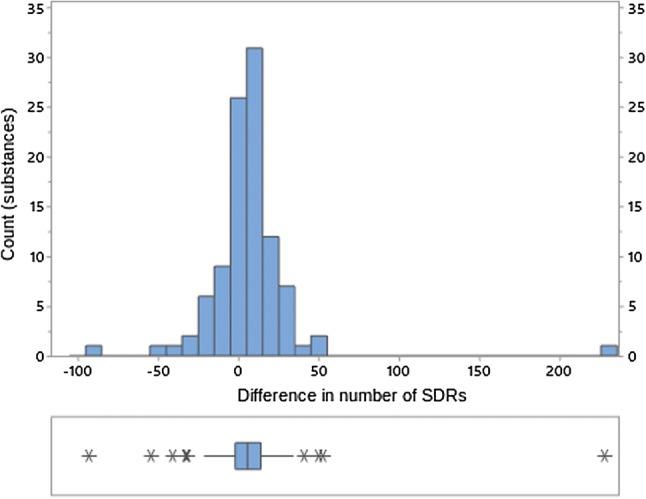
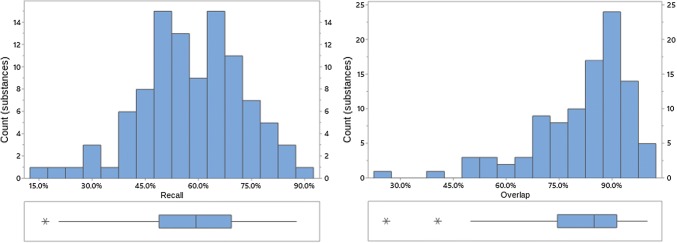
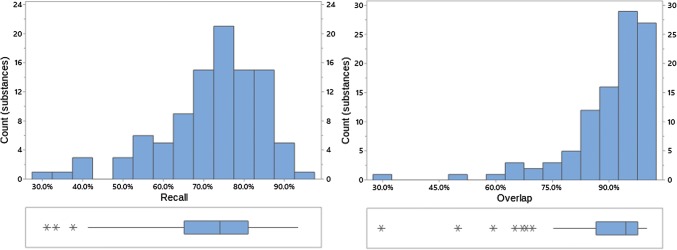
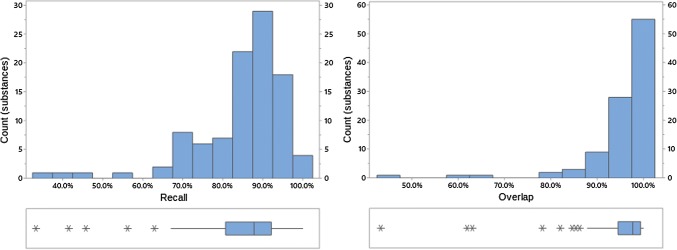
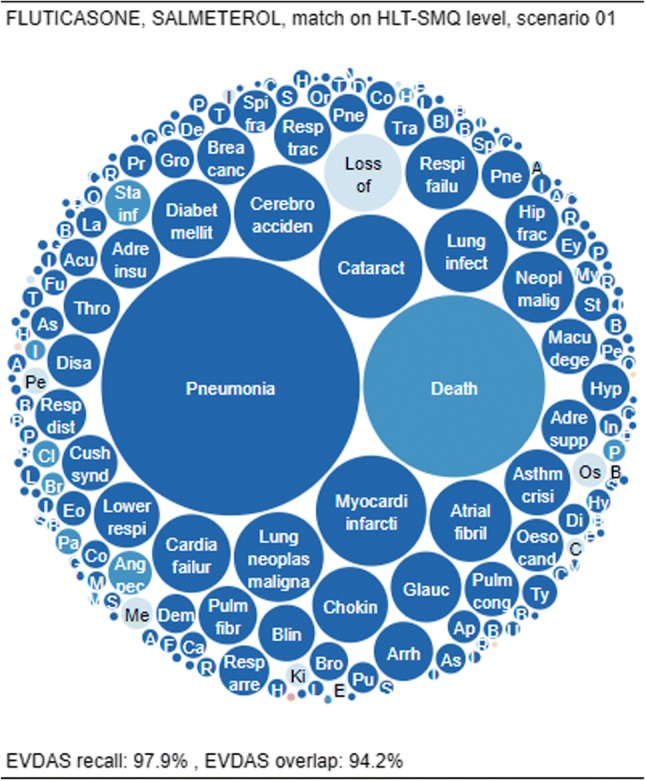
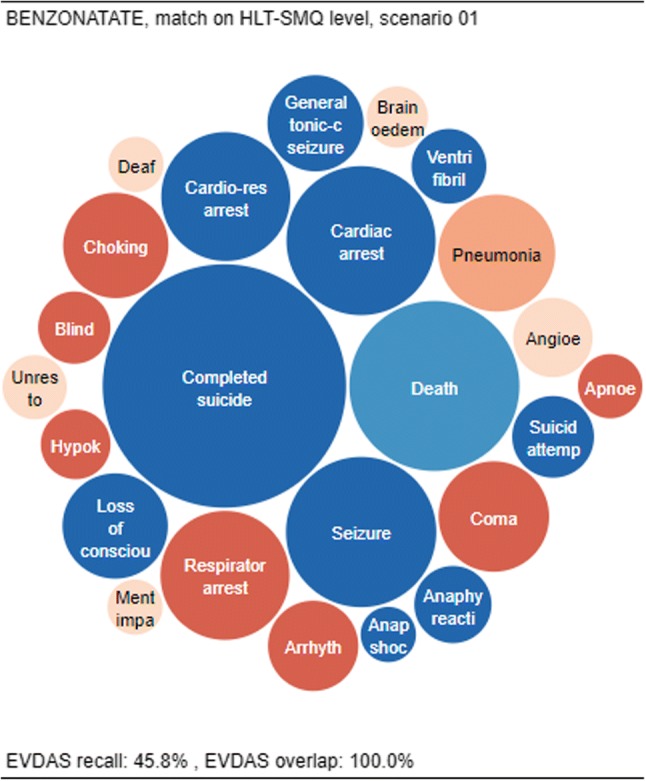
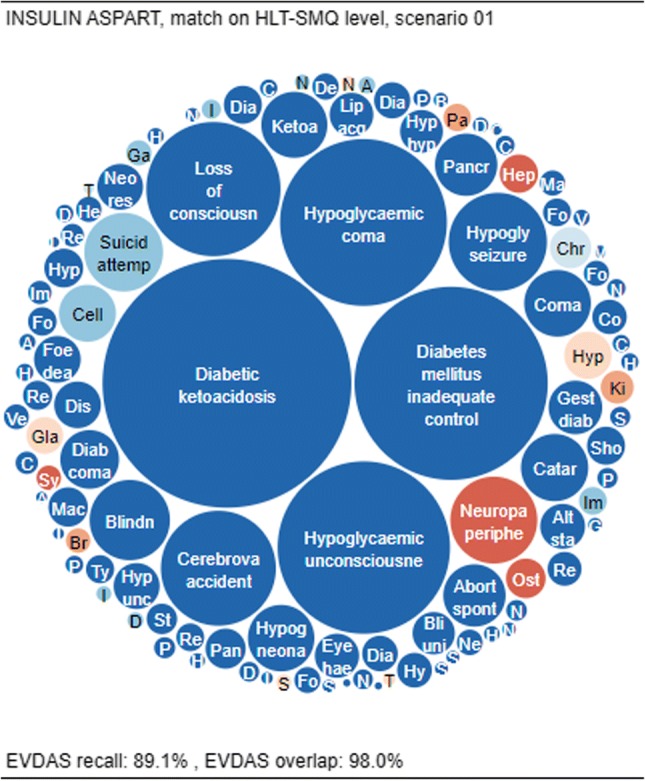
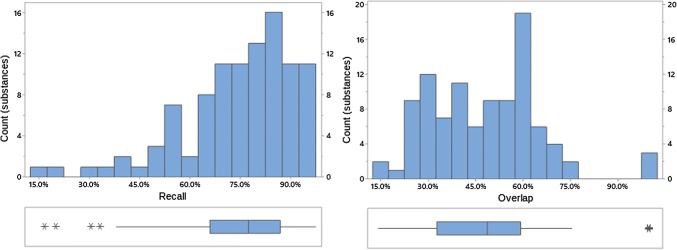
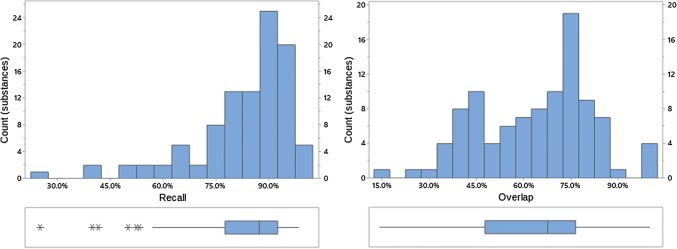
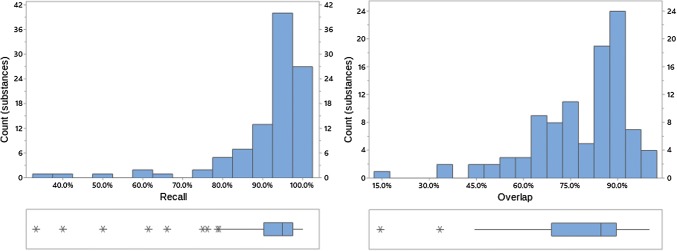
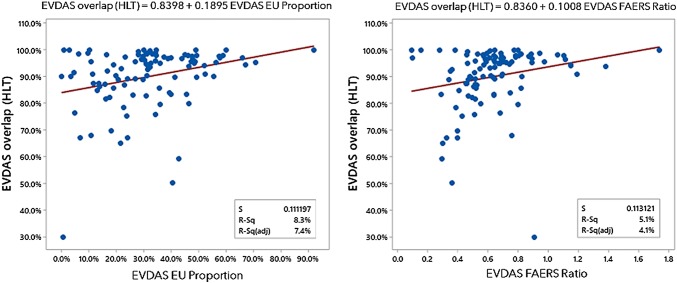
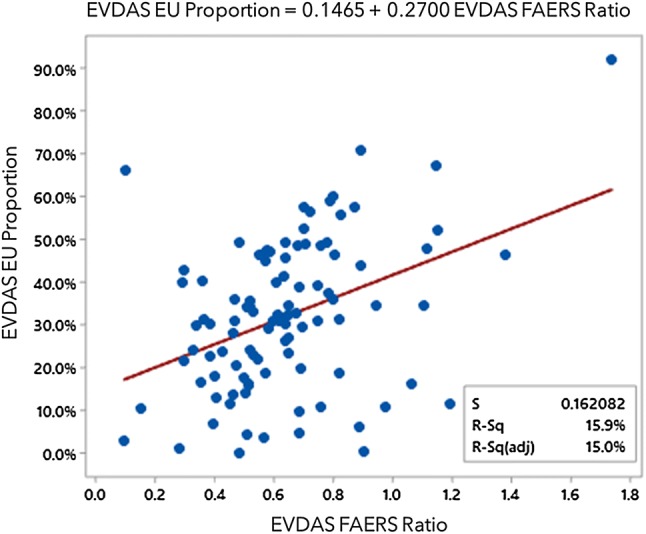
The median overlap between EVDAS and FAERS or VigiBase was 85.0% at the PT level, 94.5% at the HLT level, and 97.7% at the HLT or SMQ level. The corresponding median recall of signals in EVDAS as a percentage of all signals generated in all three databases was 59.4%, 74.1%, and 87.9% at the PT, HLT, and HLT or SMQ levels, respectively. The overlap difference is partially explained by the relative number of EU cases in EudraVigilance and the ratio of EVDAS cases and FAERS cases, presumably due to differences in marketing authorizations, or market penetration in different regions. Products with few cases in EVDAS (< 1500) also display limited recall of signals relative to FAERs/VigiBase. Time-on-market does not predict signal redundancy between the three databases. The choice of the DPA has an expected but somewhat small effect on redundancy.
Organizations typically consider regulatory expectations, operating performance (e.g., positive predictive value), and procedural complexity when selecting databases for signal management. As SDRs can be seen as a proxy of general reporting characteristics identifiable in a systematic screening process, our results indicate that, for most products, these characteristics are largely similar in each of the databases.
食品和药物管理局(FDA)不良事件报告系统(FAERS)和 VigiBase 是两个用于药物安全监测的成熟数据库,最近又增加了 EudraVigilance 数据分析系统(EVDAS)。
比例不当报告信号(SDRs)可以描述药物的报告特征,说明数据库中所有药物和所有事件的分布情况。本研究旨在通过两种基于比例不当的分析(DPA)来量化这三个数据库之间的冗余性。
使用两组阈值(EudraVigilance 的标准 SDR 标准适用于所有药物,贝叶斯方法适用于 FAERS 和 VigiBase)确定了 100 种选定产品的 SDR。对于每种产品和数据库,确定并比较了 SDR 的存在或不存在。将不良反应事件分为三个层次:MedDRA 首选术语(PT)、高级术语(HLT)和 HLT 加上标准化 MedDRA 查询(SMQ)。冗余性是通过召回率(EVDAS 中的 SDR 除以任何数据库中的 SDR)和重叠率(EVDAS 中的 SDR 和至少一个其他数据库中的 SDR,除以 EVDAS 中的 SDR)来衡量的。使用线性回归模型探索了可能影响结果的协变量。
EVDAS 与 FAERS 或 VigiBase 在 PT 水平的中位重叠率为 85.0%,在 HLT 水平的中位重叠率为 94.5%,在 HLT 或 SMQ 水平的中位重叠率为 97.7%。EVDAS 中信号的中位召回率作为所有三种数据库中生成的所有信号的百分比分别为 59.4%、74.1%和 87.9%,分别为 PT、HLT 和 HLT 或 SMQ 水平。重叠差异部分可以用 EudraVigilance 中的欧盟病例相对数量和 EVDAS 病例与 FAERS 病例的比例来解释,可能是由于营销授权的差异,或者是在不同地区的市场渗透程度不同。EVDAS 中病例数较少(<1500)的产品相对于 FAERs/VigiBase 信号的召回率也较低。市场存在时间并不预示着三种数据库之间的信号冗余。DPA 的选择对冗余性有预期的但有些小的影响。
组织在选择用于信号管理的数据库时,通常会考虑监管期望、运营绩效(如阳性预测值)和程序复杂性。由于 SDRs 可以被视为可在系统筛查过程中识别的一般报告特征的代理,因此我们的结果表明,对于大多数产品而言,这些特征在每个数据库中基本相似。