Rajamanickam Vinothkumar, Yan Tao, Wu Liangrong, Zhao Yanni, Xu Xiaohong, Zhu Heping, Chen Xi, Wang Meihong, Liu Zhoudi, Liu Zhiguo, Liang Guang, Wang Yi
Chemical Biology Research Center, School of Pharmaceutical Sciences, Wenzhou Medical University, Wenzhou, Zhejiang 325035, People's Republic of China.
Cancer Manag Res. 2020 Jan 13;12:247-263. doi: 10.2147/CMAR.S227415. eCollection 2020.
Gastric cancer is one of the leading causes of cancer-related deaths. Allylated monocarbonyl analogs of curcumin (MACs) have been reported to selectively inhibit a broad range of human cancers including gastric cancer. However, the precise molecular mechanisms underlying the inhibitory activities of MACs are not fully known.
In this study, we examined the anti-tumor activities of an allylated MAC, CA6, on gastric cancer cells and gastric cancer xenograft mouse model. The potential molecular anti-tumor mechanisms of CA6 were also elucidated.
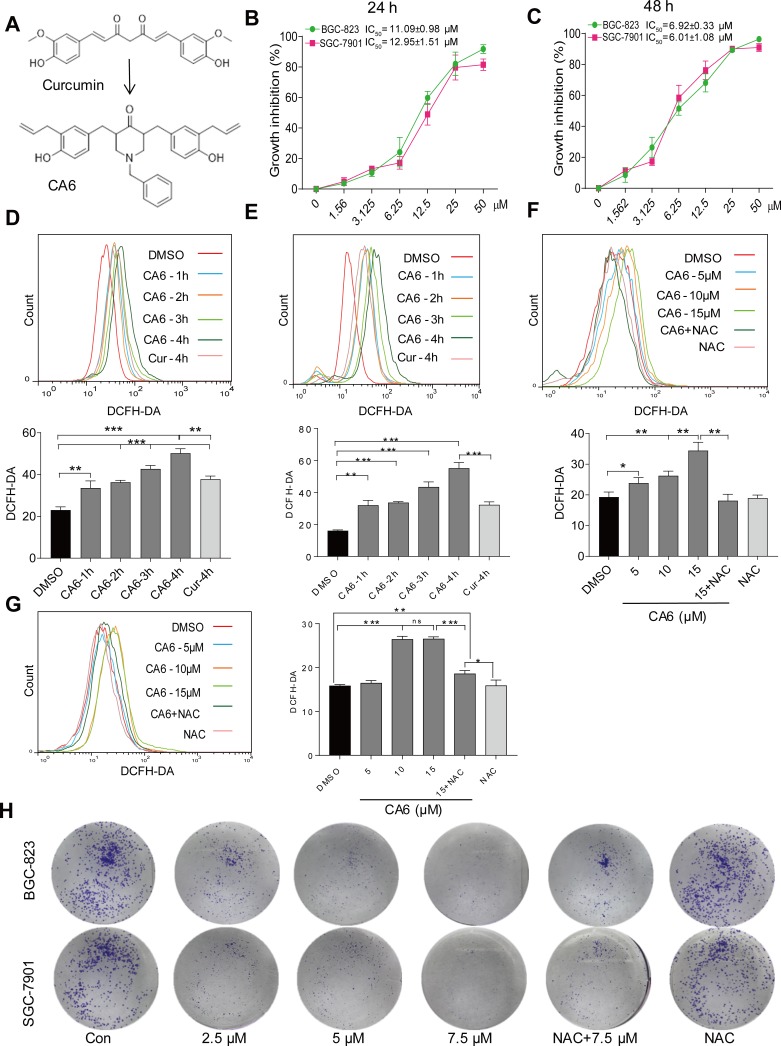
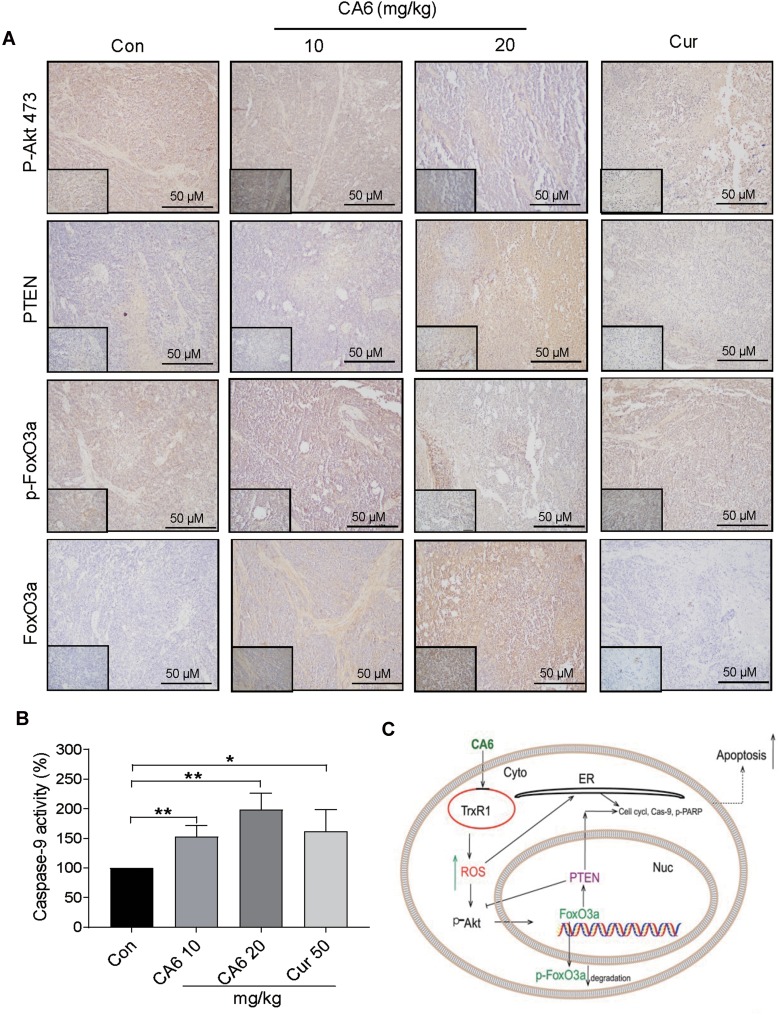
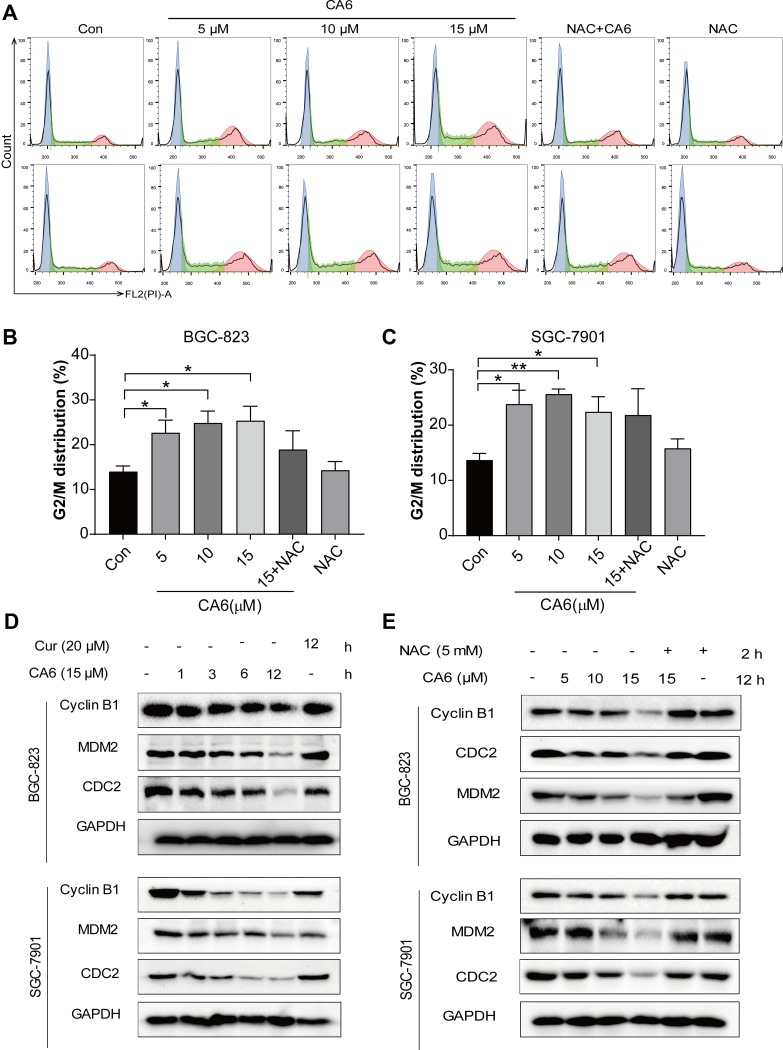
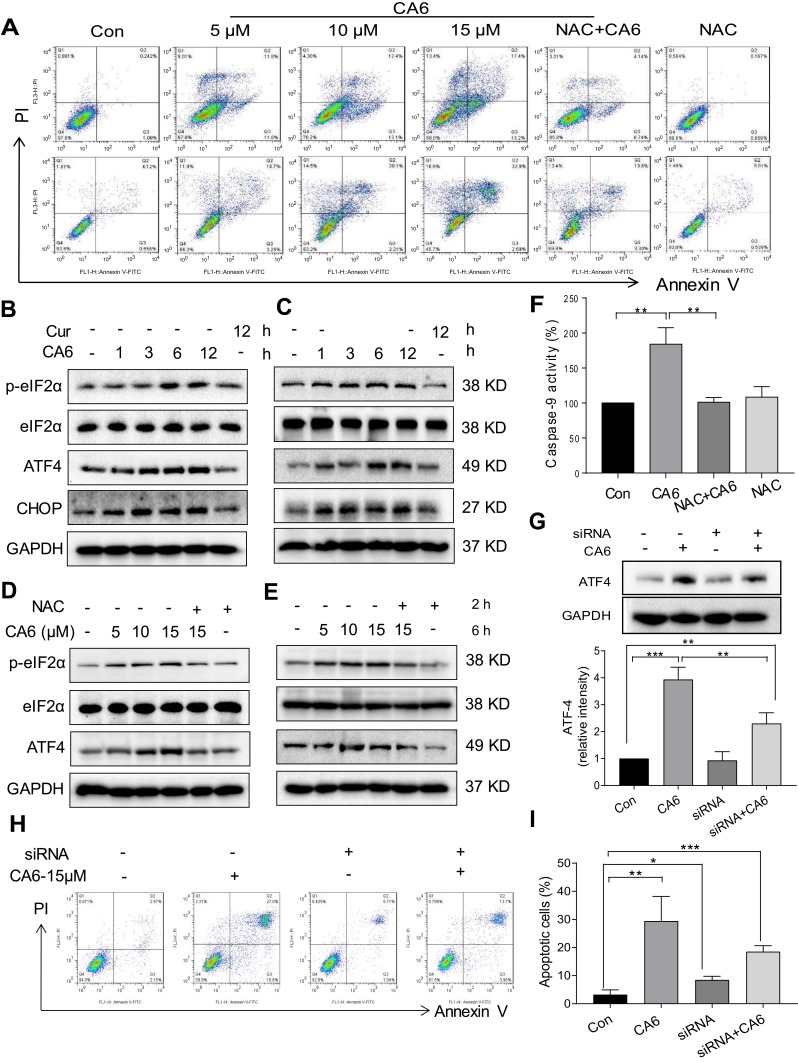
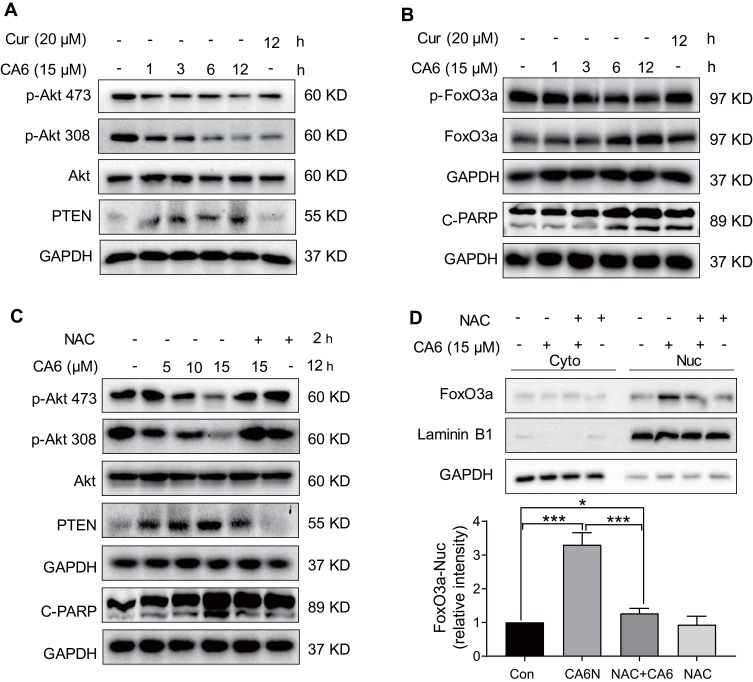
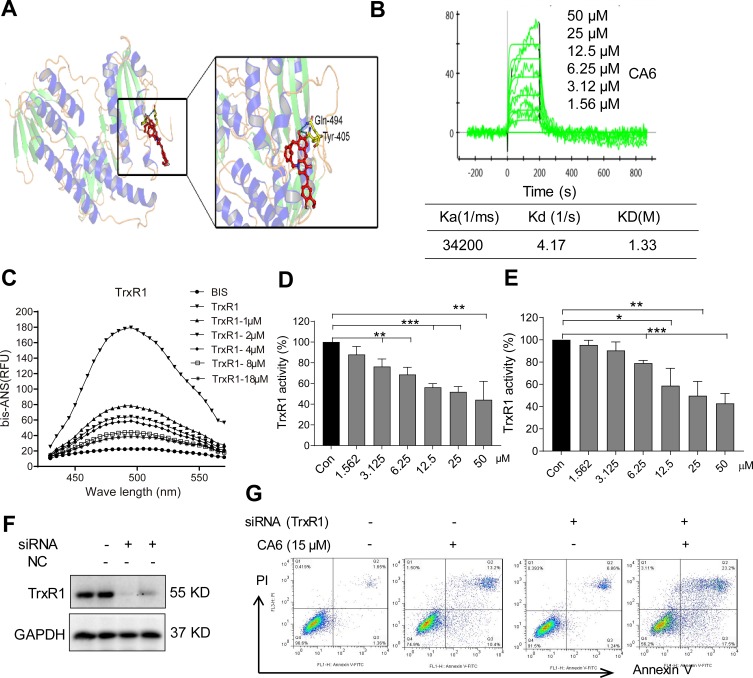
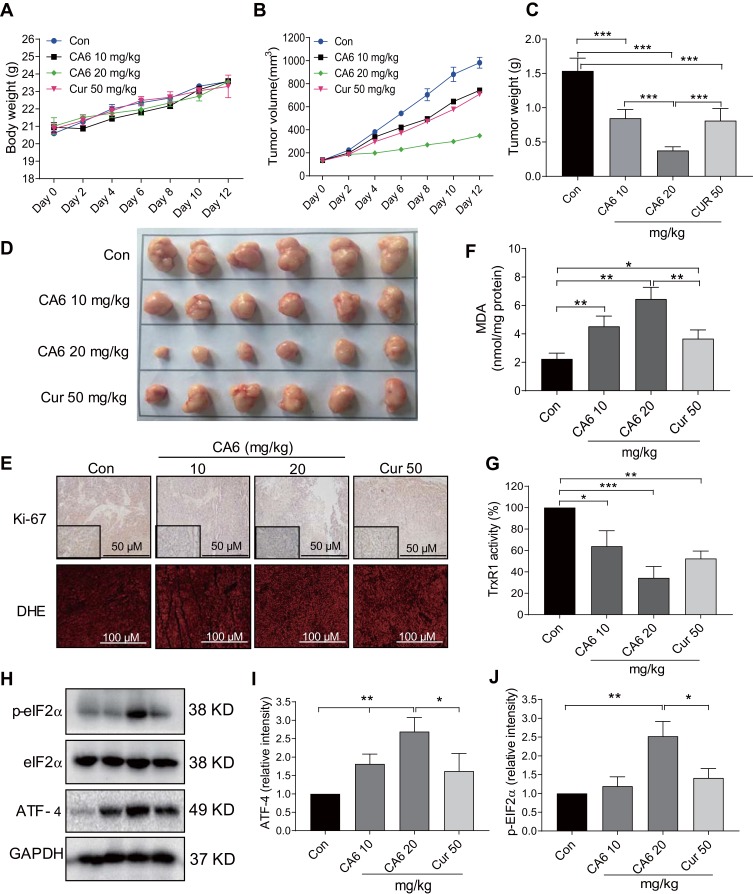
Our data show that CA6 exhibited significant cytotoxicity in gastric cancer cells, which was seen as an induction of G2/M cell cycle arrest and apoptosis. These activities were mediated through an elaboration of ROS levels in gastric cancer cells and induction of endoplasmic reticulum stress. CA6 increased ROS levels through directly binding to and inhibiting thioredoxin reductase R1 (TrxR1). Also, CA6-generated ROS inhibited Akt and activated forkhead O3A (FoxO3a), causing cytotoxicity in gastric cancer cells. Finally, CA6 treatment dose-dependently reduced the growth of gastric cancer xenografts in tumor-bearing mice, which was associated with reduced TrxR1 activity and increased ROS in the tumor.
In summary, our studies demonstrate that CA6 inhibited gastric cancer growth by inhibiting TrxR1 and increasing ROS, which in turn activated FoxO3a through suppressing Akt. CA6 is a potential candidate for the treatment of gastric cancer.
胃癌是癌症相关死亡的主要原因之一。姜黄素的烯丙基化单羰基类似物(MACs)已被报道可选择性抑制包括胃癌在内的多种人类癌症。然而,MACs抑制活性背后的确切分子机制尚不完全清楚。
在本研究中,我们检测了一种烯丙基化MAC,即CA6,对胃癌细胞和胃癌异种移植小鼠模型的抗肿瘤活性。同时也阐明了CA6潜在的分子抗肿瘤机制。
我们的数据表明,CA6在胃癌细胞中表现出显著的细胞毒性,表现为诱导G2/M期细胞周期阻滞和凋亡。这些活性是通过调节胃癌细胞中的活性氧水平和诱导内质网应激介导的。CA6通过直接结合并抑制硫氧还蛋白还原酶R1(TrxR1)来提高活性氧水平。此外,CA6产生的活性氧抑制Akt并激活叉头蛋白O3A(FoxO3a),从而导致胃癌细胞产生细胞毒性。最后,CA6治疗剂量依赖性地降低了荷瘤小鼠体内胃癌异种移植瘤的生长,这与肿瘤中TrxR1活性降低和活性氧增加有关。
总之,我们的研究表明,CA6通过抑制TrxR1和增加活性氧来抑制胃癌生长,进而通过抑制Akt激活FoxO3a。CA6是治疗胃癌的潜在候选药物。