PATH, Geneva, Switzerland.
Palestinian Ministry of Health, Nablus, West Bank.
PLoS One. 2020 Feb 5;15(2):e0228506. doi: 10.1371/journal.pone.0228506. eCollection 2020.
The Palestinian Ministry of Health (MOH) started a routine rotavirus immunization program with ROTARIX in May 2016, with support for vaccine procurement and introduction provided through a global development organization. In 2018, financial responsibility for rotavirus vaccine procurement was transferred to the Palestinian government, which elected to shift to ROTAVAC vaccine because of its lower price per dose. This study aims to assess the cost, impact, and cost-effectiveness of rotavirus vaccination, specifically evaluating the economic implications of the change in vaccine product, accounting for the different characteristics of each rotavirus vaccine used.
We conducted primary and secondary data collection to assess the introduction, procurement, supply chain, and service delivery costs related to each vaccine. We used the UNIVAC model to project costs and benefits of rotavirus vaccination over a 10-year period comparing the use of ROTARIX versus no vaccination; ROTAVAC versus no vaccination; and ROTAVAC versus ROTARIX. We undertook scenario and probabilistic analyses to capture uncertainty in some of the study parameters. We used a 3% discount rate, and all costs are in 2018 US$.
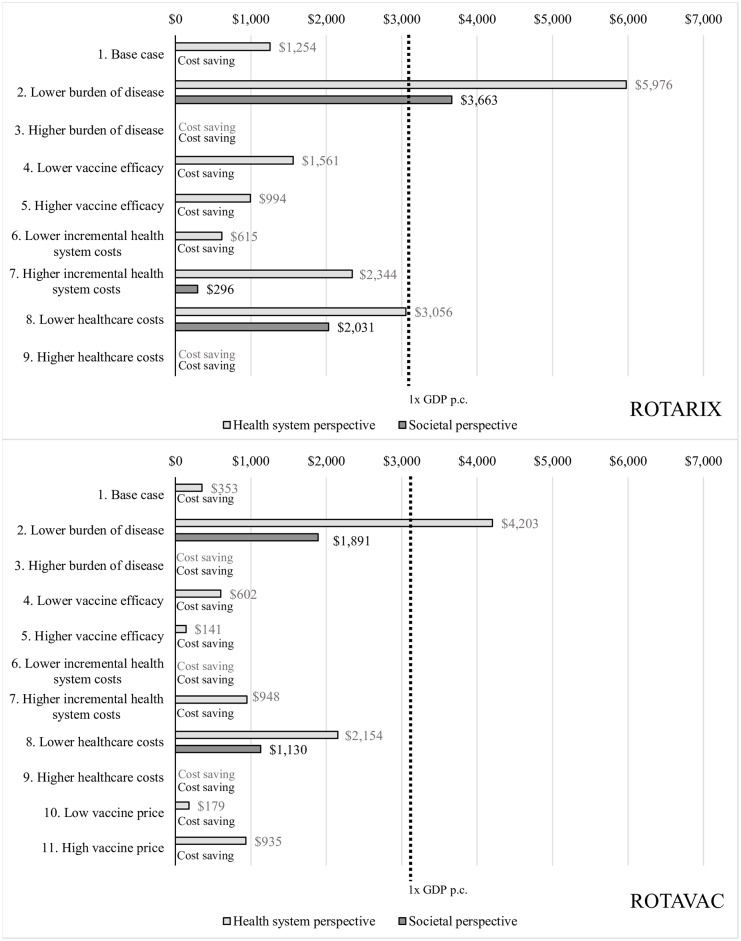
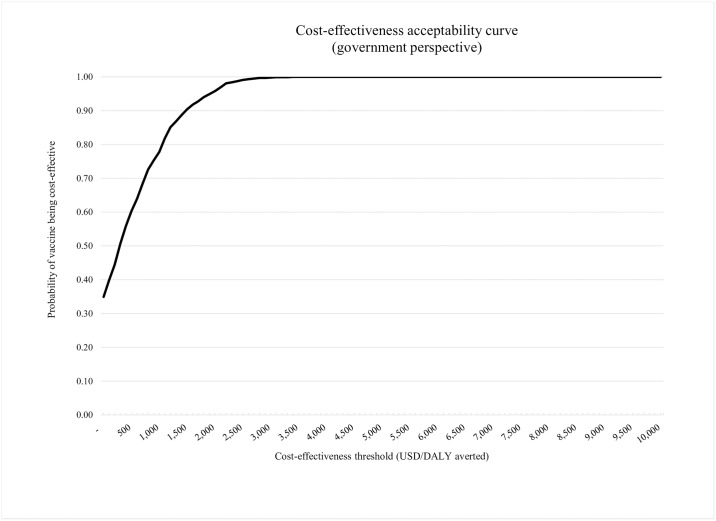
The cost to deliver one dose was lower for ROTAVAC than ROTARIX (US$2.36 versus $2.70), but the total cost per course, excluding vaccine cost, favored ROTARIX ($7.09 versus $5.39). Both vaccines had high probability of being cost-effective interventions in Palestine compared to no vaccine. Because of lower vaccination program costs for ROTAVAC, however, switching from ROTARIX to ROTAVAC was cost-saving.
National decision-makers should consider systematically assessing multiple criteria beyond vaccine price when comparing the health and economic value of several products in order to fully account for all characteristics including product presentation, number of doses per course, cold chain volume, cost of delivery, and wastage.
巴勒斯坦卫生部(MOH)于 2016 年 5 月开始使用 ROTARIX 进行常规轮状病毒免疫计划,全球发展组织为疫苗采购和引进提供支持。2018 年,轮状病毒疫苗采购的财务责任移交给巴勒斯坦政府,政府选择转而使用 ROTAVAC 疫苗,因为其每剂量价格较低。本研究旨在评估轮状病毒疫苗接种的成本、影响和成本效益,特别是评估疫苗产品变化的经济影响,考虑到使用的每种轮状病毒疫苗的不同特点。
我们进行了初级和二级数据收集,以评估与每种疫苗相关的引入、采购、供应链和服务提供成本。我们使用 UNIVAC 模型预测在 10 年内接种轮状病毒疫苗的成本和收益,比较使用 ROTARIX 与不接种疫苗、ROTAVAC 与不接种疫苗以及 ROTAVAC 与 ROTARIX 的情况。我们进行了情景和概率分析,以捕捉研究参数中的一些不确定性。我们使用 3%的贴现率,所有成本均以 2018 年美元计。
ROTAVAC 每剂接种成本低于 ROTARIX(2.36 美元对 2.70 美元),但不包括疫苗成本的每疗程总成本,ROTARIX 更具优势(7.09 美元对 5.39 美元)。与不接种疫苗相比,两种疫苗在巴勒斯坦都具有很高的成本效益干预措施的可能性。然而,由于 ROTAVAC 疫苗接种计划成本较低,因此从 ROTARIX 切换到 ROTAVAC 具有成本效益。
国家决策者在比较几种产品的健康和经济价值时,应考虑系统地评估除疫苗价格以外的多个标准,以充分考虑所有特征,包括产品展示、每疗程剂量、冷链量、交付成本和浪费。