Facultad de Ciencias Químicas, Universidad Autónoma de Nuevo León, Av. Universidad S/N Ciudad Universitaria, C.P. 66451, San Nicolás de los Garza, Nuevo León, Mexico.
Servicio de Gastroenterología Hospital Universitario Dr. José Eleuterio González, Universidad Autónoma de Nuevo León, Av. Gonzalitos y Madero S/N, Col. Mitras Centro, C.P. 64460, Monterrey, Nuevo León, Mexico.
Int J Mol Sci. 2020 Jan 31;21(3):930. doi: 10.3390/ijms21030930.
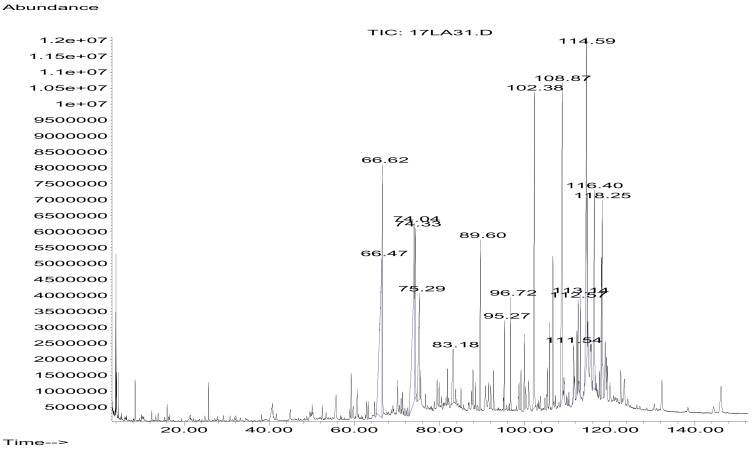
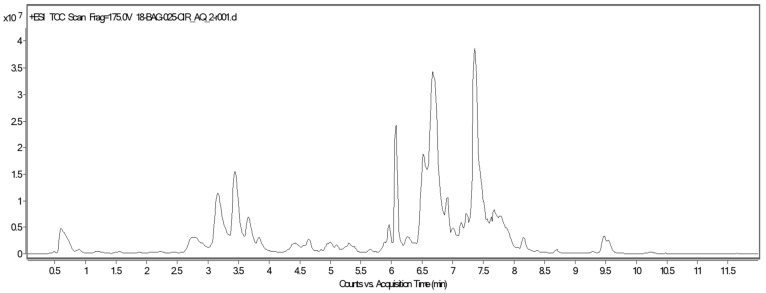
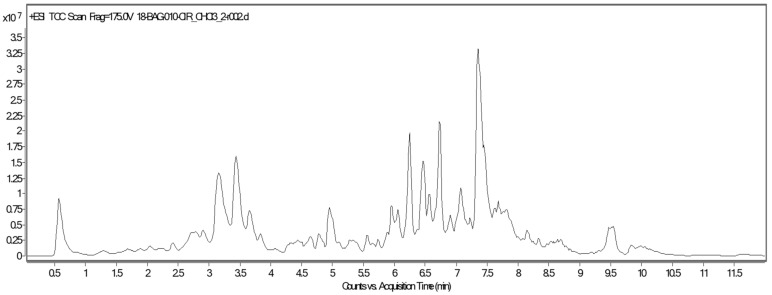
(L.) L belongs to the Vitaceae family and is an important medicinal plant used in Mexico for the management of infectious diseases and tumors. The present study aimed to evaluate the metabolic profile of the stems of and to correlate the results with their antibacterial and cytotoxic activities. The hexane extract was analyzed using gas chromatography coupled with mass spectrometry (GC-MS) and the CHCl-MeOH and aqueous extracts by ultraperformance liquid chromatography quadrupole time of fly mass spectrometry (UPLC-QTOF-MS). The antibacterial activity was determined by broth microdilution and the cytotoxicity was evaluated using MTS cell proliferation assay. Forty-six metabolites were putatively identified from the three extracts. Overall, terpenes, flavonoids and stilbenes characterize the metabolic profile. No antibacterial activity was found in any extract against the fifteen bacteria strains tested (MIC >500 µg/mL). However, high cytotoxic activity (IC ≤ 30 µg/mL) was found in the hexane and aqueous extracts against hepatocarcinoma and breast cancer cells (Hep3B, HepG2 and MCF7). This is the first report of the bioactive compounds of stems and their antibacterial and cytotoxic properties. The metabolic profile rich in anticancer compounds correlate with the cytotoxic activity of the extracts from the stems of . This study shows the antitumor effects of this plant used in the traditional medicine and justifies further research of its anticancer activity.
(L.)L 属于葡萄科,是墨西哥用于治疗传染病和肿瘤的一种重要药用植物。本研究旨在评估 的茎的代谢物谱,并将结果与其抗菌和细胞毒性活性相关联。使用气相色谱-质谱联用 (GC-MS) 分析正己烷提取物,使用超高效液相色谱-四极杆飞行时间质谱联用 (UPLC-QTOF-MS) 分析 CHCl-MeOH 和水提取物。通过肉汤微量稀释法测定抗菌活性,通过 MTS 细胞增殖测定法评估细胞毒性。从三种提取物中推测出 46 种代谢产物。总体而言,萜类、黄酮类和芪类化合物构成了代谢物谱。任何提取物对测试的十五种细菌菌株均无抗菌活性(MIC>500μg/mL)。然而,正己烷和水提取物对肝癌和乳腺癌细胞(Hep3B、HepG2 和 MCF7)具有高细胞毒性活性(IC≤30μg/mL)。这是首次报道 的茎的生物活性化合物及其抗菌和细胞毒性特性。富含抗癌化合物的代谢物谱与提取物的细胞毒性活性相关联。本研究显示了该植物在传统医学中的抗肿瘤作用,并证明了进一步研究其抗癌活性的合理性。