Jankovska-Bortkevič Elžbieta, Gavelienė Virgilija, Šveikauskas Vaidevutis, Mockevičiūtė Rima, Jankauskienė Jurga, Todorova Dessislava, Sergiev Iskren, Jurkonienė Sigita
Nature Research Centre, Laboratory of Plant Physiology, Akademijos Str. 2, LT-08412 Vilnius, Lithuania.
Bulgarian Academy of Sciences, Institute of Plant Physiology and Genetics, Acad. G. Bonchev Str. Bl. 21, Sofia BG-1113, Bulgaria.
Plants (Basel). 2020 Feb 1;9(2):179. doi: 10.3390/plants9020179.
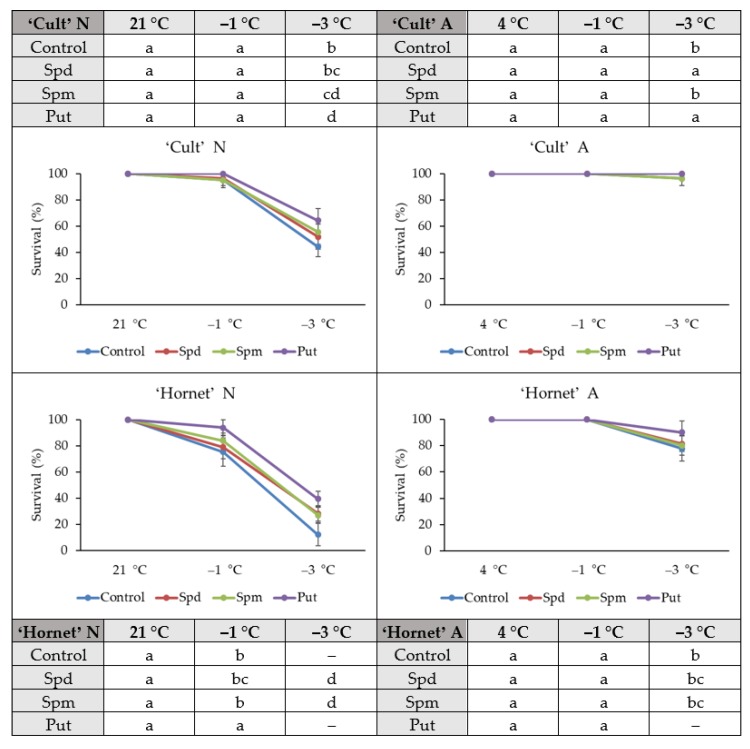
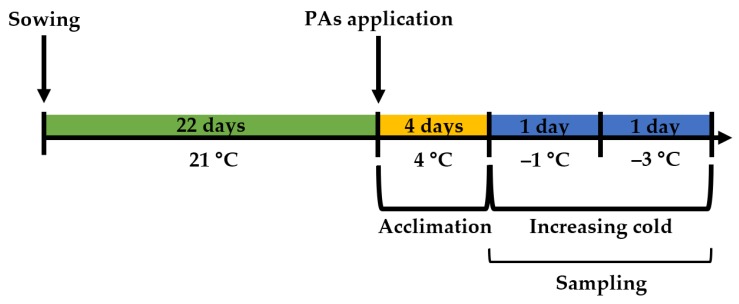
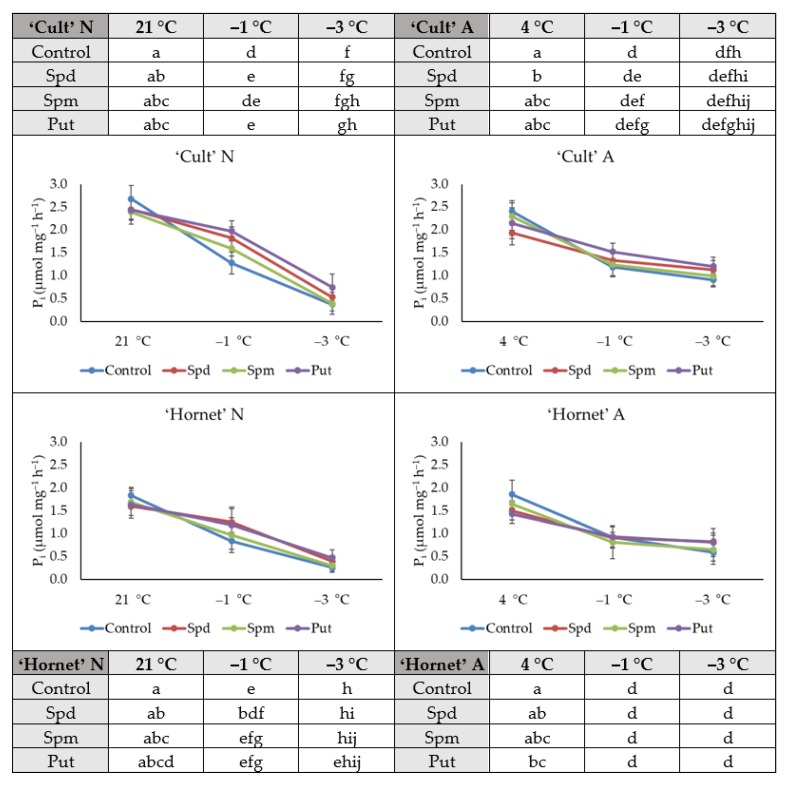
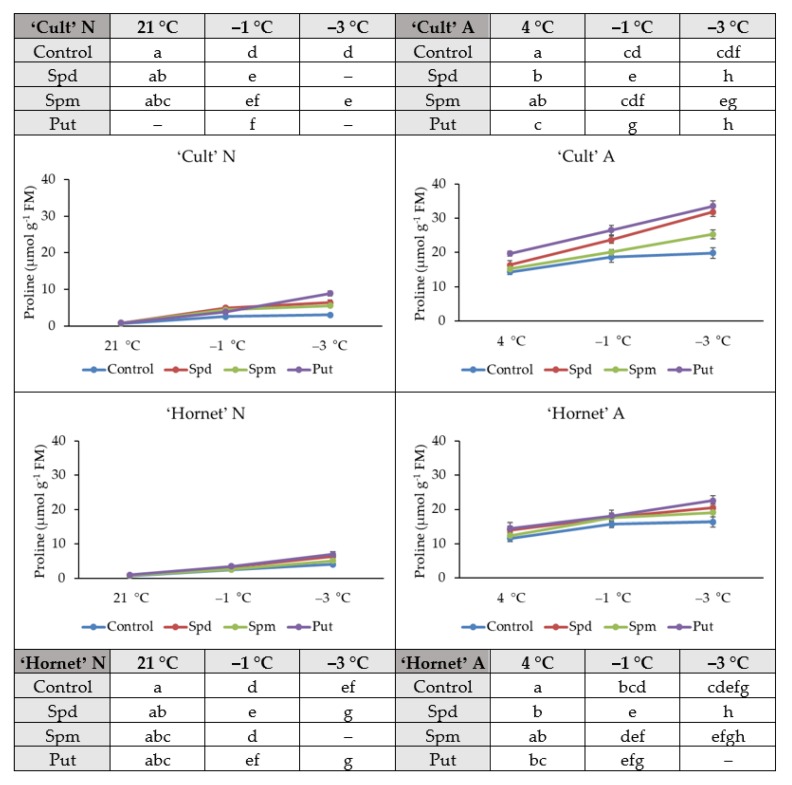
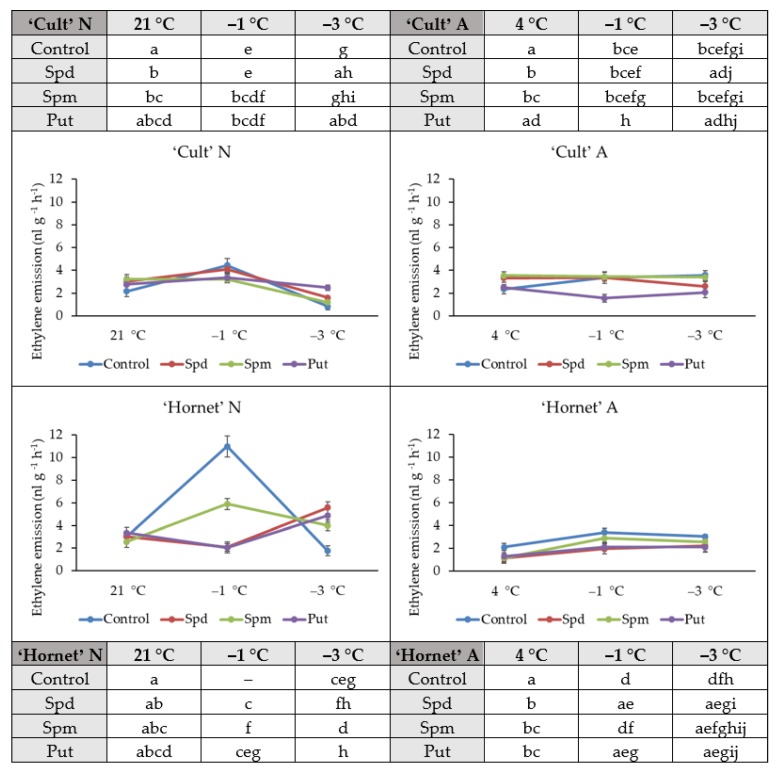
Cold stress is one of the most common abiotic stresses experienced by plants and is caused by low temperature extremes and variations. Polyamines (PAs) have been reported to contribute in abiotic stress defense processes in plants. The present study investigates the survival and responses of PA-treated non-acclimated (N) and acclimated (A) winter oilseed rape to increasing cold conditions. The study was conducted under controlled conditions. Seedlings were foliarly sprayed with spermidine (Spd), spermine (Spm), and putrescine (Put) solutions (1 mM) and exposed to four days of cold acclimation (4 °C) and two days of increasing cold (from -1 to -3 °C). Two cultivars with different cold tolerance were used in this study. The recorded traits included the percentage of survival, H-ATPase activity, proline accumulation, and ethylene emission. Exogenous PA application improved cold resistance, maintained the activity of plasma membrane H-ATPase, increased content of free proline, and delayed stimulation of ethylene emission under increasing cold. The results of the current study on winter oilseed rape revealed that foliar application of PAs may activate a defensive response (act as elicitor to trigger physiological processes), which may compensate the negative impact of cold stress. Thus, cold tolerance of winter oilseed rape can be enhanced by PA treatment.
冷胁迫是植物所经历的最常见的非生物胁迫之一,由极端低温和温度变化引起。据报道,多胺(PAs)在植物的非生物胁迫防御过程中发挥作用。本研究调查了经多胺处理的未驯化(N)和驯化(A)的冬油菜在不断降低的寒冷条件下的存活情况和反应。该研究在可控条件下进行。对幼苗进行叶面喷施亚精胺(Spd)、精胺(Spm)和腐胺(Put)溶液(1 mM),并使其经历四天的冷驯化(4℃)和两天的逐渐降温(从-1℃降至-3℃)。本研究使用了两个耐寒性不同的品种。记录的性状包括存活率、H-ATP酶活性、脯氨酸积累量和乙烯释放量。在逐渐降温的情况下,外源施用多胺提高了抗寒性,维持了质膜H-ATP酶的活性,增加了游离脯氨酸的含量,并延迟了乙烯释放的刺激。目前对冬油菜的研究结果表明,叶面喷施多胺可能会激活防御反应(作为激发子触发生理过程),这可能补偿冷胁迫的负面影响。因此,通过多胺处理可以提高冬油菜的耐寒性。