Zhao Yongguo, Kong Hua, Guo Yunling, Zou Zhi
Guangdong University of Petrochemical Technology, Maoming, China.
Key Laboratory of Biology and Genetic Resources of Tropical Crops, Ministry of Agriculture and Rural Affairs, Hainan Key Laboratory for Biosafety Monitoring and Molecular Breeding in Off-Season Reproduction Regions, Institute of Tropical Biosciences and Biotechnology, Chinese Academy of Tropical Agricultural Science, Haikou, China.
PeerJ. 2020 Jan 28;8:e8465. doi: 10.7717/peerj.8465. eCollection 2020.
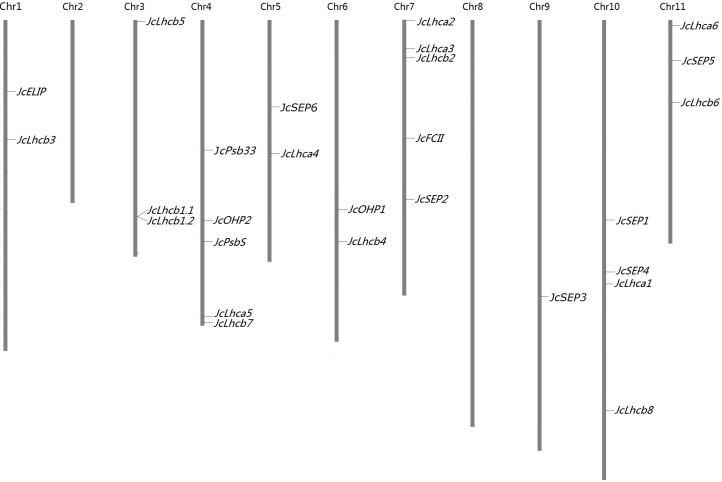
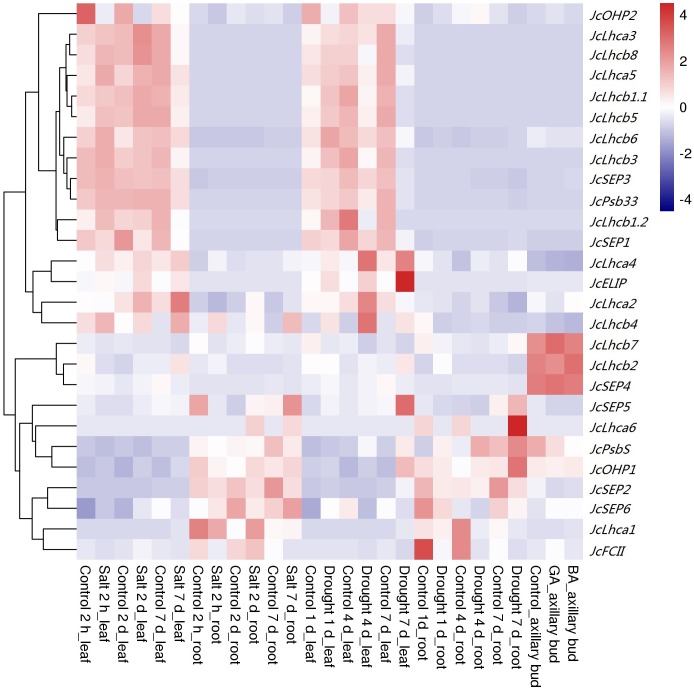
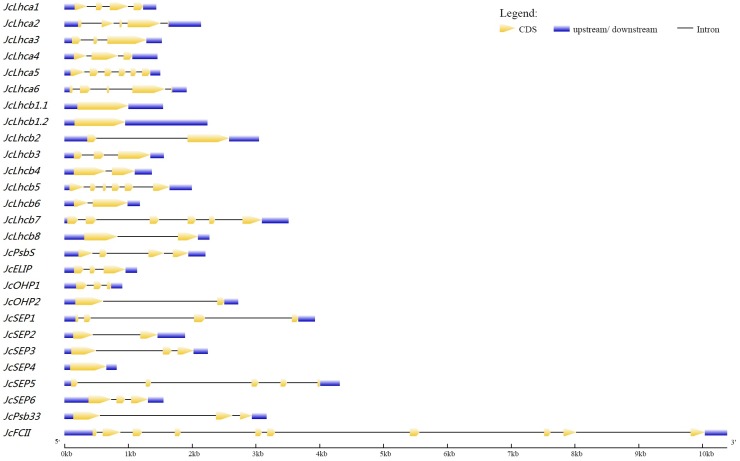
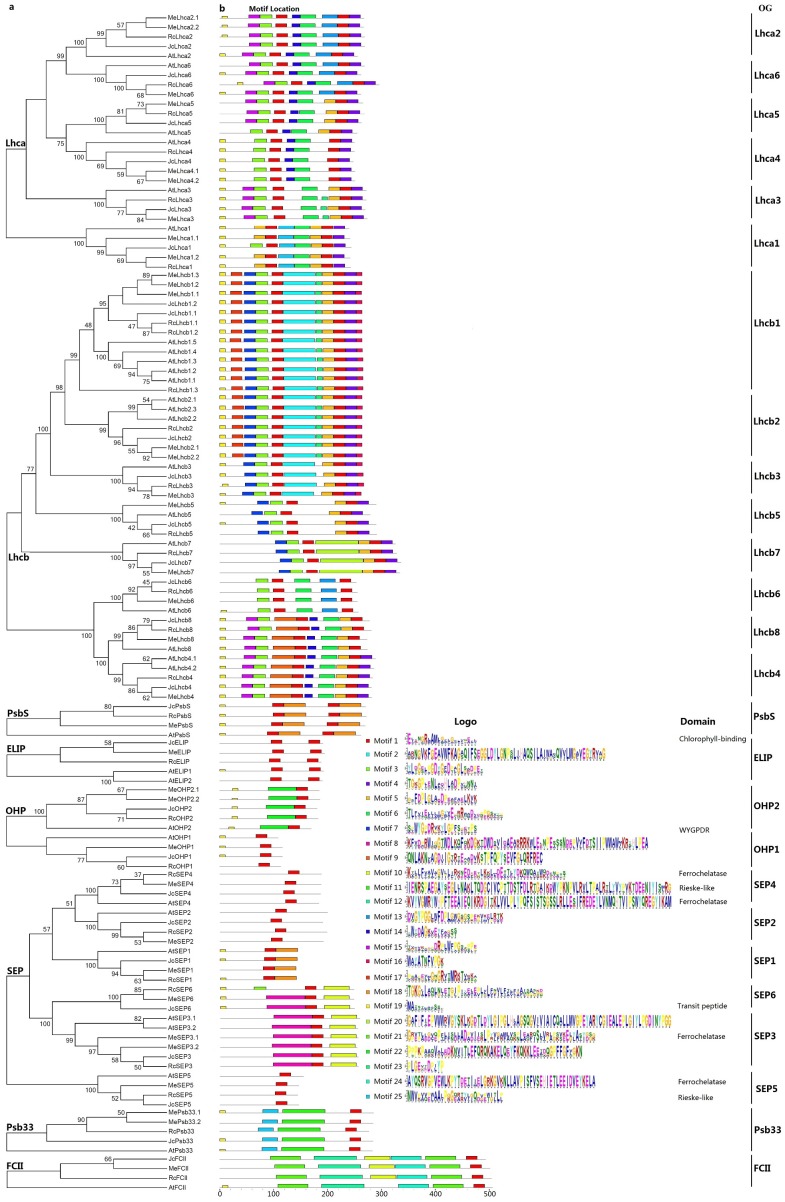
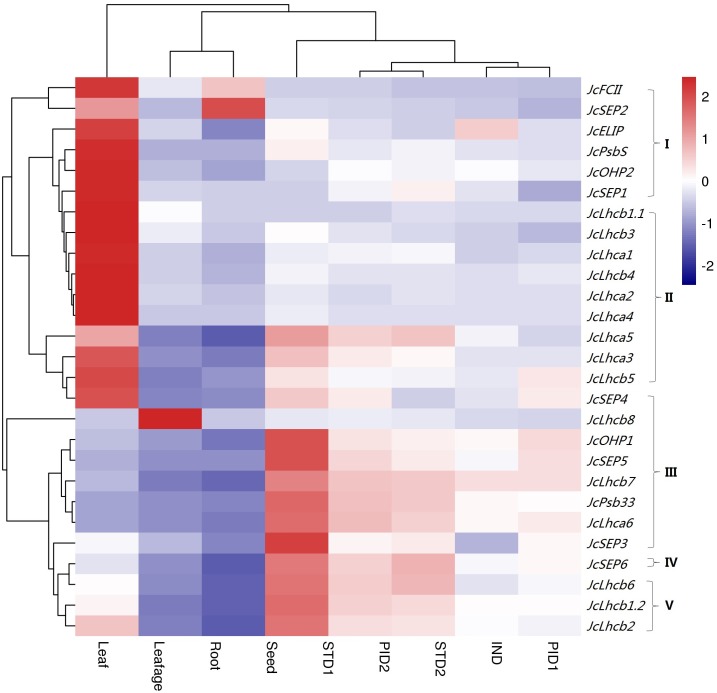
The Lhc (light-harvesting chlorophyll a/b-binding protein) superfamily represents a class of antennae proteins that play indispensable roles in capture of solar energy as well as photoprotection under stress conditions. Despite their importance, little information has been available beyond model plants. In this study, we presents a first genome-wide analysis of superfamily genes in jatropha ( L., Euphorbiaceae), an oil-bearing plant for biodiesel purpose. A total of 27 members were identified from the jatropha genome, which were shown to distribute over nine out of the 11 chromosomes. The superfamily number is comparable to 28 present in castor (, Euphorbiaceae), but relatively less than 35 in cassava (, Euphorbiaceae) and 34 in arabidopsis () that experienced one or two recent whole-genome duplications (WGDs), respectively. In contrast to a high number of paralogs present in cassava and arabidopsis, few duplicates were found in jatropha as observed in castor, corresponding to no recent WGD occurred in these two species. Nevertheless, 26 orthologous groups representing four defined families were found in jatropha, and nearly one-to-one orthologous relationship was observed between jatropha and castor. By contrast, a novel group named SEP6 was shown to have been lost in arabidopsis. Global transcriptome profiling revealed a predominant expression pattern of most superfamily genes in green tissues, reflecting their key roles in photosynthesis. Moreover, their expression profiles upon hormones, drought, and salt stresses were also investigated. These findings not only improve our knowledge on species-specific evolution of the supergene family, but also provide valuable information for further studies in jatropha.
捕光叶绿素a/b结合蛋白(Lhc)超家族是一类天线蛋白,在捕获太阳能以及胁迫条件下的光保护过程中发挥着不可或缺的作用。尽管它们很重要,但除了模式植物外,几乎没有相关信息。在本研究中,我们首次对麻风树(大戟科)中的该超家族基因进行了全基因组分析,麻风树是一种用于生产生物柴油的含油植物。从麻风树基因组中总共鉴定出27个成员,它们分布在11条染色体中的9条上。该超家族的数量与蓖麻(大戟科)中的28个相当,但相对少于木薯(大戟科)中的35个和拟南芥中的34个,木薯和拟南芥分别经历了一次或两次近期的全基因组复制(WGD)。与木薯和拟南芥中存在大量旁系同源物不同,在麻风树中发现的重复序列很少,蓖麻也是如此,这表明这两个物种近期没有发生WGD。然而,在麻风树中发现了代表四个特定家族的26个直系同源组,并且在麻风树和蓖麻之间观察到了几乎一对一的直系同源关系。相比之下,一个名为SEP6的新组在拟南芥中已丢失。全球转录组分析揭示了大多数超家族基因在绿色组织中的主要表达模式,反映了它们在光合作用中的关键作用。此外,还研究了它们在激素、干旱和盐胁迫下的表达谱。这些发现不仅增进了我们对该超基因家族物种特异性进化的了解,也为麻风树的进一步研究提供了有价值的信息。