Center of Excellence in Bionanoscience Research, King Abdulaziz University, Jeddah, Saudi Arabia.
Genomics and Biotechnology Section and Research Group, Department of Biological Sciences, Faculty of Science, King Abdulaziz University, Jeddah, Saudi Arabia.
PLoS One. 2020 Feb 6;15(2):e0228400. doi: 10.1371/journal.pone.0228400. eCollection 2020.
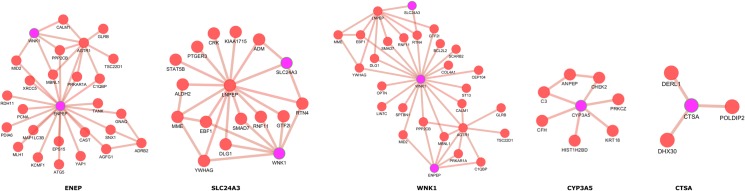
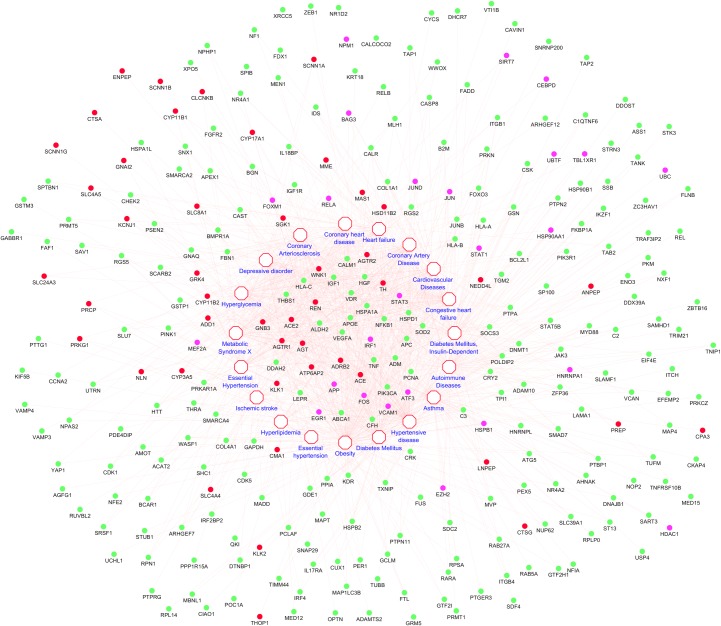
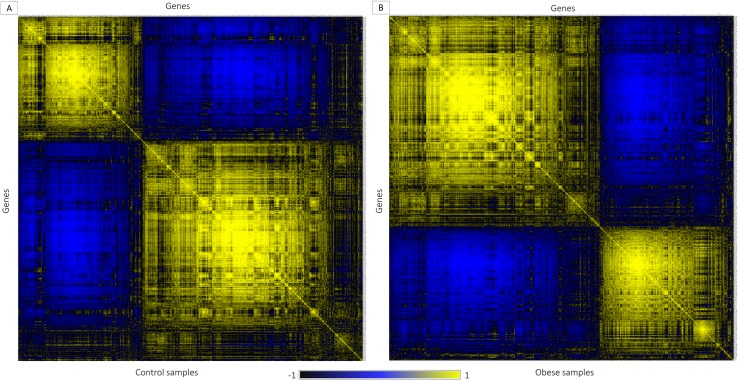
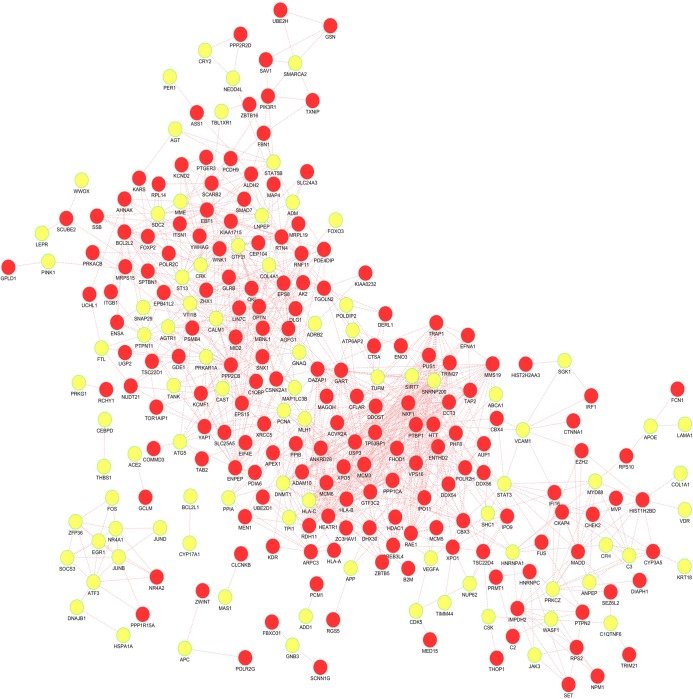
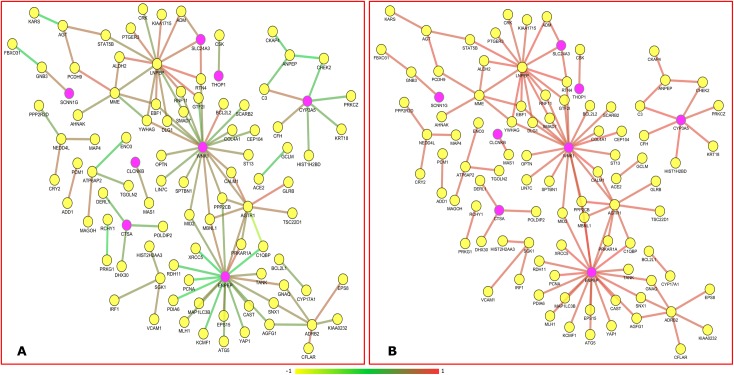
Obesity is a multifactorial disease caused by complex interactions between genes and dietary factors. Salt-rich diet is related to the development and progression of several chronic diseases including obesity. However, the molecular basis of how salt sensitivity genes (SSG) contribute to adiposity in obesity patients remains unexplored. In this study, we used the microarray expression data of visceral adipose tissue samples and constructed a complex protein-interaction network of salt sensitivity genes and their co-expressed genes to trace the molecular pathways connected to obesity. The Salt Sensitivity Protein Interaction Network (SSPIN) of 2691 differentially expressed genes and their 15474 interactions has shown that adipose tissues are enriched with the expression of 23 SSGs, 16 hubs and 84 bottlenecks (p = 2.52 x 10⁻¹⁶) involved in diverse molecular pathways connected to adiposity. Fifteen of these 23 SSGs along with 8 other SSGs showed a co-expression with enriched obesity-related genes (r ≥ 0.8). These SSGs and their co-expression partners are involved in diverse metabolic pathways including adipogenesis, adipocytokine signaling pathway, renin-angiotensin system, etc. This study concludes that SSGs could act as molecular signatures for tracing the basis of adipogenesis among obese patients. Integrated network centered methods may accelerate the identification of new molecular targets from the complex obesity genomics data.
肥胖是一种由基因和饮食因素复杂相互作用引起的多因素疾病。高盐饮食与多种慢性疾病的发展和进展有关,包括肥胖。然而,盐敏感基因 (SSG) 如何导致肥胖患者肥胖的分子基础仍未被探索。在这项研究中,我们使用内脏脂肪组织样本的微阵列表达数据构建了盐敏感基因及其共表达基因的复杂蛋白质相互作用网络,以追踪与肥胖相关的分子途径。2691 个差异表达基因及其 15474 个相互作用的盐敏感性蛋白相互作用网络 (SSPIN) 表明,脂肪组织富含 23 个 SSG、16 个枢纽和 84 个瓶颈的表达(p = 2.52 x 10⁻¹⁶),这些基因参与与肥胖相关的不同分子途径。这 23 个 SSG 中的 15 个以及其他 8 个 SSG 与富含肥胖相关基因的表达呈共表达(r≥0.8)。这些 SSG 及其共表达伙伴参与多种代谢途径,包括脂肪生成、脂肪细胞因子信号通路、肾素-血管紧张素系统等。这项研究得出结论,SSG 可以作为追踪肥胖患者脂肪生成基础的分子特征。集成网络中心方法可能会加速从复杂肥胖基因组学数据中识别新的分子靶标。