Department of Medical Physics, University of Wisconsin School of Medicine and Public Health, University of Wisconsin-Madison, Madison, WI 53706, United States of America. Department of Electrical and Computer Engineering, University of Wisconsin-Madison, Madison, WI 53706, United States of America. Author to whom any correspondence should be addressed.
Phys Med Biol. 2020 Mar 19;65(6):065008. doi: 10.1088/1361-6560/ab735f.
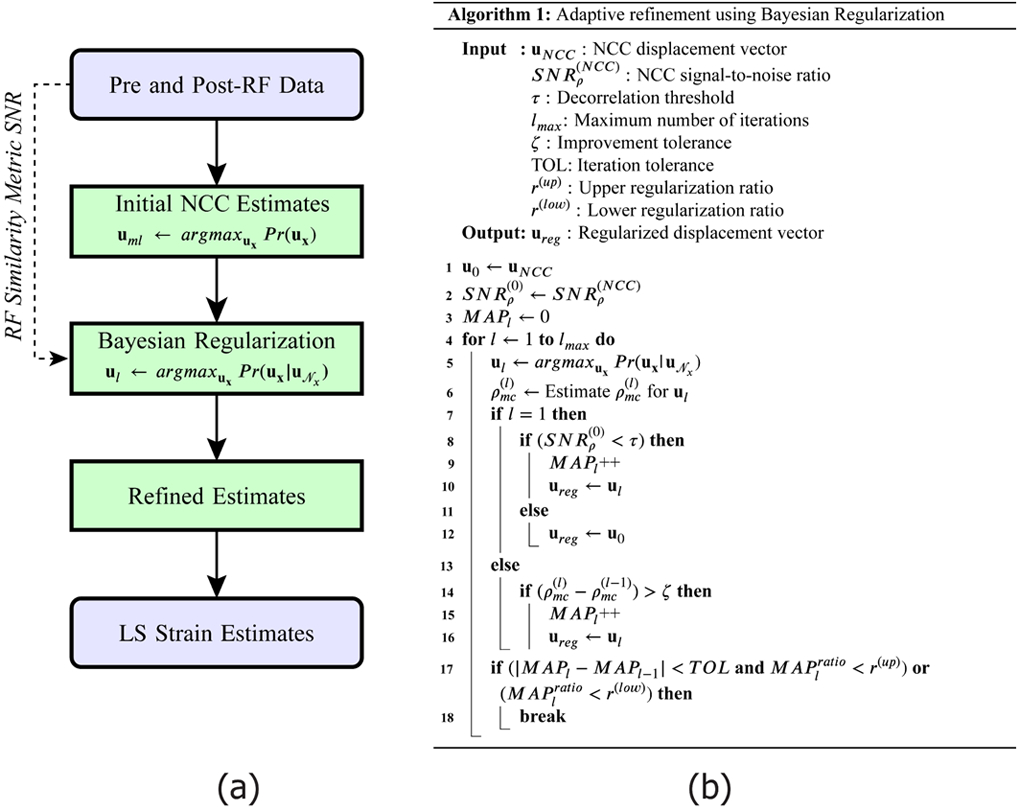
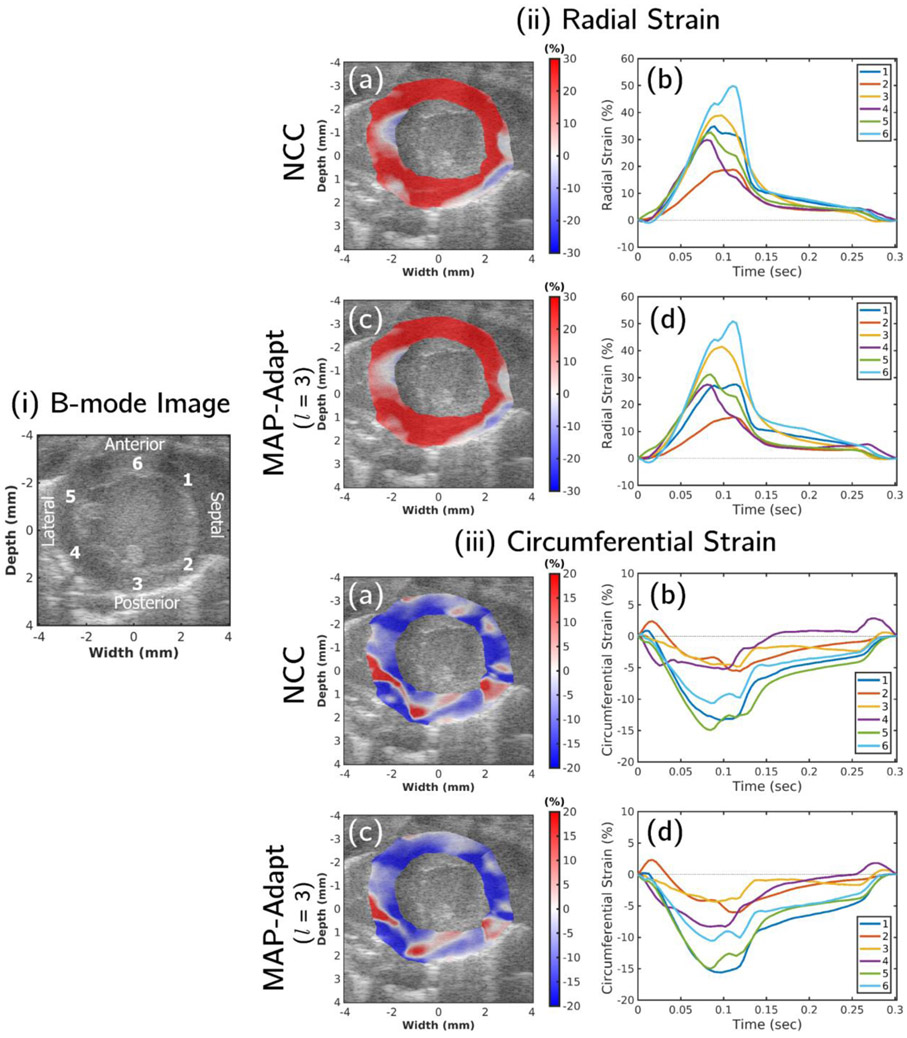
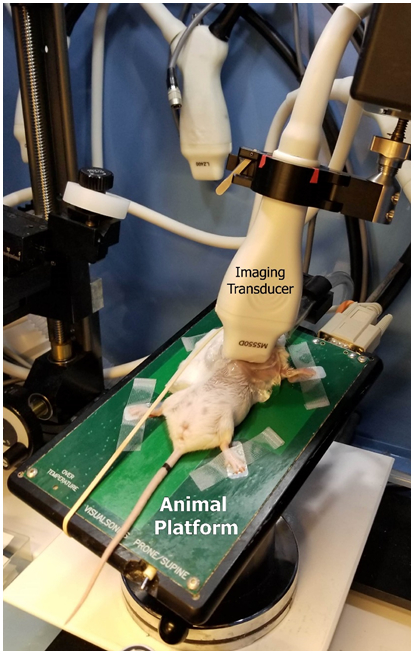
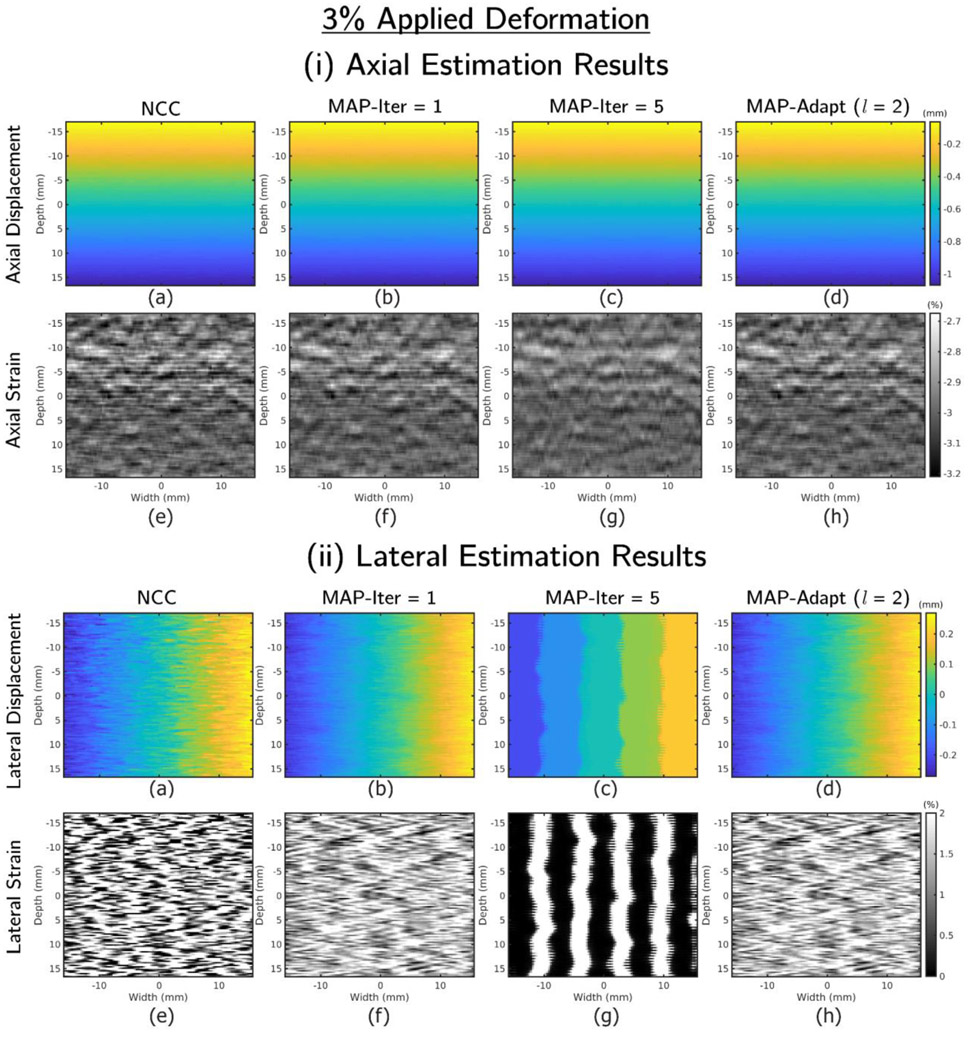
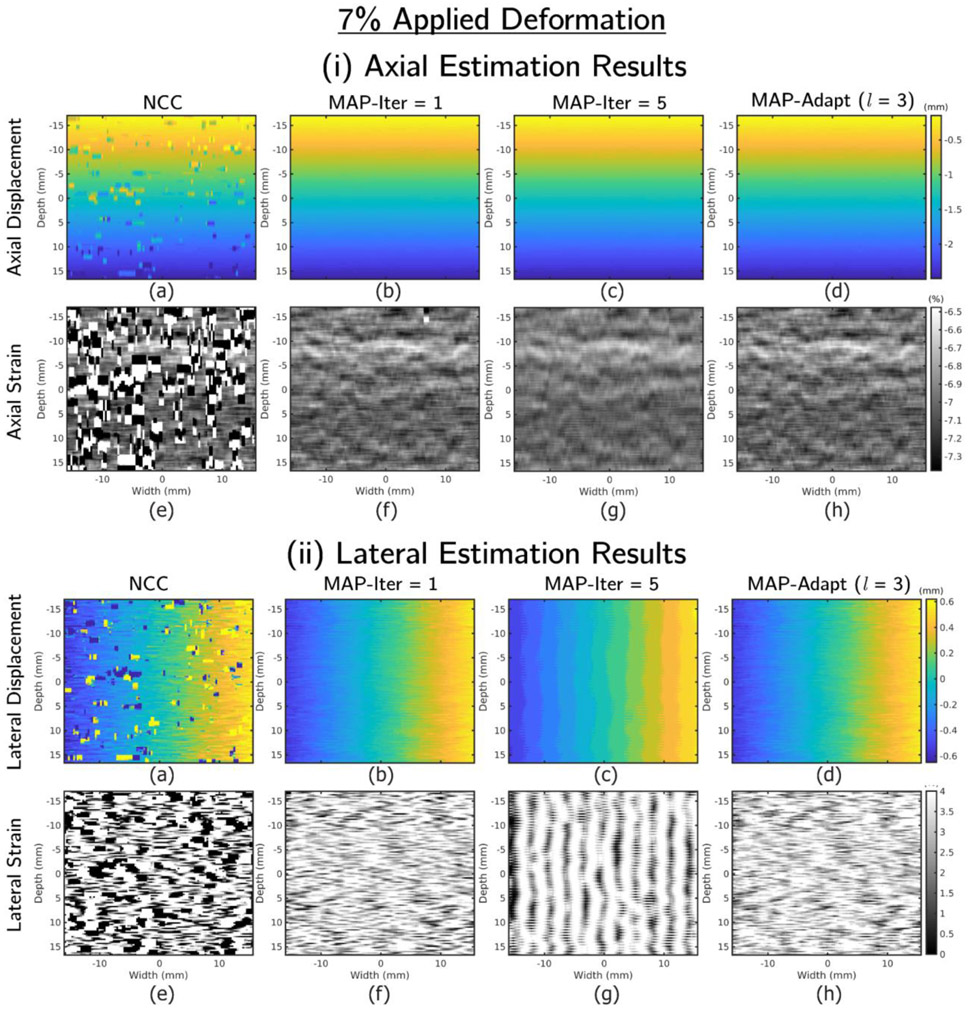
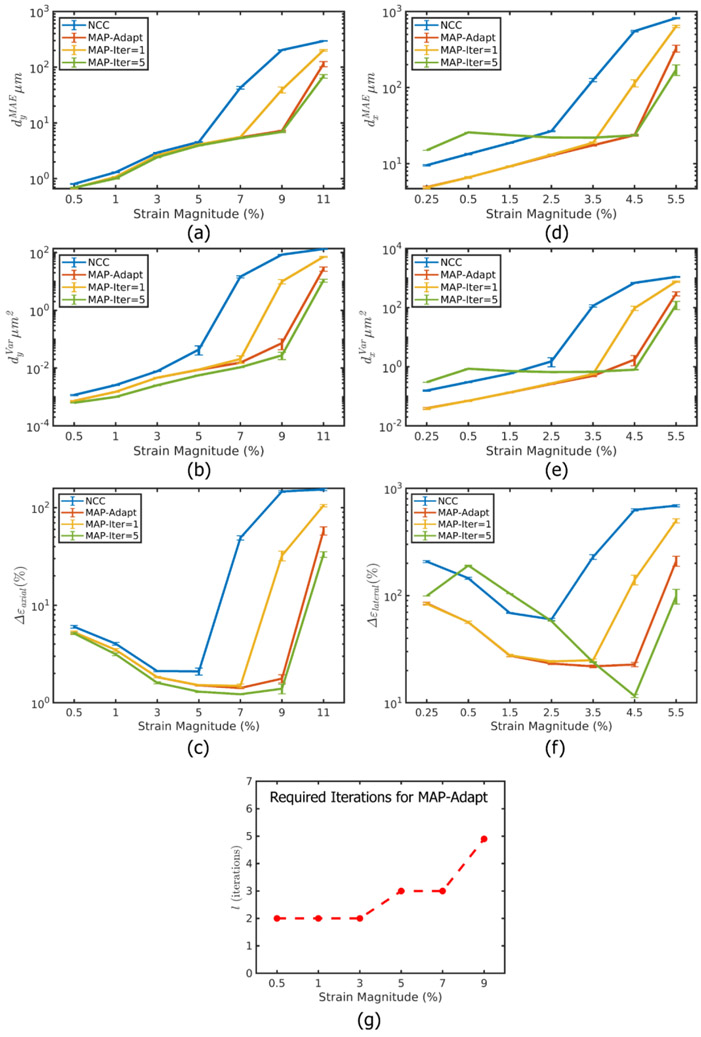
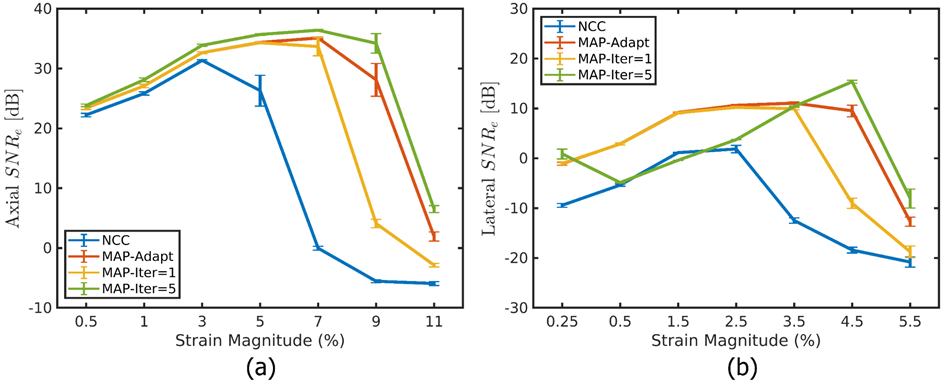
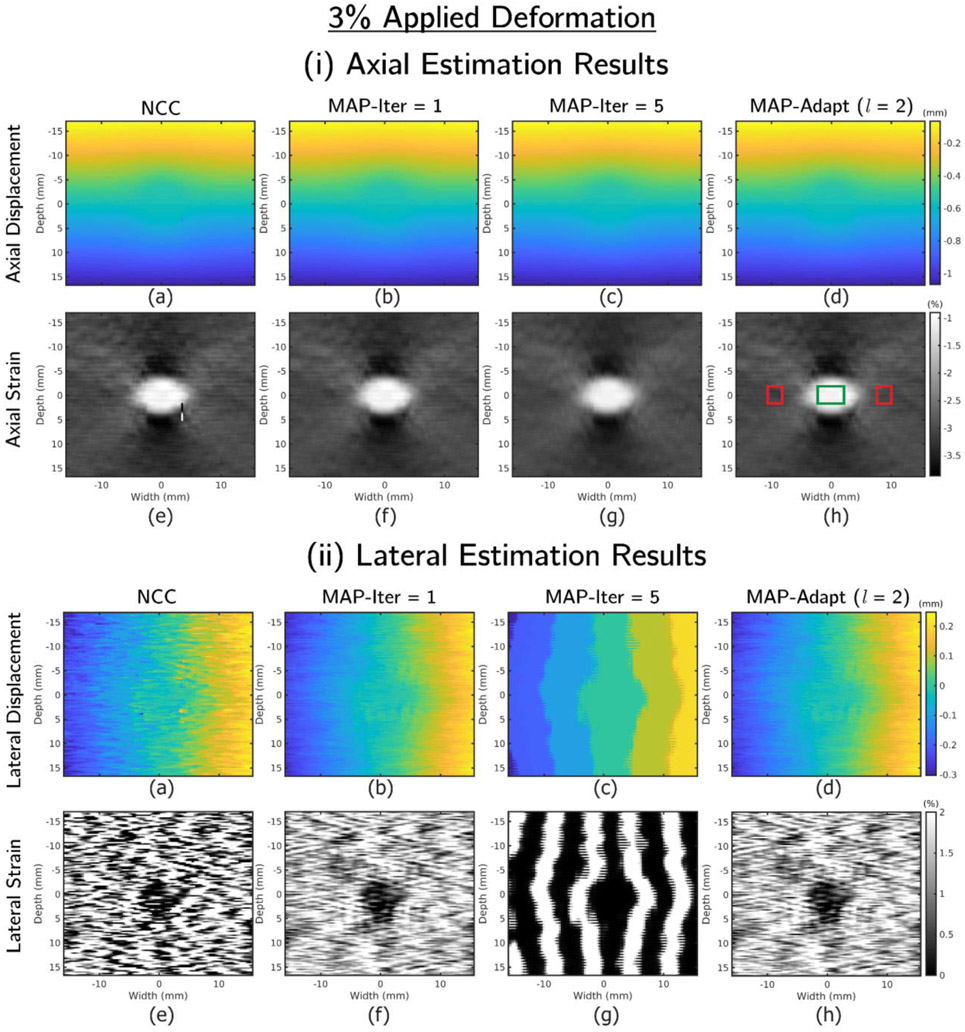
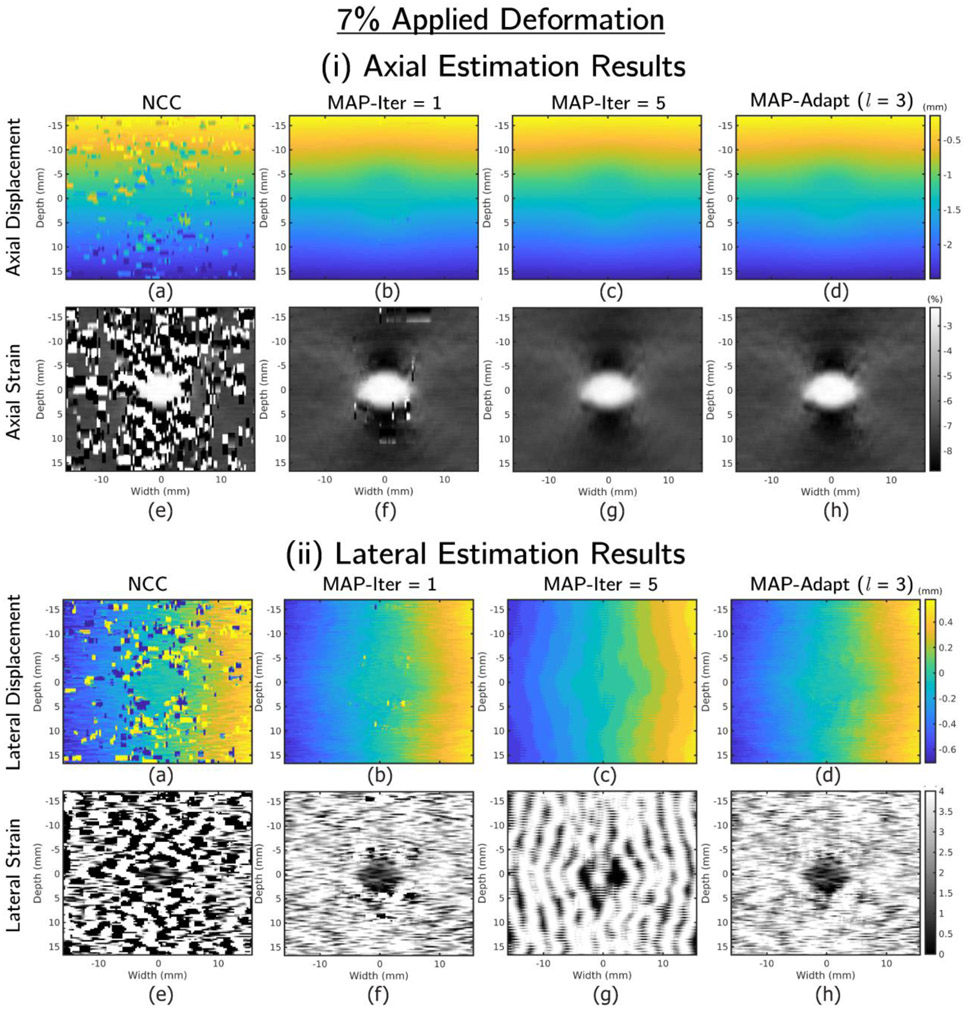
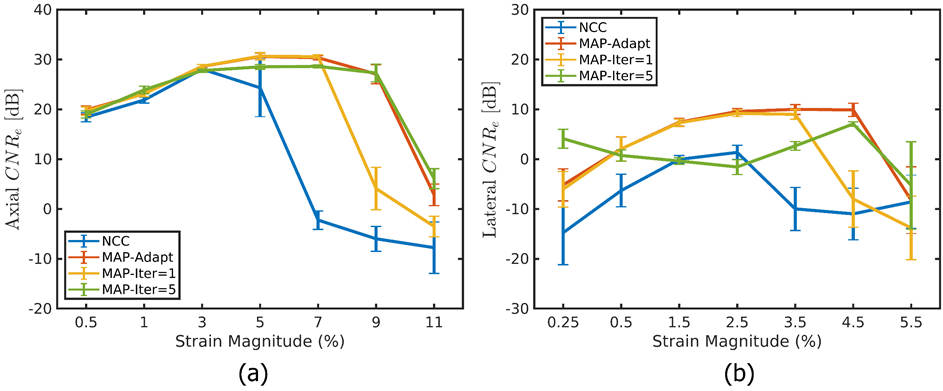
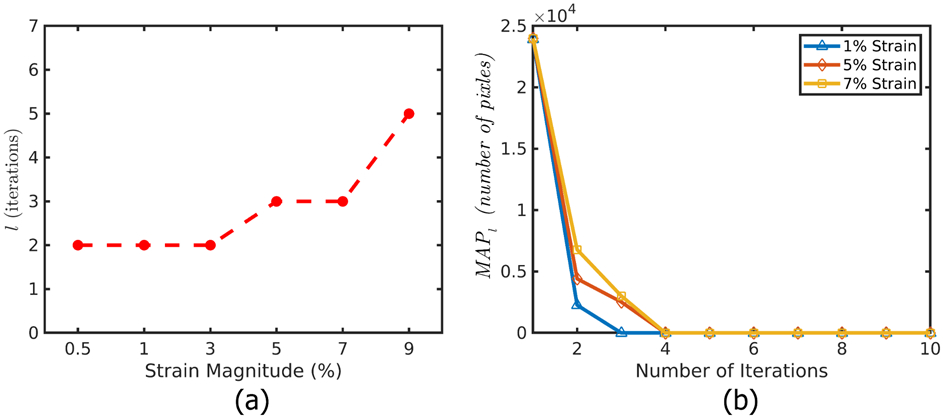
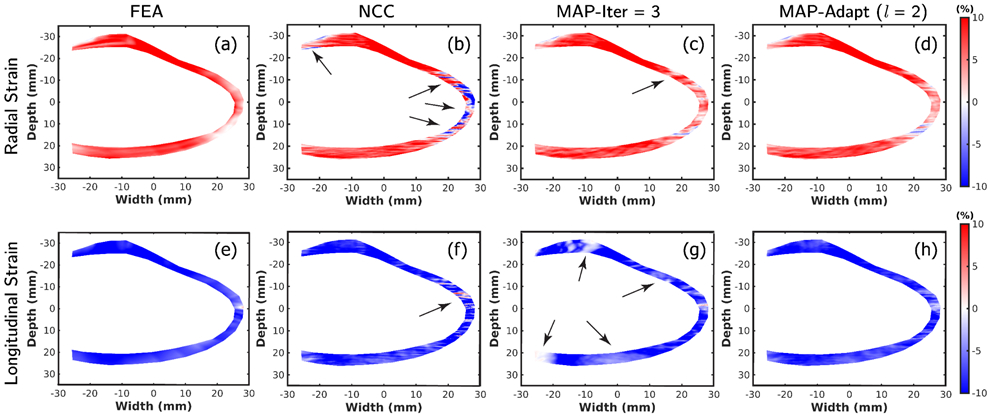
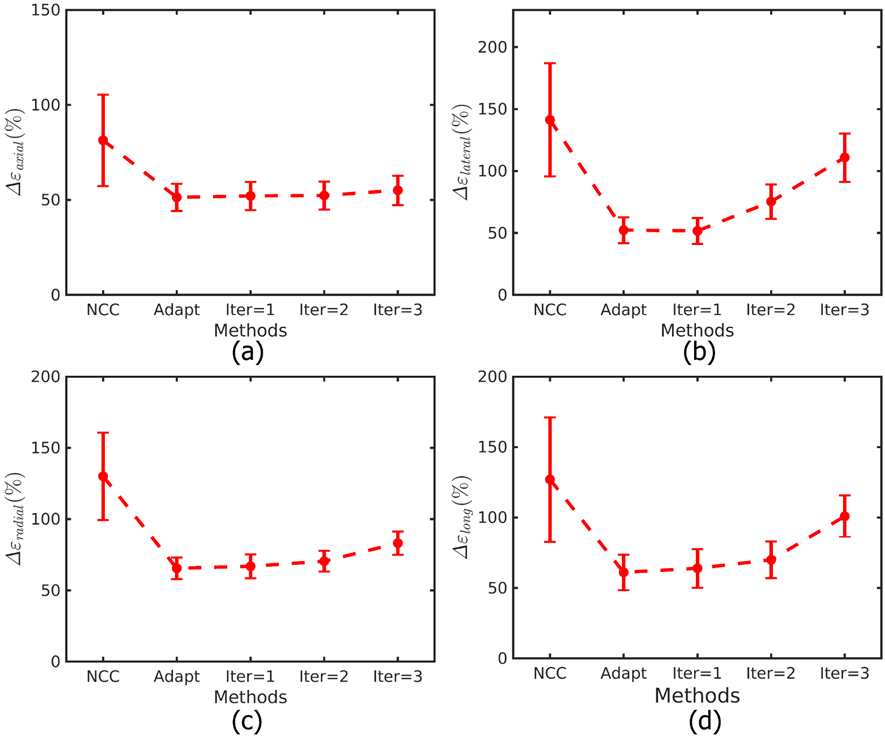
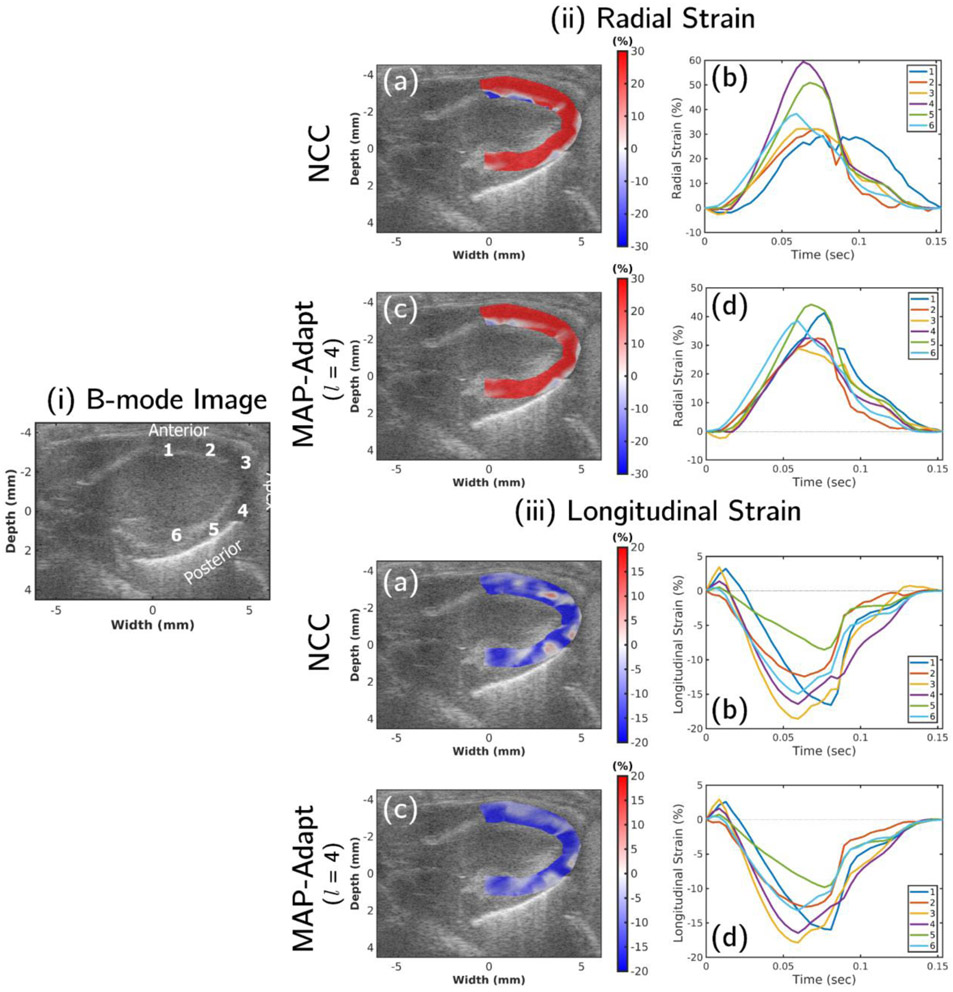
Ultrasound strain imaging utilizes radio-frequency (RF) ultrasound echo signals to estimate the relative elasticity of tissue under deformation. Due to the diagnostic value inherent in tissue elasticity, ultrasound strain imaging has found widespread clinical and preclinical applications. Accurate displacement estimation using pre and post-deformation RF signals is a crucial first step to derive high quality strain tensor images. Incorporating regularization into the displacement estimation framework is a commonly employed strategy to improve estimation accuracy and precision. In this work, we propose an adaptive variation of the iterative Bayesian regularization scheme utilizing RF similarity metric signal-to-noise ratio previously proposed by our group. The regularization scheme is incorporated into a 2D multi-level block matching (BM) algorithm for motion estimation. Adaptive nature of our algorithm is attributed to the dynamic variation of iteration number based on the normalized cross-correlation (NCC) function quality and a similarity measure between pre-deformation and motion compensated post-deformation RF signals. The proposed method is validated for either quasi-static and cardiac elastography or strain imaging applications using uniform and inclusion phantoms and canine cardiac deformation simulation models. Performance of adaptive Bayesian regularization was compared to conventional NCC and Bayesian regularization with fixed number of iterations. Results from uniform phantom simulation study show significant improvement in lateral displacement and strain estimation accuracy. For instance, at 1.5% lateral strain in a uniform phantom, Bayesian regularization with five iterations incurred a lateral strain error of 104.49%, which was significantly reduced using our adaptive approach to 27.51% (p < 0.001). Contrast-to-noise (CNR ) ratios obtained from inclusion phantom indicate improved lesion detectability for both axial and lateral strain images. For instance, at 1.5% lateral strain, Bayesian regularization with five iterations had lateral CNR of -0.31 dB which was significantly increased using the adaptive approach to 7.42 dB (p < 0.001). Similar results are seen with cardiac deformation modelling with improvement in myocardial strain images. In vivo feasibility was also demonstrated using data from a healthy murine heart. Overall, the proposed method makes Bayesian regularization robust for clinical and preclinical applications.
超声应变成像利用射频 (RF) 超声回波信号来估计组织在变形下的相对弹性。由于组织弹性具有诊断价值,因此超声应变成像已在临床和临床前得到广泛应用。使用变形前后的 RF 信号准确估计位移是获得高质量应变成像的关键第一步。在位移估计框架中引入正则化是提高估计准确性和精度的常用策略。在这项工作中,我们提出了一种基于我们小组先前提出的 RF 相似性度量信噪比的迭代贝叶斯正则化方案的自适应变体。该正则化方案被纳入用于运动估计的 2D 多级块匹配 (BM) 算法中。我们算法的自适应性质归因于基于归一化互相关 (NCC) 函数质量和预变形与运动补偿后变形 RF 信号之间的相似性度量的迭代次数的动态变化。该方法使用均匀和包含体模以及犬心脏变形模拟模型,针对准静态和心脏弹性成像或应变成像应用进行了验证。将自适应贝叶斯正则化的性能与具有固定迭代次数的传统 NCC 和贝叶斯正则化进行了比较。均匀体模模拟研究的结果表明,横向位移和应变估计精度有了显著提高。例如,在均匀体模中,具有五个迭代的贝叶斯正则化会导致横向应变误差为 104.49%,而使用我们的自适应方法可将其显著降低至 27.51%(p < 0.001)。包含体模的对比度噪声比 (CNR) 表明,轴向和横向应变图像的病变检测能力得到了提高。例如,在 1.5%的横向应变下,具有五个迭代的贝叶斯正则化的横向 CNR 为-0.31dB,而使用自适应方法可将其显著提高至 7.42dB(p < 0.001)。在心脏变形建模中也观察到类似的结果,心肌应变图像得到了改善。体内可行性也使用健康鼠心的数据进行了证明。总体而言,该方法使贝叶斯正则化对于临床和临床前应用具有鲁棒性。