Department of Biomedical and Biotechnological Sciences, Anatomy, Histology and Movement Sciences Section, School of Medicine, University of Catania, 95123 Catania, Italy.
Department of Biomedical and Biotechnological Sciences, University of Catania, 95123 Catania, Italy.
Cells. 2020 Feb 3;9(2):347. doi: 10.3390/cells9020347.
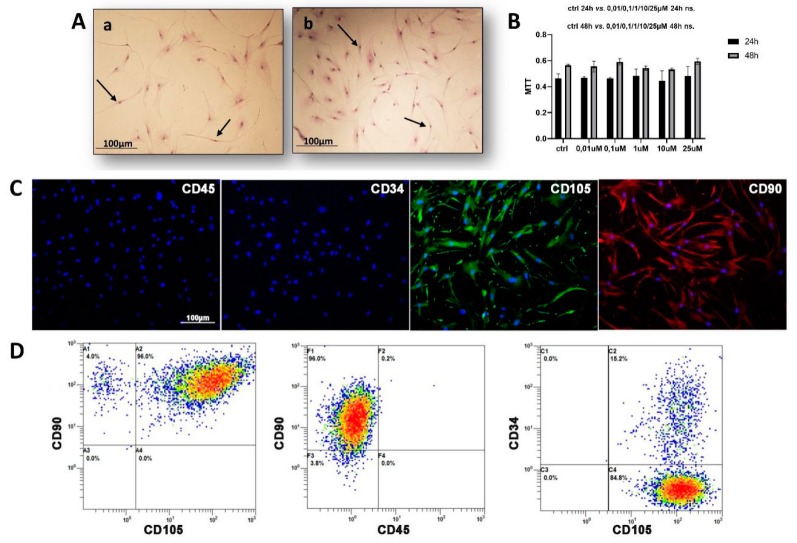
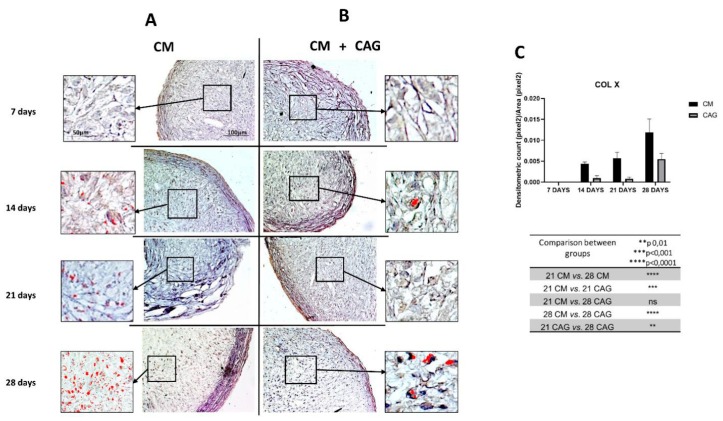
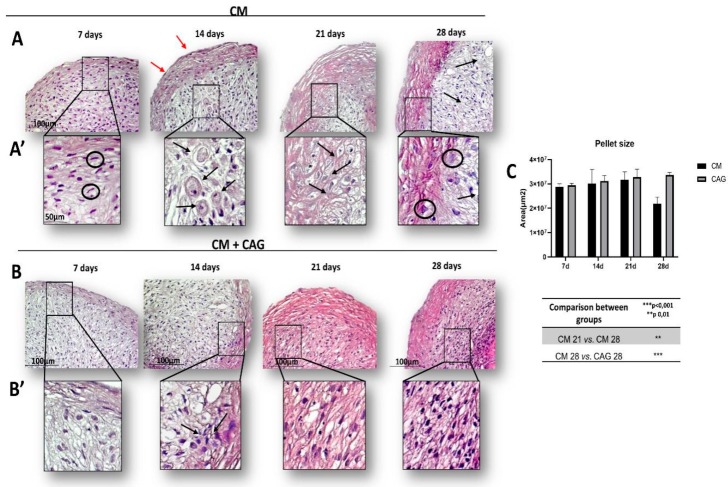
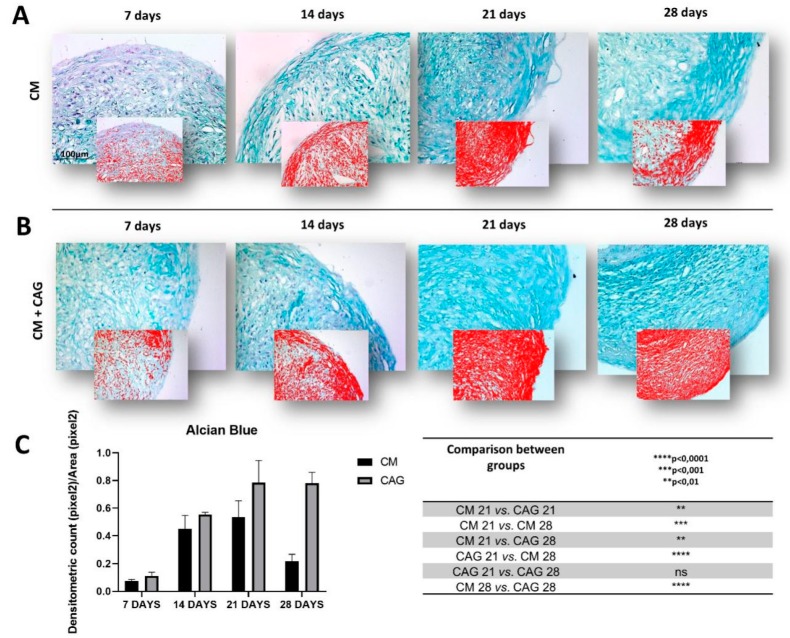
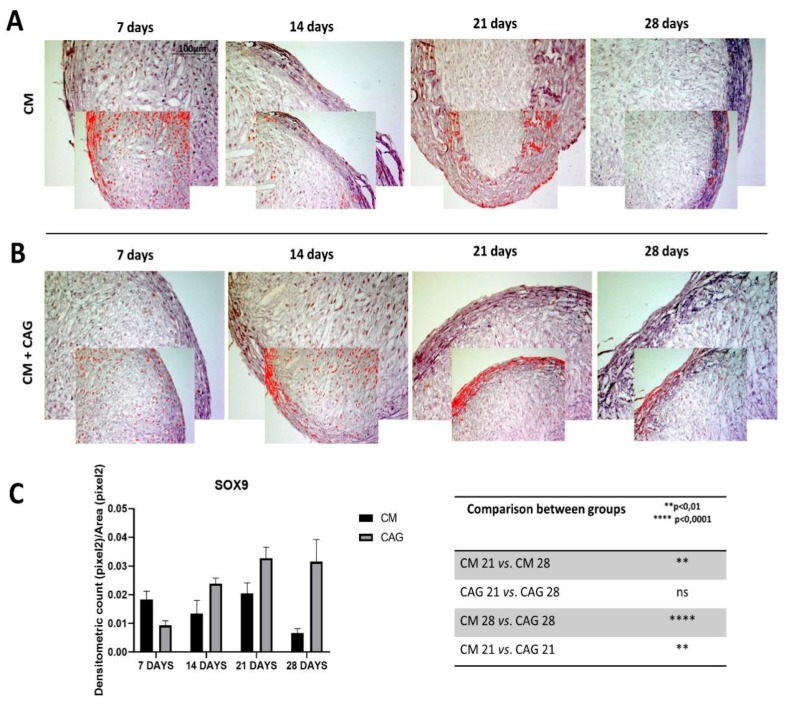
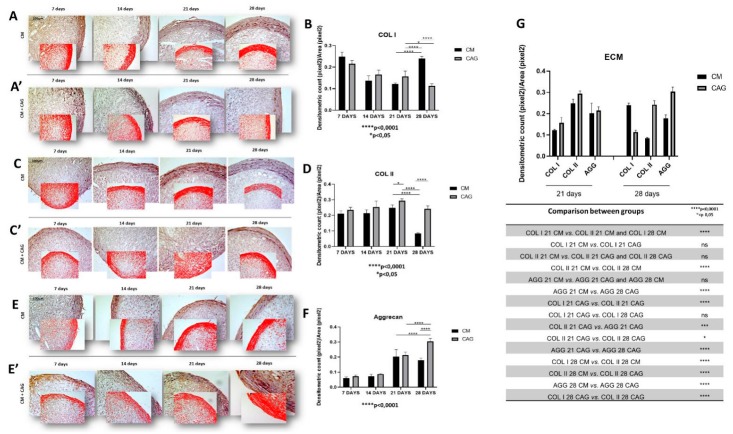
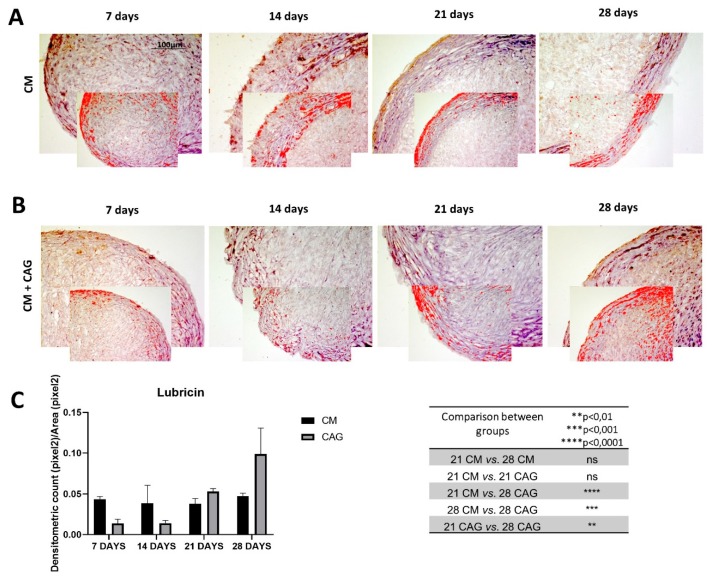
Stem cell therapy and tissue engineering represent a promising approach for cartilage regeneration. However, they present limits in terms of mechanical properties and premature de-differentiation of engineered cartilage. Cycloastragenol (CAG), a triterpenoid saponin compound and a hydrolysis product of the main ingredient in Astragalus membranaceous, has been explored for cartilage regeneration. The aim of this study was to investigate CAG's ability to promote cell proliferation, maintain cells in their stable active phenotype, and support the production of cartilaginous extracellular matrix (ECM) in human adipose-derived mesenchymal stem cells (hAMSCs) in up to 28 days of three-dimensional (3D) chondrogenic culture. The hAMSC pellets were cultured in chondrogenic medium (CM) and in CM supplemented with CAG (CAG-CM) for 7, 14, 21, and 28 days. At each time-point, the pellets were harvested for histological (hematoxylin and eosin (H&E)), histochemical (Alcian-Blue) and immunohistochemical analysis (Type I, II, and X collagen, aggrecan, SOX9, lubricin). After excluding CAG's cytotoxicity (MTT Assay), improved cell condensation, higher glycosaminoglycans (sGAG) content, and increased cell proliferation have been detected in CAG-CM pellets until 28 days of culture. Overall, CAG improved the chondrogenic differentiation of hAMSCs, maintaining stable the active chondrocyte phenotype in up to 28 days of 3D in vitro chondrogenic culture. It is proposed that CAG might have a beneficial impact on cartilage regeneration approaches.
干细胞治疗和组织工程代表了一种有前途的软骨再生方法。然而,它们在机械性能和工程化软骨的过早去分化方面存在限制。环黄芪醇(CAG)是一种三萜皂苷化合物,也是黄芪主要成分的水解产物,已被探索用于软骨再生。本研究旨在研究 CAG 在促进细胞增殖、维持细胞稳定的活跃表型以及支持人脂肪间充质干细胞(hAMSCs)在三维(3D)软骨生成培养中产生软骨细胞外基质(ECM)方面的能力,时间长达 28 天。将 hAMSC 球状体培养在软骨生成培养基(CM)和补充 CAG 的 CM(CAG-CM)中 7、14、21 和 28 天。在每个时间点,收获球状体进行组织学(苏木精和伊红(H&E))、组织化学(阿尔辛蓝)和免疫组织化学分析(I 型、II 型和 X 型胶原蛋白、聚集蛋白聚糖、SOX9、润滑素)。在排除 CAG 的细胞毒性(MTT 测定)后,在 CAG-CM 球状体中检测到细胞凝聚增强、糖胺聚糖(sGAG)含量增加和细胞增殖增加,直至培养 28 天。总体而言,CAG 改善了 hAMSCs 的软骨分化,在长达 28 天的 3D 体外软骨生成培养中维持了稳定的活跃软骨细胞表型。因此,CAG 可能对软骨再生方法产生有益影响。