Fu Liwei, Li Pinxue, Zhu Junyao, Liao Zhiyao, Gao Cangjian, Li Hao, Yang Zhen, Zhao Tianyuan, Chen Wei, Peng Yu, Cao Fuyang, Ning Chao, Sui Xiang, Guo Quanyi, Lin Yunfeng, Liu Shuyun
School of Medicine, Nankai University, Tianjin, 300071, People's Republic of China.
Institute of Orthopedics, Chinese PLA General Hospital, Beijing Key Laboratory of Regenerative Medicine in Orthopedics, Key Laboratory of Musculoskeletal Trauma & War Injuries PLA, No. 28 Fuxing Road, Haidian District, Beijing, 100853, People's Republic of China.
Bioact Mater. 2021 Jul 27;9:411-427. doi: 10.1016/j.bioactmat.2021.07.028. eCollection 2022 Mar.
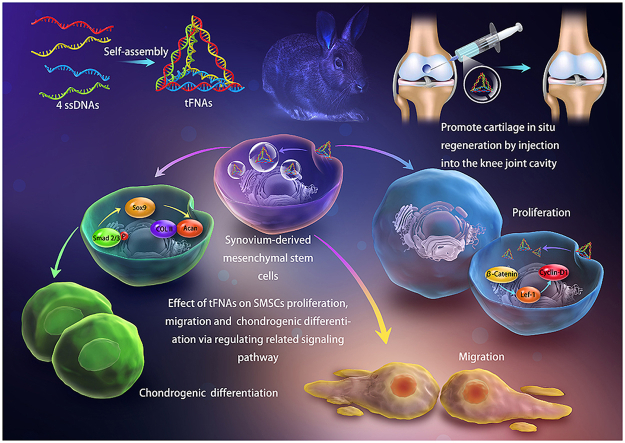
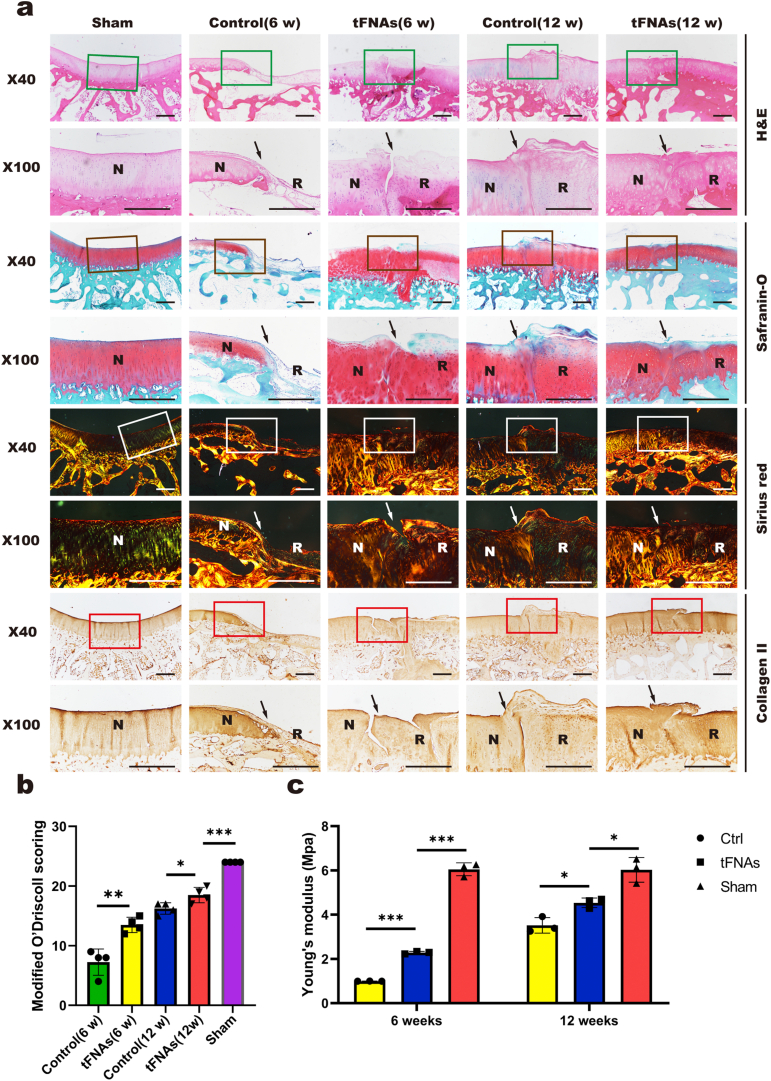
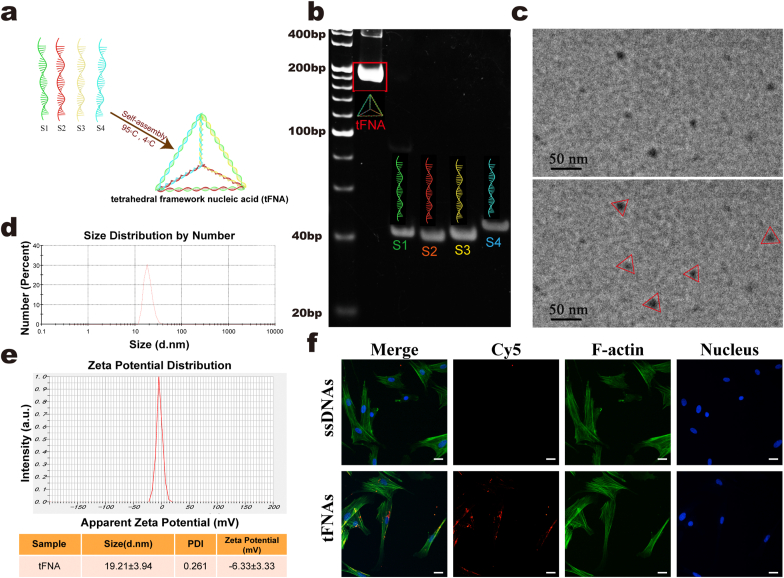
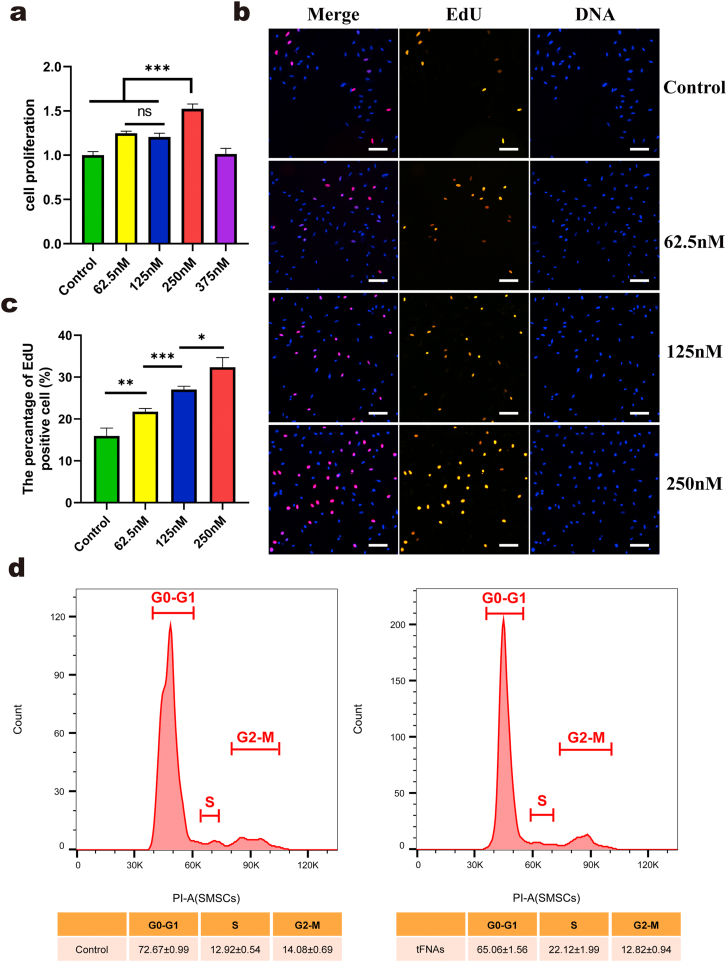
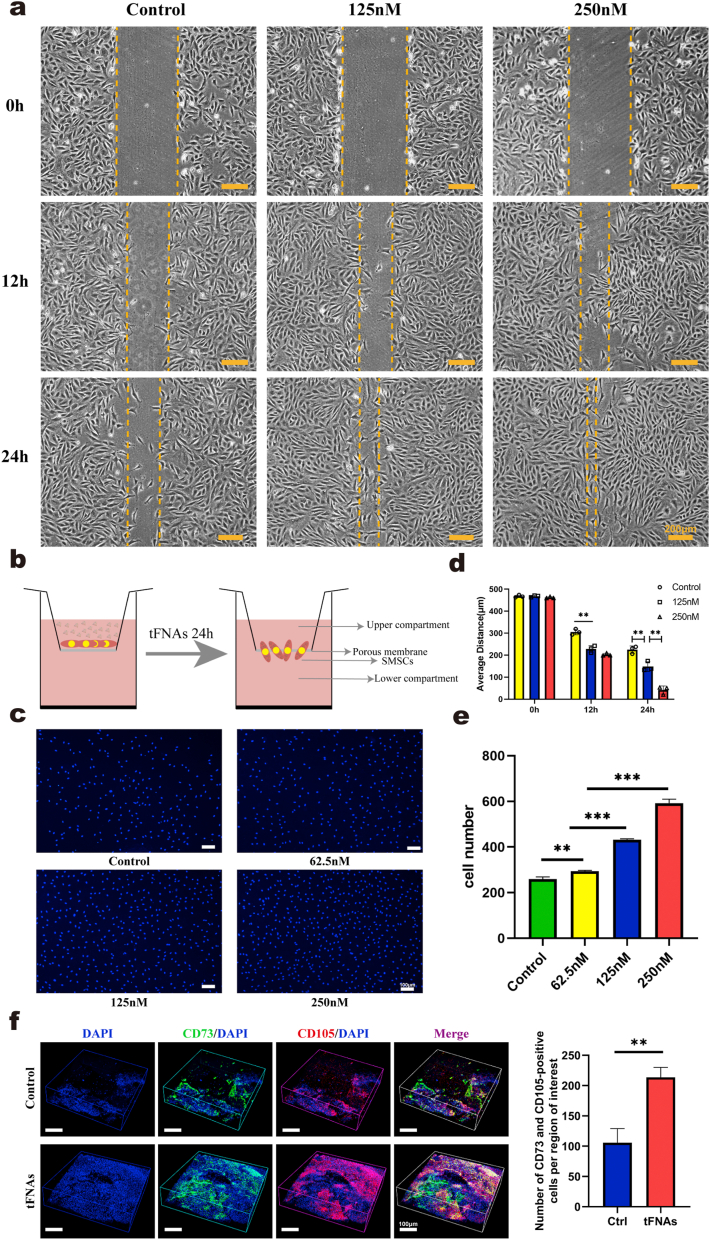
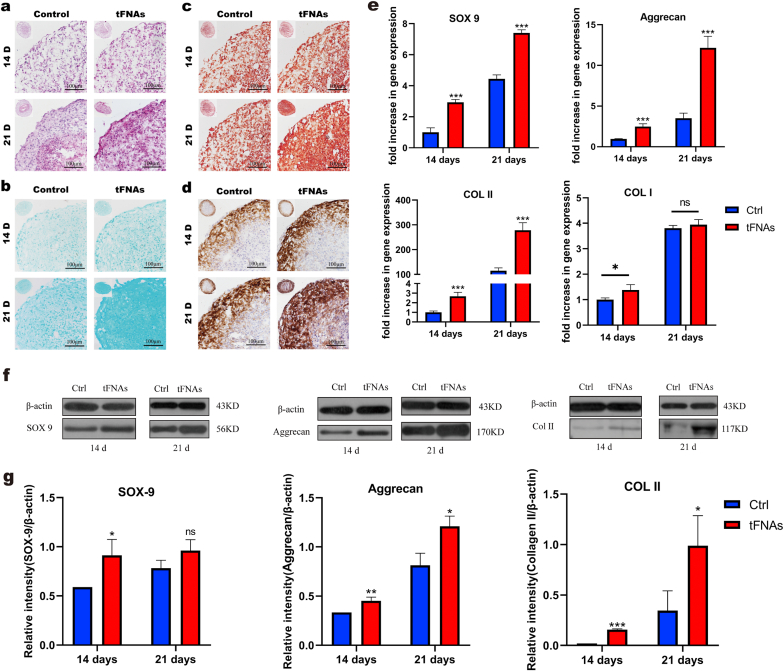
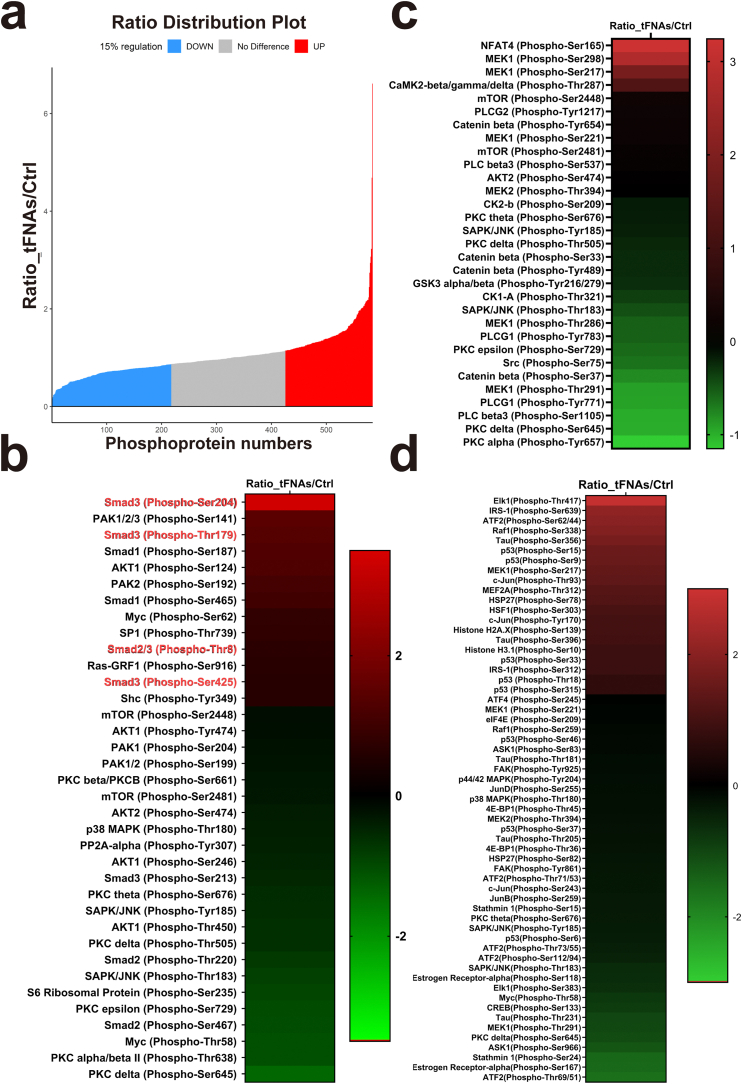
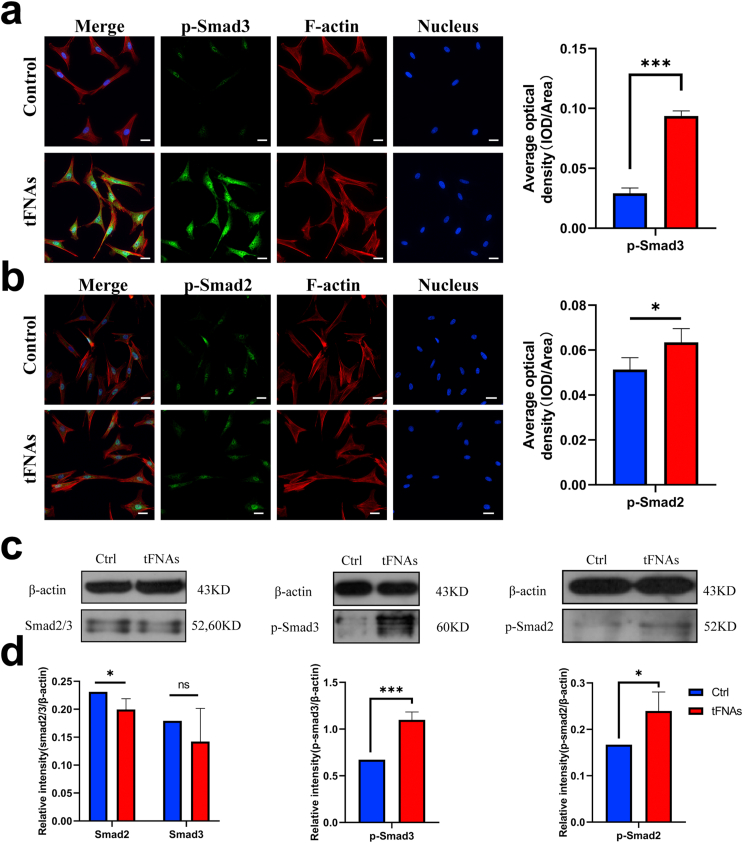
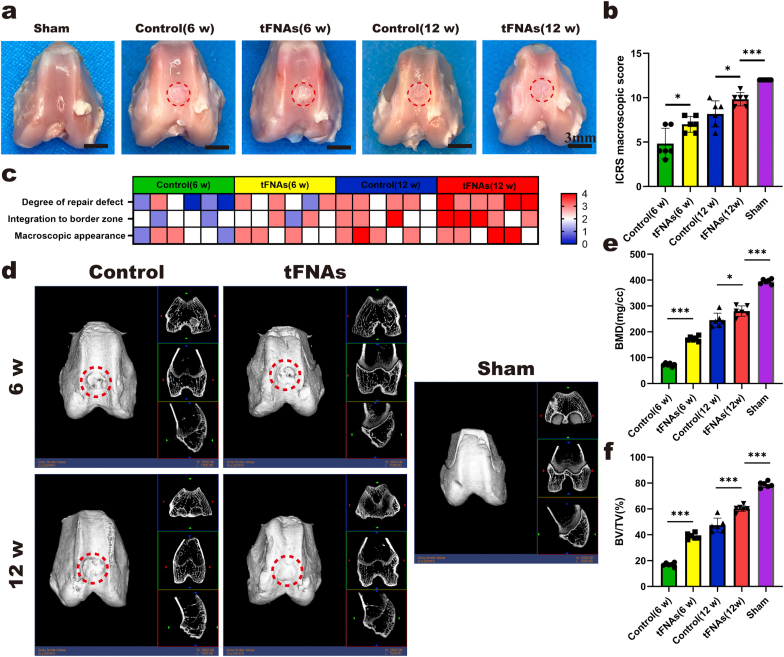
Many recent studies have shown that joint-resident mesenchymal stem cells (MSCs) play a vital role in articular cartilage (AC) in situ regeneration. Specifically, synovium-derived MSCs (SMSCs), which have strong chondrogenic differentiation potential, may be the main driver of cartilage repair. However, both the insufficient number of MSCs and the lack of an ideal regenerative microenvironment in the defect area will seriously affect the regeneration of AC. Tetrahedral framework nucleic acids (tFNAs), notable novel nanomaterials, are considered prospective biological regulators in biomedical engineering. Here, we aimed to explore whether tFNAs have positive effects on AC in situ regeneration and to investigate the related mechanism. The results of in vitro experiments showed that the proliferation and migration of SMSCs were significantly enhanced by tFNAs. In addition, tFNAs, which were added to chondrogenic induction medium, were shown to promote the chondrogenic capacity of SMSCs by increasing the phosphorylation of Smad2/3. In animal models, the injection of tFNAs improved the therapeutic outcome of cartilage defects compared with that of the control treatments without tFNAs. In conclusion, this is the first report to demonstrate that tFNAs can promote the chondrogenic differentiation of SMSCs in vitro and enhance AC regeneration in vivo, indicating that tFNAs may become a promising therapeutic for AC regeneration.
最近的许多研究表明,关节驻留间充质干细胞(MSCs)在关节软骨(AC)原位再生中起着至关重要的作用。具体而言,具有强大软骨形成分化潜能的滑膜来源的间充质干细胞(SMSCs)可能是软骨修复的主要驱动因素。然而,MSCs数量不足以及缺损区域缺乏理想的再生微环境都会严重影响AC的再生。四面体框架核酸(tFNAs)是著名的新型纳米材料,被认为是生物医学工程中有前景的生物调节剂。在此,我们旨在探讨tFNAs是否对AC原位再生有积极作用,并研究相关机制。体外实验结果表明,tFNAs显著增强了SMSCs的增殖和迁移能力。此外,添加到软骨形成诱导培养基中的tFNAs通过增加Smad2/3的磷酸化来促进SMSCs的软骨形成能力。在动物模型中,与未使用tFNAs的对照治疗相比,注射tFNAs改善了软骨缺损的治疗效果。总之,这是第一份证明tFNAs可以在体外促进SMSCs软骨形成分化并在体内增强AC再生的报告,表明tFNAs可能成为AC再生的一种有前景的治疗方法。