ANSES, Laboratory for Food Safety, University Paris-Est, Maisons-Alfort, France.
ANSES, Laboratory for Food Safety, Boulogne-sur-Mer, France.
BMC Genomics. 2020 Feb 6;21(1):130. doi: 10.1186/s12864-020-6544-x.
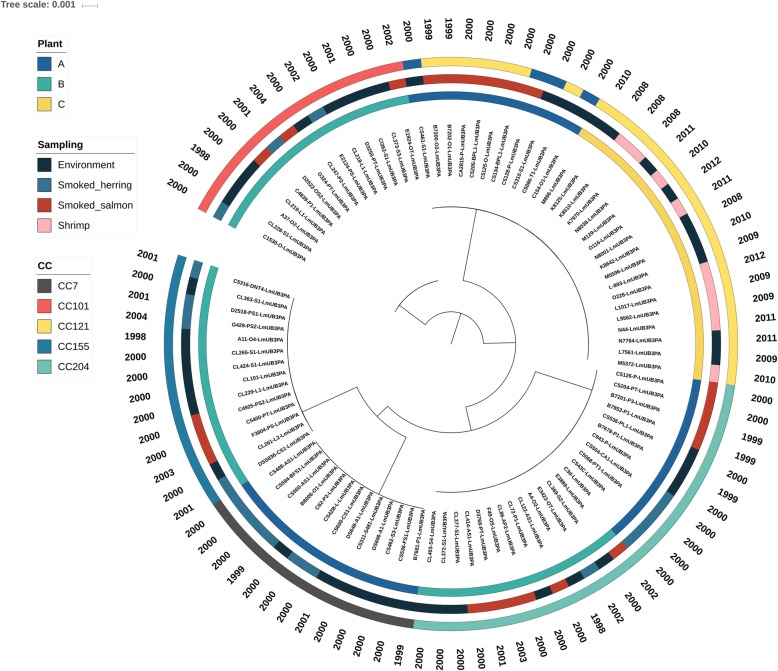
Listeria monocytogenes Clonal Complexes (CCs) have been epidemiologically associated with foods, especially ready-to-eat (RTE) products for which the most likely source of contamination depends on the occurrence of persisting clones in food-processing environments (FPEs). As the ability of L. monocytogenes to adapt to environmental stressors met in the food chain challenges the efforts to its eradication from FPEs, the threat of persistent strains to the food industry and public health authorities continues to rise. In this study, 94 food and FPEs L. monocytogenes isolates, representing persistent subtypes contaminating three French seafood facilities over 2-6 years, were whole-genome sequenced to characterize their genetic diversity and determine the biomarkers associated with long-term survival in FPEs.
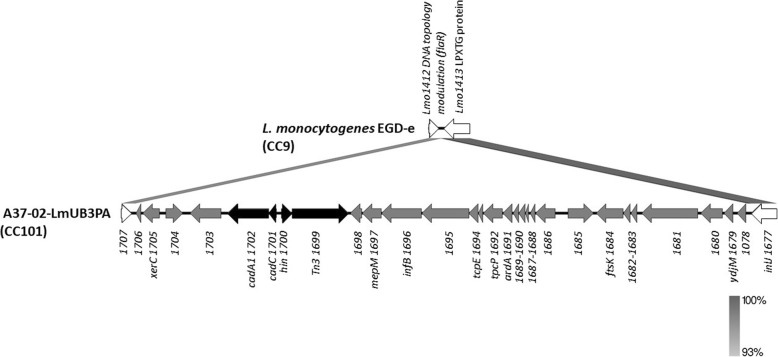
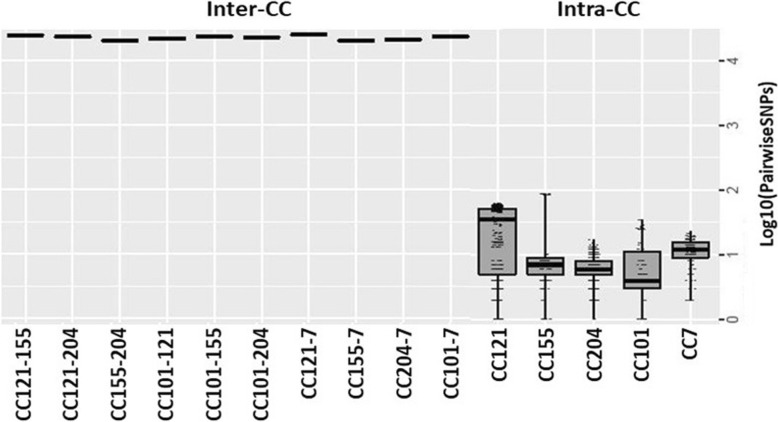
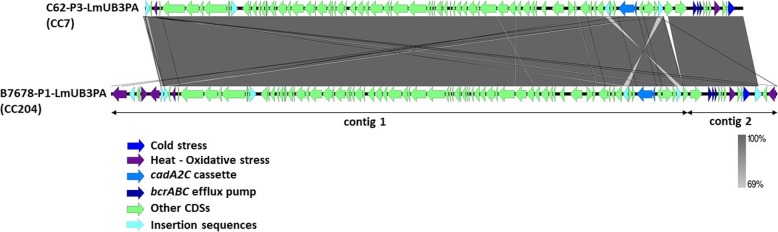
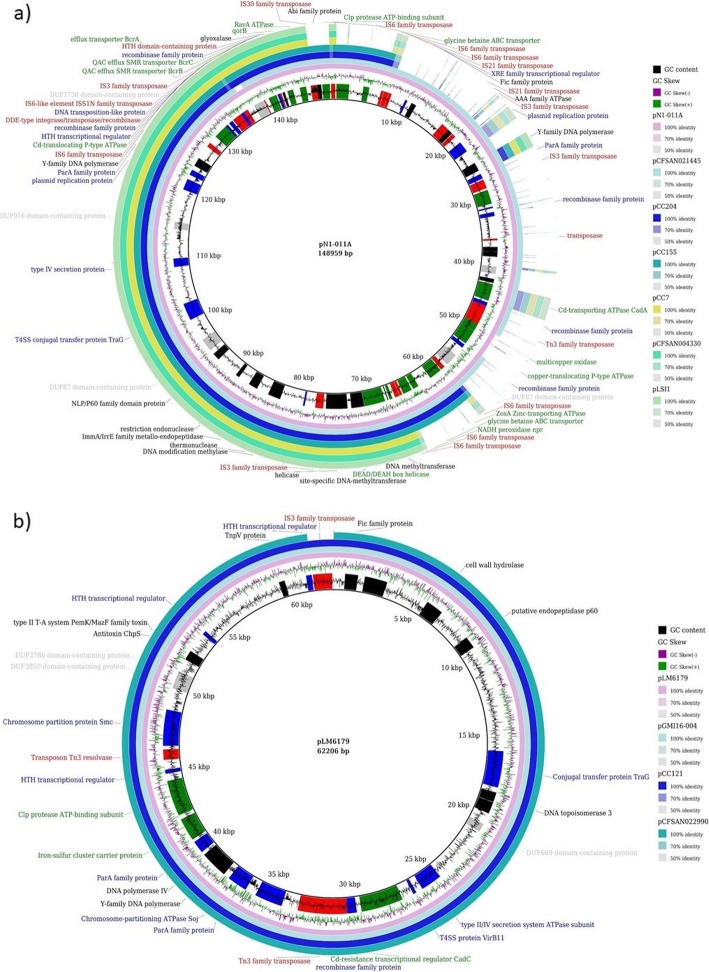
Food and FPEs isolates belonged to five CCs, comprising long-term intra- and inter-plant persisting clones. Mobile genetic elements (MGEs) such as plasmids, prophages and transposons were highly conserved within CCs, some of which harboured genes for resistance to chemical compounds and biocides used in the processing plants. Some of these genes were found in a 90.8 kbp plasmid, predicted to be" mobilizable", identical in isolates from CC204 and CC155, and highly similar to an 81.6 kbp plasmid from isolates belonging to CC7. These similarities suggest horizontal transfer between isolates, accompanied by deletion and homologous recombination in isolates from CC7. Prophage profiles characterized persistent clonal strains and several prophage-loci were plant-associated. Notably, a persistent clone from CC101 harboured a novel 31.5 kbp genomic island that we named Listeria genomic island 3 (LGI3), composed by plant-associated loci and chromosomally integrating cadmium-resistance determinants cadA1C.
Genome-wide analysis indicated that inter- and intra-plant persisting clones harbour conserved MGEs, likely acquired in FPEs and maintained by selective pressures. The presence of closely related plasmids in L. monocytogenes CCs supports the hypothesis of horizontal gene transfer conferring enhanced survival to FPE-associated stressors, especially in hard-to-clean harbourage sites. Investigating the MGEs evolutionary and transmission dynamics provides additional resolution to trace-back potentially persistent clones. The biomarkers herein discovered provide new tools for better designing effective strategies for the removal or reduction of resident L. monocytogenes in FPEs to prevent contamination of RTE seafood.
李斯特菌单增李斯特菌克隆群(CCs)与食品在流行病学上有关联,尤其是即食(RTE)产品,其最可能的污染来源取决于食品加工环境(FPE)中持续存在的克隆。由于李斯特菌适应食物链中遇到的环境胁迫的能力对从 FPE 中根除李斯特菌的努力构成挑战,持续菌株对食品行业和公共卫生当局的威胁继续上升。在这项研究中,对 94 株来自食品和 FPE 的李斯特菌分离株进行了全基因组测序,这些分离株代表了在过去 2-6 年中污染三个法国海鲜工厂的持续性亚群,以表征其遗传多样性并确定与 FPE 中长期存活相关的生物标志物。
食品和 FPE 分离株属于五个 CC,包括工厂内和工厂间的长期持续性克隆。移动遗传元件(MGEs),如质粒、噬菌体和转座子,在 CC 内高度保守,其中一些携带对加工厂中使用的化学化合物和杀生物剂的抗性基因。这些基因中的一些存在于一个 90.8 kbp 的质粒中,该质粒被预测为“可移动的”,在 CC204 和 CC155 的分离株中相同,与属于 CC7 的分离株中的一个 81.6 kbp 的质粒高度相似。这些相似性表明了分离株之间的水平转移,同时伴随着 CC7 分离株中的缺失和同源重组。噬菌体谱特征表明了持续性克隆株,并且几个噬菌体基因座与植物有关。值得注意的是,来自 CC101 的一个持续性克隆株携带一个新的 31.5 kbp 基因组岛,我们将其命名为李斯特菌基因组岛 3(LGI3),由与植物有关的基因座和染色体整合的镉抗性决定簇 cadA1C 组成。
全基因组分析表明,工厂内和工厂间的持续性克隆株携带保守的 MGEs,可能在 FPE 中获得并通过选择压力维持。在李斯特菌 CC 中存在密切相关的质粒支持水平基因转移赋予了对 FPE 相关应激的增强生存能力的假说,尤其是在难以清洁的藏匿场所。研究 MGE 的进化和传播动态为追溯潜在的持续性克隆提供了额外的分辨率。本文发现的生物标志物为更好地设计有效的策略提供了新的工具,以去除或减少 FPE 中常驻的李斯特菌,防止 RTE 海鲜的污染。