Department of Medical Chemistry, Faculty of Medicine, University of Debrecen, Debrecen 4032, Hungary.
MTA-DE Lendület Laboratory of Cellular Metabolism, University of Debrecen, Debrecen 4032, Hungary.
Genes Dev. 2020 Mar 1;34(5-6):321-340. doi: 10.1101/gad.334284.119. Epub 2020 Feb 6.
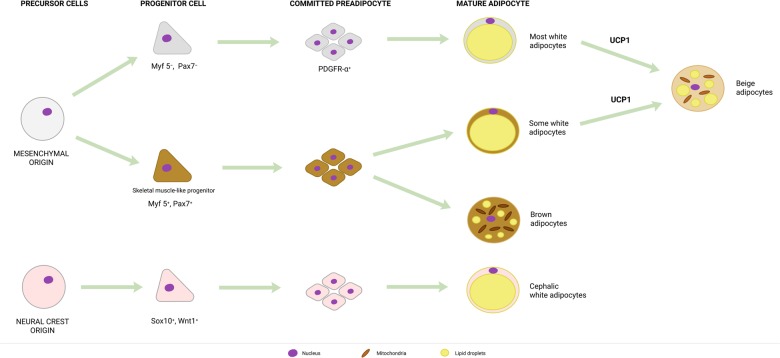
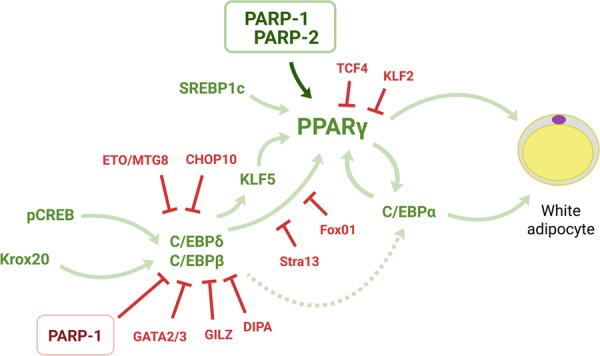
Poly(ADP-ribose) polymerases (PARPs or ARTDs), originally described as DNA repair factors, have metabolic regulatory roles. PARP1, PARP2, PARP7, PARP10, and PARP14 regulate central and peripheral carbohydrate and lipid metabolism and often channel pathological disruptive metabolic signals. PARP1 and PARP2 are crucial for adipocyte differentiation, including the commitment toward white, brown, or beige adipose tissue lineages, as well as the regulation of lipid accumulation. Through regulating adipocyte function and organismal energy balance, PARPs play a role in obesity and the consequences of obesity. These findings can be translated into humans, as evidenced by studies on identical twins and SNPs affecting PARP activity.
聚(ADP-核糖)聚合酶(PARPs 或 ARTDs)最初被描述为 DNA 修复因子,具有代谢调节作用。PARP1、PARP2、PARP7、PARP10 和 PARP14 调节中枢和外周碳水化合物和脂质代谢,并经常传递病理性破坏代谢信号。PARP1 和 PARP2 对于脂肪细胞分化至关重要,包括向白色、棕色或米色脂肪组织谱系的分化,以及脂质积累的调节。通过调节脂肪细胞功能和机体能量平衡,PARPs 在肥胖及其后果中发挥作用。这些发现可以在人类中得到验证,这一点可以从对同卵双胞胎和影响 PARP 活性的 SNP 的研究中得到证明。