School of Nursing, Midwifery and Health Systems, University College Dublin, Dublin, Ireland.
School of Medicine, University College Dublin, Dublin, Ireland.
PLoS One. 2020 Feb 7;15(2):e0228821. doi: 10.1371/journal.pone.0228821. eCollection 2020.
The best interventions to address frailty among older adults have not yet been fully defined, and the diversity of interventions and outcome measures makes this process challenging. Consequently, there is a lack of guidance for clinicians and researchers regarding which interventions are most likely to help older persons remain robust and independent. This paper uses meta-analysis to assess effectiveness of primary care interventions for physical frailty among community-dwelling adults aged 60+ and provides an up-to-date synthesis of literature in this area.
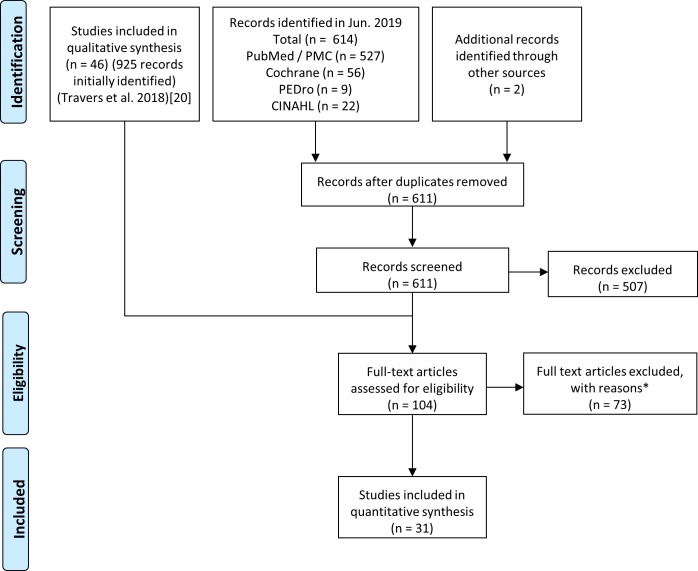
PubMed, CINAHL, Cochrane Register of Controlled Trials, and PEDro databases were searched, and RCTs, controlled pilot studies, or trials with similar study designs addressing frailty in the primary care setting among persons aged 60+ were chosen. Study data was abstracted following PRISMA guidelines, then meta-analysis was performed using the random effects model.
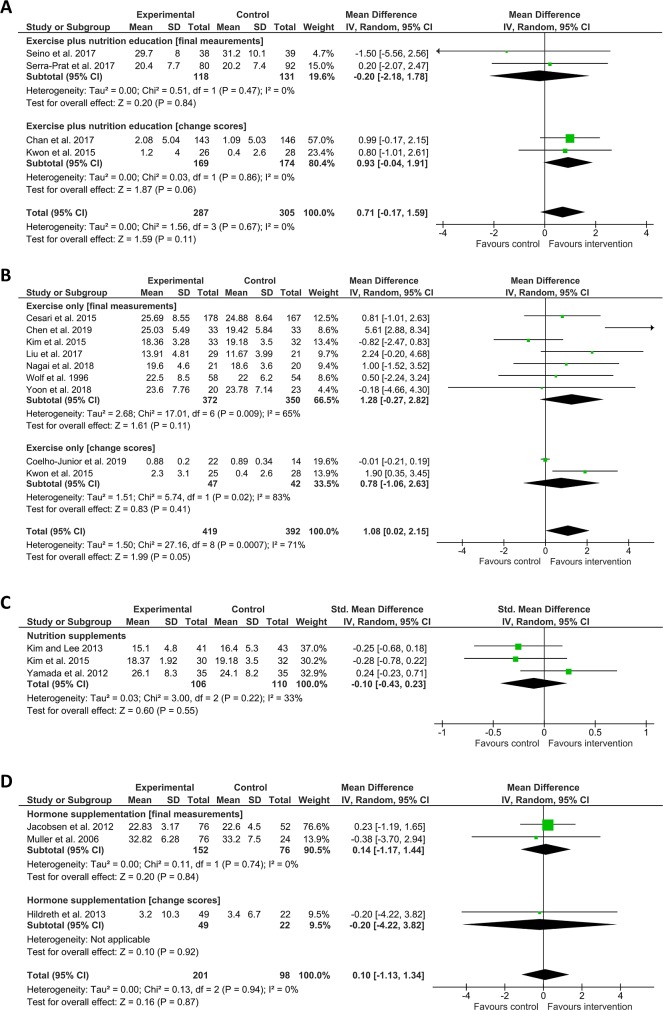
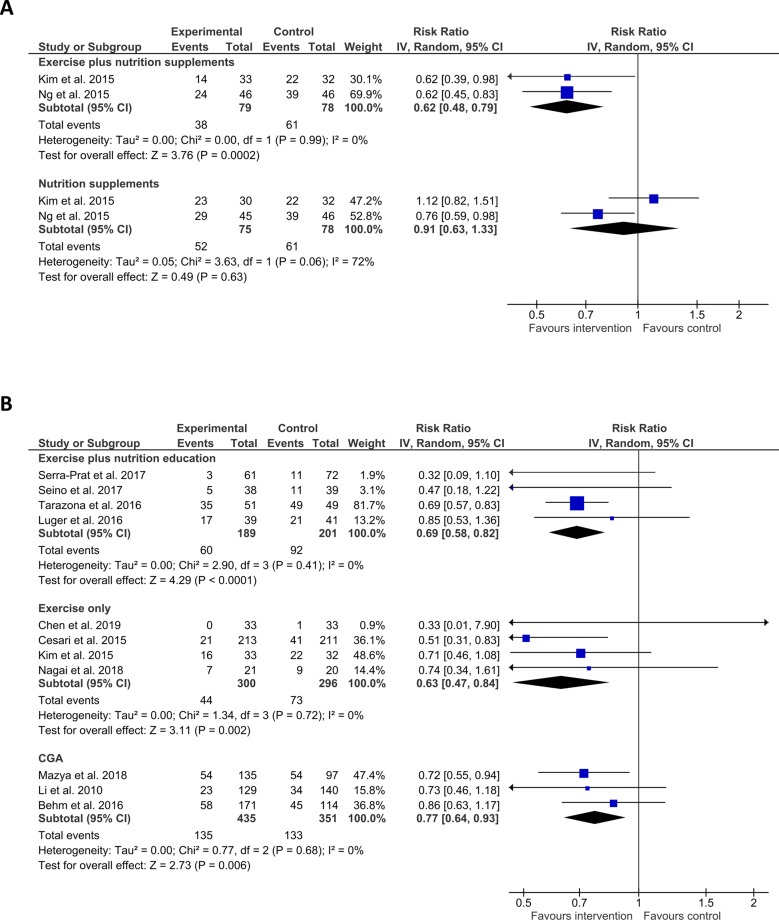
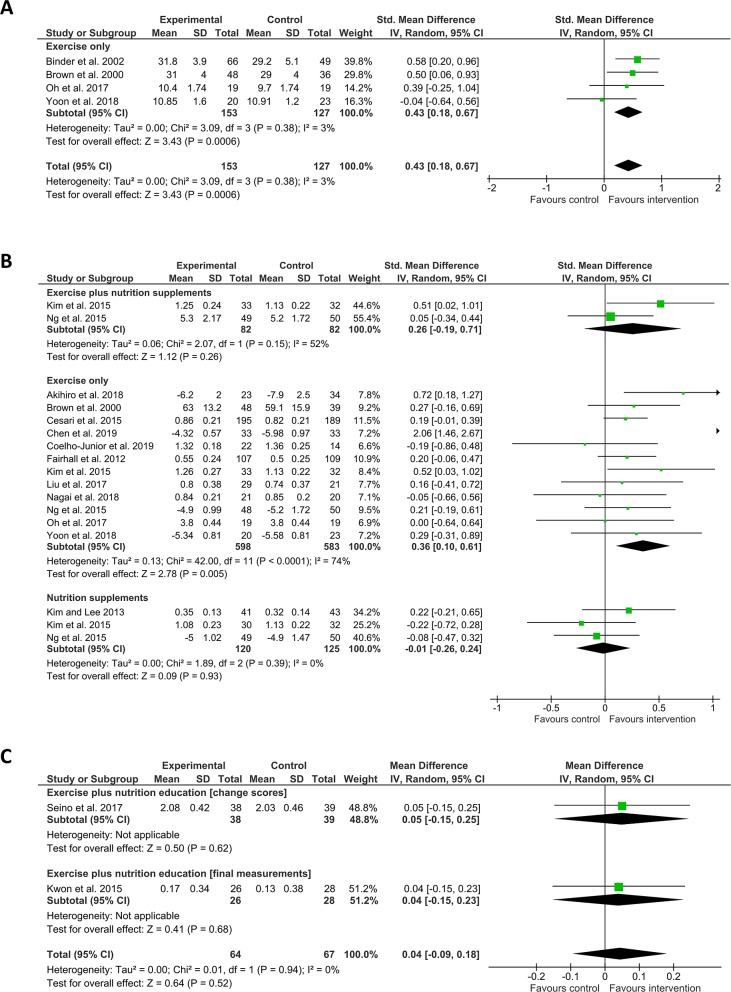
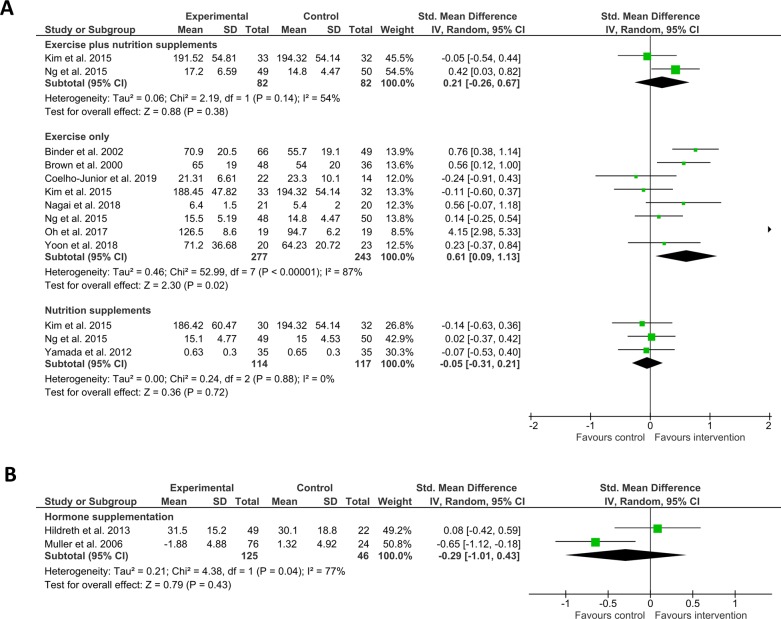
31 studies with a total of 4794 participants were analysed. Interventions using predominantly resistance-based exercise and nutrition supplementation seemed to improve frailty status versus control (RR = 0.62 (CI 0.48-0.79), I2 = 0%). Exercise plus nutrition education also reduced frailty (RR = 0.69 (CI 0.58-0.82), I2 = 0%). Exercise alone seemed effective in reducing frailty (RR = 0.63 (CI 0.47-0.84), I2 = 0%) and improving physical performance (RR = 0.43 (CI 0.18-0.67), I2 = 0%). Exercise alone also appeared superior to control in improving gait speed (SMD = 0.36 (CI 0.10-0.61, I2 = 74%), leg strength (SMD = 0.61 (CI 0.09-1.13), I2 = 87%), and grip strength (Mean Difference = 1.08 (CI 0.02-2.15), I2 = 71%) though a high degree of heterogeneity was observed. Comprehensive geriatric assessment (RR = 0.77 (CI 0.64-0.93), I2 = 0%) also seemed superior to control in reducing frailty.
Exercise alone or with nutrition supplementation or education, and comprehensive geriatric assessment, may reduce physical frailty. Individual-level factors and health systems resource availability will likely determine configuration of future interventions.
尚未充分确定针对老年人衰弱问题的最佳干预措施,且干预措施和结果测量指标的多样性使这一过程颇具挑战性。因此,临床医生和研究人员缺乏有关哪些干预措施最有可能帮助老年人保持强健和独立的指导。本文使用荟萃分析评估了针对 60 岁及以上社区居住成年人的初级保健衰弱干预措施的有效性,并对该领域的文献进行了最新综述。
检索了 PubMed、CINAHL、Cochrane 对照试验注册库和 PEDro 数据库,选择了在初级保健环境中针对 60 岁及以上人群衰弱问题的随机对照试验、对照性试点研究或类似研究设计的试验。研究数据按照 PRISMA 指南进行提取,然后使用随机效应模型进行荟萃分析。
对 31 项共纳入 4794 名参与者的研究进行了分析。主要采用基于阻力的运动和营养补充的干预措施似乎可改善衰弱状态(RR = 0.62(95%CI 0.48-0.79),I² = 0%)。运动加营养教育也可降低衰弱风险(RR = 0.69(95%CI 0.58-0.82),I² = 0%)。单独运动似乎可有效降低衰弱(RR = 0.63(95%CI 0.47-0.84),I² = 0%)和改善身体表现(RR = 0.43(95%CI 0.18-0.67),I² = 0%)。与对照组相比,单独运动在改善步态速度(SMD = 0.36(95%CI 0.10-0.61,I² = 74%)、腿部力量(SMD = 0.61(95%CI 0.09-1.13),I² = 87%)和握力(Mean Difference = 1.08(95%CI 0.02-2.15),I² = 71%)方面也表现出优越性,但观察到高度异质性。综合老年评估(RR = 0.77(95%CI 0.64-0.93),I² = 0%)也似乎优于对照组,可降低衰弱风险。
单独运动或与营养补充或教育相结合,以及综合老年评估,可能会降低身体衰弱程度。个体因素和卫生系统资源可用性可能会决定未来干预措施的形式。