Center of Neuroscience, Dept. Biotechnology and Life Sciences (DBSV), University of Insubria, Varese, Italy.
Dept. Biomedical and NeuroMotor Sciences, University of Bologna, Bologna, Italy; Center of Neuroscience, Dept. Biotechnology and Life Sciences (DBSV), University of Insubria, Varese, Italy.
Neurobiol Dis. 2020 May;138:104791. doi: 10.1016/j.nbd.2020.104791. Epub 2020 Feb 4.
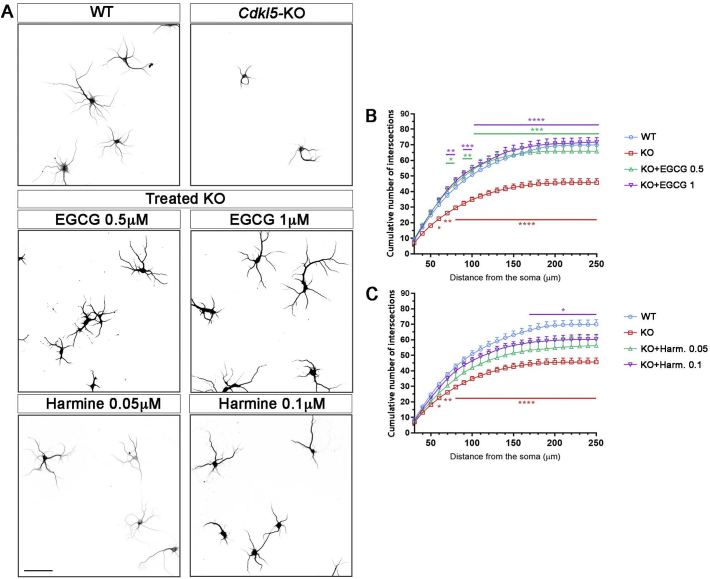
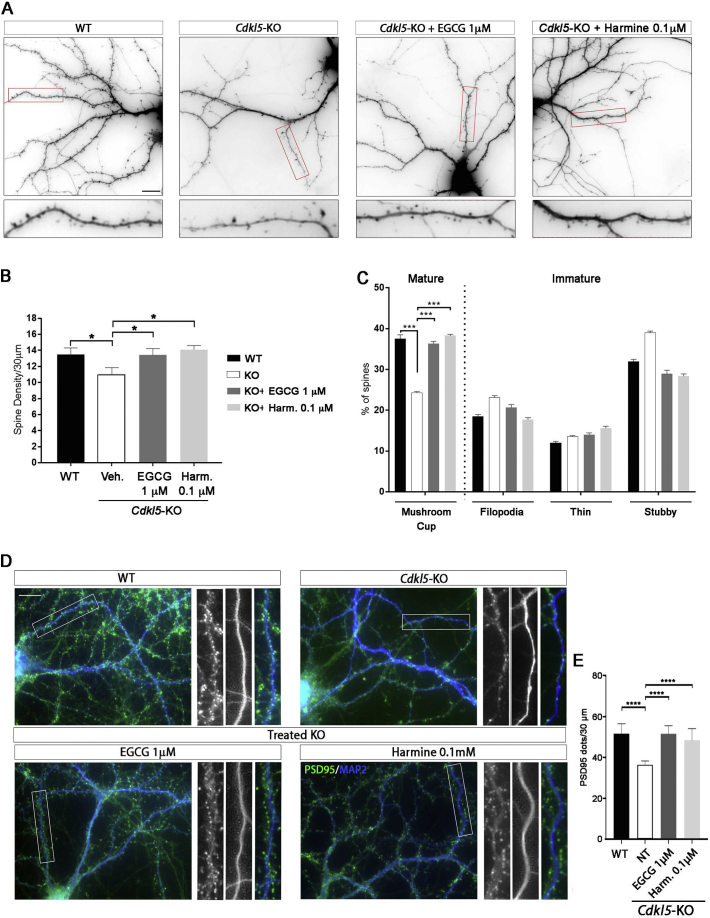
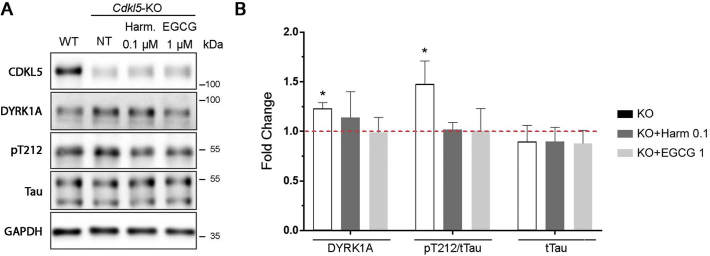
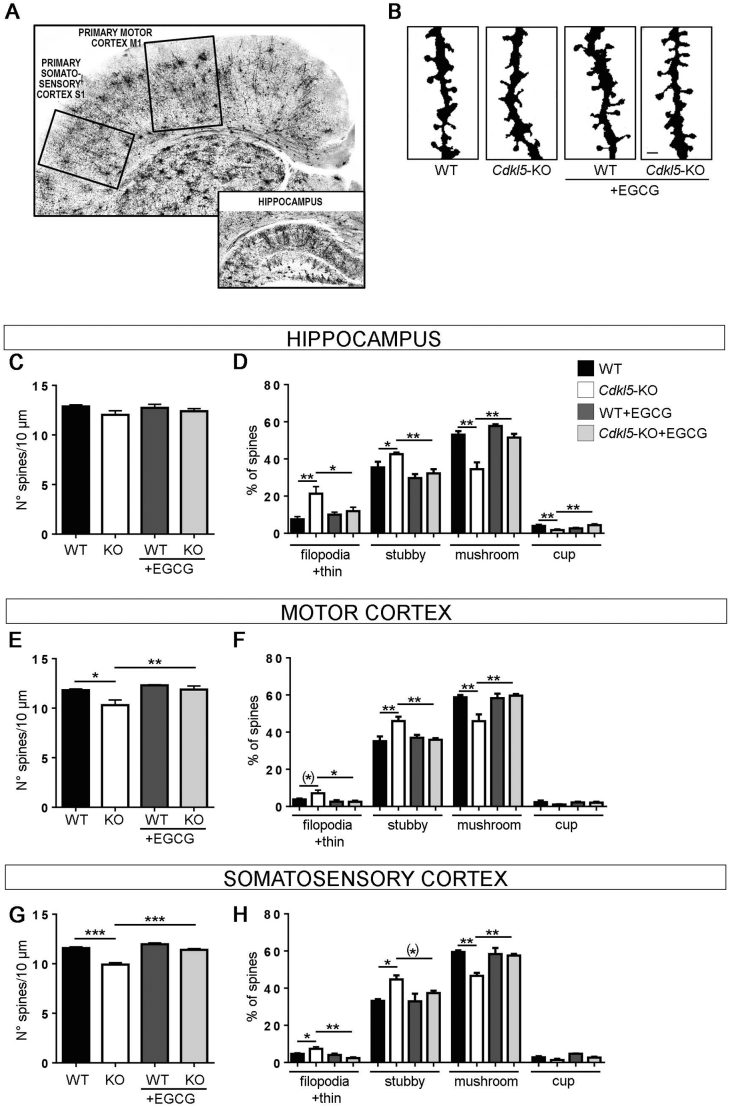
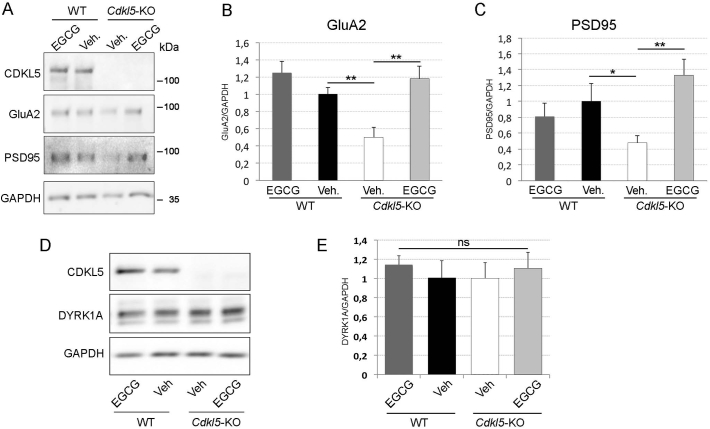
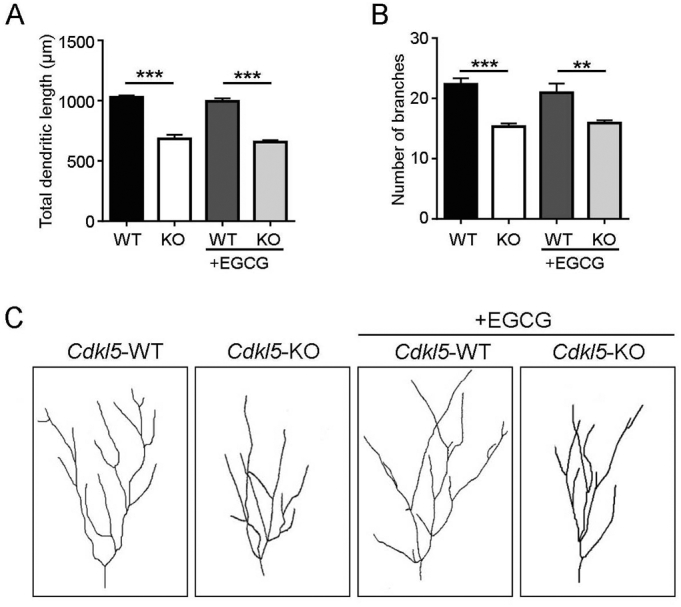
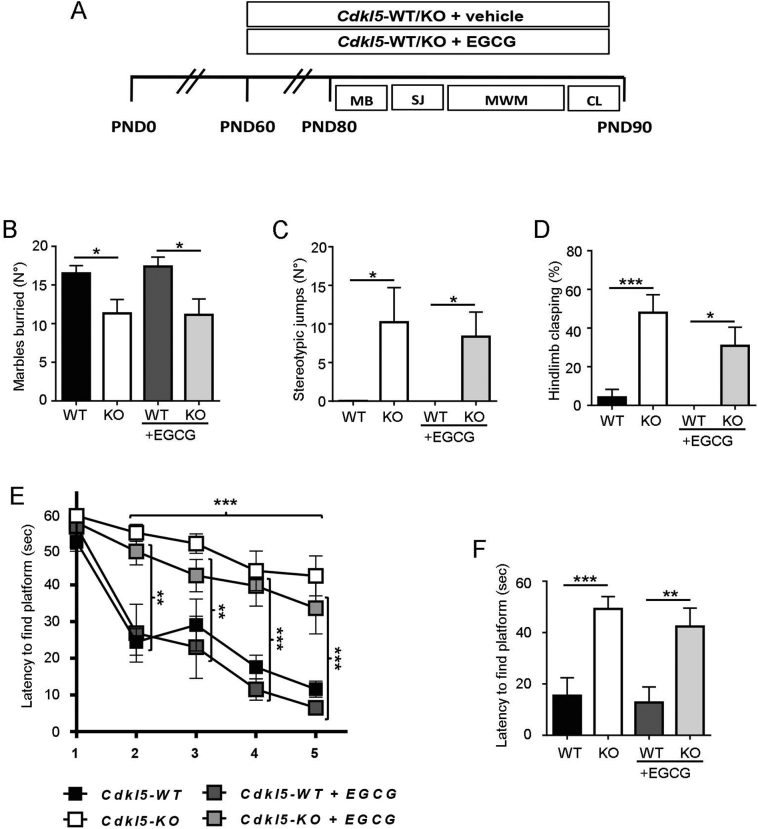
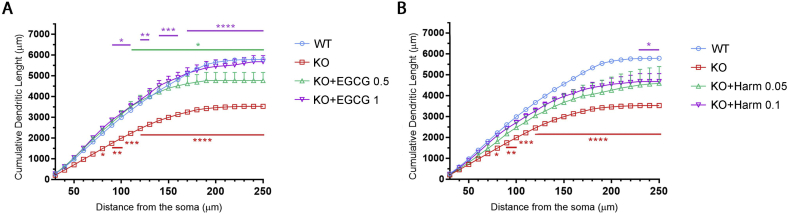
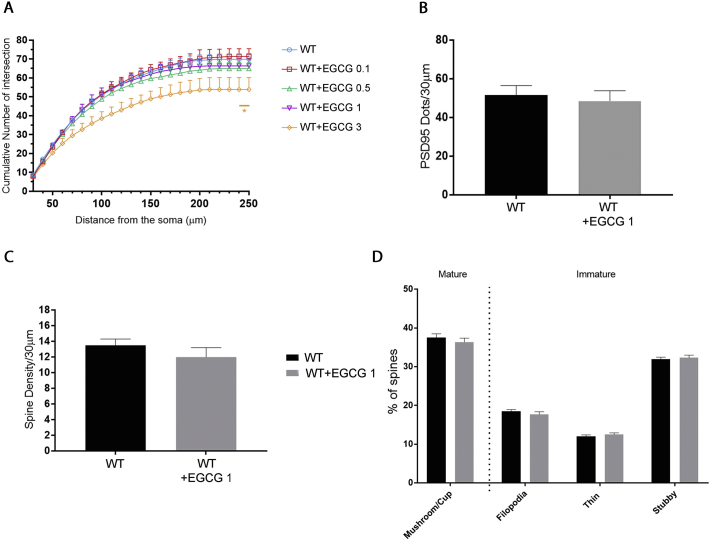
CDKL5 deficiency disorder (CDD) is a rare X-linked neurodevelopmental disorder that is characterised by early-onset seizures, intellectual disability, gross motor impairment, and autistic-like features. CDD is caused by mutations in the cyclin-dependent kinase-like 5 (CDKL5) gene that encodes a serine/threonine kinase with a predominant expression in the brain. Loss of CDKL5 causes neurodevelopmental alterations in vitro and in vivo, including defective dendritic arborisation and spine maturation, which most likely underlie the cognitive defects and autistic features present in humans and mice. Here, we show that treatment with epigallatocathechin-3-gallate (EGCG), the major polyphenol of green tea, can restore defects in dendritic and synaptic development of primary Cdkl5 knockout (KO) neurons. Furthermore, defective synaptic maturation in the hippocampi and cortices of adult Cdkl5-KO mice can be rescued through the intraperitoneal administration of EGCG, which is however not sufficient to normalise behavioural CDKL5-dependent deficits. EGCG is a pleiotropic compound with numerous cellular targets, including the dual-specificity tyrosine-phosphorylation-regulated kinase 1A (DYRK1A) that is selectively inhibited by EGCG. DYRK1A controls dendritic development and spine formation and its deregulation has been implicated in neurodevelopmental and degenerative diseases. Treatment with another DYRK1A inhibitor, harmine, was capable of correcting neuronal CDKL5-dependent defects; moreover, DYRK1A levels were upregulated in primary Cdkl5-KO neurons in concomitance with increased phosphorylation of Tau, a well-accepted DYRK1A substrate. Altogether, our results indicate that DYRK1A deregulation may contribute, at least in part, to the neurodevelopmental alterations caused by CDKL5 deficiency.
CDKL5 缺乏症(CDD)是一种罕见的 X 连锁神经发育障碍,其特征为早发性癫痫、智力障碍、粗大运动障碍和类自闭症特征。CDD 是由细胞周期蛋白依赖性激酶样 5(CDKL5)基因突变引起的,该基因编码一种在大脑中表达为主的丝氨酸/苏氨酸激酶。CDKL5 的缺失导致体外和体内的神经发育改变,包括树突分支和棘突成熟缺陷,这很可能是人类和小鼠认知缺陷和自闭症特征的基础。在这里,我们表明表没食子儿茶素没食子酸酯(EGCG),即绿茶的主要多酚,可以恢复原代 Cdkl5 敲除(KO)神经元树突和突触发育的缺陷。此外,通过腹腔内给予 EGCG,可以挽救成年 Cdkl5-KO 小鼠海马和皮质中缺陷的突触成熟,但不足以使 CDKL5 依赖性行为缺陷正常化。EGCG 是一种多效化合物,具有许多细胞靶点,包括双特异性酪氨酸磷酸化调节激酶 1A(DYRK1A),其被 EGCG 选择性抑制。DYRK1A 控制树突发育和棘突形成,其失调与神经发育和退行性疾病有关。另一种 DYRK1A 抑制剂 harmine 的治疗能够纠正神经元 CDKL5 依赖性缺陷;此外,在 Cdkl5-KO 神经元中,与 Tau 磷酸化增加相一致,DYRK1A 水平上调,Tau 是公认的 DYRK1A 底物。总之,我们的结果表明,DYRK1A 的失调可能至少部分导致了 CDKL5 缺乏引起的神经发育改变。