Fuentes Alejandra, Herrera Héctor, Charles Trevor C, Arriagada Cesar
Laboratorio Biorremediación, Departamento de Ciencias Forestales, Facultad de Ciencias Agropecuarias y Forestales, Universidad de La Frontera, Francisco Salazar, Temuco 01145, Chile.
Department of Biology, University of Waterloo, University Avenue West, Waterloo, ON N2L 3G1, Canada.
Microorganisms. 2020 Feb 4;8(2):209. doi: 10.3390/microorganisms8020209.
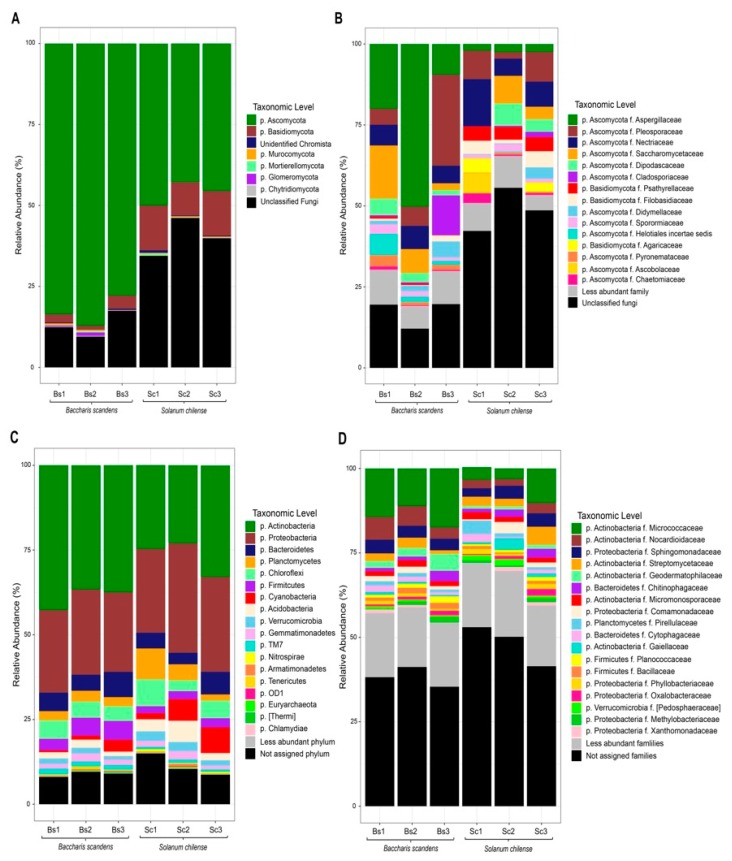
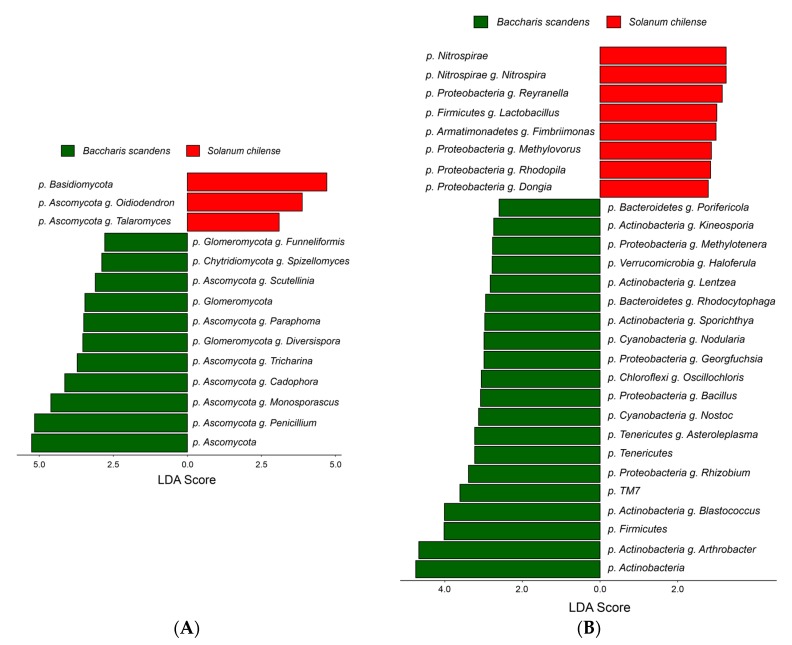
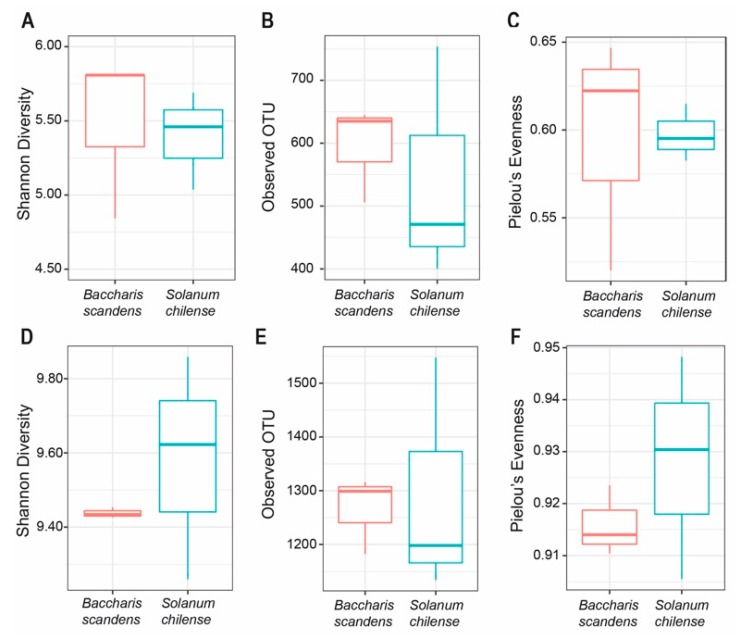
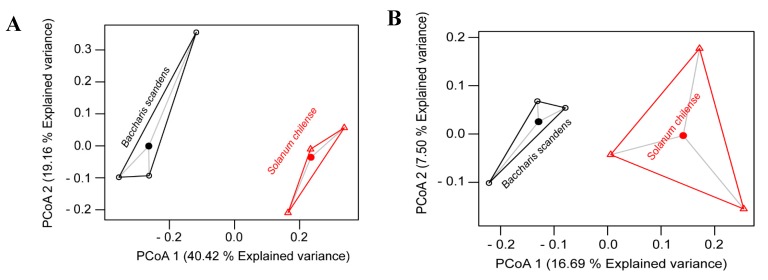
The rhizosphere microbiome is key in survival, development, and stress tolerance in plants. Salinity, drought, and extreme temperatures are frequent events in the Atacama Desert, considered the driest in the world. However, little information of the rhizosphere microbiome and its possible contribution to the adaptation and tolerance of plants that inhabit the desert is available. We used a high-throughput Illumina MiSeq sequencing approach to explore the composition, diversity, and functions of fungal and bacterial communities of the rhizosphere of and native plants from the Atacama Desert. Our results showed that the fungal phyla Ascomycota and Basidiomycota and the bacterial phyla Actinobacteria and Proteobacteria were the dominant taxa in the rhizosphere of both plants. The linear discriminant analysis (LDA) effect size (LefSe) of the rhizosphere communities associated with showed the genera and were the preferential taxa, whereas the genera and was the preferential taxa in Both plant showed similar diversity, richness, and abundance according to Shannon index, observed OTUs, and evenness. Our results indicate that there are no significant differences ( = 0.1) between the fungal and bacterial communities of both plants, however through LefSe, we find taxa associated with each plant species and the PCoA shows a separation between the samples of each species. This study provides knowledge to relate the assembly of the microbiome to the adaptability to drought stress in desert plants.
根际微生物群对植物的生存、发育和胁迫耐受性至关重要。盐度、干旱和极端温度在阿塔卡马沙漠频繁发生,该沙漠被认为是世界上最干旱的沙漠。然而,关于根际微生物群及其对栖息于沙漠中的植物的适应性和耐受性可能做出的贡献的信息却很少。我们采用高通量Illumina MiSeq测序方法,探究了阿塔卡马沙漠两种本土植物根际真菌和细菌群落的组成、多样性及功能。我们的结果表明,子囊菌门和担子菌门真菌以及放线菌门和变形菌门细菌是这两种植物根际的优势类群。与[一种植物名称]相关的根际群落的线性判别分析(LDA)效应大小(LefSe)显示,[某些属名]属是优势类群,而在[另一种植物名称]中,[某些属名]属是优势类群。根据香农指数、观测到的操作分类单元(OTU)和均匀度,两种植物均表现出相似的多样性、丰富度和丰度。我们的结果表明,两种植物的真菌和细菌群落之间没有显著差异(P = 0.1),然而通过LefSe分析,我们发现了与每种植物物种相关的类群,主坐标分析(PCoA)显示各物种样本之间存在分离。本研究为将微生物群的组装与沙漠植物对干旱胁迫的适应性联系起来提供了知识。