Department of Viroscience, Erasmus MC University Medical Center, Center for Research on Influenza Pathogenesis (CRIP) Center of Excellence for Influenza Research and Surveillance (CEIRS), Rotterdam, the Netherlands.
Department of Microbiology and Immunology, Emory University School of Medicine, Atlanta, GA, 30322, USA.
Nat Commun. 2020 Feb 7;11(1):766. doi: 10.1038/s41467-020-14626-0.
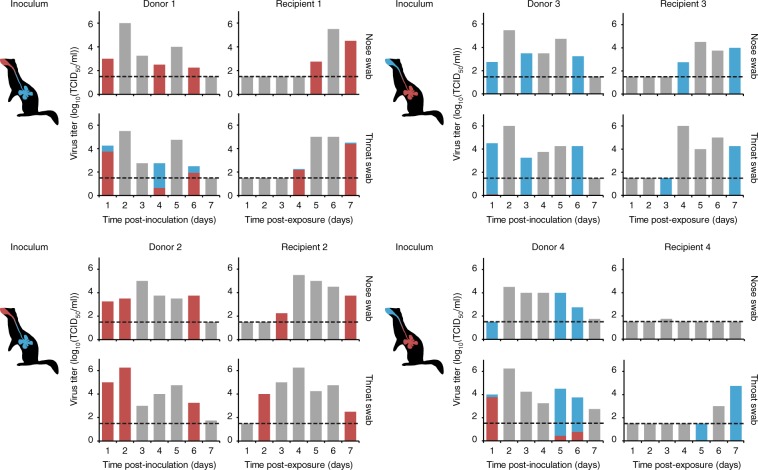
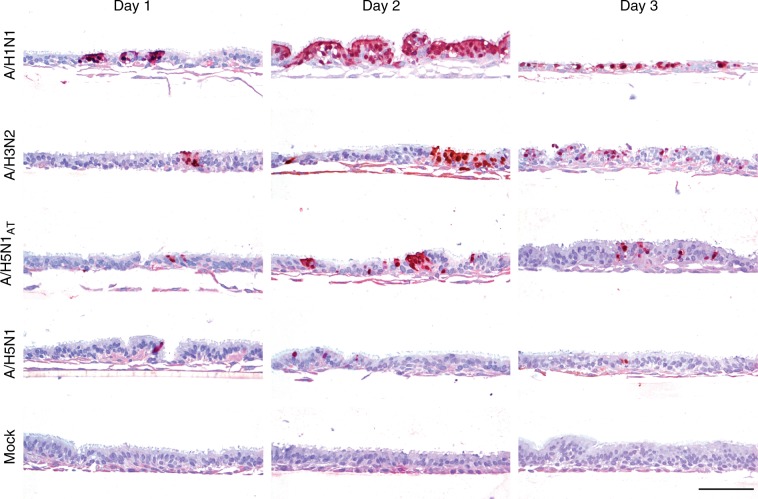
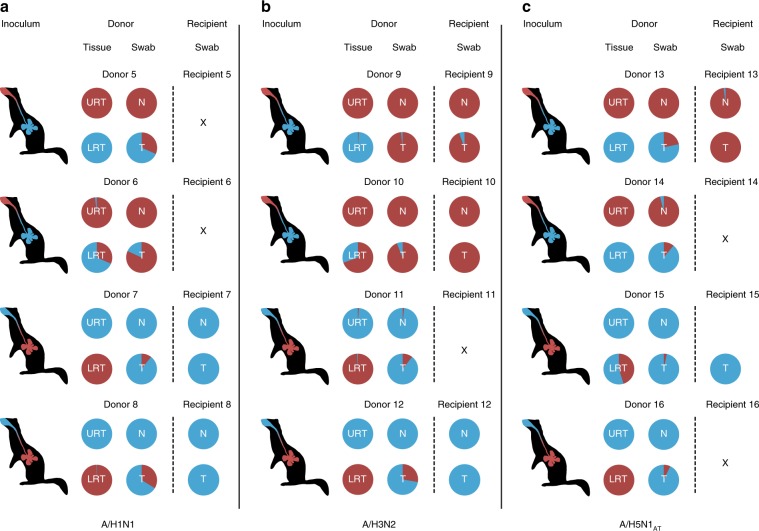
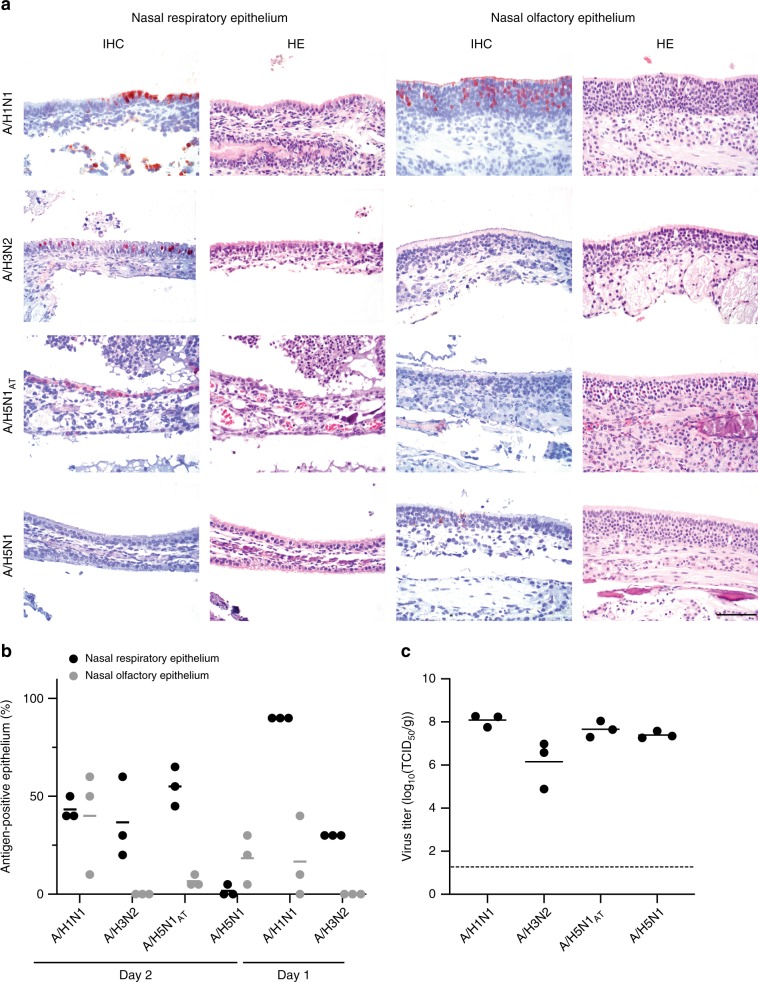
Human influenza A viruses are known to be transmitted via the air from person to person. It is unknown from which anatomical site of the respiratory tract influenza A virus transmission occurs. Here, pairs of genetically tagged and untagged influenza A/H1N1, A/H3N2 and A/H5N1 viruses that are transmissible via the air are used to co-infect donor ferrets via the intranasal and intratracheal routes to cause an upper and lower respiratory tract infection, respectively. In all transmission cases, we observe that the viruses in the recipient ferrets are of the same genotype as the viruses inoculated intranasally, demonstrating that they are expelled from the upper respiratory tract of ferrets rather than from trachea or the lower airways. Moreover, influenza A viruses that are transmissible via the air preferentially infect ferret and human nasal respiratory epithelium. These results indicate that virus replication in the upper respiratory tract, the nasal respiratory epithelium in particular, of donors is a driver for transmission of influenza A viruses via the air.
已知人流感病毒通过空气在人与人之间传播。目前尚不清楚流感 A 病毒通过呼吸道的哪个解剖部位传播。在这里,通过鼻腔和气管途径将一对对遗传标记和未标记的甲型 H1N1、H3N2 和 H5N1 流感病毒共同感染供体雪貂,分别引起上呼吸道和下呼吸道感染。在所有传播病例中,我们观察到受感染雪貂体内的病毒与鼻腔内接种的病毒具有相同的基因型,表明它们是从雪貂的上呼吸道而不是从气管或下呼吸道排出的。此外,可通过空气传播的流感 A 病毒优先感染雪貂和人类鼻腔呼吸道上皮。这些结果表明,供体上呼吸道(特别是鼻腔呼吸道上皮)中的病毒复制是流感 A 病毒通过空气传播的驱动因素。