Nigeria Field Epidemiology and Laboratory Training Program, Abuja, Nigeria.
National Malaria Elimination Program, Federal Ministry of Health, Abuja, Nigeria.
Infect Dis Poverty. 2020 Feb 10;9(1):15. doi: 10.1186/s40249-020-0629-2.
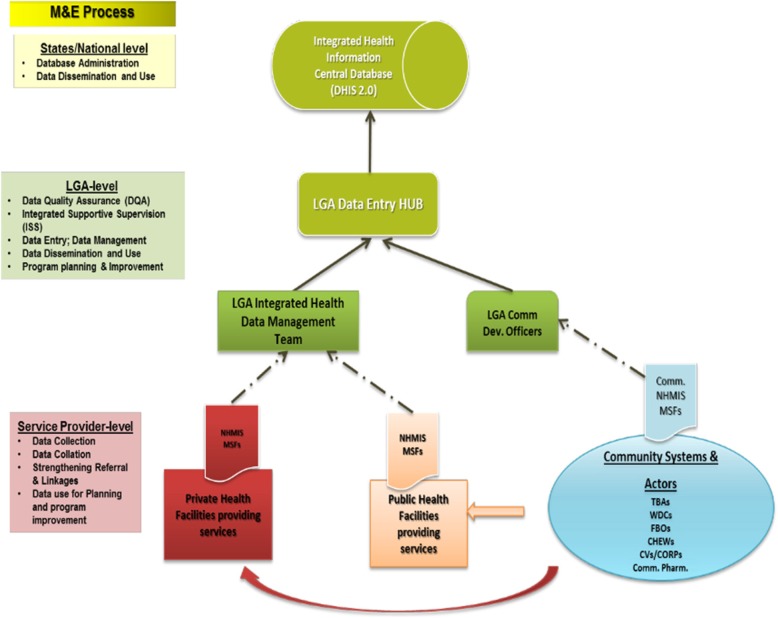
Malaria surveillance system strengthening is essential in the progress towards malaria elimination. In Nigeria, more attention is being given to this recently as the country is striving towards achieving elimination. However, the surveillance system performance is fraught with challenges including poor data quality with varying magnitude by state. This study evaluated the operation of the Kano State malaria surveillance system and assessed its key attributes.
An observational study design comprising a survey, record review and secondary data analysis, and mixed methods data collection approach were used. Four key stakeholders' and 35 Roll Back Malaria Focal Persons (RBMs) semi-structured interviews on operation of the system and attributes of the surveillance system, were conducted. We analyzed the abstracted 2013-2016 National Health Management Information System web-based malaria datasets. The surveillance system was evaluated using the "2001 United States Centers for Disease Control's updated guidelines for Evaluating Public Health Surveillance Systems". Data were described using means, standard deviation, frequencies and proportions. Chi-squared for linear trends was used.
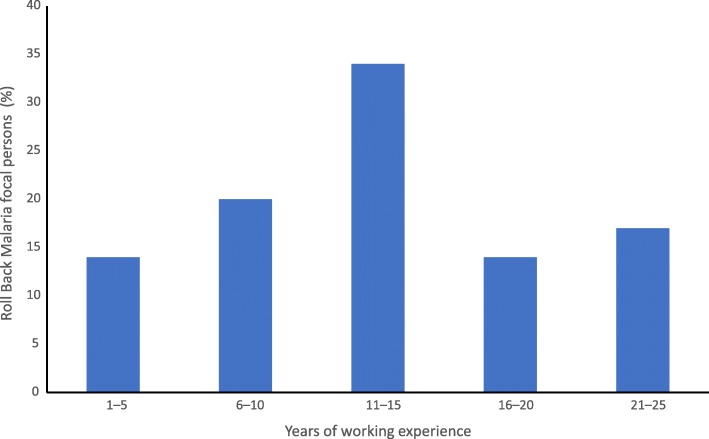
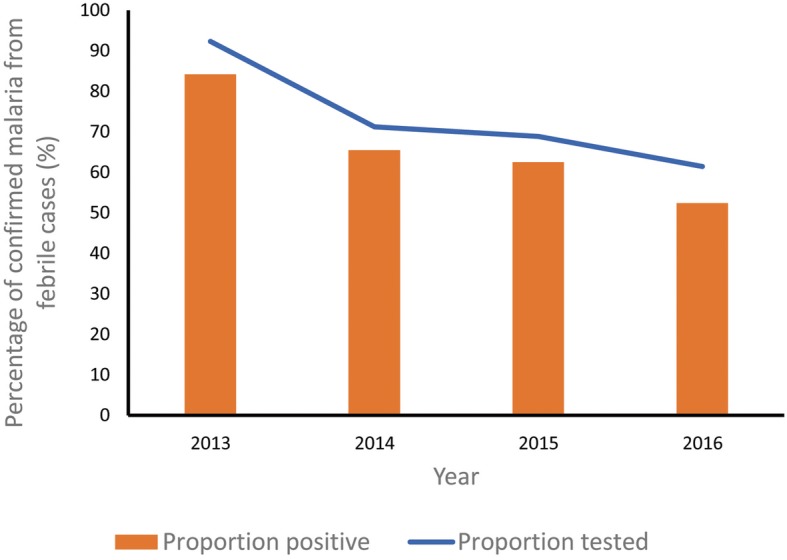
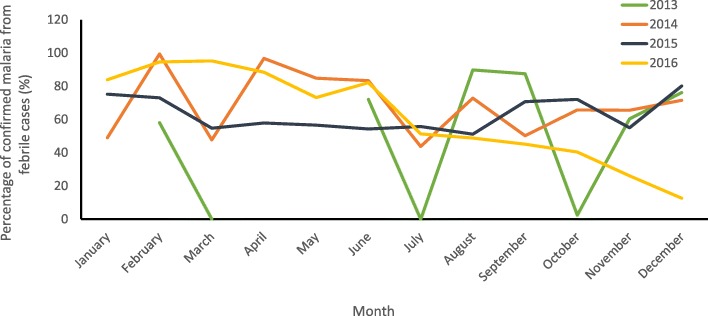
Overall, 24 RBMs (68.6%) had ≤ 15-year experience on malaria surveillance, 29 (82.9%) had formal training on malaria surveillance; 32 RBMs (91.4%) reported case definitions were easy-to-use, reporting forms were easy-to-fill and data flow channels were clearly defined. Twenty-seven respondents (69.2%) reported data tools could accommodate changes and all RBMs understood malaria case definitions. All respondents (4 stakeholders and 34 RBMs [97.1%]) expressed willingness to continue using the system and 33 (84.6%) reported analyzed data were used for decision-making. Public health facilities constituted the main data source. Overall, 65.0% of funding were from partner agencies. Trend of malaria cases showed significant decline (χ = 7.49; P = 0.0006). Timeliness of reporting was below the target (≥ 80%), except being 82% in 2012.
Malaria surveillance system in Kano State was simple, flexible, acceptable, useful and donor-driven but the data were not representative of all health facilities. Timeliness of reporting was suboptimal. We recommended reporting from private health facilities, strengthening human resource capacity for supportive supervision and ensuring adequate government funding to enhance the system's representativeness and improve data quality.
疟疾监测系统的加强对于消除疟疾的进展至关重要。在尼日利亚,随着该国努力实现消除疟疾的目标,最近对这方面的重视程度越来越高。然而,该监测系统的运行存在诸多挑战,包括各州数据质量参差不齐。本研究评估了卡诺州疟疾监测系统的运行情况,并评估了其关键属性。
采用观察性研究设计,包括调查、记录审查和二次数据分析,以及混合方法数据收集方法。对系统运行和监测系统属性进行了四次关键利益攸关方和 35 名减少疟疾焦点人员(RBM)的半结构化访谈。我们分析了 2013-2016 年国家卫生管理信息系统基于网络的疟疾数据集。使用“2001 年美国疾病控制中心更新的公共卫生监测系统评估指南”评估监测系统。使用均值、标准差、频率和比例描述数据。线性趋势的卡方检验用于分析。
总体而言,24 名 RBM(68.6%)在疟疾监测方面的经验不足 15 年,29 名(82.9%)接受过疟疾监测方面的正式培训;32 名 RBM(91.4%)报告病例定义易于使用,报告表易于填写,数据流通道定义明确。27 名受访者(69.2%)报告数据工具能够适应变化,所有 RBM 都理解疟疾病例定义。所有受访者(4 名利益攸关方和 34 名 RBM[97.1%])都表示愿意继续使用该系统,33 名(84.6%)报告说分析后的数据用于决策制定。公共卫生机构是主要的数据来源。总体而言,65.0%的资金来自合作伙伴机构。疟疾病例的趋势呈显著下降(χ²=7.49;P=0.0006)。报告的及时性低于目标(≥80%),除 2012 年为 82%。
卡诺州的疟疾监测系统简单、灵活、可接受、有用且由捐助者驱动,但数据并不代表所有卫生机构。报告的及时性不理想。我们建议从私立卫生机构报告,加强对支持性监督的人力资源能力建设,并确保政府提供充足资金,以提高系统的代表性并提高数据质量。