Al-Ghamdi Najood A, Meyer Walter J, Atzori Barbara, Alhalabi Wadee, Seibel Clayton C, Ullman David, Hoffman Hunter G
Department of Computer Science, Faculty of Computing and Information Technology, King Abdulaziz University, Jeddah, Saudi Arabia.
Shriners Hospitals for Children, Galveston, TX, United States.
Front Hum Neurosci. 2020 Jan 23;13:467. doi: 10.3389/fnhum.2019.00467. eCollection 2019.
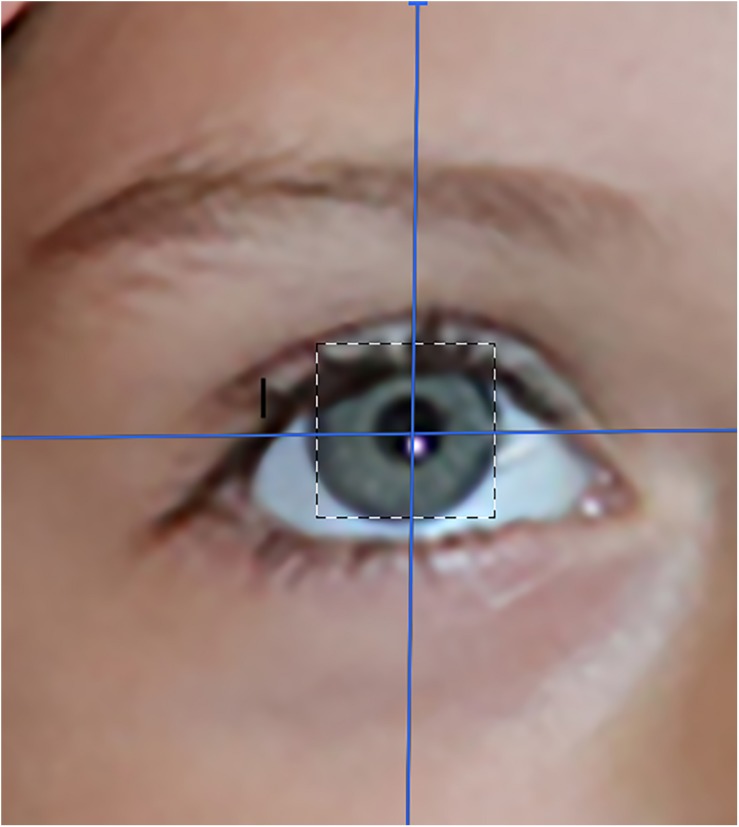
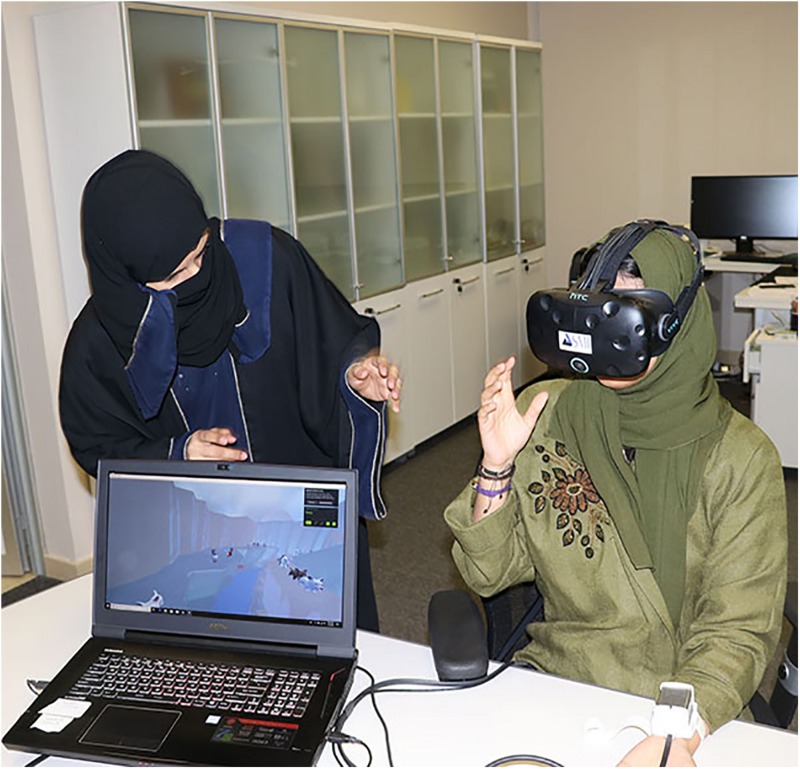
In light of growing concerns about opioid analgesics, developing new non-pharmacologic pain control techniques has become a high priority. Adjunctive virtual reality can help reduce acute pain during painful medical procedures. However, for some especially painful medical procedures such as burn wound cleaning, clinical researchers recommend that more distracting versions of virtual reality are needed, to further amplify the potency of virtual reality analgesia. The current study with healthy volunteers explores for the first time whether interacting with virtual objects in Virtual Reality (VR) via "hands free" eye-tracking technology integrated into the VR helmet makes VR more effective/powerful than non-interactive/passive VR (no eye-tracking) for reducing pain during brief thermal pain stimuli.
Forty eight healthy volunteers participated in the main study. Using a within-subject design, each participant received one brief thermal pain stimulus during interactive eye tracked virtual reality, and each participant received another thermal pain stimulus during non-interactive VR (treatment order randomized). After each pain stimulus, participants provided subjective 0-10 ratings of cognitive, sensory and affective components of pain, and rated the amount of fun they had during the pain stimulus.
As predicted, interactive eye tracking increased the analgesic effectiveness of immersive virtual reality. Compared to the passive non-interactive VR condition, during the interactive eye tracked VR condition, participants reported significant reductions in worst pain ( < 0.001) and pain unpleasantness ( < 0.001). Participants reported a significantly stronger illusion of presence ( < 0.001), and significantly more fun in VR ( < 0.001) during the interactive condition compared to during passive VR. In summary, as predicted by our primary hypothesis, in the current laboratory acute pain analog study with healthy volunteers, increasing the immersiveness of the VR system via interactive eye tracking significantly increased how effectively VR reduced worst pain during a brief thermal pain stimulus. Although attention was not directly measured, the pattern of pain ratings, presence ratings, and fun ratings are consistent with an attentional mechanism for how VR reduces pain. Whether the current results generalize to clinical patient populations is another important topic for future research. Additional research and development is recommended.
鉴于对阿片类镇痛药的担忧日益增加,开发新的非药物疼痛控制技术已成为当务之急。辅助性虚拟现实有助于减轻痛苦的医疗程序中的急性疼痛。然而,对于一些特别痛苦的医疗程序,如烧伤伤口清理,临床研究人员建议需要更具分散注意力的虚拟现实版本,以进一步增强虚拟现实镇痛的效果。目前这项针对健康志愿者的研究首次探讨了通过集成在虚拟现实头盔中的“免提”眼动追踪技术在虚拟现实(VR)中与虚拟物体交互,是否比非交互式/被动虚拟现实(无眼动追踪)在减轻短暂热痛刺激期间的疼痛方面更有效/更强大。
48名健康志愿者参与了主要研究。采用被试内设计,每位参与者在交互式眼动追踪虚拟现实期间接受一次短暂热痛刺激,每位参与者在非交互式虚拟现实期间接受另一次热痛刺激(治疗顺序随机)。每次疼痛刺激后,参与者对疼痛的认知、感觉和情感成分进行0至10的主观评分,并对疼痛刺激期间的乐趣程度进行评分。
正如预期的那样,交互式眼动追踪提高了沉浸式虚拟现实的镇痛效果。与被动非交互式虚拟现实条件相比,在交互式眼动追踪虚拟现实条件下,参与者报告最剧烈疼痛(<0.001)和疼痛不适感(<0.001)显著降低。与被动虚拟现实期间相比,参与者在交互式条件下报告的临场感错觉显著更强(<0.001),并且在虚拟现实中的乐趣显著更多(<0.001)。总之,正如我们的主要假设所预测的那样,在当前针对健康志愿者的实验室急性疼痛模拟研究中,通过交互式眼动追踪提高虚拟现实系统的沉浸感显著提高了虚拟现实在短暂热痛刺激期间减轻最剧烈疼痛的效果。尽管没有直接测量注意力,但疼痛评分、临场感评分和乐趣评分的模式与虚拟现实减轻疼痛的注意力机制一致。目前的结果是否适用于临床患者群体是未来研究的另一个重要课题。建议进行更多的研究和开发。