Navarro-Muñoz Jorge Carlos, Collemare Jérôme
Westerdijk Fungal Biodiversity Institute, Utrecht, Netherlands.
Front Microbiol. 2020 Jan 21;10:3018. doi: 10.3389/fmicb.2019.03018. eCollection 2019.
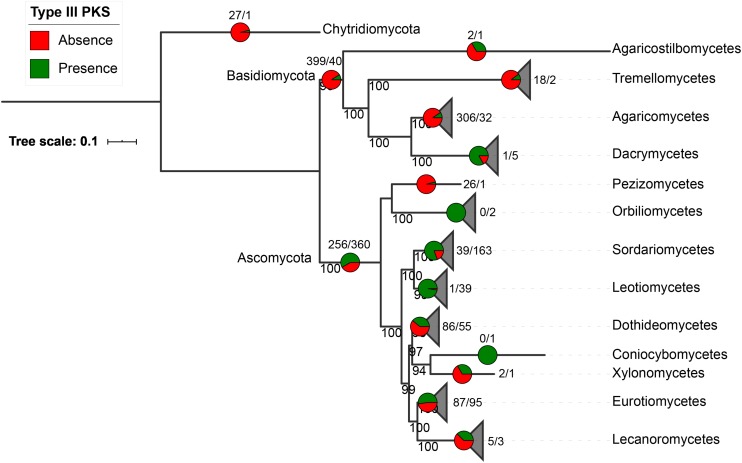
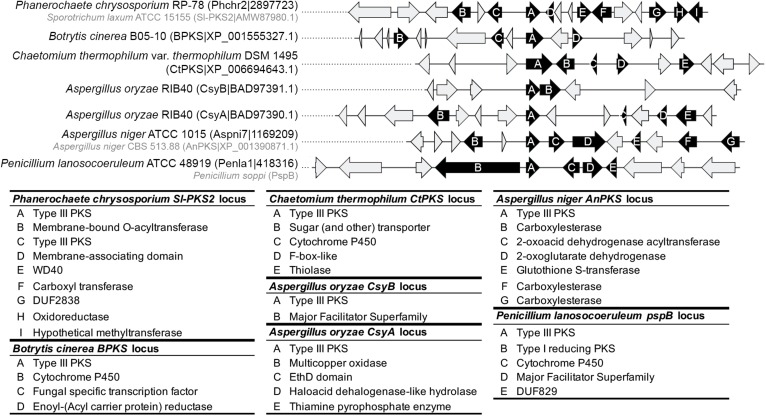
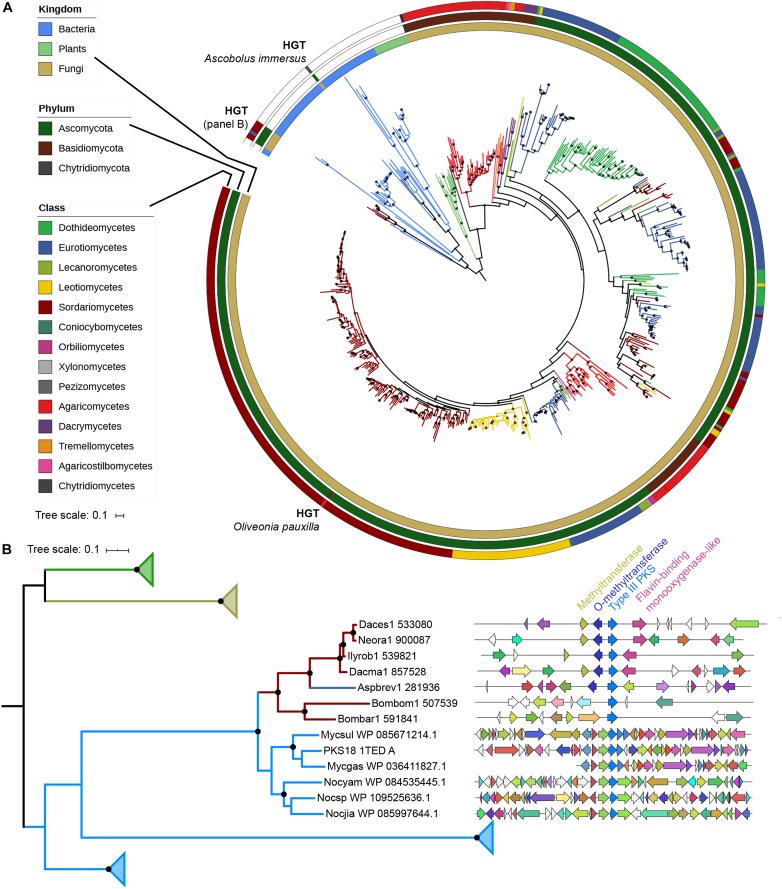
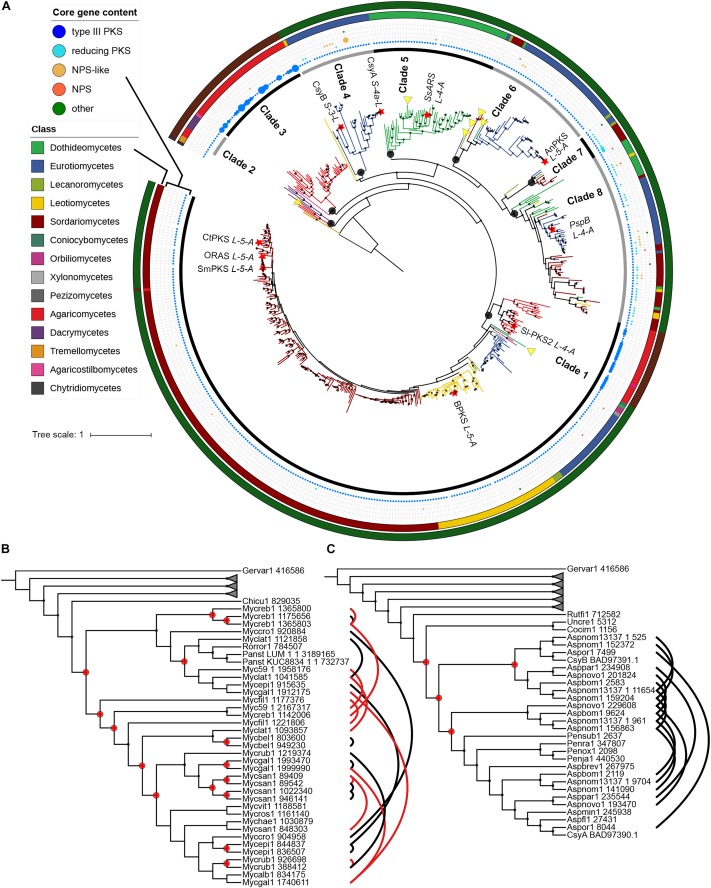
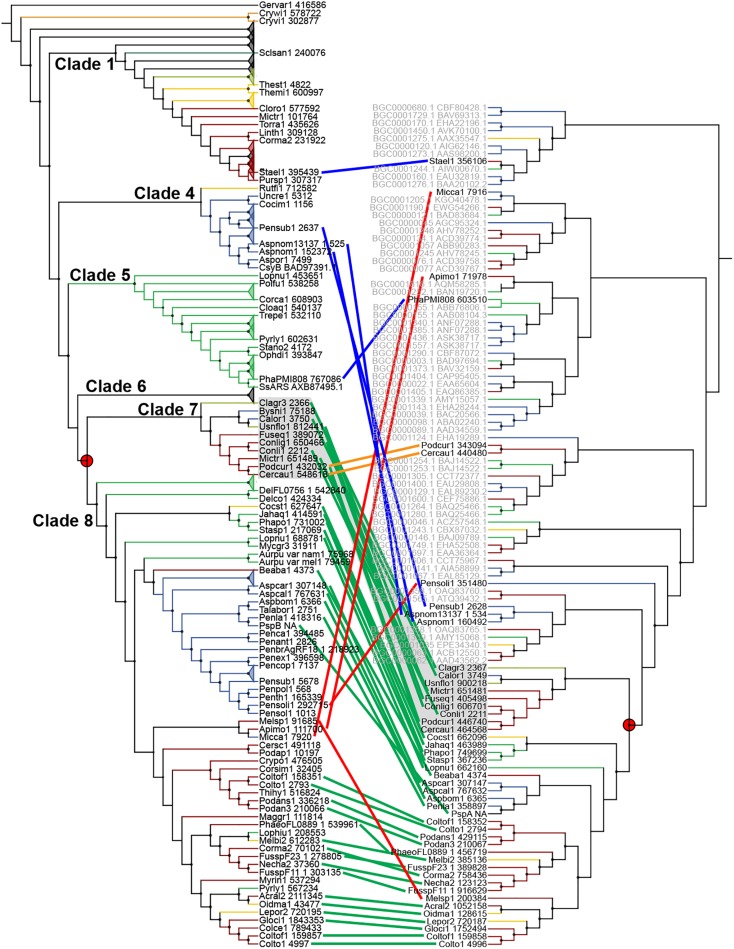
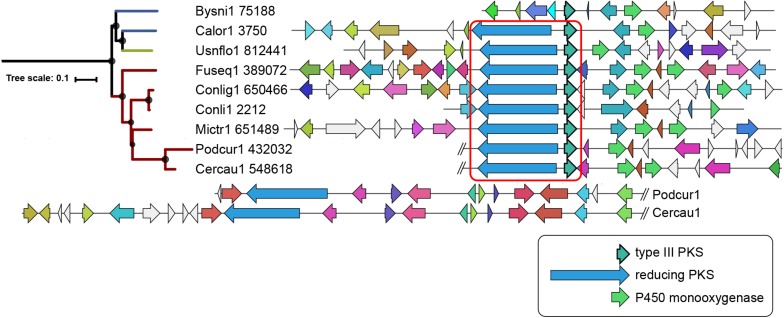
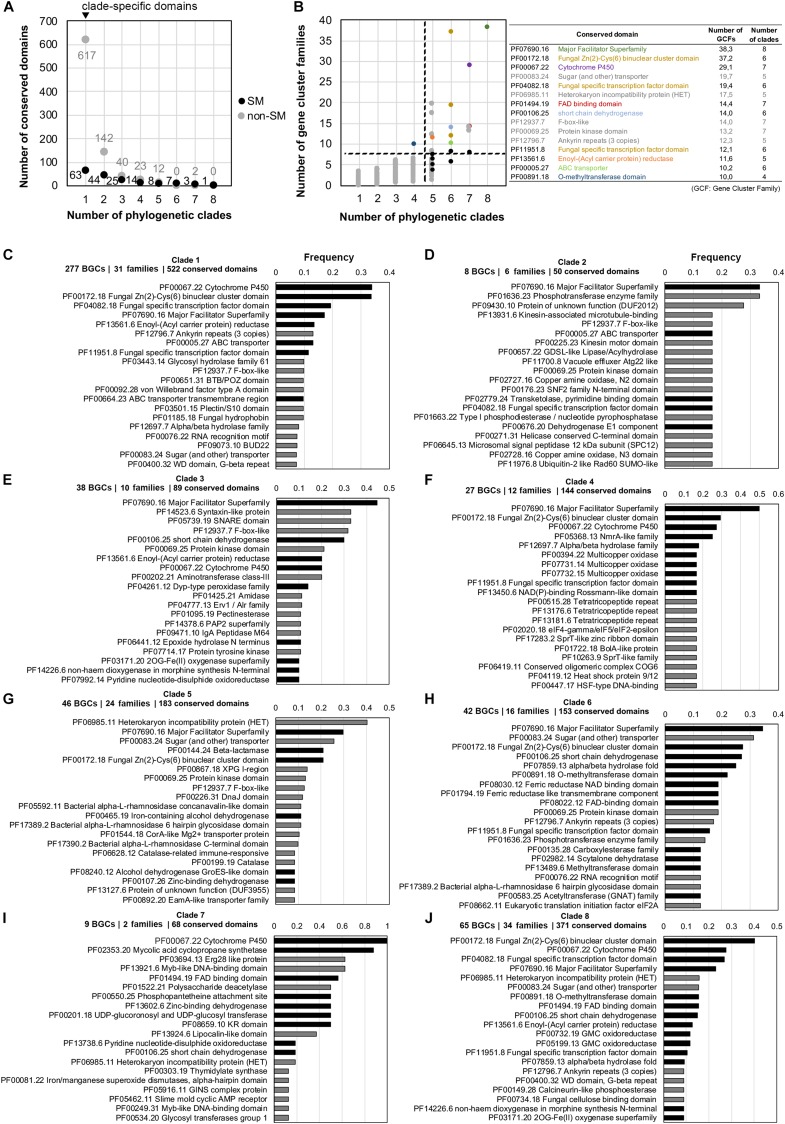
Type III polyketide synthases (PKSs) produce secondary metabolites with diverse biological activities, including antimicrobials. While they have been extensively studied in plants and bacteria, only a handful of type III PKSs from fungi has been characterized in the last 15 years. The exploitation of fungal type III PKSs to produce novel bioactive compounds requires understanding the diversity of these enzymes, as well as of their biosynthetic pathways. Here, phylogenetic and reconciliation analyses of 522 type III PKSs from 1,193 fungal genomes revealed complex evolutionary histories with massive gene duplications and losses, explaining their discontinuous distribution in the fungal tree of life. In addition, horizontal gene transfer events from bacteria to fungi and, to a lower extent, between fungi, could be inferred. Ancestral gene duplication events have resulted in the divergence of eight phylogenetic clades. Especially, two clades show ancestral linkage and functional co-evolution between a type III PKS and a reducing PKS genes. Investigation of the occurrence of protein domains in fungal type III PKS predicted gene clusters highlighted the diversity of biosynthetic pathways, likely reflecting a large chemical landscape. Type III PKS genes are most often located next to genes encoding cytochrome P450s, MFS transporters and transcription factors, defining ancestral core gene clusters. This analysis also allowed predicting gene clusters for the characterized fungal type III PKSs and provides working hypotheses for the elucidation of the full biosynthetic pathways. Altogether, our analyses provide the fundamental knowledge to motivate further characterization and exploitation of fungal type III PKS biosynthetic pathways.
III型聚酮合酶(PKSs)可产生具有多种生物活性的次生代谢产物,包括抗菌剂。虽然它们在植物和细菌中已得到广泛研究,但在过去15年里,仅有少数来自真菌的III型PKSs得到了表征。利用真菌III型PKSs生产新型生物活性化合物需要了解这些酶及其生物合成途径的多样性。在此,对来自1193个真菌基因组的522个III型PKSs进行系统发育和比对分析,揭示了其复杂的进化历史,伴有大量基因复制和丢失,这解释了它们在真菌生命树中的不连续分布。此外,还可推断出从细菌到真菌以及在较小程度上真菌之间的水平基因转移事件。祖先基因复制事件导致了8个系统发育分支的分化。特别是,两个分支显示出III型PKS和还原型PKS基因之间的祖先联系和功能共同进化。对真菌III型PKS预测基因簇中蛋白质结构域出现情况的研究突出了生物合成途径的多样性,这可能反映了一个广阔的化学图景。III型PKS基因最常位于编码细胞色素P450、MFS转运蛋白和转录因子的基因旁边,定义了祖先核心基因簇。该分析还使得能够预测已表征的真菌III型PKSs的基因簇,并为阐明完整生物合成途径提供了可行的假设。总之,我们的分析提供了基础知识,以推动对真菌III型PKS生物合成途径的进一步表征和利用。