School of Environmental and Life Sciences, University of Newcastle, Newcastle, New South Wales, Australia.
Genome Biol Evol. 2021 Apr 5;13(4). doi: 10.1093/gbe/evab056.
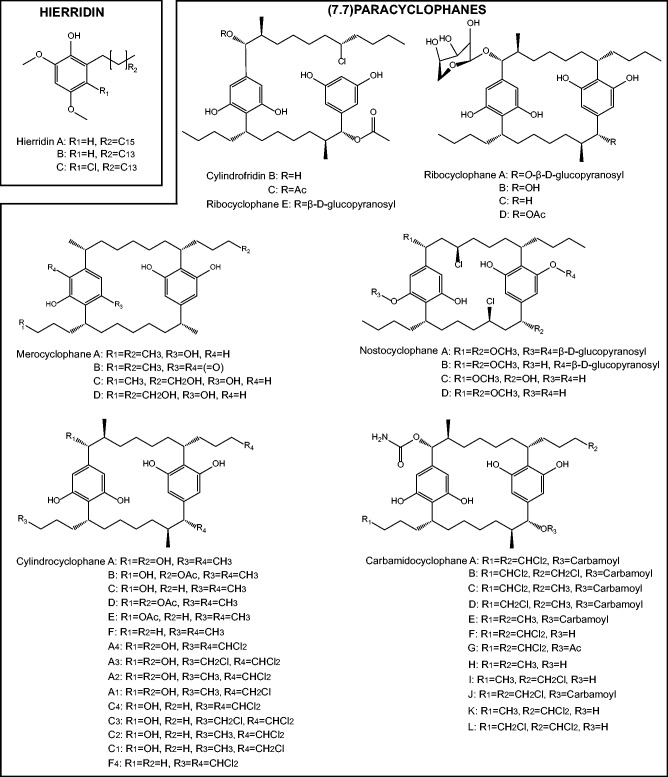
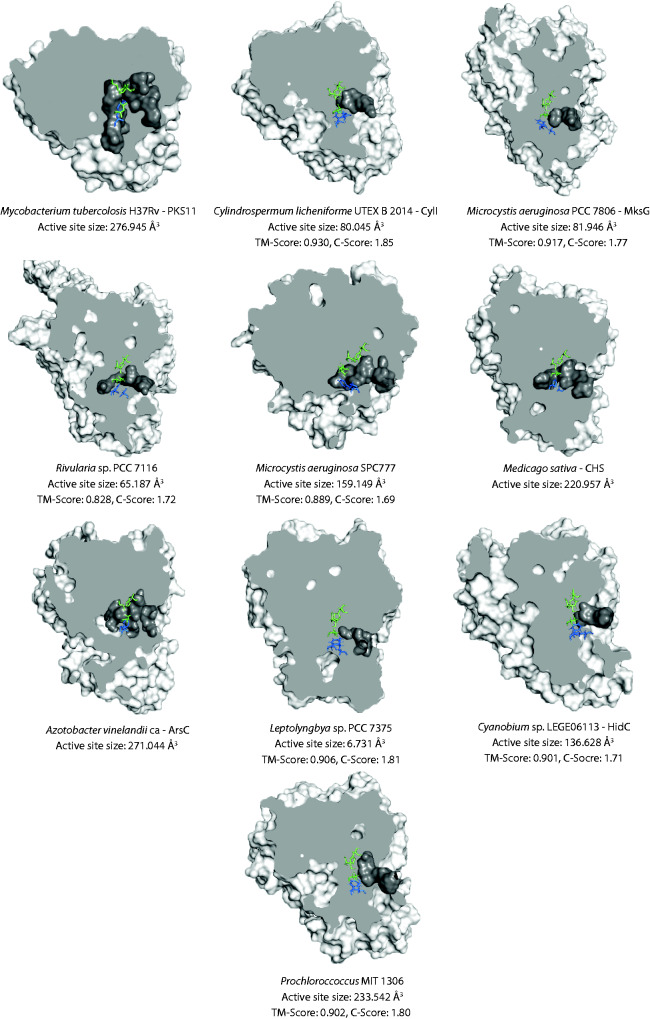
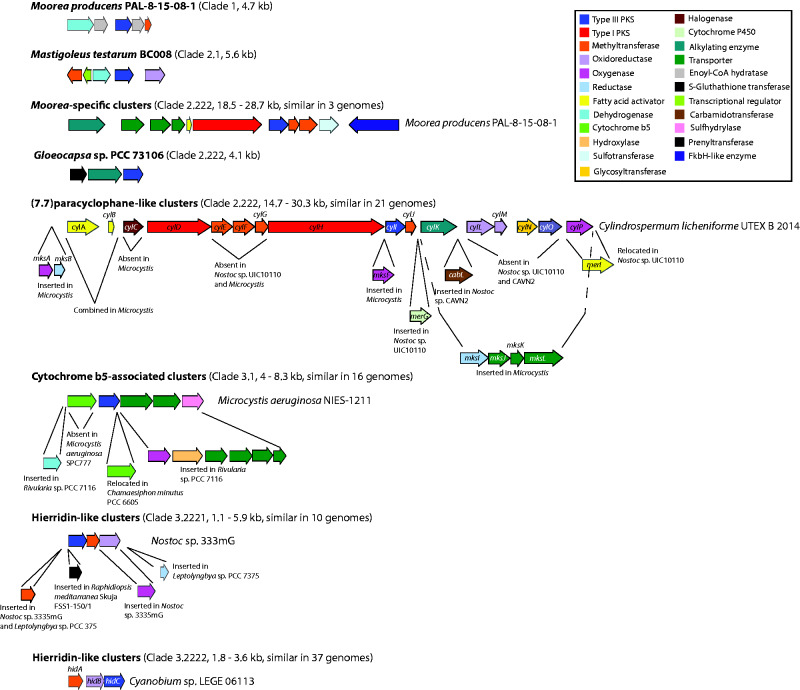
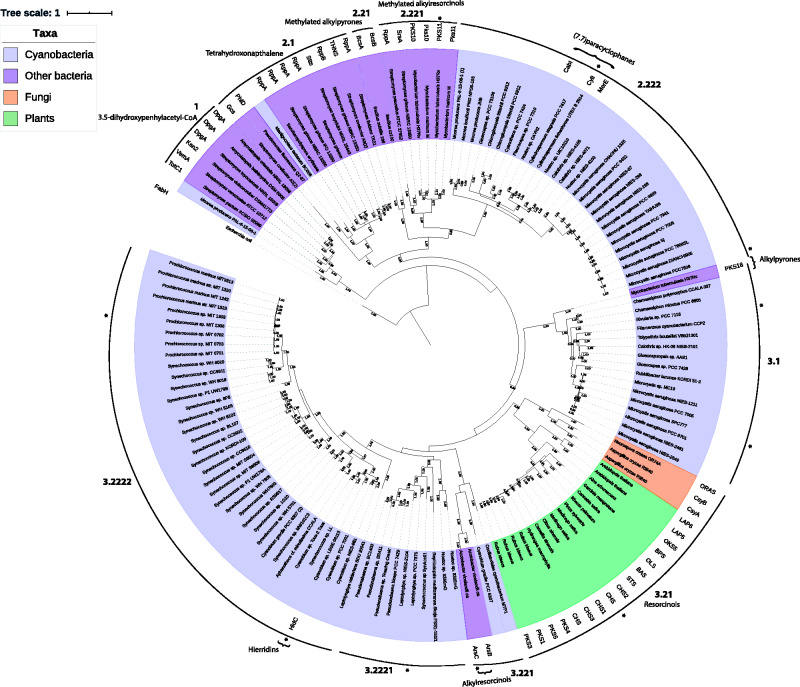
Cyanobacteria are prolific producers of natural products, including polyketides and hybrid compounds thereof. Type III polyketide synthases (PKSs) are of particular interest, due to their wide substrate specificity and simple reaction mechanism, compared with both type I and type II PKSs. Surprisingly, only two type III PKS products, hierridins, and (7.7)paracyclophanes, have been isolated from cyanobacteria. Here, we report the mining of 517 cyanobacterial genomes for type III PKS biosynthesis gene clusters. Approximately 17% of the genomes analyzed encoded one or more type III PKSs. Together with already characterized type III PKSs, the phylogeny of this group of enzymes was investigated. Our analysis showed that type III PKSs in cyanobacteria evolved into three major lineages, including enzymes associated with 1) (7.7)paracyclophane-like biosynthesis gene clusters, 2) hierridin-like biosynthesis gene clusters, and 3) cytochrome b5 genes. The evolutionary history of these enzymes is complex, with some sequences partitioning primarily according to speciation and others putatively according to their reaction type. Protein modeling showed that cyanobacterial type III PKSs generally have a smaller active site cavity (mean = 109.035 Å3) compared with enzymes from other organisms. The size of the active site did not correlate well with substrate size, however, the "Gatekeeper" amino acid residues within the active site were strongly correlated to enzyme phylogeny. Our study provides unprecedented insight into the distribution, diversity, and molecular evolution of cyanobacterial type III PKSs, which could facilitate the discovery, characterization, and exploitation of novel enzymes, biochemical pathways, and specialized metabolites from this biosynthetically talented clade of microorganisms.
蓝藻是天然产物的丰富生产者,包括聚酮化合物和它们的杂种化合物。与 I 型和 II 型 PKS 相比,III 型聚酮合酶(PKS)由于其广泛的底物特异性和简单的反应机制而特别受到关注。令人惊讶的是,仅从蓝藻中分离出两种 III 型 PKS 产物,即 hierridins 和(7.7)对环芳烷。在这里,我们报告了对 517 个蓝藻基因组进行 III 型 PKS 生物合成基因簇的挖掘。分析的大约 17%的基因组编码一个或多个 III 型 PKS。与已经表征的 III 型 PKS 一起,研究了该酶组的系统发育。我们的分析表明,蓝藻中的 III 型 PKS 进化为三个主要谱系,包括与 1)(7.7)对环芳烷样生物合成基因簇相关的酶,2)hierridin 样生物合成基因簇和 3)细胞色素 b5 基因相关的酶。这些酶的进化历史很复杂,有些序列主要根据物种形成进行分区,而其他序列则可能根据其反应类型进行分区。蛋白质建模表明,与其他生物体的酶相比,蓝藻 III 型 PKS 通常具有较小的活性位点腔(平均值= 109.035Å3)。然而,活性位点的大小与底物大小没有很好的相关性,但是活性位点内的“守门员”氨基酸残基与酶系统发育强烈相关。我们的研究提供了对蓝藻 III 型 PKS 的分布、多样性和分子进化的前所未有的了解,这有助于发现、表征和利用来自这个生物合成有天赋的微生物类群的新型酶、生化途径和特殊代谢产物。