Institute of Sciences of Food Production, National Research Council, Bari, Italy.
Department of Agriculture Peoria, National Center for Agricultural Utilization Research, U.S., Peoria, IL, USA.
BMC Genomics. 2019 Apr 24;20(1):314. doi: 10.1186/s12864-019-5567-7.
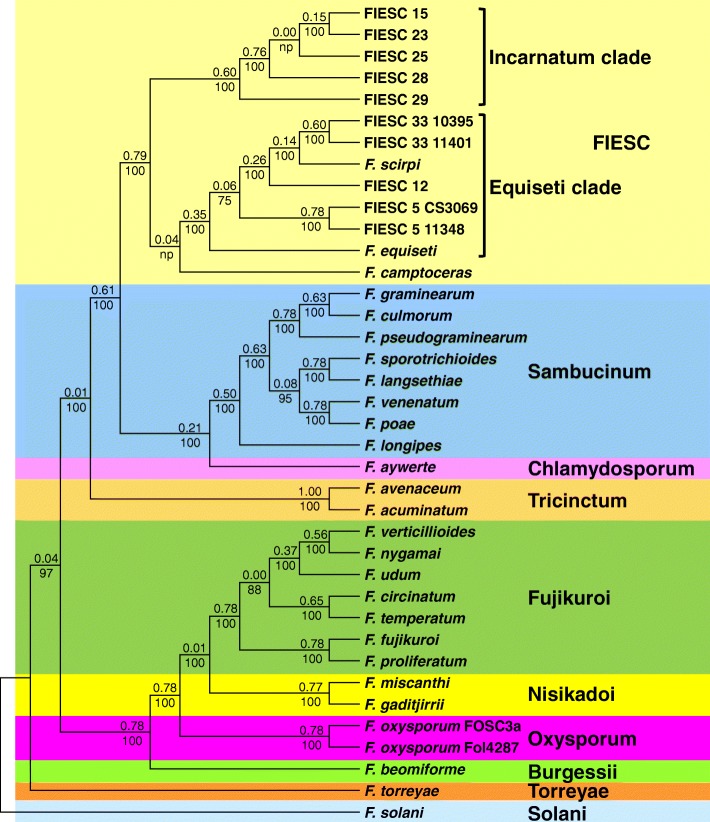
The Fusarium incarnatum-equiseti species complex (FIESC) comprises 33 phylogenetically distinct species that have been recovered from diverse biological sources, but have been most often isolated from agricultural plants and soils. Collectively, members of FIESC can produce diverse mycotoxins. However, because the species diversity of FIESC has been recognized only recently, the potential of species to cause mycotoxin contamination of crop plants is unclear. In this study, therefore, we used comparative genomics to investigate the distribution of and variation in genes and gene clusters responsible for the synthesis of mycotoxins and other secondary metabolites (SMs) in FIESC.
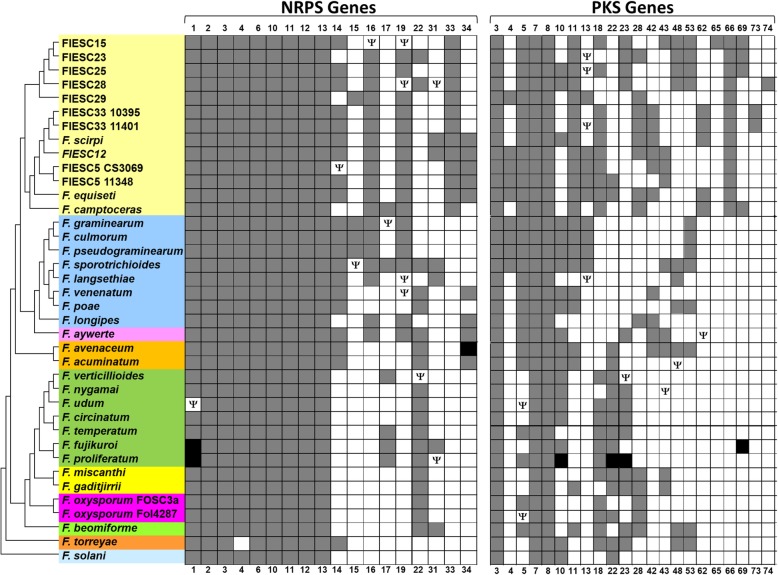
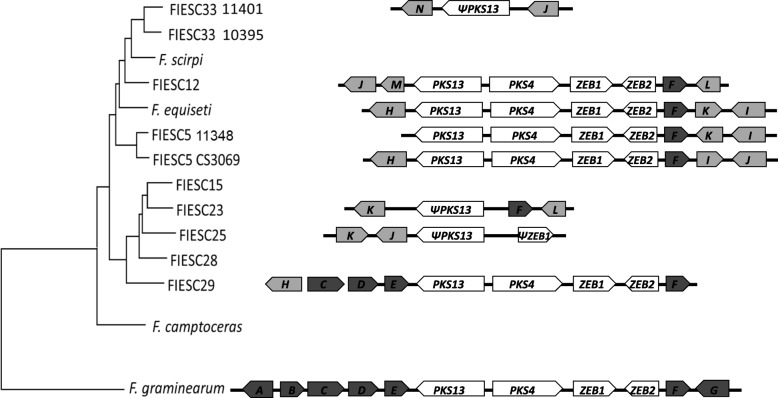
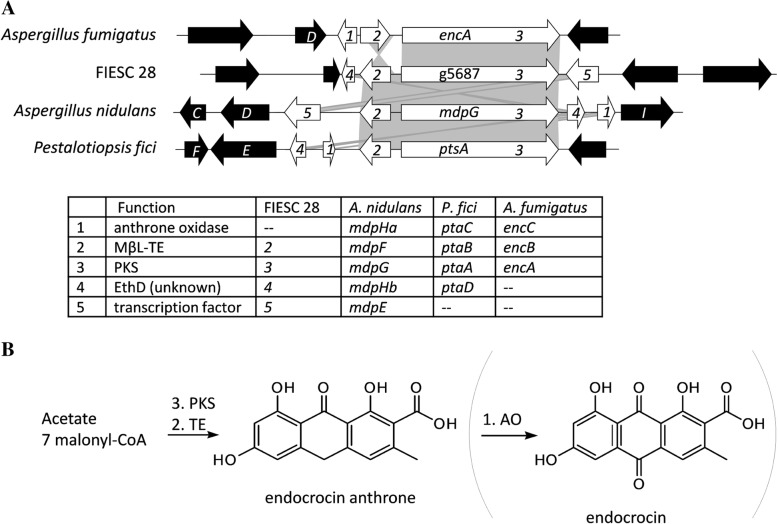
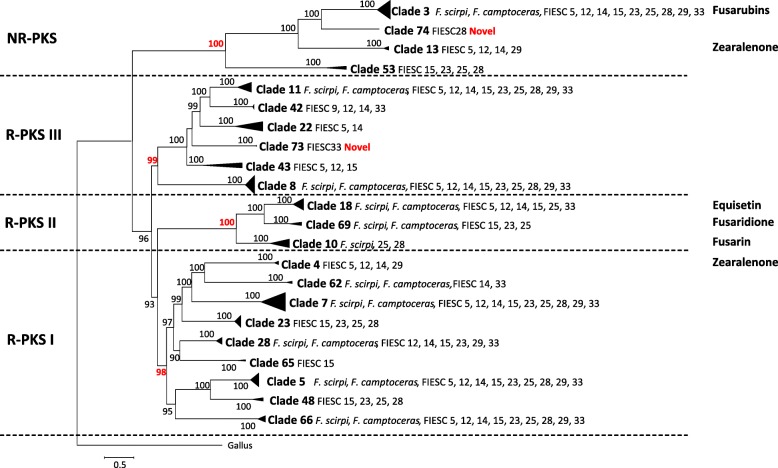
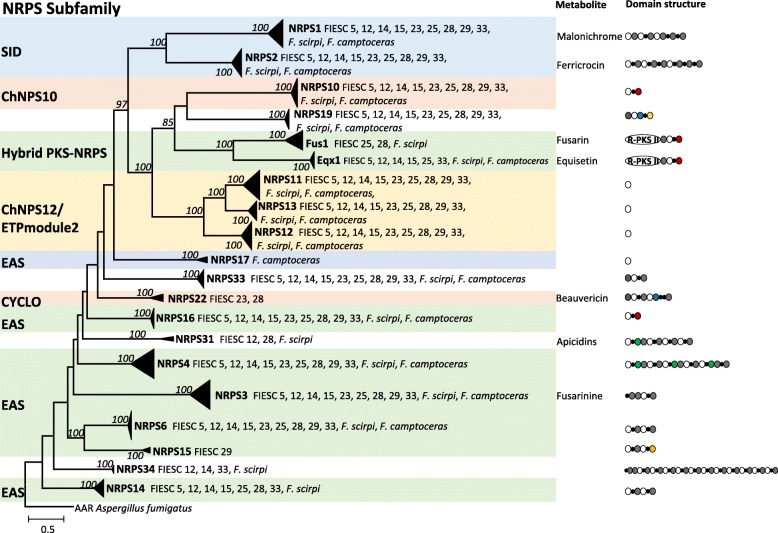
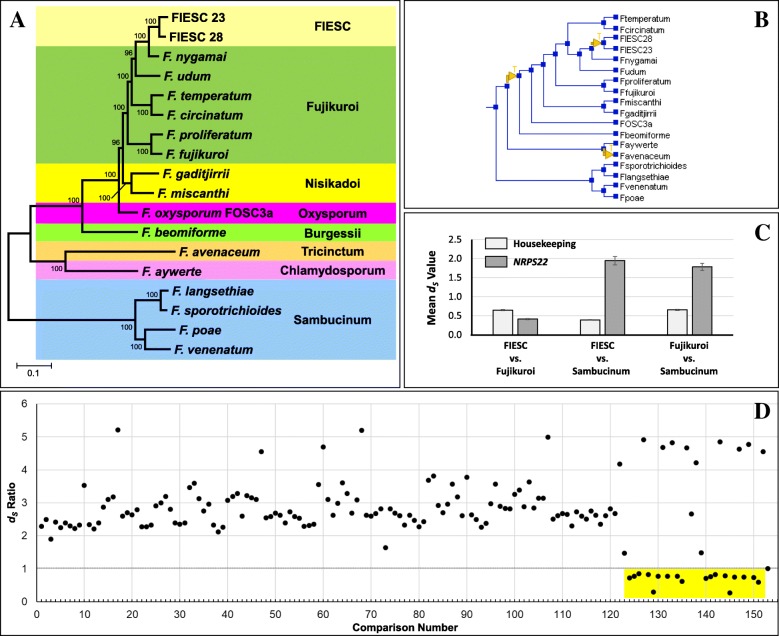
We examined genomes of 13 members of FIESC that were selected based primarily on their phylogenetic diversity and/or occurrence on crops. The presence and absence of SM biosynthetic gene clusters varied markedly among the genomes. For example, the trichothecene mycotoxin as well as the carotenoid and fusarubin pigment clusters were present in all genomes examined, whereas the enniatin, fusarin, and zearalenone mycotoxin clusters were present in only some genomes. Some clusters exhibited discontinuous patterns of distribution in that their presence and absence was not correlated with the phylogenetic relationships of species. We also found evidence that cluster loss and horizontal gene transfer have contributed to such distribution patterns. For example, a combination of multiple phylogenetic analyses suggest that five NRPS and seven PKS genes were introduced into FIESC from other Fusarium lineages.
Our results suggest that although the portion of the genome devoted to SM biosynthesis has remained similar during the evolutionary diversification of FIESC, the ability to produce SMs could be affected by the different distribution of related functional and complete gene clusters.
串珠镰刀菌-互隔交链孢菌复合种(FIESC)由 33 个在系统发育上有明显区别的种组成,这些种从各种生物来源中被回收,但最常从农业植物和土壤中分离出来。总的来说,FIESC 的成员可以产生不同的真菌毒素。然而,由于 FIESC 的物种多样性最近才被认识到,因此物种产生作物植物真菌毒素污染的潜力尚不清楚。在这项研究中,因此,我们使用比较基因组学来研究 FIESC 中负责合成真菌毒素和其他次生代谢物(SM)的基因和基因簇的分布和变异。
我们检查了 13 个 FIESC 成员的基因组,这些成员主要是根据它们的系统发育多样性和/或在作物上的发生情况选择的。SM 生物合成基因簇的存在和缺失在基因组中差异显著。例如,所有被检查的基因组中都存在三萜类真菌毒素以及类胡萝卜素和镰刀菌素色素簇,而恩镰菌素、呋塞米和玉米赤霉烯酮真菌毒素簇仅存在于一些基因组中。一些簇表现出不连续的分布模式,即它们的存在和缺失与物种的系统发育关系不相关。我们还发现了集群丢失和水平基因转移对这种分布模式的贡献的证据。例如,多项系统发育分析的组合表明,5 个 NRPS 和 7 个 PKS 基因是从其他镰刀菌谱系引入 FIESC 的。
我们的研究结果表明,尽管 FIESC 进化多样化过程中用于 SM 生物合成的基因组部分保持相似,但产生 SM 的能力可能受到相关功能和完整基因簇的不同分布的影响。