Prieto Cristina, Lagaron Jose M
Novel Materials and Nanotechnology Group, Institute of Agrochemistry and Food Technology (IATA), Spanish National Research Council (CSIC). Calle Catedrático Agustín Escardino Benlloch 7, 46980 Paterna, Spain.
Nanomaterials (Basel). 2020 Feb 6;10(2):270. doi: 10.3390/nano10020270.
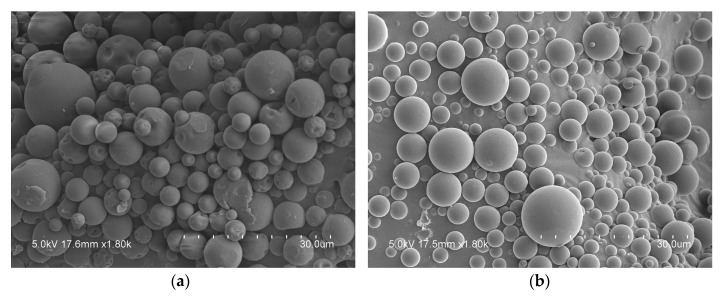
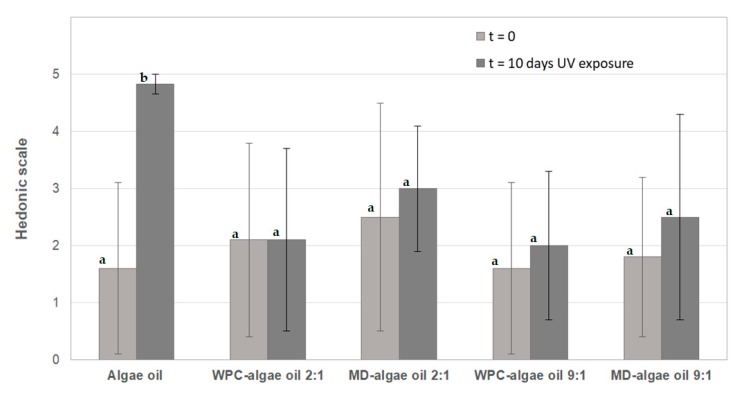
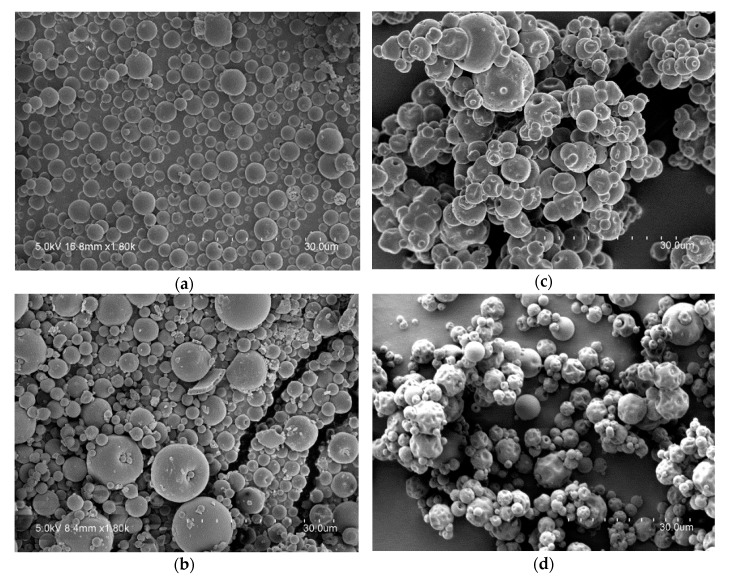
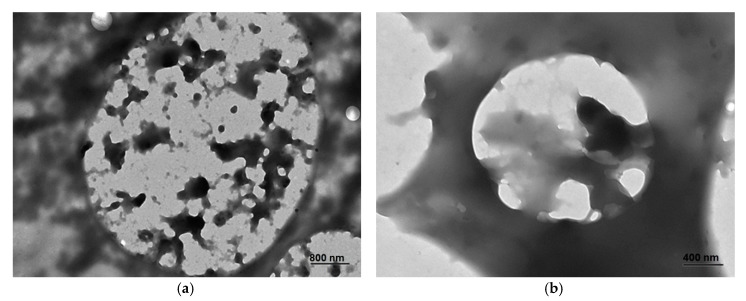
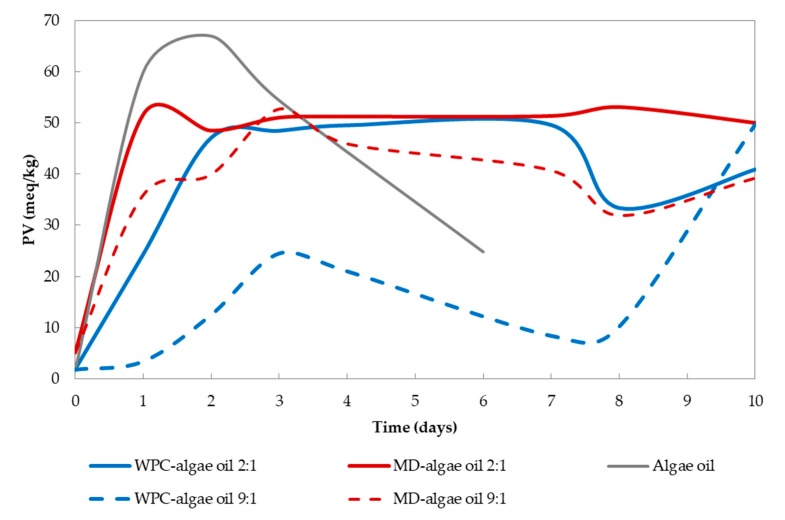
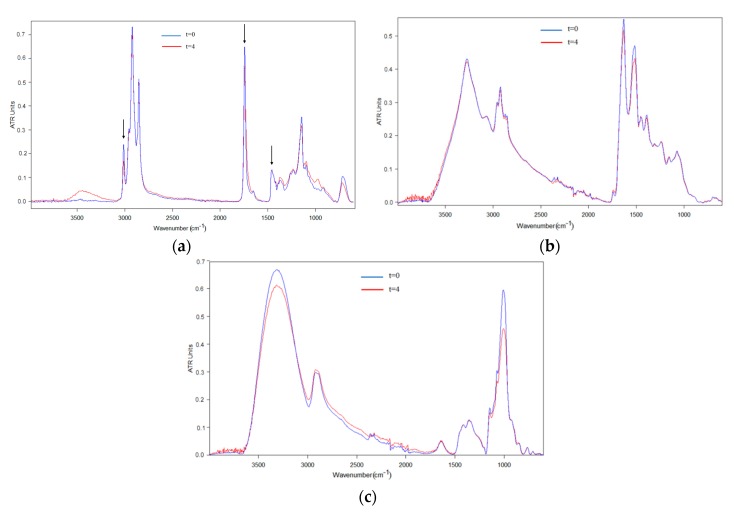
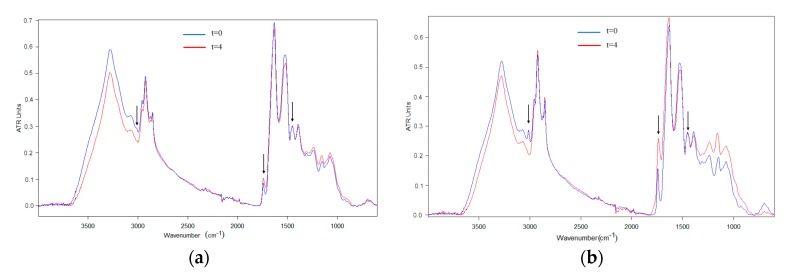
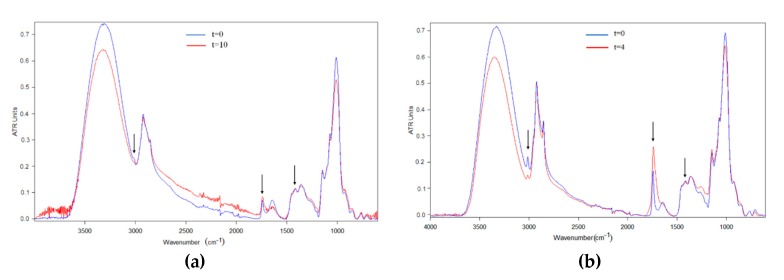
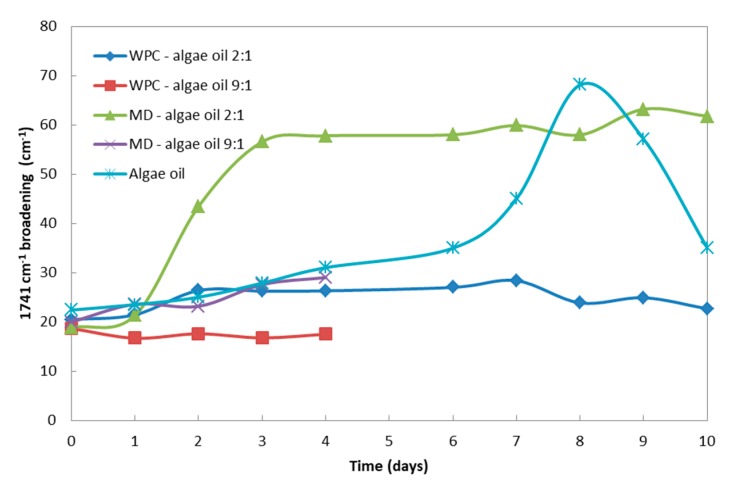
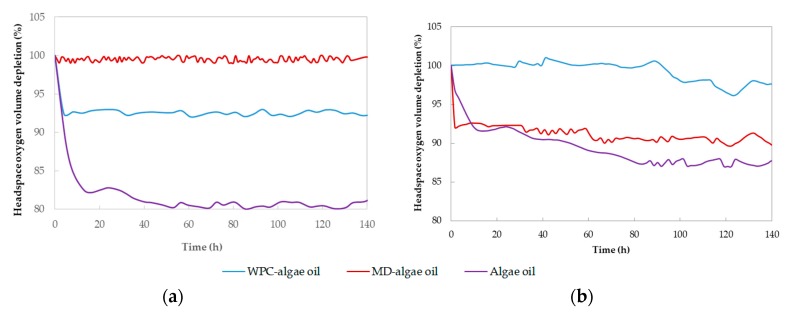
Long chain polyunsaturated omega-3 fatty acids (PUFAs), namely eicosapentaenoic acid (EPA) and docosahexaenoic acid (DHA), are important functional ingredients due to their well-documented health benefits, but highly susceptible to oxidation. One of the most promising approaches to preserve bioactives is their encapsulation within protective matrices. In this paper, an innovative high throughput encapsulation technique termed as emulsion electrospraying assisted by pressurized gas (EAPG) was used to encapsulate at room temperature nanodroplets of algae oil into two food hydrocolloids, whey protein concentrate and maltodextrin. Spherical encapsulating particles with sizes around 5 µm were obtained, where the oil was homogeneously distributed in nanometric cavities with sizes below 300 nm. Peroxide values under 5 meq/kg, demonstrated that the oil did not suffer from oxidation during the encapsulation process carried out at room temperature. An accelerated stability assay against oxidation under strong UV light was performed to check the protective capacity of the different encapsulating materials. While particles made from whey protein concentrate showed good oxidative stability, particles made from maltodextrin were more susceptible to secondary oxidation, as determined by a methodology put forward in this study based on ATR-FTIR spectroscopy. Further organoleptic testing performed with the encapsulates in a model food product, i.e., milk powder, suggested that the lowest organoleptic impact was seen for the encapsulates made from whey protein concentrate. The obtained results demonstrate the potential of the EAPG technology using whey protein concentrate as the encapsulating matrix, for the stabilization of sensitive bioactive compounds.
长链多不饱和ω-3脂肪酸(PUFAs),即二十碳五烯酸(EPA)和二十二碳六烯酸(DHA),因其已被充分证明的健康益处而成为重要的功能成分,但极易氧化。保存生物活性成分最有前景的方法之一是将它们封装在保护性基质中。在本文中,一种创新的高通量封装技术——加压气体辅助乳液电喷雾(EAPG),被用于在室温下将藻油纳米液滴封装到两种食品亲水胶体——浓缩乳清蛋白和麦芽糊精中。获得了尺寸约为5 µm的球形封装颗粒,其中油均匀分布在尺寸小于300 nm的纳米级空腔中。过氧化物值低于5 meq/kg,表明在室温下进行的封装过程中油未发生氧化。进行了在强紫外光下的加速氧化稳定性试验,以检查不同封装材料的保护能力。由浓缩乳清蛋白制成的颗粒表现出良好的氧化稳定性,而由麦芽糊精制成的颗粒更容易发生二次氧化,这是通过本研究基于衰减全反射傅里叶变换红外光谱(ATR-FTIR)提出的方法确定的。在模型食品——奶粉中对封装物进行的进一步感官测试表明,由浓缩乳清蛋白制成的封装物的感官影响最小。所得结果证明了以浓缩乳清蛋白为封装基质的EAPG技术在稳定敏感生物活性化合物方面的潜力。