Institute for Stroke and Dementia Research, Klinikum der Universität München, Ludwig-Maximilians-Universität LMU, Munich, Germany.
Department of Psychiatry and Psychotherapy, Ludwig-Maximilians-Universität LMU, Munich, Germany.
Alzheimers Dement. 2020 Mar;16(3):501-511. doi: 10.1002/alz.12032. Epub 2020 Feb 11.
Developing cross-validated multi-biomarker models for the prediction of the rate of cognitive decline in Alzheimer's disease (AD) is a critical yet unmet clinical challenge.
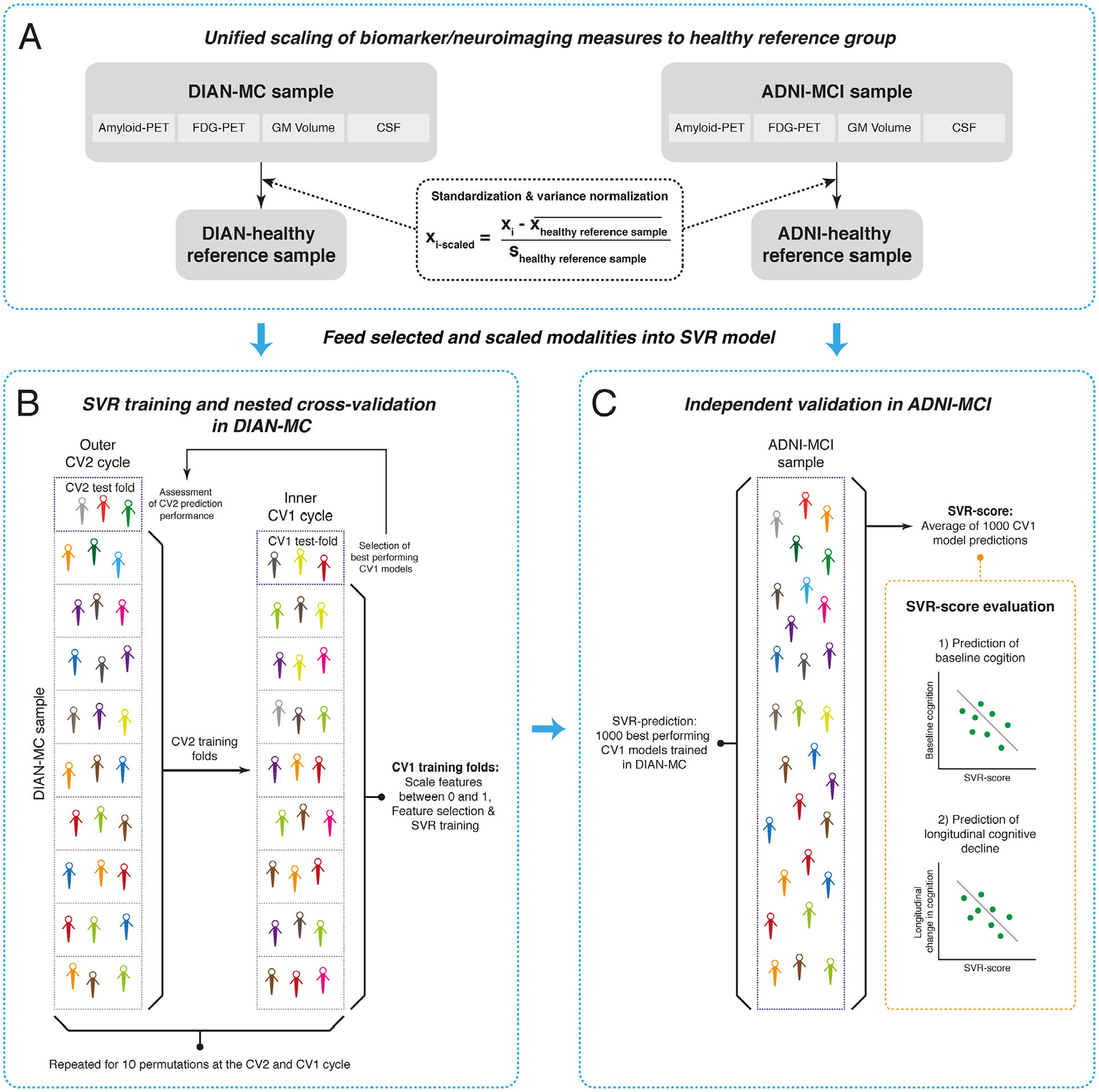
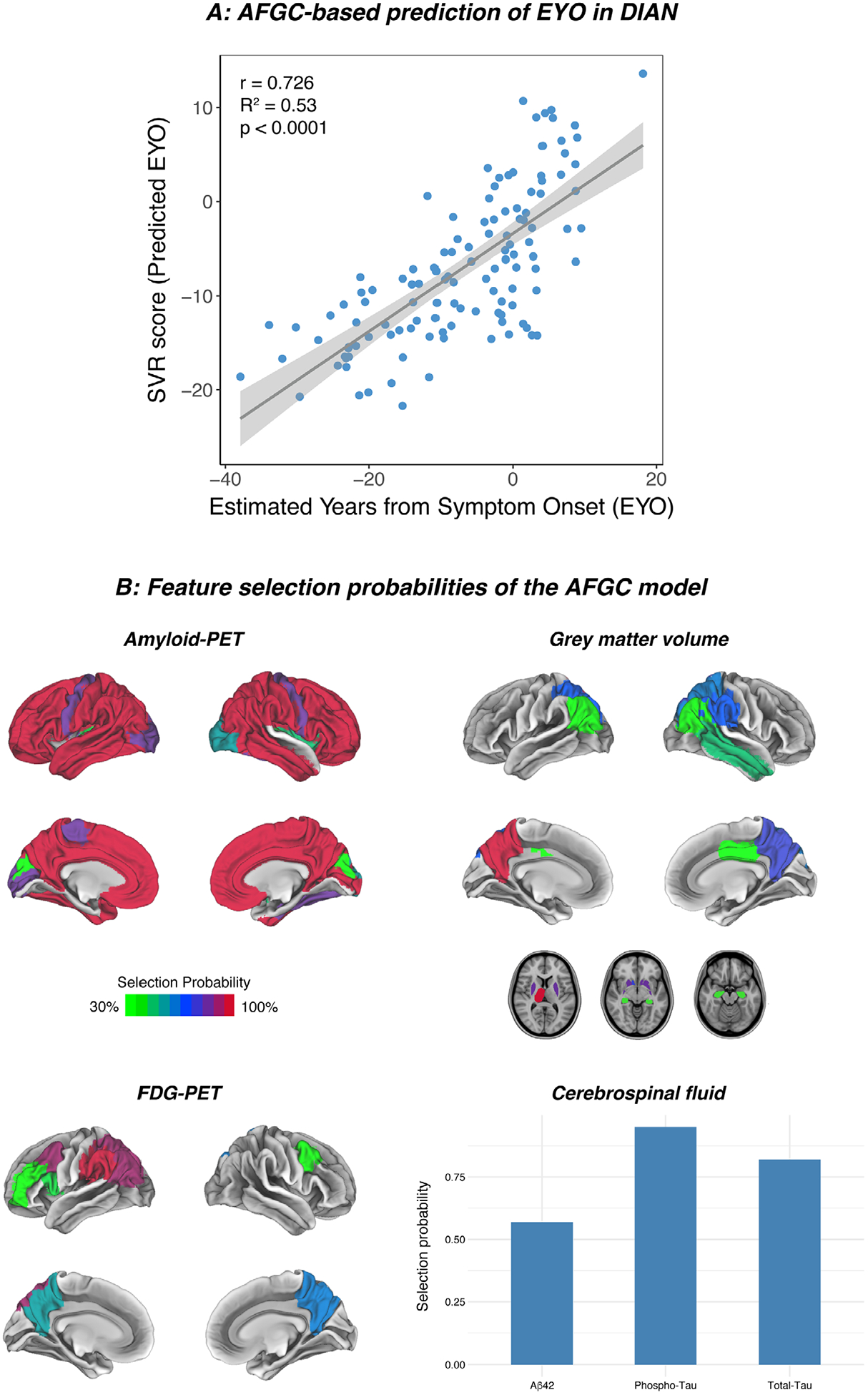
We applied support vector regression to AD biomarkers derived from cerebrospinal fluid, structural magnetic resonance imaging (MRI), amyloid-PET and fluorodeoxyglucose positron-emission tomography (FDG-PET) to predict rates of cognitive decline. Prediction models were trained in autosomal-dominant Alzheimer's disease (ADAD, n = 121) and subsequently cross-validated in sporadic prodromal AD (n = 216). The sample size needed to detect treatment effects when using model-based risk enrichment was estimated.
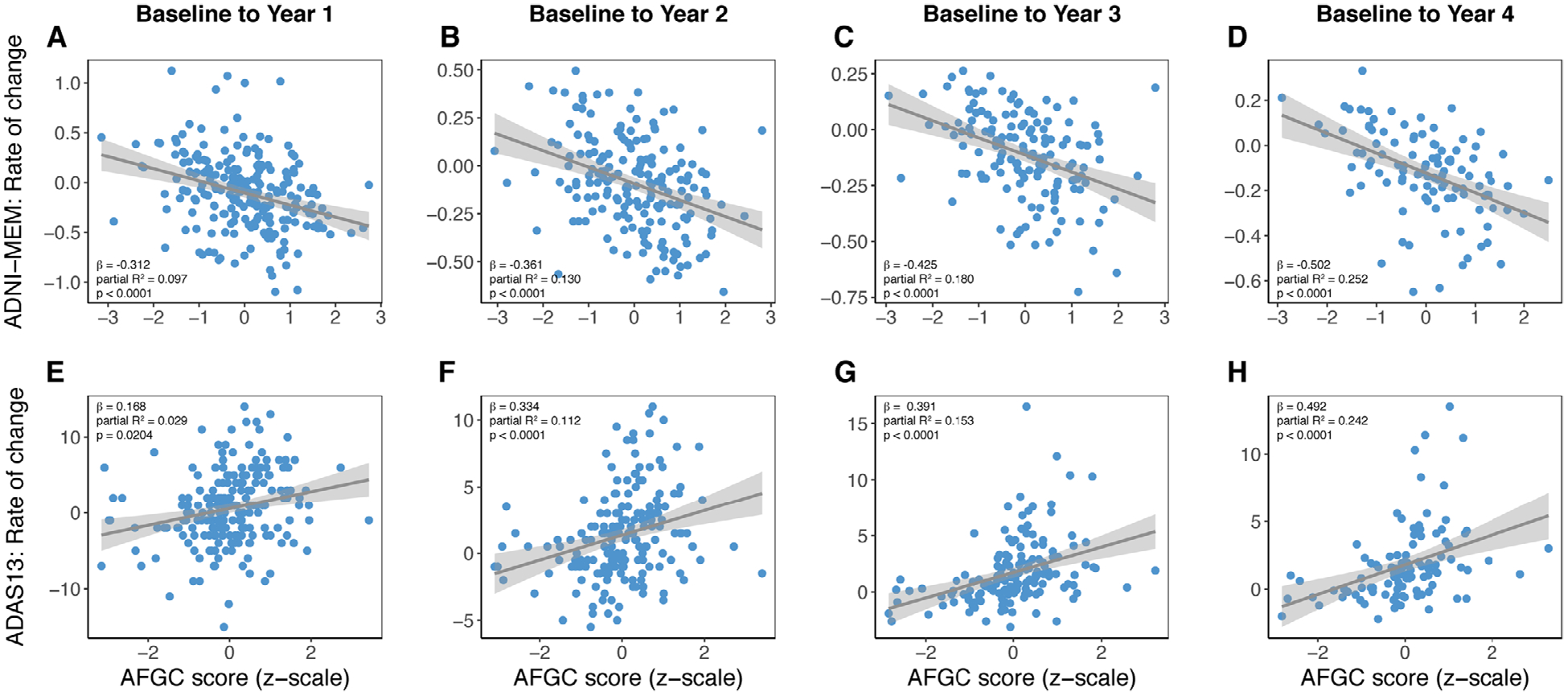
A model combining all biomarker modalities and established in ADAD predicted the 4-year rate of decline in global cognition (R = 24%) and memory (R = 25%) in sporadic AD. Model-based risk-enrichment reduced the sample size required for detecting simulated intervention effects by 50%-75%.
Our independently validated machine-learning model predicted cognitive decline in sporadic prodromal AD and may substantially reduce sample size needed in clinical trials in AD.
开发经过交叉验证的多生物标志物模型,以预测阿尔茨海默病(AD)认知下降的速度,是一项具有挑战性但尚未实现的临床需求。
我们应用支持向量回归分析,对源自脑脊液、结构磁共振成像(MRI)、淀粉样蛋白-PET 和氟脱氧葡萄糖正电子发射断层扫描(FDG-PET)的 AD 生物标志物进行分析,以预测认知下降的速度。预测模型在常染色体显性遗传 AD(ADAD,n = 121)中进行训练,并随后在散发性前驱 AD(n = 216)中进行交叉验证。我们估计了使用基于模型的风险富集检测治疗效果时所需的样本量。
一个结合所有生物标志物模式并在 ADAD 中建立的模型,可预测散发性前驱 AD 的 4 年整体认知(R = 24%)和记忆(R = 25%)下降速度。基于模型的风险富集将检测模拟干预效果所需的样本量减少了 50%-75%。
我们独立验证的机器学习模型预测了散发性前驱 AD 的认知下降,可能会大大减少 AD 临床试验所需的样本量。