Department of History and Philosophy of Science and Medicine, Indiana University, Bloomington, Indiana.
Department of Meteorology, University of Reading, Reading, United Kingdom.
Ann N Y Acad Sci. 2020 Jun;1469(1):105-124. doi: 10.1111/nyas.14308. Epub 2020 Feb 11.
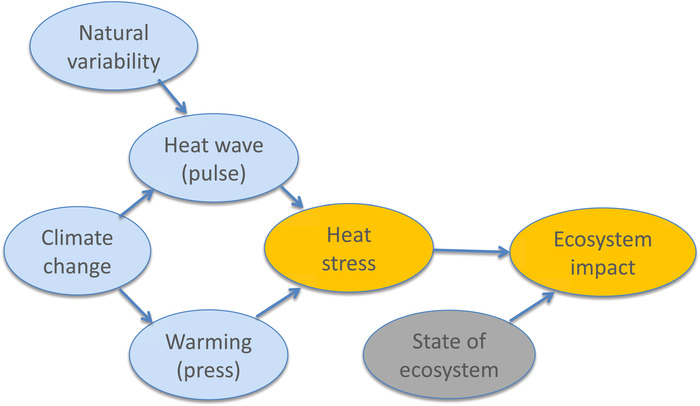
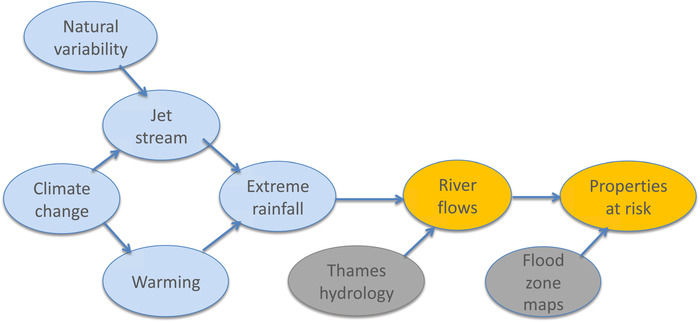
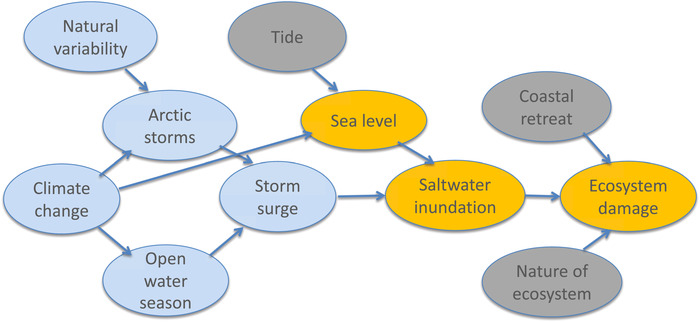
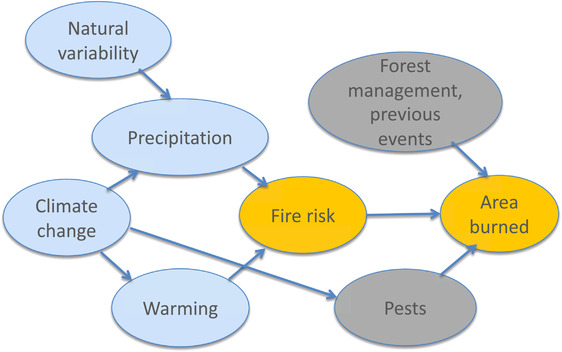
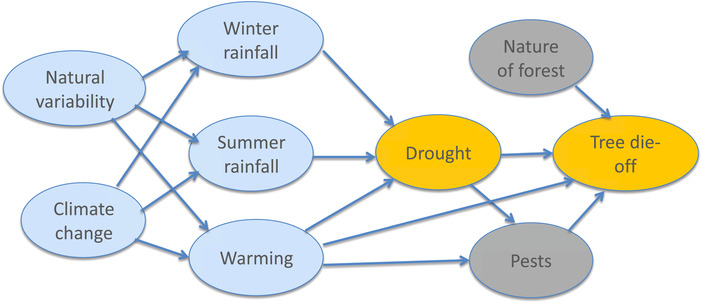
In our discussion of environmental and ecological catastrophes or disasters resulting from extreme weather events, we unite disparate literatures, the biological and the physical. Our goal is to tie together biological understandings of extreme environmental events with physical understandings of extreme weather events into joint causal accounts. This requires fine-grained descriptions, in both space and time, of the ecological, evolutionary, and biological moving parts of a system together with fine-grained descriptions, also in both space and time, of the extreme weather events. We find that both the "storyline" approach to extreme event attribution and the probabilistic "risk-based" approach have uses in such descriptions. However, the storyline approach is more readily aligned with the forensic approach to evidence that is prevalent in the ecological literature, which cultivates expert-based rules of thumb, that is, heuristics, and detailed methods for analyzing causes and mechanisms. We introduce below a number of preliminary examples of such studies as instances of what could be pursued in the future in much more detail.
在讨论由极端天气事件导致的环境和生态灾难或灾害时,我们综合了不同的文献资料,包括生物学和物理学方面的文献。我们的目标是将极端环境事件的生物学理解与极端天气事件的物理学理解联系起来,形成共同的因果解释。这需要对系统的生态、进化和生物学组成部分进行精细的时空描述,同时也需要对极端天气事件进行精细的时空描述。我们发现,极端事件归因的“情节线”方法和基于概率的“风险”方法在这些描述中都有其用途。然而,情节线方法更符合生态文献中普遍存在的取证方法,这种方法培养了基于专家的经验法则,即启发式方法,以及用于分析原因和机制的详细方法。下面我们将介绍一些此类研究的初步示例,作为未来可以更详细研究的实例。