Sargeant Jan M, O'Connor Annette M
Department of Population Medicine, University of Guelph, Guelph, ON, Canada.
Department of Veterinary Diagnostic and Production Animal Medicine, Iowa State University College of Veterinary Medicine, Ames, IA, United States.
Front Vet Sci. 2020 Jan 28;7:11. doi: 10.3389/fvets.2020.00011. eCollection 2020.
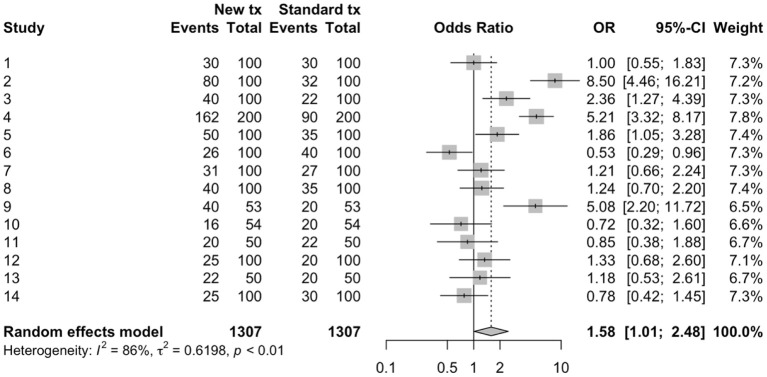
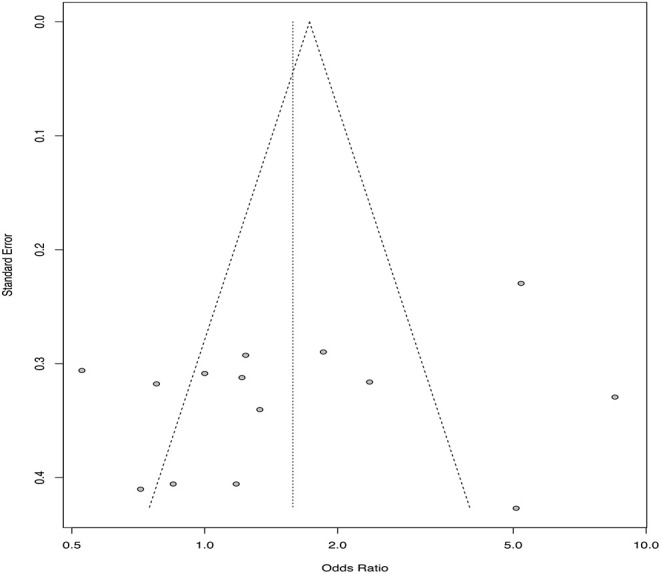
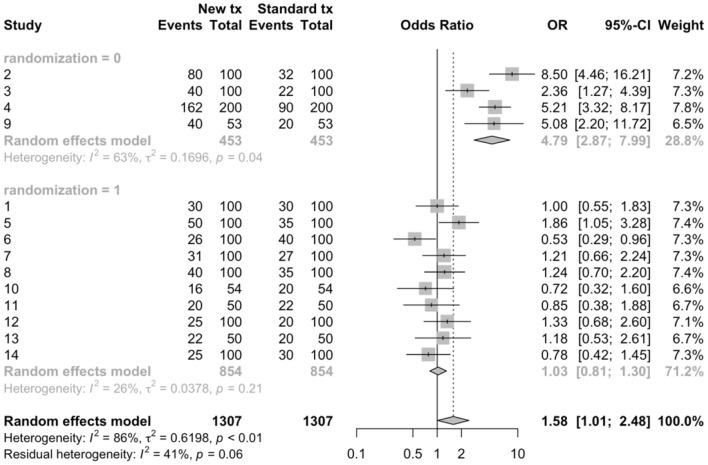
Evidence-based decision making is a hallmark of effective veterinary clinical practice. Scoping reviews, systematic reviews, and meta-analyses all are methods intended to provide transparent and replicable ways of summarizing a body of research to address an important clinical or public health issue. As these methods increasingly are being used by researchers and read by practitioners, it is important to understand the distinction between these techniques and to understand what research questions they can, and cannot, address. This review provides an overview of scoping reviews, systematic reviews, and meta-analysis, including a discussion of the method and uses. A sample dataset and coding to conduct a simple meta-analysis in the statistical program R also are provided. Scoping reviews are a descriptive approach, designed to chart the literature around a particular topic. The approach involves an extensive literature search, following by a structured mapping, or charting, of the literature. The results of scoping reviews can help to inform future research by identifying gaps in the existing literature and also can be used to identify areas where there may be a sufficient depth of literature to warrant a systematic review. Systematic reviews are intended to address a specific question by identifying and summarizing all of the available research that has addressed the review question. Questions types that can be addressed by a systematic review include prevalence/incidence questions, and questions related to etiology, intervention efficacy, and diagnostic test accuracy. The systematic review process follows structured steps with multiple reviewers working in parallel to reduce the potential for bias. An extensive literature search is undertaken and, for each relevant study identified by the search, a formal extraction of data, including the effect size, and assessment of the risk of bias is performed. The results from multiple studies can be combined using meta-analysis. Meta-analysis provides a summary effect size, and allows heterogeneity of effect among studies to be quantified and explored. These evidence synthesis approaches can provide scientific input to evidence-based clinical decision-making for veterinarians and regulatory bodies, and also can be useful for identifying gaps in the literature to enhance the efficiency of future research in a topic area.
循证决策是有效的兽医临床实践的标志。范围综述、系统综述和荟萃分析都是旨在提供透明且可重复的方法,以总结一系列研究来解决重要的临床或公共卫生问题。随着这些方法越来越多地被研究人员使用并被从业者阅读,理解这些技术之间的区别以及它们能够和不能解决哪些研究问题非常重要。本综述概述了范围综述、系统综述和荟萃分析,包括对方法和用途的讨论。还提供了一个示例数据集以及在统计软件R中进行简单荟萃分析的编码。范围综述是一种描述性方法,旨在梳理围绕特定主题的文献。该方法包括广泛的文献检索,随后是对文献的结构化映射或梳理。范围综述的结果可以通过识别现有文献中的空白来为未来的研究提供信息,也可用于识别可能有足够文献深度以进行系统综述的领域。系统综述旨在通过识别和总结所有已解决该综述问题的现有研究来解决特定问题。系统综述可以解决的问题类型包括患病率/发病率问题,以及与病因、干预效果和诊断测试准确性相关的问题。系统综述过程遵循结构化步骤,多个评审员并行工作以减少偏倚的可能性。进行广泛的文献检索,对于检索到的每一项相关研究,进行数据的正式提取,包括效应量,并对偏倚风险进行评估。多项研究的结果可以使用荟萃分析进行合并。荟萃分析提供一个汇总效应量,并允许对研究之间效应的异质性进行量化和探索。这些证据综合方法可以为兽医和监管机构的循证临床决策提供科学依据,也有助于识别文献中的空白,以提高某一主题领域未来研究的效率。